The Ose Ifá Calendar: Observance, Rhythm, and Practice
Most practitioners encounter Ose Ifá as a date on a community calendar — a recurring marker that arrives, demands attention, and then recedes into the ordinary flow of the week. What that date actually represents, structurally and spiritually, is a different and more interesting question. This article unpacks the Yorùbá timekeeping logic behind Ose Ifá, walks through what a genuine observance looks like, and addresses how diaspora devotees can honor the cycle faithfully without pretending they live in Ilé-Ifẹ̀.
This spoke is part of our broader introduction to Yoruba religion and spirituality — which sets the wider context for the rhythm and observance of Ifá tradition.
What Is Ose Ifá?
This piece is one spoke in our broader guide to the full 16 Principal Odù of Ifá corpus.
Ose Ifá is the sacred day within the traditional Yorùbá week dedicated to the worship of Ọ̀rúnmìlà, the Òrìṣà of wisdom, divination, and destiny, along with associated Òrìṣà including Ọṣun, Èṣù, Ọṣayin, Yemọja, Olókun, Ajé, and Ọṣùmàrè. The name itself tells you nearly everything: the day belongs to Ifá.
The Meaning of Ose in Yorùbá Timekeeping
The Yorùbá word ọ̀sẹ̀ originally meant "holy day." Because the same holy day returned on a fixed interval, the word gradually extended its meaning to cover the interval itself — the week as the span between one sacred observance and the next. This linguistic doubling, where a day-name becomes a week-name, reflects how deeply ritual time structured Yorùbá life. The calendar wasn't built around labor cycles or astronomical observation alone; it was built around worship.
Ose Ifá is also called Ọjọ́ Awọ or ose Awọ, terms that translate roughly as "the day of secrets" or "the day of the initiated." Each label points toward the same reality: this is a time set apart, governed by different rules than ordinary days.
How Ose Ifá Differs from a Western Weekly Calendar
The most important thing to understand is that Ose Ifá does not land on a fixed day of the Gregorian week. It isn't Sunday. It isn't tied to Monday or Friday. Ose Ifá recurs according to its own logic, one rooted in the traditional Yorùbá four-day week — the Kojoda calendar — rather than the seven-day Western week introduced through British colonial contact.
The practical result: Ose Ifá cycles through the Gregorian week continuously. This week it might fall on a Tuesday, four weeks from now on a Saturday. For practitioners accustomed to scheduling worship around fixed weekdays, this demands a different relationship with time. That's not a bug in the system. It's the point.
The Traditional Rhythm of the Ose Ifá Cycle
The structure underneath Ose Ifá is the oldest temporal framework in Yorùbá culture. Understanding it makes the observance schedule feel logical rather than arbitrary.
The Five-Day Yorùbá Week
The traditional Yorùbá week has four days, each dedicated to a specific Òrìṣà. Widely cited accounts describe one such sequence as: a day for Ọbàtálá, a day for Ọ̀rúnmìlà (Ifá), a day for Ògún, and a day for Ṣàngó — though scholars commonly note that the ordering varies across lineages and regional traditions, and no single sequence should be treated as universally binding. What all sources agree on is the four-day structure itself.
Here is where the counting gets interesting, and where confusion often enters. Community sources across diaspora and homeland traditions consistently describe Ose Ifá as returning "every five days." That framing uses inclusive counting — a method where you count the starting day as day one. So if Ose Ifá falls today (day one), the next Ose Ifá arrives on what Gregorian-calendar speakers would call day five, but which the Yorùbá counting system recognizes as the fifth inclusive day of the new cycle. The four-day week and the five-day interval are not contradictory. They describe the same structure from two different counting conventions.
Where Ose Ifá Falls within the Cycle
Within the four-day Yorùbá week, Ose Ifá occupies the slot dedicated to Ọ̀rúnmìlà and the mysteries of Ifá. In some lineages and community calendars this is the second day of the week; in others it appears as the fourth. The discrepancy reflects genuine variation across Yorùbá territories and diaspora communities — not errors. Practitioners are advised to follow their lineage's specific calendar rather than assuming a universal sequence.
Beyond Ose Ifá itself, the tradition recognizes a layered sacred calendar. Ose Ifá forms the foundational devotional unit, repeating roughly every five days. Isan Ifá provides a mid-level gathering frequency for Babalawos. And Ìtàdógún — meaning "seventeenth day" — convenes the broader community for collective divination, prayer, songs, dancing, and recitation of Odù Ifá verses. Itadogun frequency also varies by lineage and temple. The nested structure means that regular Ose Ifá observance sits within a larger rhythm of communal deepening, not as an isolated ritual but as the smallest and most accessible unit of a much larger sacred architecture.
Observance Practices on Ose Ifá
No single protocol governs every Ose Ifá across all traditions. What follows represents widely shared practices drawn from community and lineage sources — a useful orientation, not a substitute for guidance from your own Babalawo or Iyanifa.
Prayer, Chanting, and Recitation of Odù
The literary heart of Ose Ifá observance is the understanding Odù Ifá. The Ifá corpus consists of 256 sacred Odù, each containing approximately 800 poetic verses called ese, chanted in liturgical Yorùbá by priests. On Ose Ifá, practitioners — at whatever level of initiation they hold — engage these texts through chanting, recitation, and focused prayer directed toward Ọ̀rúnmìlà and the Odù associated with their own destiny.
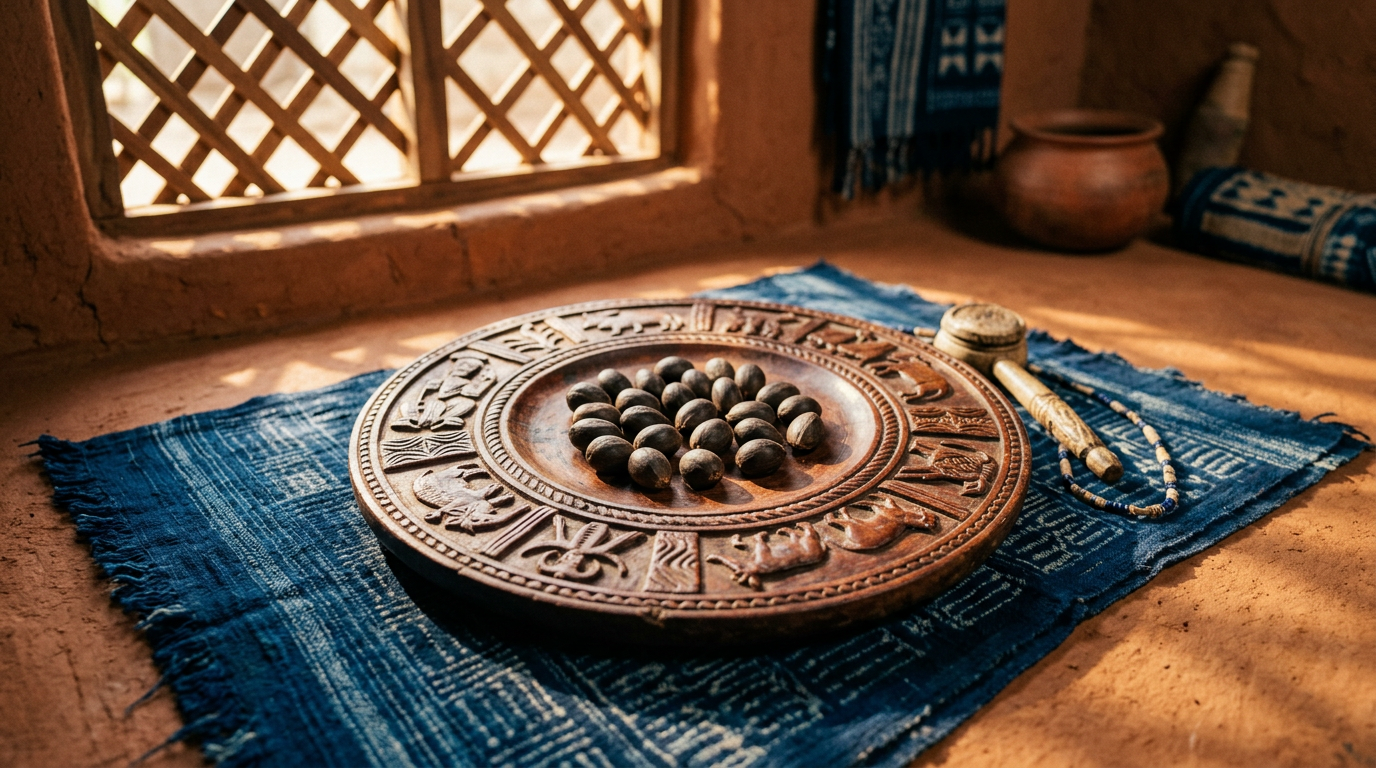
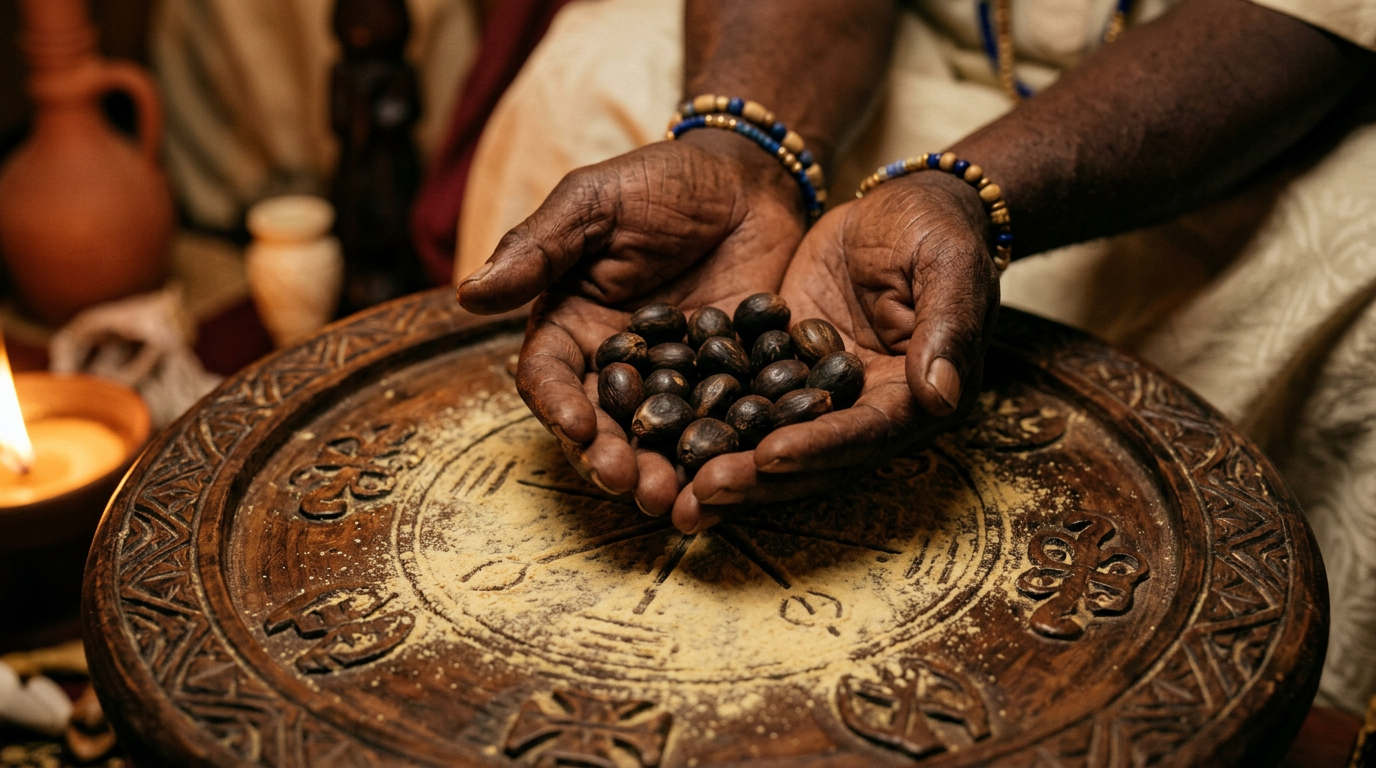
For devotees who have received the Icofa (the Hand of Ọ̀rúnmìlà, a set of 16 sacred Ikin or palm nuts), one common practice involves holding the Ikin, breathing on them deliberately, raising them to the forehead, and reciting prayers including the individual's own Odù. This is intimate, personal work. Five days goes by faster than expected; this kind of physical engagement with sacred objects keeps the relationship active rather than theoretical.
Offerings and Ritual Protocols
Cleaning Ifá and Òrìṣà shrines is standard Ose Ifá practice — not metaphorical tidying but intentional sacred maintenance. Alongside shrine care, practitioners make personal ebọ (offerings and ritual prescriptions) and in many communities make charitable donations or acts of generosity aligned with the values of Ọ̀rúnmìlà. The specific materials, foods, and protocols appropriate for offerings depend on the Odù governing the individual and on lineage tradition. This is precisely the kind of question to bring to a diviner rather than resolve from an article.
The connection of offerings to the role of Òrìṣà in daily worship matters here. Ose Ifá isn't only about Ọ̀rúnmìlà in isolation — associated Òrìṣà including Ọṣun, Èṣù, and Ọṣayin are also honored, and a complete observance acknowledges those relationships as well.
Community Gathering and Collective Worship
Where community is accessible, Ose Ifá often moves from private practice to collective gathering. Practitioners come together to chant Odù, share prayers, and reinforce the social fabric of the tradition. This communal dimension isn't optional ornamentation — collective Àṣẹ amplified through shared intention is regarded as qualitatively different from individual practice, and many community sources emphasize that Ose Ifá gatherings serve a relational function that solitary observance cannot fully replicate.
Why Spiritual Rhythm Matters in Ifá Tradition
Consistency, in Ifá, is not a personality trait. It's a theological commitment.
Alignment with Natural and Cosmic Cycles
The Ifá divination system was proclaimed a UNESCO Masterpiece of Oral and Intangible Heritage of Humanity in 2005, formally inscribed in 2008 — recognition that affirmed what practitioners have always known: this is a living system with deep cosmological coherence, not a collection of folklore. Part of that coherence is temporal. The Yorùbá calendar wasn't designed to manage business schedules; it was designed to keep human activity synchronized with patterns understood to govern existence itself. Ose Ifá is a point of contact with that larger order. The regularity of return is the practice, not merely a frame for it.
The Ifá tradition spread to the Americas and Caribbean through the Atlantic slave trade and today exists in distinct diaspora forms including Lucumí in Cuba, Candomblé in Brazil, and Isese lineages across North America. Each of these traditions adapted — often under extreme duress — to different temporal environments. That adaptation is itself evidence that the rhythm has a living quality. It bends without breaking.
Discipline as a Path to Deeper Àṣẹ
Àṣẹ is the universal spiritual force or life power recognized in Yorùbá tradition — the animating energy that flows through all things and can be concentrated, cultivated, or dissipated by human action. In the Ifá path, Àṣẹ is understood to accumulate through the alignment of intention and ethical practice. Irregular worship — showing up when convenient, skipping cycles without ceremony — doesn't neutralize Àṣẹ so much as fail to develop it. The rhythm of Ose Ifá creates the conditions under which that development becomes possible.
Five days is short enough to prevent drift. Long enough to allow genuine preparation. That interval is a feature, not an accident.
Adapting Ose Ifá Observance in the Diaspora
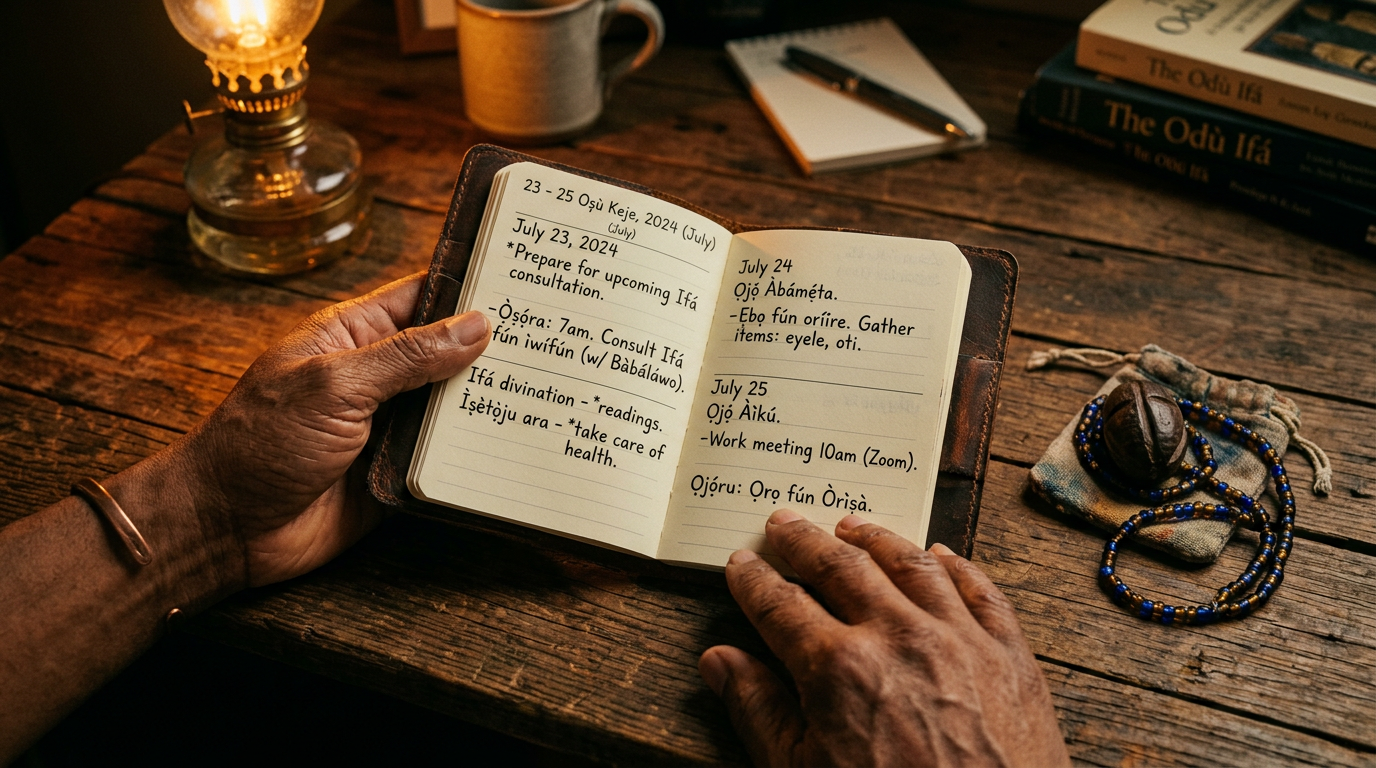
Diaspora practitioners face a structural challenge that homeland communities rarely encounter at the same scale: the complete mismatch between Yorùbá sacred time and the rhythms governing work, school, and family life in a Gregorian-calendar world.
Navigating Modern Schedules and Time Zones
The displacement of the four-day Kojoda calendar began during British colonial contact, when the seven-day Gregorian week was imposed on Yorùbá communities as part of broader administrative and missionary reorganization. Diaspora practitioners aren't simply adjusting to modern schedules — they are recovering a suppressed temporal logic that was deliberately interrupted. That framing matters because it transforms adaptation from compromise into continuation.
Practically: track Ose Ifá on a dedicated app or calendar tool that follows the four-day cycle, not the Gregorian week. Several community organizations and online platforms publish Ose Ifá cycle calendars. When the observance day lands on a Wednesday that you can't fully honor, do what you can — the brief, intentional moment at a shrine is not nothing — and complete fuller observance at the next Ose Ifá. Consult your lineage elder on protocols for missed cycles.
Maintaining Authenticity while Living Abroad
Authenticity in the diaspora context doesn't mean performing an exact replica of what happens in Ilé-Ifẹ̀. Lucumí practitioners in Cuba adapted Ose Ifá equivalents to Cuban social life; Candomblé communities in Brazil shaped observances to fit Brazilian temporal reality. Both are distinct living systems, not diluted copies. North American Isese communities are doing the same thing their predecessors did — finding the form that preserves the substance while surviving a different environment.
What marks faithful adaptation is not the furniture of the observance but the intention, the consistency, and the relationship with a lineage that can provide genuine guidance. A building a home Ifá altar or sacred space grounded in that lineage connection is not a lesser option. For many diaspora practitioners, it is the primary one.
Getting Started with Your Own Ose Ifá Practice
Entry-level Ose Ifá practice doesn't require full initiation, a perfectly equipped shrine, or proximity to a large community. It requires orientation and consistency.
Begin by locating the current Ose Ifá cycle. Community platforms, established Ifa organizations, and lineage elders can point you toward a live calendar. Mark the next Ose Ifá. On that day, find ten or fifteen minutes for deliberate prayer directed toward Ọ̀rúnmìlà — an acknowledgment of the day, a statement of your intentions, a moment of stillness. That is not a watered-down observance. That is how beginners build the habit that eventually becomes the practice.
As you deepen, consider receiving an introduction to Ifá tradition and philosophy through a recognized teacher, and eventually consulting a Babalawo or Iyanifa about receiving Icofa. The Ikin give the cycle a physical anchor. Devotees who hold the Hand of Ọ̀rúnmìlà and engage it on each Ose Ifá report that the interval itself begins to feel different — more structured, more watched, more charged. That shift is Àṣẹ accumulating.
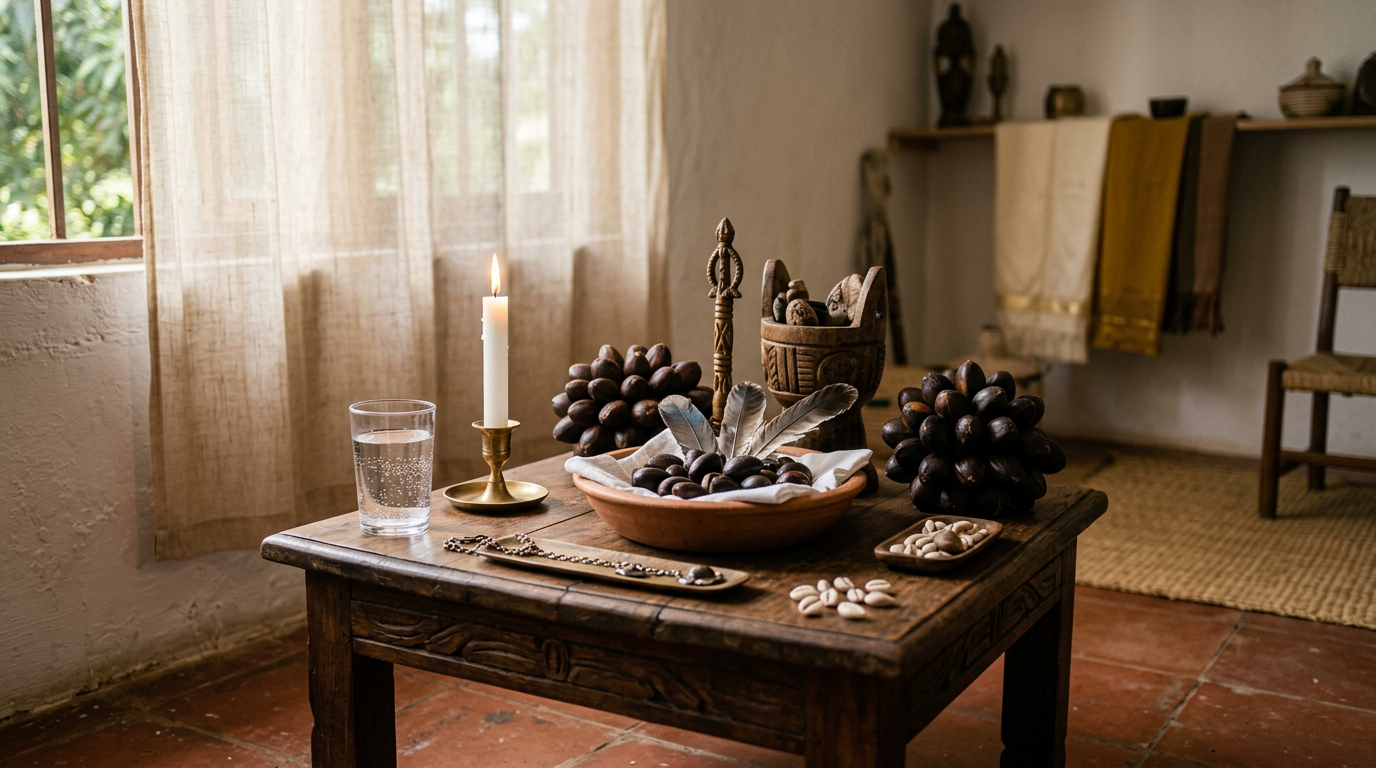
Clean your sacred space on each Ose Ifá, even if it consists of nothing more than a candle and a glass of water. Make whatever offering your means and lineage allow. Explore the Odù through community study, through recordings of ese chanting, through texts where you can find them. The Ifá glossary of Yorùbá spiritual terms will help as vocabulary accumulates.
Where to Go from Here
Ose Ifá is the smallest complete unit of Ifá devotional time — four days, returning, always returning. Its power lies not in the drama of any single observance but in the accumulated effect of showing up at that interval, repeatedly, over months and years. The tradition has carried this rhythm across continents and centuries, through colonial disruption, through the Middle Passage, through every environment that was not designed to hold it. That durability is its own kind of testimony.
Start with the next cycle. The one after that takes care of itself.