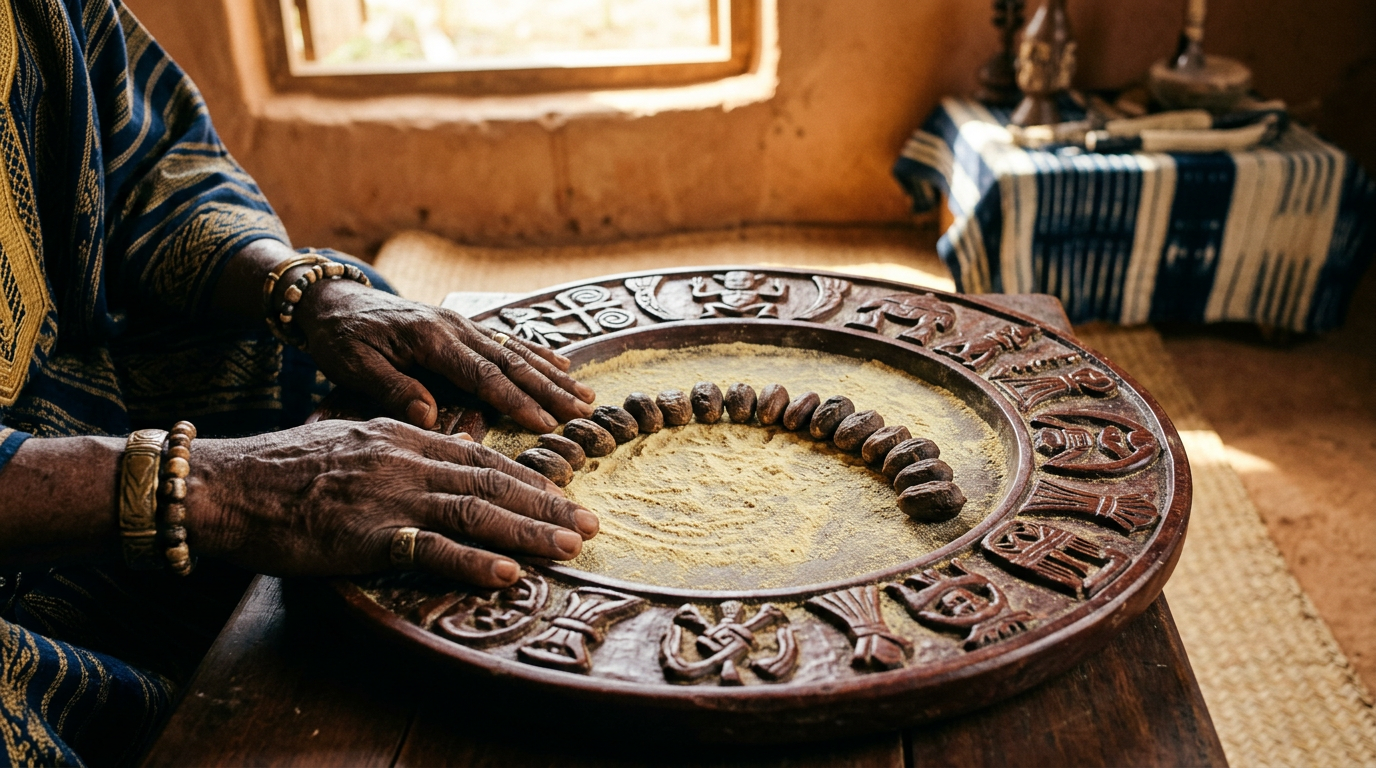
Itefa Initiation: What to Expect on the Path to Ifá Priesthood
Few decisions in a spiritual seeker's life carry the weight of Itefa. This guide walks you through what the initiation actually involves — who it's for, how to prepare, what happens during the ceremony in broad terms, and what comes after — so you can approach the path with clear eyes and genuine readiness.
This guide is part of our broader introduction to Yorùbá religion and spirituality, which sets the wider context for Ifá practice, Òrìṣà veneration, and the initiatory path.
What Is Itefa and Why Does It Matter in Ifá Tradition?
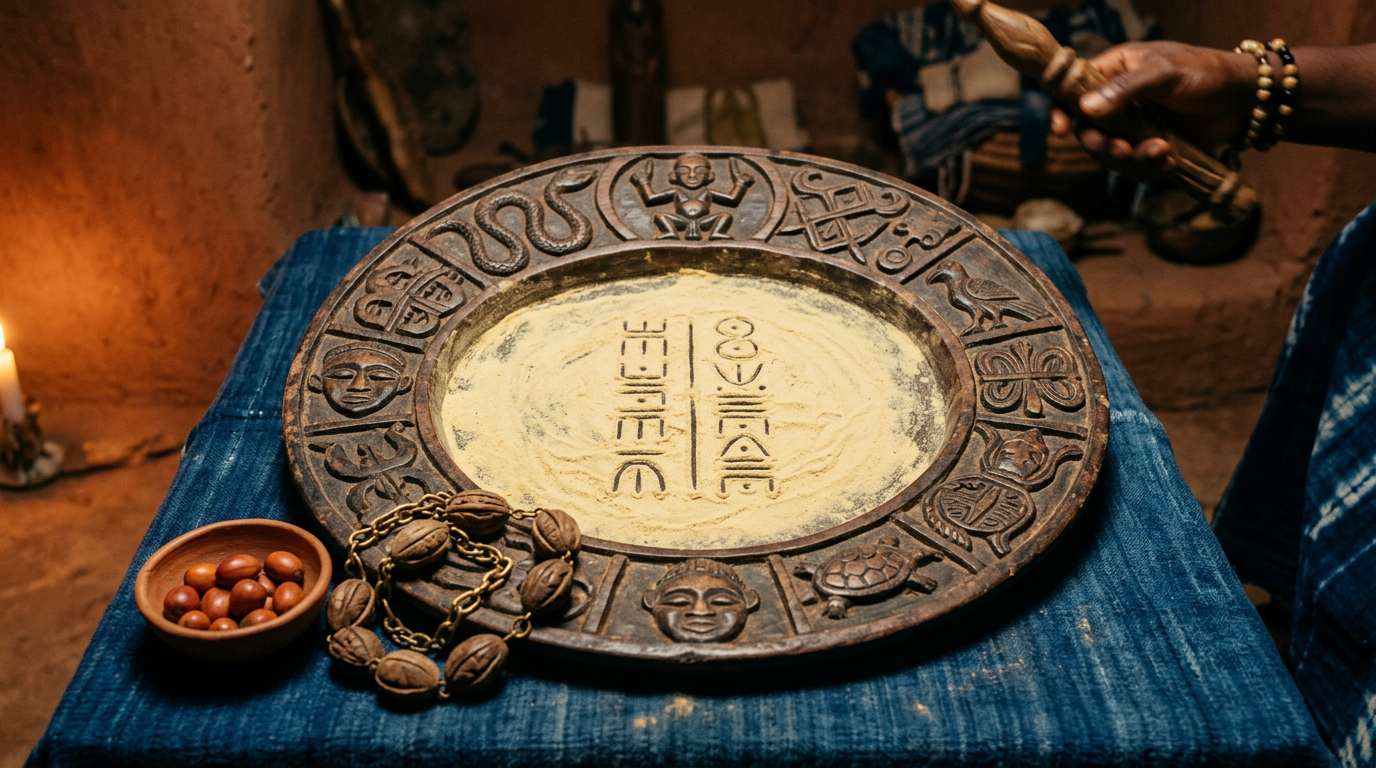
For readers considering initiation into Ifá priesthood themselves, the practical requirements — lineage, apprenticeship years, financial preparation, and personal readiness — are covered in depth in our guide on the full Ìtẹfá path to Babaláwo priesthood.
Itefa is the core initiatory rite of the Ifá tradition, formally establishing a deeper relationship with Ọ̀rúnmìlà and aligning the initiate with their Orí — the personal spiritual destiny that each person carries from the moment of creation. More than a ritual milestone, Itefa is understood by practitioners as an act of spiritual rebirth: the moment a person consciously orients their entire life toward divine wisdom.
The Meaning of Itefa Within Ifá Cosmology
Ifá is one of the world's oldest living oral traditions. UNESCO inscribed the Ifá divination system on its Representative List of the Intangible Cultural Heritage of Humanity in 2008, recognizing its intellectual and cultural significance to Yorùbá communities and the African diaspora. At the heart of this system sits the Odù Ifá — a literary corpus of 256 Odù, each subdivided into verses called Ẹsẹ, with approximately 800 Ẹsẹ per Odù. Itefa is the rite through which a person formally enters into relationship with this living body of wisdom, receiving their own personal birth Odù in the process.
That personal Odù shapes everything that follows: how the initiate practices, what restrictions they carry, how they serve their community. This is why preparation and intention matter so much. Itefa is not enrollment in a course — it is an existential reorientation.
Itefa vs. Other Ifá-Related Ceremonies
Itefa differs fundamentally from Isefa, which is sometimes called receiving one Hand of Ọ̀rúnmìlà. Isefa is a preparatory rite that establishes a formal relationship with Ifá and is a meaningful step in its own right. Itefa, by contrast, is the full priestly initiation — conferring deeper spiritual authority alongside lifelong responsibilities that Isefa does not impose.
Within Itefa itself, lineage-specific variation exists. Some lineages practice a variant called Itelodu, in which a male initiate additionally receives and beholds the sacred Òrìṣà Odù shrine. An initiate who undergoes standard Itefa without this additional step is known as an Awo Elegan and, in lineages that observe this distinction, cannot participate in ceremonies where Òrìṣà Odù is directly invoked. Whether Itefa or Itelodu is practiced as the norm depends on lineage and geography — neither is universally "standard," and a prospective initiate should clarify which form their elders practice before beginning.
Signs That You May Be Called to Itefa
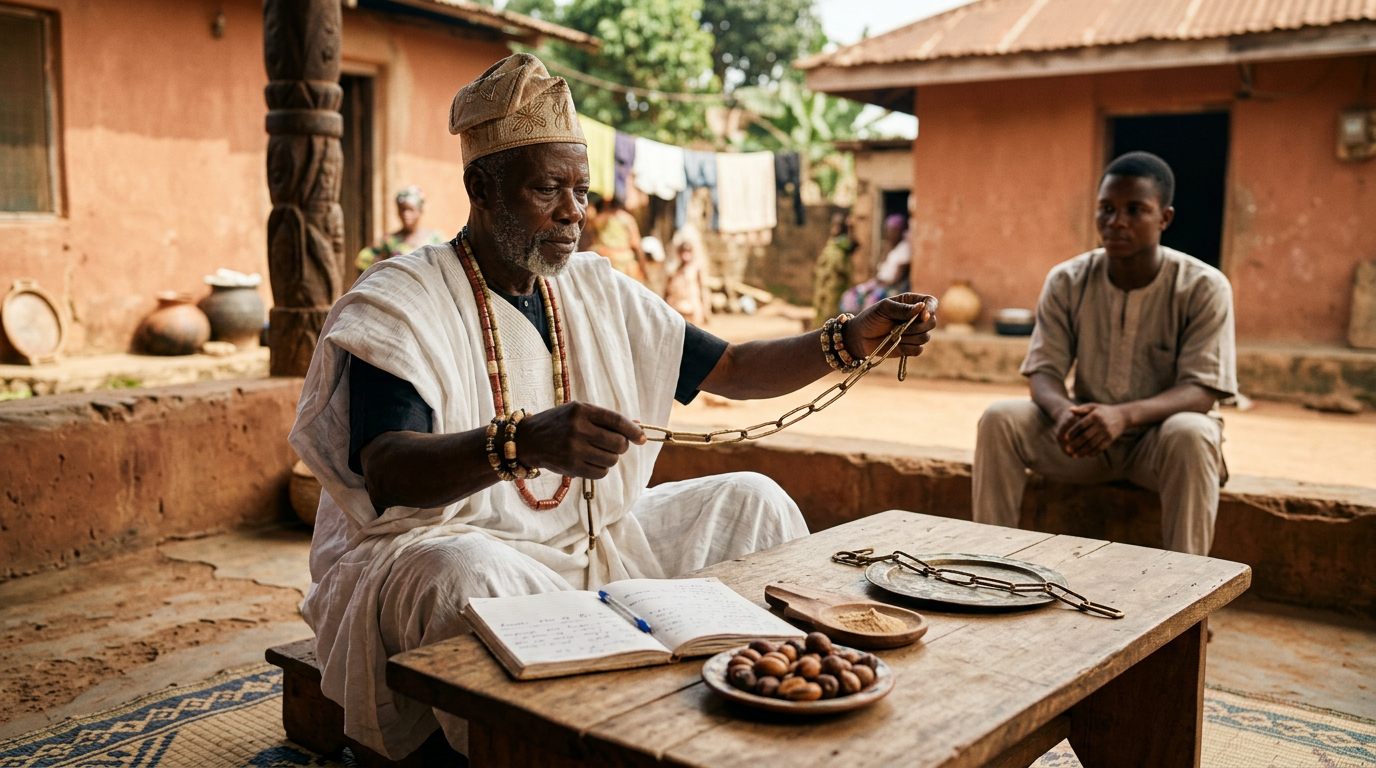
Not everyone who walks with Ifá is meant to become a priest. Many people spend a whole life close to Ifá through regular divination and care for their Òrìṣà, and never sit for initiation. That life is complete as it stands.
For those who are called, the call does not arrive the same way for everyone. Sometimes it is spoken at the very beginning, when Ifá is consulted for a newborn and speaks about the child's road. Sometimes it comes later, when a grown person keeps returning to the same ground in one consultation after another. And sometimes Ifá asks for initiation as the remedy itself, because that is what will settle the trouble the person is carrying.
No one of these roads is lesser than the others. And not one of them is something you decide for yourself. In every case it is a qualified elder who reads it, not the one who wants it.
Divination and Spiritual Indicators
The traditional mechanism for discerning a call to Itefa is divination itself. A calling is confirmed by an experienced elder Awo, through formal Ifá consultation. That is how it is done. A personal sense of calling matters — but that sense is meant to be tested against the wisdom of the oracle and the judgment of elders who can read what you may not see in yourself.
Recurring themes in divination, specific Odù appearing consistently in your consultations, or clear signs from your Òrìṣà may all surface as spiritual indicators. But these are starting points for conversation with your elders, not conclusions you reach alone.
The Role of Your Elders and Community
Itefa does not happen in isolation. It is a communal act, witnessed and supported by the Awo community, and the elders who guide your preparation carry real responsibility for what they initiate. Their role is not ceremonial gatekeeping — it is genuine spiritual discernment on your behalf.
If you are being encouraged toward Itefa by a community and its elders, ask yourself whether those encouragements came through formal divination or through social enthusiasm. Pressure — even well-meaning pressure — is different from calling. The tradition gives you a tool for knowing the difference: consult Ifá.
How to Prepare for Itefa Initiation
Preparation for Itefa is measured in months, sometimes years — not in a checklist completed the week before the ceremony.
Spiritual and Emotional Readiness
Spiritual readiness means more than sincere intention. Before Itefa, prospective initiates are typically expected to have an established practice: regular divination, a working relationship with their Òrìṣà, and some grounding in Ifá divination and Odù. The ceremony will reveal your personal birth Odù, and beginning to understand the Odù corpus before that moment — even at a surface level — gives you context for what you receive.
Emotionally, Itefa calls for honesty about your motivations. There is a difference between the person who comes because Ifá said so and the person who comes because they want the title. The tradition knows the difference, and in time so will you.
Practical Considerations and Logistics
Initiation costs vary significantly by lineage, geography, and ceremony scale. You will hear figures from several thousand dollars into the tens of thousands, and travel is usually on top of that. These figures are illustrative, not fixed — your specific elders will detail the ceremonial obligations, and those obligations should be discussed transparently before any commitment is made.
You will also need to plan for time away from ordinary responsibilities. Itefa ceremonies typically unfold over multiple days, and the period immediately following carries specific restrictions and protocols. Ask your elders what post-initiation taboos apply in your lineage and plan your logistics accordingly. Financial and logistical readiness is real readiness — arriving underprepared burdens your community.
What to Expect During the Itefa Ceremony
The specific details of the Itefa ceremony belong to initiates and are not publicly disclosed — a boundary that is itself part of the tradition's integrity. What can be said honestly is this: the ceremony is profound, physically demanding, and spiritually immersive in ways that most descriptions fail to capture until you've lived it.
The Sacred Process in Broad Terms
Over the course of the ceremony, you will be surrounded by your Awo community. Elders will guide each phase. Sacred objects are prepared, ẹbọ (sacrifice) is performed, and the work of formally seating Ifá in your life takes place through processes that have been transmitted for generations. The atmosphere is not theatrical — it is focused, reverent, and, for most initiates, unlike anything they have previously experienced.
Babaláwo — a title derived from the Yorùbá words baba (father) and awo (secrets or mysteries), meaning "father of secrets" — serve as custodians of the tradition, administering divination and ẹbọ while transmitting the oral lineage. Their presence and competence during Itefa are not incidental. The quality of your ceremony depends heavily on who performs it.
Receiving Your Odù Ifá
The moment most initiates anticipate most intensely is the revelation of their personal birth Odù. Through the casting of sacred palm-nuts or the Opele divination chain, the Odù governing your Orí is identified. This Odù is not a label or a horoscope — it is a living body of wisdom that will speak to your specific nature, your life's challenges, the taboos you carry, and the path best suited to your spiritual development.
Understanding the structure of Ifá divination and its Odù beforehand will help you begin absorbing this revelation. Your birth Odù is something you will study for the rest of your life.
Life After Itefa: Walking the Path of a Babaláwo or Ìyánífá
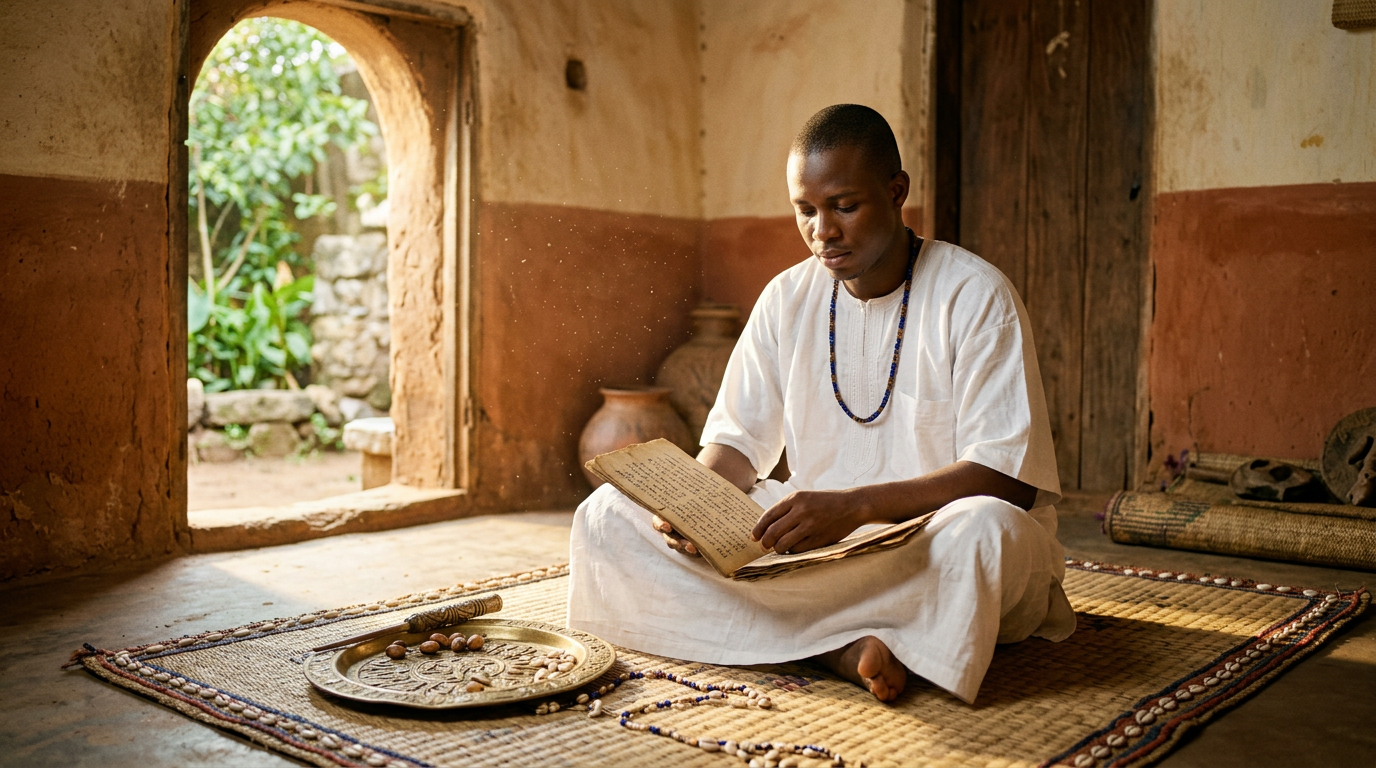
Itefa confers status. It does not confer competence. The ceremony is a beginning.
Responsibilities and Ongoing Study
A person who studies Ifá before initiation is Omo Awo. After Itefa, that same person is Babaláwo. What changed is not how much they know. What changed is where they may stand and what they may touch.
Study does not stop at the door of initiation. An Omo Awo may sit with the Odù for years and carry a great deal. A Babaláwo fresh from Itefa may still have most of the corpus ahead of them. Initiation opens rooms that were closed. It does not fill them.
There is no fixed term on either side of that door. Your Oluawo sets the pace, and lineages differ. Be careful with anyone who quotes you a number.
The role of the Babaláwo in Yorùbá tradition encompasses performing divination, administering ẹbọ, and transmitting the oral tradition — responsibilities that place Babaláwo at the center of community spiritual and social welfare. These are not ceremonial duties performed occasionally. They are a vocation.
For women, the title is Ìyánífá. Ìyánífá undergo the same foundational initiatory rite, though access to the full form of Itefa for women varies by lineage — some Yorùbá lineages restrict it, others permit it without restriction. A prospective female initiate should understand her elders' position clearly before proceeding, and the debate across lineages should not be glossed over.
Maintaining Your Relationship with Ifá
The Odù you received during Itefa will remain the primary framework through which Ifá speaks to you. Regular divination — both for yourself and, in time, for others — is how that relationship stays alive. Neglecting the practice is not neutral. The connection weakens, and that has real consequences for your Orí.
Your elders do not fall away once you are initiated. Study under an Oluawo is a real relationship with real obligations, and what you receive there matters as much as any ceremony. Show up, and keep showing up.
Choosing the Right Ifá Elder and Lineage
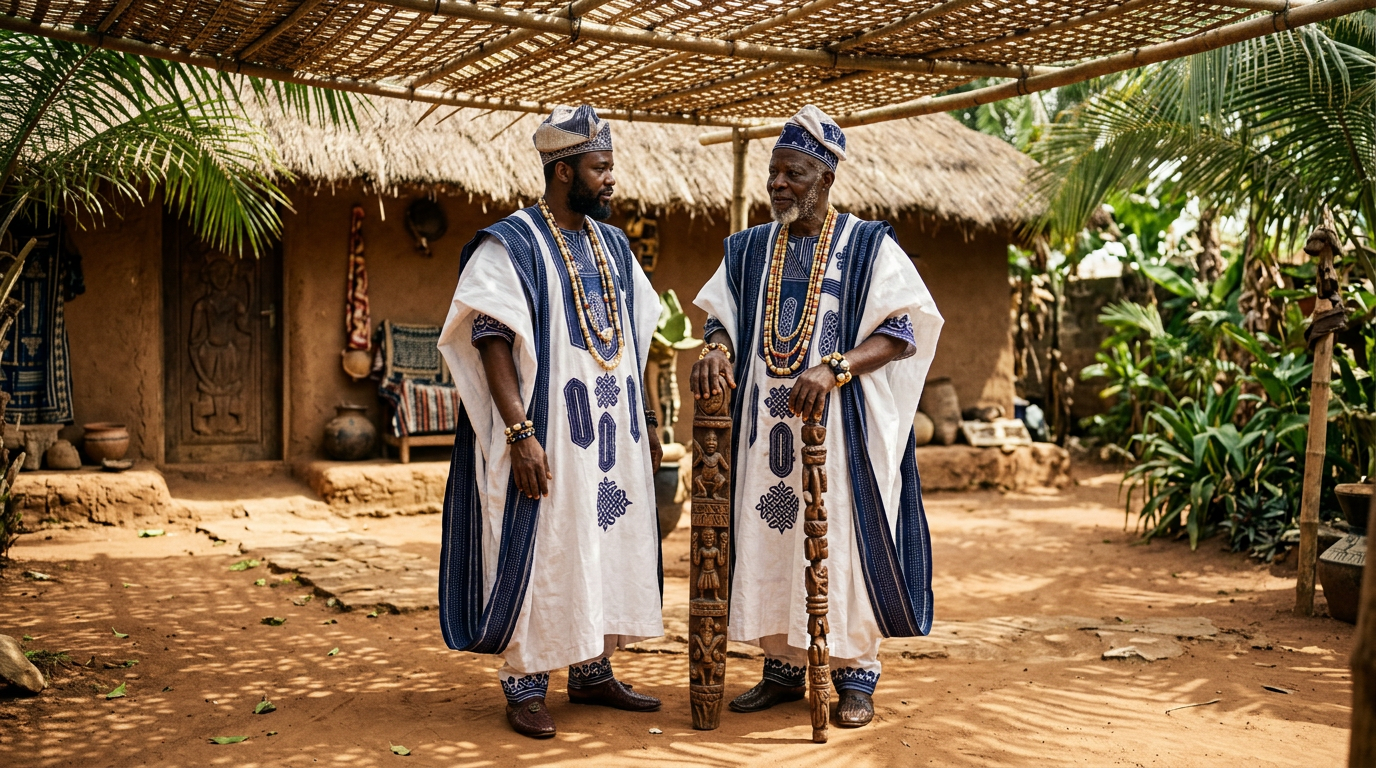
This may be the most consequential decision in your entire initiation process — more consequential, even, than timing or logistics.
A reputable elder's credentials are verifiable within the Awo community. Their lineage can be traced. Other initiates speak to their character and competence without reservation. If you ask an elder about their training and the answer is vague, or if their title cannot be corroborated by elders senior to them, treat that as important information.
Watch for these: initiation offered remotely or without physical community presence; pressure-based fee structures where urgency is manufactured; and claimed titles that cannot be confirmed by any verifiable lineage. None of these are indicators of a single "bad actor" — they are structural red flags that apply regardless of how sincere the individual may seem.
Finding a reputable Ifá elder or community takes time. That time is well spent. An initiation performed by an unqualified elder, or outside a recognized lineage structure, cannot give you what Itefa is meant to give — and some elders will tell you it must be redone properly. Ask hard questions before you commit. The tradition expects discernment from you.
Lineage integrity also shapes what you receive. Different lineages observe different protocols, different taboos, and different ceremonial forms. Knowing which lineage you are entering — and understanding what that lineage requires of you — is part of informed consent. Ask your Ifá and Yorùbá spiritual terms questions, study the lineage's history, and enter with your eyes open.
Where to Go from Here
Itefa is a doorway. What it opens is a lifetime of study, service, and relationship with Ifá — not a credential to acquire and set aside. The path to priesthood is long by design, and the tradition's insistence on preparation, community vetting, and apprenticeship reflects hard-won wisdom about what sustainable spiritual authority actually requires.
If you are discerning whether Itefa is right for you, the answer lives in divination and in honest conversation with qualified elders — not in any article, including this one. Use what you've read here as orientation, then bring your questions to your community. That is exactly how the tradition is meant to work.