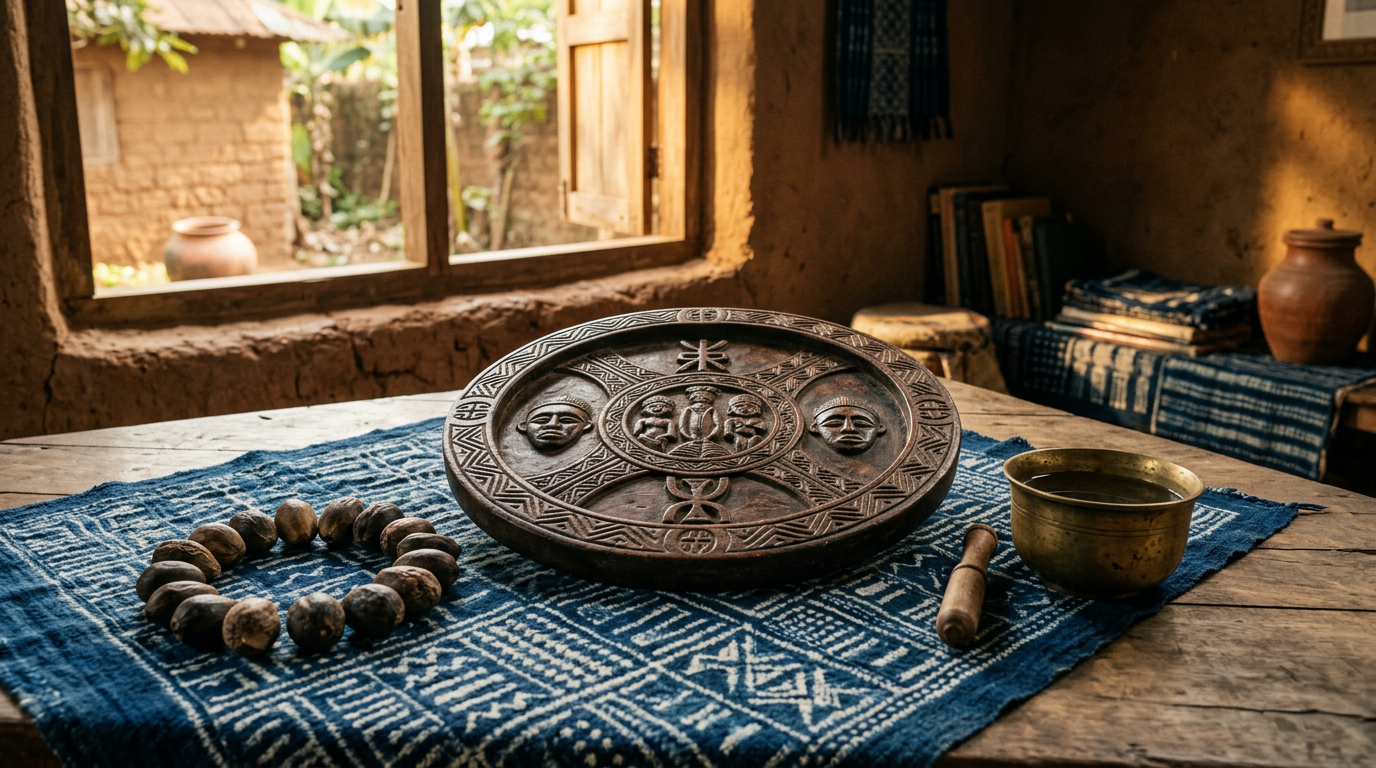
Òrìṣà Worship in Yoruba Tradition: A Grounded Guide
Most people first encounter the Òrìṣà through diaspora traditions, a Netflix documentary, or the orisha-adjacent aesthetics of popular music. What rarely travels alongside those encounters is the actual theological structure underneath — why the Òrìṣà exist, how they are approached, who is qualified to approach them, and what the whole system is trying to accomplish. This guide works through those questions from the ground up, rooted in Yoruba Isese practice as it has been lived and transmitted in Yorubaland itself.
What Are the Òrìṣà in Yoruba Cosmology?
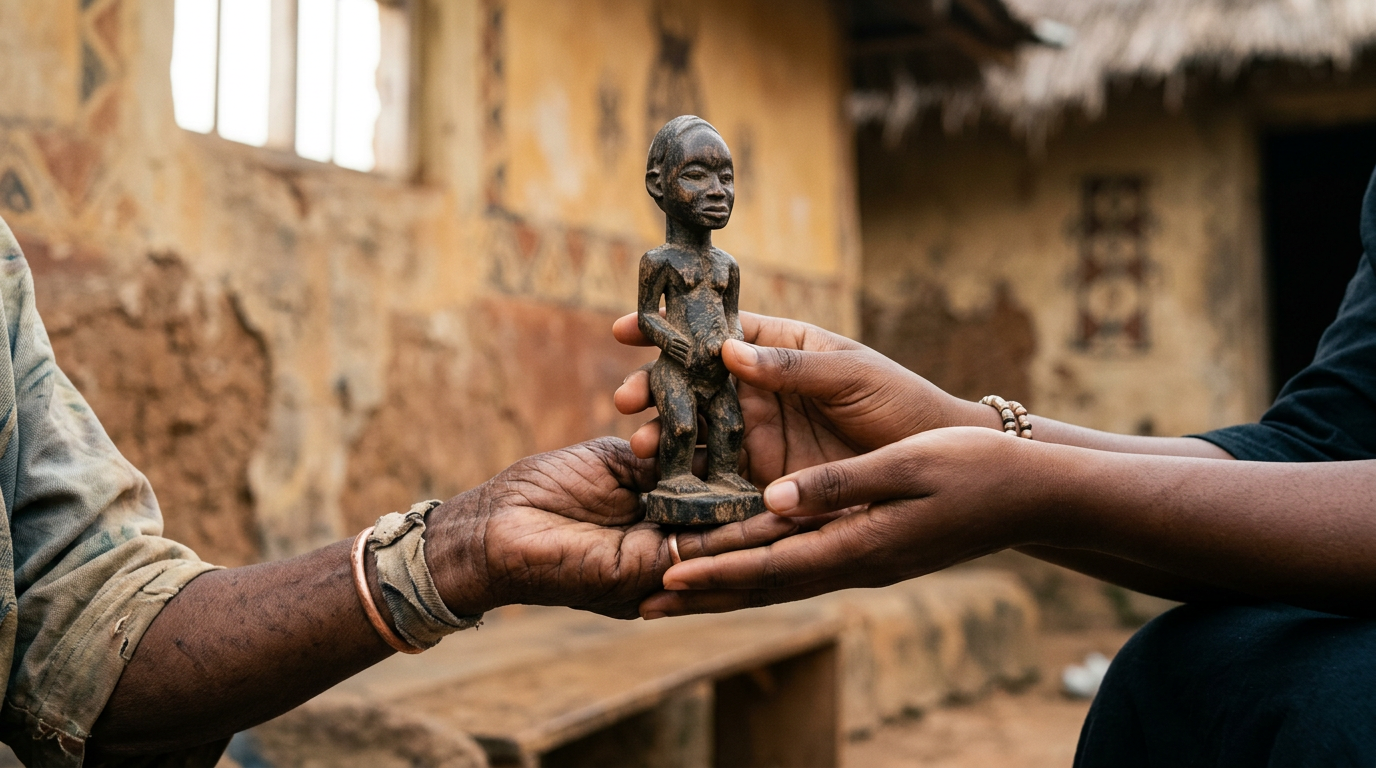
The Òrìṣà are divine emanations of Olódùmarè — the supreme being in Yoruba cosmology — who govern specific forces within creation and carry Àṣẹ, the dynamic spiritual authority that animates all things. They are not independent gods competing for territory. They are expressions of a single ultimate reality, differentiated so that human beings can relate to cosmic forces in personal, workable terms.
Òrìṣà as Emanations of Olódùmarè
Olódùmarè stands at the apex of Yoruba spiritual understanding as the ultimate source of all creation and the giver of Àṣẹ — the sacred energy that sustains every living thing, including the Òrìṣà themselves. The Òrìṣà carry that Àṣẹ into the world, each governing a particular domain: rivers, iron, thunder, fertility, wisdom. Yoruba tradition holds that there are 401 Òrìṣà — a sacred number that functions symbolically to mean "as many as you can conceive, plus one more." Some are primordial divinities, others are nature forces, others are ancestors so spiritually elevated that they joined the divine order. The count is not a census. It is a statement about the inexhaustibility of the sacred.
The Relationship Between Òrìṣà and Human Destiny
Here is the piece that tends to surprise newcomers: the most immediate and personal Òrìṣà for any human being is not Ṣàngó or Ọṣun or any of the great divinities. It is Orí.
Orí — literally meaning "head" — is understood in Yoruba philosophy as a person's spiritual consciousness, personal destiny, and innermost divine essence. Before an individual can benefit from the intercession of any Òrìṣà, their Orí must be aligned. This places spiritual agency squarely within the person rather than entirely in external forces. Yoruba cosmology is not predestinarian in the strict sense; destiny is chosen, negotiated, and can be supported or disrupted depending on how consciously one lives. That is the work the Òrìṣà help with — and why approaching them matters.
How Òrìṣà Worship Is Practiced in Yorubaland
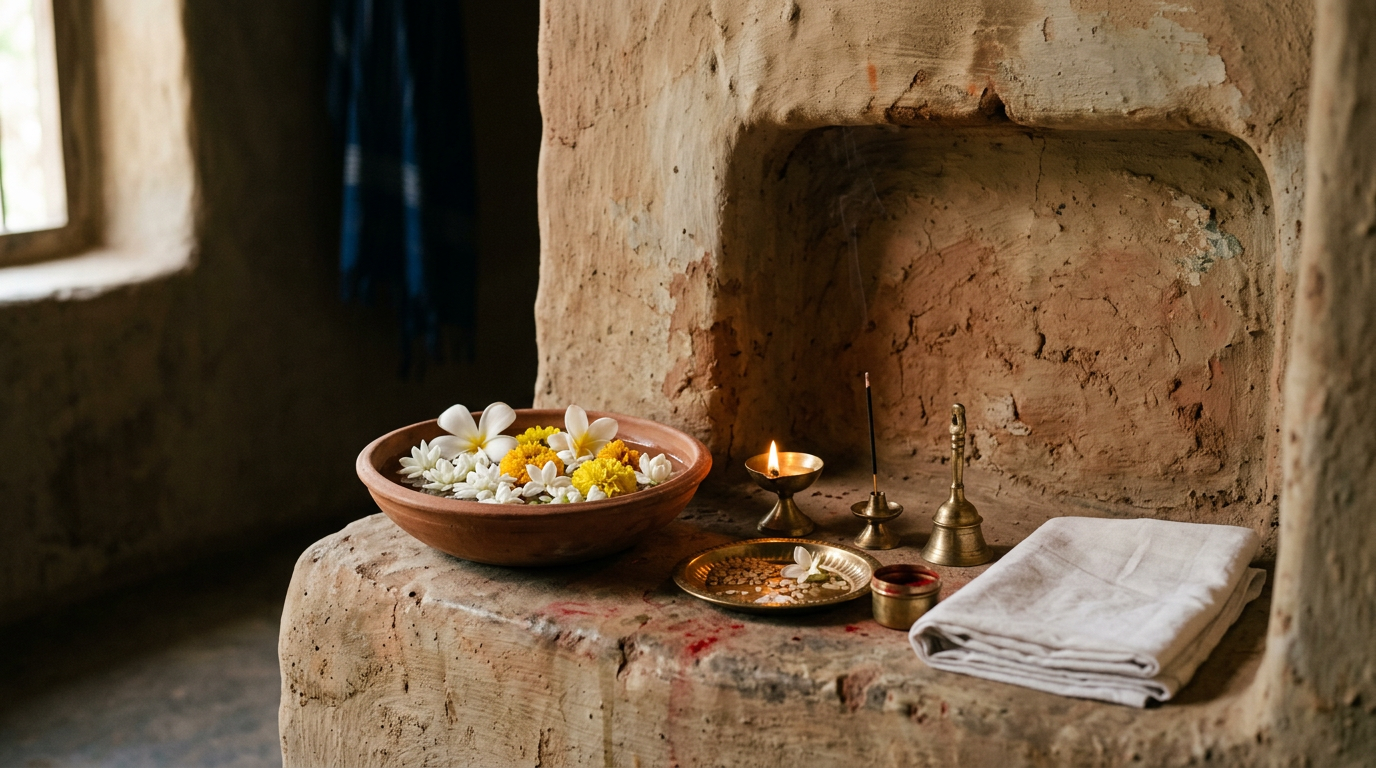
Òrìṣà worship is a daily, embodied practice woven into the texture of ordinary life. It is not reserved for festivals or crisis moments — though both of those have their place too.
Daily Devotion and Prayer
Most practice begins at home, in the morning, with prayer and acknowledgment of Olódùmarè, the Òrìṣà, and one's own Orí. The specifics depend on lineage and the particular Òrìṣà to whom a devotee is consecrated. Some devotees maintain household shrines where they greet their Òrìṣà with water, prayers, and small daily offerings. Others observe particular days of the week as sacred to their patron Òrìṣà. None of this is casual — the consistency and sincerity of daily practice is what maintains the relationship.
Offerings, Sacrifice, and Reciprocity
Ẹbọ — offering or sacrifice — is the central mechanism of reciprocity in Yoruba practice. The concept describes a continual exchange of energy between human beings, ancestors, and the divine. Ẹbọ is not a transaction in the commercial sense, as if one were purchasing a favor. It is participation in an ongoing relationship. Offerings range from cool water and certain foods to more elaborate preparations and, in specific ritual contexts prescribed by Ifá divination, animal sacrifice. That last element often attracts sensationalized attention from outside observers, but within the tradition it carries clear theological grounding: life given to sustain life, within a cosmos understood as fundamentally relational.
The Role of Sacred Spaces and Shrines
Shrines are not decorations. They are points of active contact — locations where the Àṣẹ of a particular Òrìṣà is concentrated and where communication between the human and divine is most immediate. A shrine dedicated to Ọṣun will typically be located near a body of flowing water, or will incorporate water, brass objects, and specific colors that correspond to her domain. Shrines for Ògún may be found at thresholds or near iron implements. The physical environment of a shrine reflects the theological reality of the Òrìṣà it houses. Keeping a shrine properly maintained is itself a form of ongoing prayer.
The Connection Between Ifá and Òrìṣà Veneration
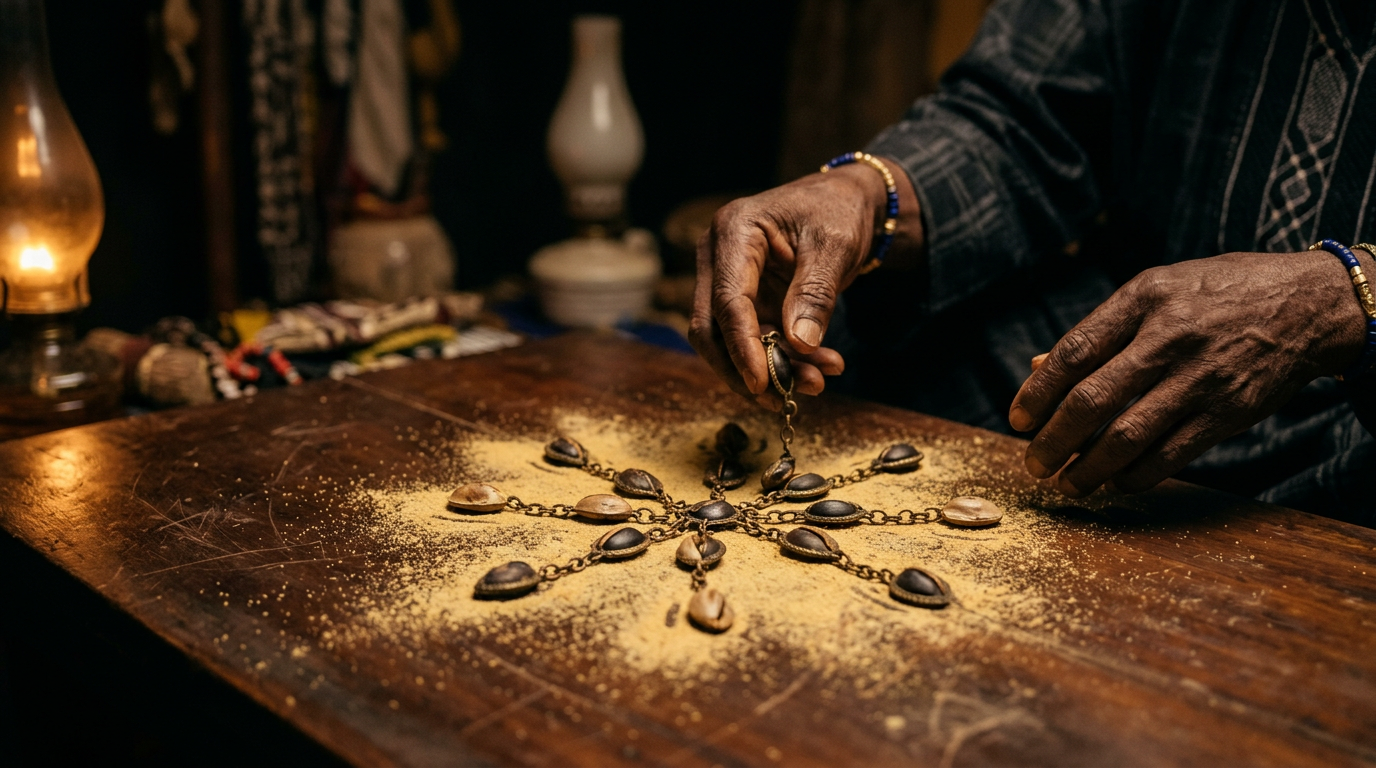
Ifá and Òrìṣà worship are sometimes discussed as if they were separate systems running in parallel. That framing misses the relationship. Ifá is the interpretive architecture through which Òrìṣà veneration is directed, calibrated, and made specific to a person's situation.
How Ifá Divination Guides Òrìṣà Worship
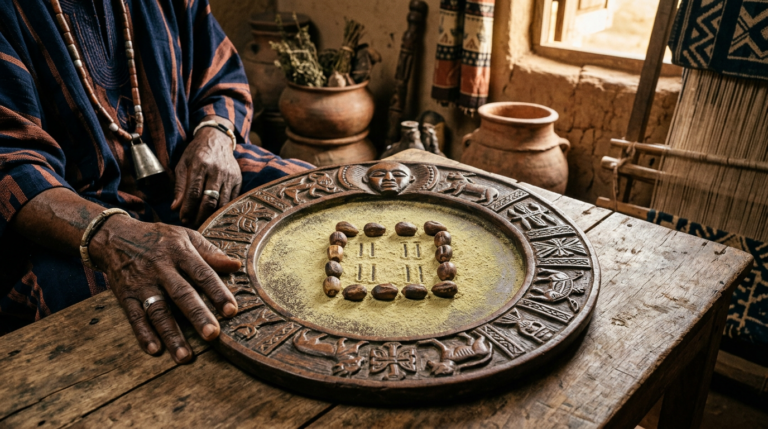
Ifá divination guides all major decisions in Òrìṣà worship by identifying which Odù governs a situation, prescribing the appropriate Ẹbọ, and directing which Òrìṣà requires propitiation. If someone is facing illness, business failure, or a difficult crossroads in life, the consultation with a trained Babaláwo or Ìyánífá does not begin with a guess about which Òrìṣà to approach. The divination process reveals the answer. This precision is what distinguishes authentic Ifá-guided practice from generalized spirituality.
Odù Ifá as a Source of Spiritual Knowledge
The literary corpus of Ifá is called Odù and consists of 256 parts, each subdivided into poetic verses called Ẹsẹ̀. According to UNESCO's Intangible Cultural Heritage documentation, there are approximately 800 Ẹsẹ̀ per Odù, though the exact total remains unknown because the corpus continues to grow. This is a living tradition, not a fixed scripture. New Ẹsẹ̀ accumulate as Babaláwos encounter new situations, preserving the tradition's capacity to address contemporary life without abandoning its roots. In November 2005, UNESCO proclaimed the Ifá divination system one of humanity's Masterpieces of the Oral and Intangible Heritage of Humanity — a recognition of its depth, structure, and global significance. For a deeper look at how this system works, see our introduction to Ifá divination and understanding Odù Ifá.
Key Òrìṣà and Their Domains
Ọbàtálá, Ṣàngó, Ọṣun, and Ògún
Four Òrìṣà appear in almost every account of the tradition, and for good reason — their domains address forces that every human community must contend with. Widely recognized associations, across lineages and regions, describe them this way:
Ọbàtálá governs purity, wisdom, and the creation of human form. Ọbàtálá is associated with white cloth, cool temperament, and the patient work of formation. Devotees often find Ọbàtálá's energy most present in matters of clarity, spiritual discipline, and healing of the mind.
Ṣàngó holds dominion over thunder, justice, and kingship. Ṣàngó's energy is immediate and powerful — the crash of thunder that levels without warning, the king's judgment that cuts through ambiguity. He was historically also a deified king of the Oyo Empire, which means his worship carries both cosmic and ancestral dimensions.
Ọṣun is the Òrìṣà of rivers, love, fertility, and feminine power. Her shrine is the river itself. Ọṣun's domain encompasses the sweetness of life — abundance, beauty, the love that sustains community — alongside the fierce protectiveness of a mother who will not be dismissed.
Ògún rules iron, labor, and protection. Every tool, every path cut through the forest, every surgery, every road — all fall under Ògún's domain. Ògún is the first to open the way, which is why practitioners invoke him before crossing thresholds or beginning difficult work.
Why Each Òrìṣà Matters to the Community
These four represent a principle, not a limit. The Yoruba tradition holds that different Òrìṣà govern different forces in the world, and different people carry different spiritual signatures that align them more closely to particular divinities. A community that honors all the Òrìṣà is a community that addresses the full range of human experience — creativity and destruction, tenderness and power, clarity and mystery. No single Òrìṣà covers everything, and that incompleteness is by design. The tradition builds relationship and interdependence into its very structure.
The Role of Priests, Priestesses, and Elders
Babaláwo, Ìyánífá, and Òrìṣà Priests
Authentic Òrìṣà worship is not a solitary reading project. The tradition is held and transmitted through recognized lineage holders, and approaching it responsibly means understanding who those people are.
A Babaláwo — literally "father of secrets" — is a fully initiated male Ifá priest who has mastered the Odù Ifá through years of apprenticeship under a senior diviner. The status cannot be inherited or purchased. Ìyánífá are female Ifá initiates, and while their role varies across regional lineages (some traditions have specific restrictions on women's access to certain aspects of Ifá, and this remains a live conversation within the tradition), they serve as authoritative specialists in their lineages. Separate from these are Olorisa priests — men and women consecrated to a specific Òrìṣà rather than to Ifá itself. Their training, protocols, and responsibilities differ from those of Babaláwo and Ìyánífá but are no less demanding or serious.
The role of the Babaláwo in Yoruba tradition is worth understanding on its own terms — these are not generic spiritual advisors but specialists whose knowledge is vast, lineage-specific, and earned over years of structured apprenticeship.
Initiation and Spiritual Responsibility
Initiation in Ifá and Òrìṣà traditions is not a graduation ceremony. It is a transformation — a formal restructuring of one's spiritual identity and obligations. An initiated person takes on responsibility not just for their own practice but for the integrity of the tradition they have entered. They answer to their lineage elders, to the Òrìṣà they serve, and to the community they are now equipped to guide. Initiation in Ifá and Òrìṣà traditions is a serious threshold, and the tradition treats it accordingly.
Common Misconceptions About Òrìṣà Worship
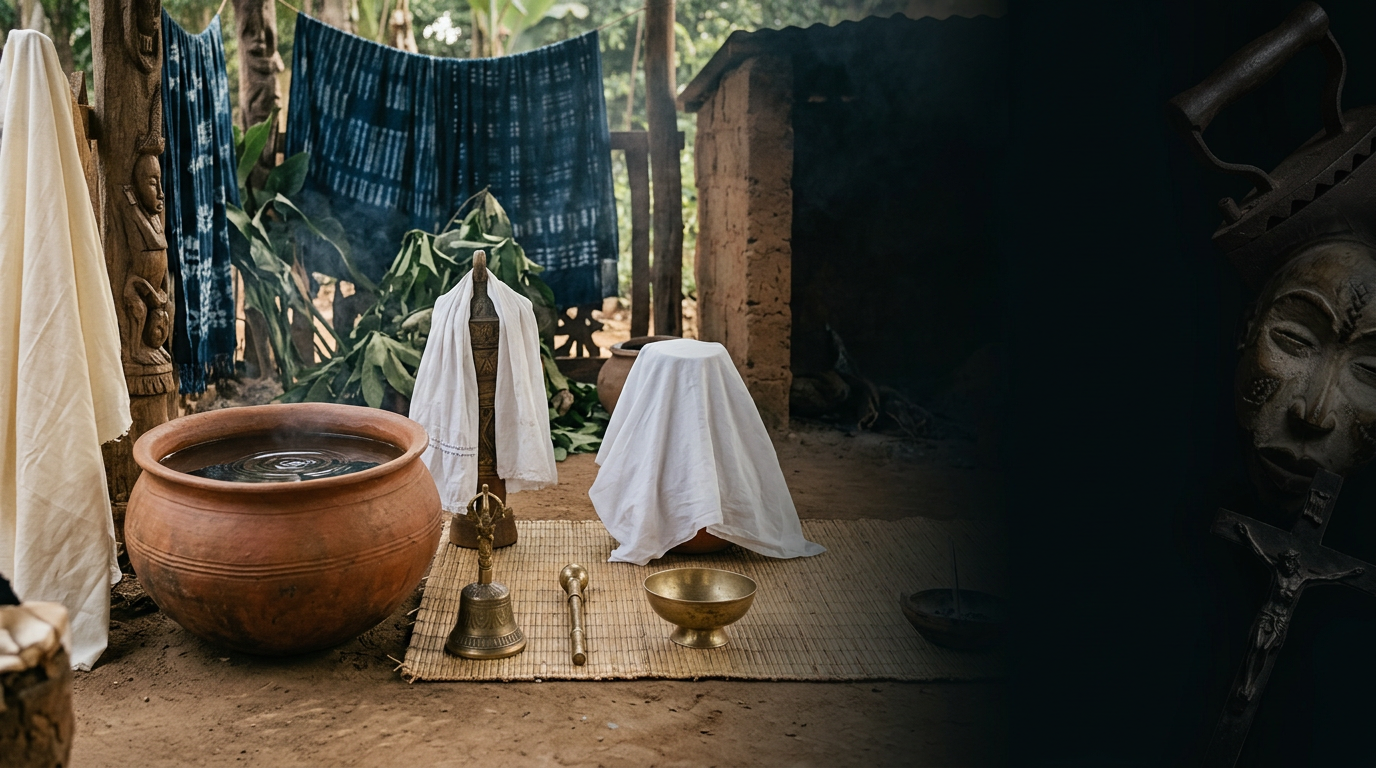
The most persistent misconceptions about Òrìṣà worship did not arise spontaneously. Colonial-era Christian missionary activity — and the administrative machinery that supported it across West Africa — systematically reframed Yoruba spiritual practice as devil worship, sorcery, or black magic. Scholars and cultural analysts widely note that these distortions have no basis in authentic Yoruba theology; they served colonial interests by delegitimizing indigenous religious authority. The damage has proven durable: these misrepresentations persist in media portrayals and in the assumptions many people bring to their first encounter with the tradition.
A few specific corrections are worth stating plainly. Òrìṣà worship is not polytheism in the sense of competing deities with independent power — all Òrìṣà derive their authority from Olódùmarè and operate within a unified cosmological order. Ẹbọ, including animal sacrifice, is a theologically coherent practice of reciprocity, not a violent ritual without meaning. And the diaspora traditions — Candomblé in Brazil, Lucumí/Santería in Cuba and the United States, and related forms — share Yoruba roots but are distinct from mainland Yoruba Isese practice. They developed under different historical pressures and evolved their own structures. Conflating them with each other, or with Vodou (which has its own distinct origins), flattens real differences that matter to practitioners of each tradition.
Finally, Òrìṣà worship is not a folk tradition awaiting validation from Western institutional recognition. The UNESCO proclamation of the Ifá divination system in 2005 matters. But the tradition's legitimacy does not depend on it.
Why Òrìṣà Worship Remains Relevant Today
Yoruba Isese practice — the tradition as maintained on the continent — is not a relic. Nigeria holds a central position in global Orisa worship: the tradition originated there, and the National Institute for Cultural Orientation, a Nigerian government cultural body, recognizes Nigeria as the historical, cultural, and spiritual hub of Orisa practice worldwide. That hub is active. Communities across Yorubaland continue to initiate priests, consult Babaláwos, maintain shrines, celebrate festivals, and transmit the Odù Ifá orally from elders to apprentices.
Beyond the African continent, the tradition's reach is genuinely global — carried first by the violence of the transatlantic slave trade into the Americas, and more recently by voluntary migration and deliberate cultural transmission. People from many backgrounds now approach the Òrìṣà with sincere interest, which makes accurate information more important than ever.
What makes the tradition durable is not sentiment but architecture. Àṣẹ flows from Olódùmarè through the Òrìṣà into all living things, and the practices of worship — prayer, Ẹbọ, divination, initiation, community — exist to keep that flow conscious and reciprocal. Any tradition built on relationship rather than prescription has a structural capacity for renewal. Òrìṣà worship has been renewing itself for a very long time.
Where to Go From Here
Approaching Òrìṣà worship seriously means engaging with it on its own terms — through its lineage holders, its oral literature, and its living practitioners — rather than through secondary summaries alone, including this one. If you are new to Yoruba spirituality, begin with the relationships: find a reputable community, locate a Babaláwo or Ìyánífá for consultation, and let Ifá divination give you direction that is specific to your own Orí and circumstances. Reading is orientation, not initiation. The tradition rewards direct engagement far more than it rewards study from a distance.