Yoruba Religion and the Òrìṣà Pantheon: A Grounded Introduction
Most people first encounter terms like Ọ̀ṣun, Ṣàngó, or Ifá through music, pop culture, or a friend who mentioned them in passing. What those encounters rarely provide is the cosmological context that makes sense of them. This article offers that foundation: an honest, tradition-grounded overview of Yoruba religion, the Òrìṣà, and the spiritual framework that connects them — written for people who want to understand, not just sample.
Related reading: our overview of Ifá religion as an African spiritual tradition provides broader context for the pantheon this article explores.
This guide focuses on the Òrìṣà pantheon as one entry point. Readers wanting the wider frame — what Yoruba religion is, how Ifá fits, why these practices have survived — can start with the complete beginner’s guide to Yoruba religion and spirituality before circling back here for the Òrìṣà-specific details.
What Is Yoruba Religion?
Yoruba religion is one of the world's most ancient and far-reaching spiritual traditions, not a regional curiosity or a relic of the pre-colonial past.
Origins and Historical Roots
Known in Yoruba as Ìṣẹ̀ṣẹ — a word drawn from ìṣẹ̀ (source, root origin) and ìṣe (practice, tradition), meaning roughly "the tradition of antiquity" — Yoruba religion is widely recognized as the largest indigenous African religion, with several million adherents across the globe. Its geographic and spiritual heart is Ile-Ife, founded around 500 B.C. in what is now southwestern Nigeria. Within Yoruba cosmology, Ile-Ife is not simply an ancient city; it is the precise location where the earth itself was created.
This is not mythology in the dismissive Western sense of the word. Yoruba religious knowledge is carried within Ìtàn — the total complex of songs, histories, narratives, and cultural concepts that constitute Yoruba civilization. Ìtàn functions as a living knowledge system, transmitting philosophy, ethics, and cosmology across generations through oral tradition. It is active, not archival.
Core Spiritual Principles
The ethical core of Yoruba practice is Iwa Pẹlẹ: good and gentle character. Before ritual knowledge, before initiation, before anything else, devotees are called to cultivate Iwa Pẹlẹ — the quality of character that aligns a person with their highest spiritual potential. This emphasis distinguishes Yoruba religion from portrayals that reduce it to ceremony and spectacle. The tradition's deepest concern is who you are, not only what you do.
Olódùmarè, Orí, and the Structure of Yoruba Cosmology
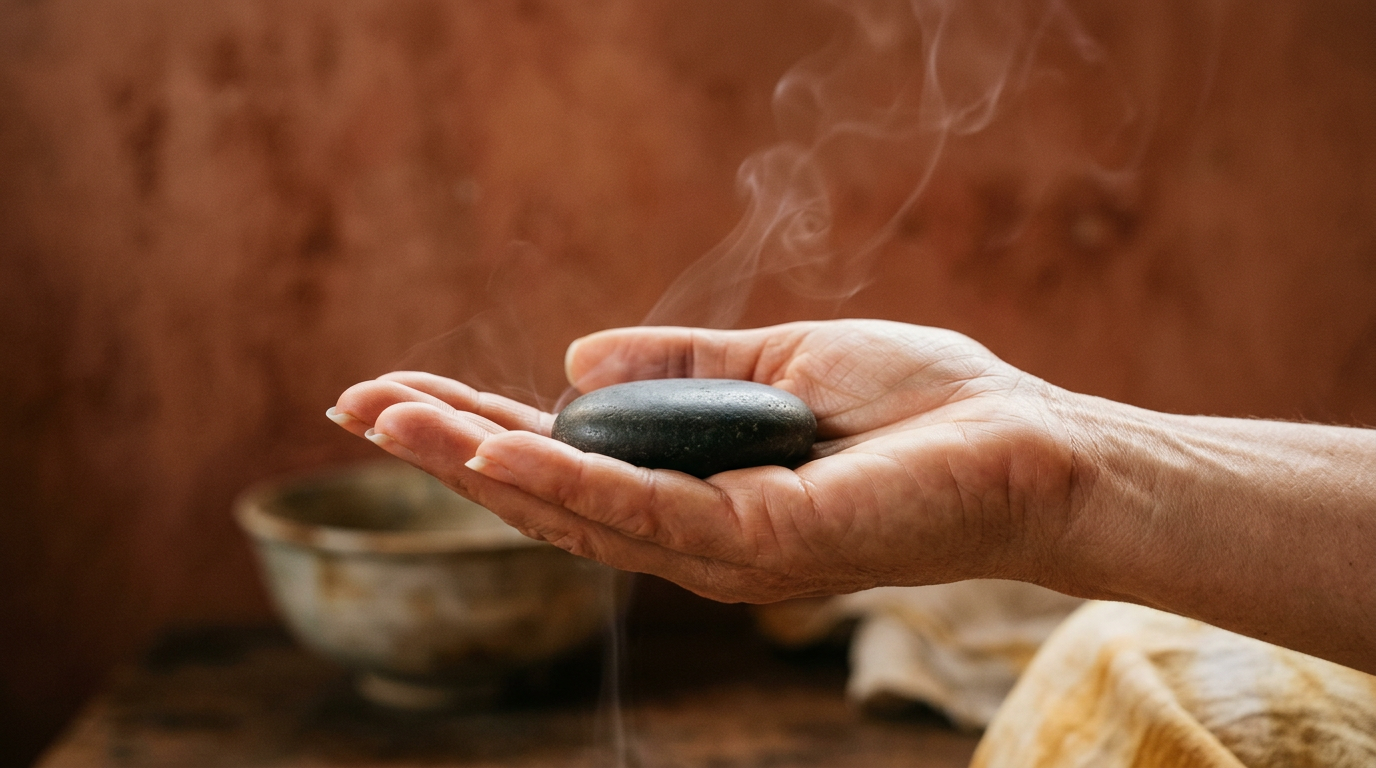
Yoruba cosmology is structured, coherent, and far more nuanced than the label "polytheism" suggests.
The Supreme Creator: Olódùmarè
Olódùmarè — also called Ọlọ́run, "owner of heaven" — is the Supreme Being: the creator of the universe, the source from whom all things emanate. The name Olódùmarè is interpreted as "the owner of the source of creation that does not become empty." Olódùmarè brought into existence both Ọ̀run (the spiritual realm) and Ayé (the physical world), and is understood as transcendent — present in all things but not directly approached through human ritual. Prayers and offerings move through intermediaries, not directly to the Supreme source.
Orí: The Inner Divine Self
Widely cited accounts within the tradition describe Orí — literally "head" in Yoruba — as each person's inner divine consciousness and their most intimate connection to Olódùmarè. Before a soul journeys from Ọ̀run into Ayé, it selects its Orí, choosing the destiny it will carry into physical life. Orí is therefore understood as each person's personal Òrìṣà, the spiritual self that shapes character, purpose, and ultimate alignment with divine will. When Yoruba practitioners say "know yourself," they mean this in a precise cosmological sense.
The Relationship Between Heaven and Earth
Ọ̀run and Ayé are not opposites. They are two aspects of a continuous reality, with the Òrìṣà functioning as the living connective tissue between them. Aṣẹ — the divine life-force and energy that runs through all things — is the medium of that connection. Originating from Olódùmarè, Aṣẹ is the power that makes things happen, the energy regulating all movement and activity in the universe. Every ritual, prayer, and offering is, in this sense, an act of working consciously with Aṣẹ.
Who Are the Òrìṣà?

The Òrìṣà are not gods in the Greco-Roman sense, and the word "pantheon" itself — borrowed from classical Western tradition — carries connotations that don't quite fit. Use it as a rough orientation, not a definition.
Defining the Òrìṣà
The Òrìṣà are divine intermediaries: spiritual beings who embody specific cosmic forces, natural phenomena, and aspects of human experience, and who serve as the channels through which devotees access and work with Aṣẹ. Yoruba tradition holds that there are 401 Òrìṣà — a sacred number that functions symbolically to mean "as many as you can conceive, plus one more." They include primordial divinities who participated in creation, ancestors elevated to divine status, and personified natural forces. The number is not a census. It is a statement about infinity.
How the Òrìṣà Relate to Natural Forces and Human Experience
Each Òrìṣà governs specific domains: rivers, iron, thunder, medicine, wisdom, the crossroads. These aren't arbitrary assignments. They reflect Yoruba understanding that the natural world is spiritually alive — that rivers carry feminine divine force, that iron contains warrior energy, that the liminal space of the crossroads holds transformative power. Devotion to a particular Òrìṣà is not idol worship; it is cultivating a relationship with a specific expression of divine Aṣẹ that resonates with your own nature and Orí.
Key Òrìṣà and Their Sacred Roles
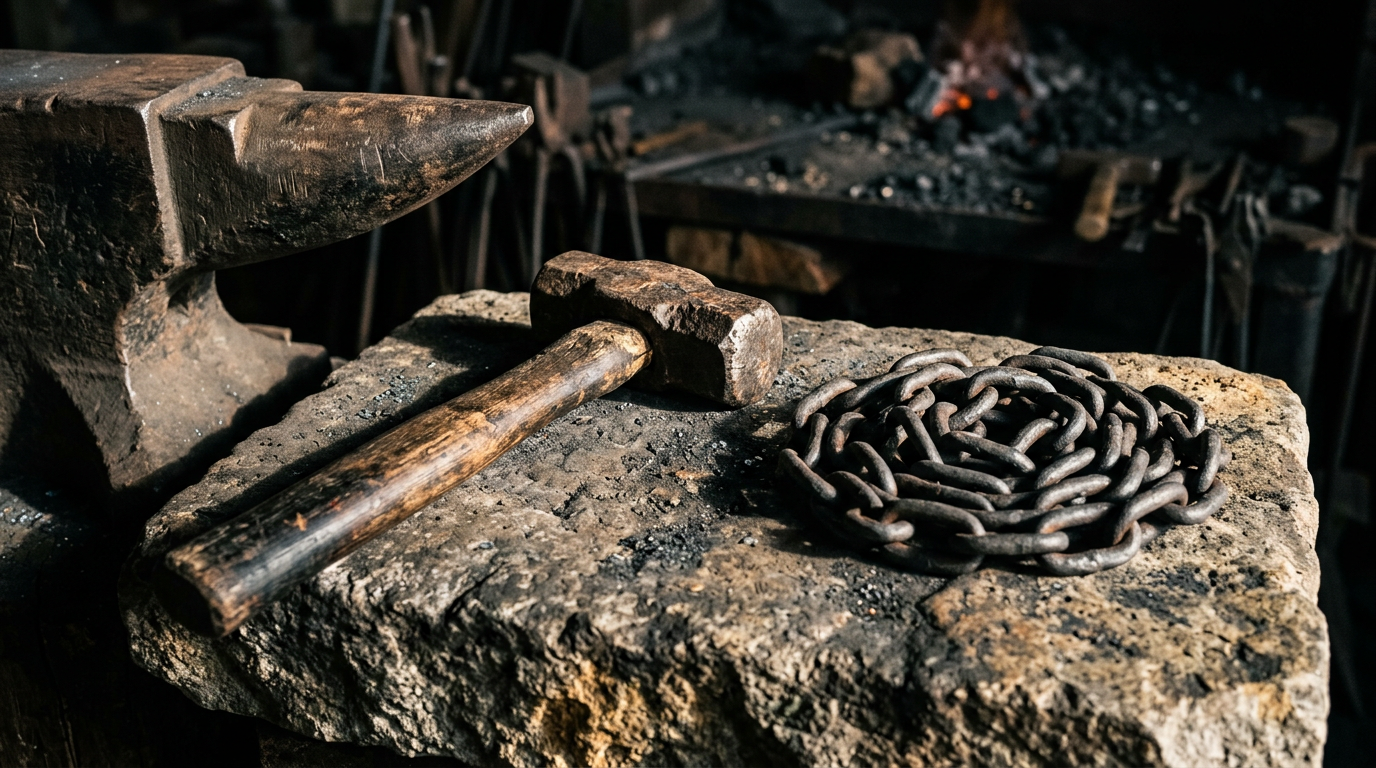
A survey of several prominent Òrìṣà gives a sense of the tradition's range without flattening its complexity.
Èṣù-Ẹlégbára: The Divine Messenger
Èṣù-Ẹlégbára is the Òrìṣà of the crossroads, the divine messenger between Ọ̀run and Ayé, and the enforcer of Aṣẹ. In every ceremony and ritual, Èṣù is honored first — without Èṣù's blessing, no roads open, no communication with the Òrìṣà flows. Period.
One clarification matters enormously here: Èṣù is not the devil. That identification was imposed by colonial-era Christian missionaries who reinterpreted Yoruba spiritual figures through a European theological lens. Reliable sources, including Britannica's treatment of Èṣù, describe the Òrìṣà as protective and fundamentally benevolent. Èṣù enforces divine law; he is not an adversary of it. Conflating him with Satan remains one of the most persistent and damaging colonial distortions of Yoruba religion, and anyone serious about the tradition learns to name and reject it. For a deeper look, understanding Èṣù-Ẹlégbára in Yoruba tradition covers this more thoroughly.
Ọ̀rúnmìlà and the Ifá Oracle
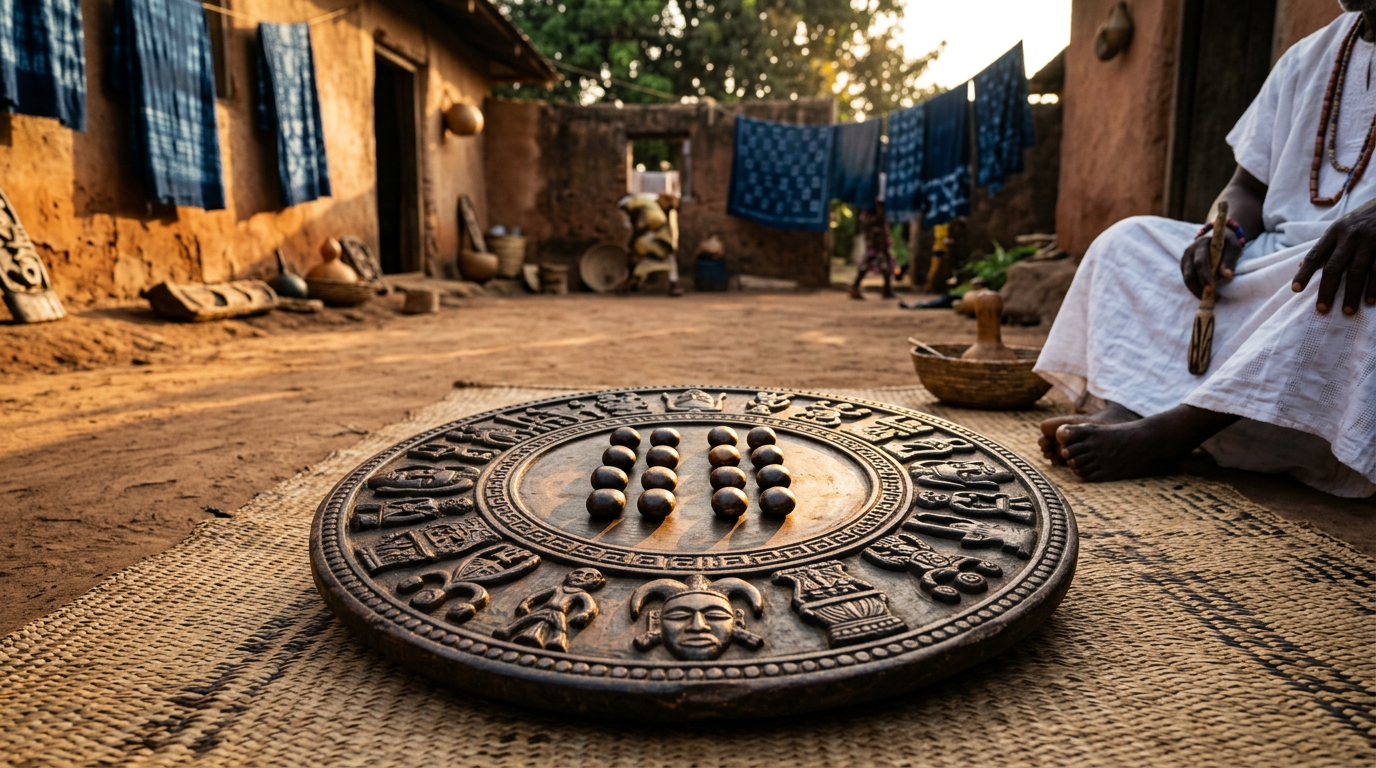
Ọ̀rúnmìlà is the Òrìṣà of wisdom, knowledge, and divination. Believed to have been present at the creation of the universe — witness to every soul's chosen destiny — Ọ̀rúnmìlà is the originator of the Ifá divination system. In 2005, UNESCO inscribed the Ifá divination system on its Representative List of the Intangible Cultural Heritage of Humanity, an acknowledgment of its extraordinary philosophical and literary depth. The Ifá corpus consists of 256 Odù, each subdivided into hundreds of poetic verses called ese — an oral library of staggering scope. For those new to the system, introduction to Ifá divination is a useful next step.
Ọ̀ṣun, Ṣàngó, Ògún, and Other Prominent Òrìṣà
Ọ̀ṣun governs love, fertility, beauty, divination, and fresh water. She is associated with the Ọ̀ṣun River in southwestern Nigeria, a living sacred site where her presence is actively honored. Her energy is often described as generous and fierce in equal measure — sweetness with spine.
Ṣàngó is the Òrìṣà of thunder and lightning, associated with justice, royal power, and the transformative force of electricity in the world. He is one of the most widely venerated Òrìṣà across both West Africa and the diaspora.
Ògún is the Òrìṣà of iron, labor, warfare, and the clearing of paths. Every person who works with metal, drives a vehicle, or relies on sharp tools is understood to be in relationship with Ògún's domain. His energy is raw, direct, and indispensable.
These three, alongside Ọ̀rúnmìlà and Èṣù, constitute the Òrìṣà most commonly encountered by those beginning to study the tradition. But recognizing them as individuals is just a first step — the tradition's depth lies in understanding how each one's domain intersects with your own Orí and life circumstances.
Worship, Devotion, and Ritual Practice
Yoruba religion is not a belief system you hold privately. It is a practice you live communally.
Offerings, Prayer, and Ceremony
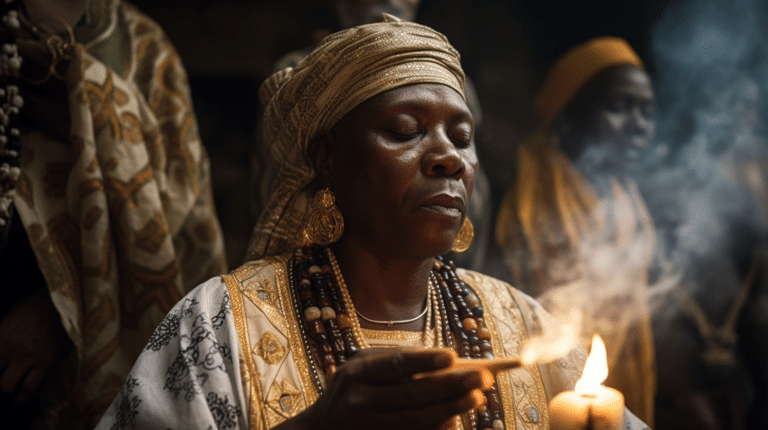
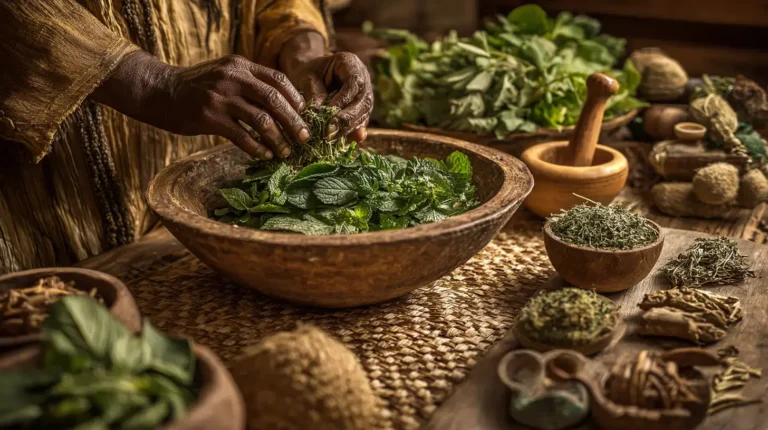
Devotional practice centers on building and maintaining reciprocal relationships with the Òrìṣà. Offerings (ẹbọ) may include foods, herbs, candles, or other sacred items specific to each Òrìṣà. Prayers are offered in Yoruba, often through song, with invocations that draw on specific Odù verses. Ceremonies mark life transitions, seasonal cycles, and moments requiring spiritual intervention or gratitude. Each of these acts is understood as working consciously with Aṣẹ — not petitioning a distant being but engaging in active co-creation with divine energy.
The Role of Priests and Priestesses
A Babalawo — meaning "father of secrets" — is a priest of Ifá who has undergone rigorous training in oral mastery of hundreds of Odù Ifá verses, herbal medicine, ritual performance, and Yoruba spiritual philosophy. This knowledge is not learned from books alone; it is transmitted through apprenticeship under a qualified elder. Women initiated into the Ifá tradition hold the title Ìyánífá, meaning "mother of Ifá." Beyond the Ifá priesthood, each Òrìṣà has its own lineage of initiated priests and priestesses who maintain specific ritual protocols and community responsibilities. If you are looking for guidance, how to find a legitimate Ifá priest or Babalawo is a practical starting point.
Yoruba Religion in the Global Diaspora

The transatlantic slave trade forced millions of Yoruba people out of West Africa. Their religion traveled with them — not passively, but through active, determined cultural preservation under conditions of extreme violence and suppression.
From West Africa to the Americas
Yoruba religion is the foundation of several distinct New World traditions: Santería (also called Lucumí) in Cuba, Candomblé in Brazil, Trinidad Orisha, and Umbanda. These are not diluted imitations of an "authentic original." They are related but distinct expressions of Yoruba spiritual heritage, each shaped by specific historical conditions, geographic environments, and cultural encounters. Candomblé practitioners in Salvador did not corrupt the tradition; they kept it alive under circumstances that made direct transmission nearly impossible. That is a different thing entirely.
Preserving Tradition in a Modern World
The same UNESCO inscription that honored the Ifá divination system in 2005 also documented a serious concern: the tradition faces mounting pressure from colonial-era religious discrimination, ongoing intolerance, and declining engagement among younger generations. Preservation is not automatic. It requires active transmission — elders teaching, communities gathering, initiations performed, Odù recited. In West Africa and across the diaspora, practitioners and institutions are working to ensure that Ìtàn continues to live. Yoruba ancestral veneration and Egúngún represents another dimension of this living practice worth exploring.
Approaching Yoruba Religion with Respect and Authenticity
Interest in Yoruba religion has grown considerably outside traditional communities — and that growth brings both possibility and risk.
Authentic engagement with this tradition comes through legitimate lineage, proper initiation, and sustained study under qualified elders. It does not come through self-initiation, spiritual tourism, or assembling a practice from books and social media alone. The Ifá corpus itself teaches that knowledge without proper grounding is incomplete at best, harmful at worst. This is not gatekeeping — it is the tradition's own instruction on how to receive what it offers.
Cultural humility is not optional here. If you are coming from outside the tradition, your first task is to listen. Seek out recognized lineage holders. Ask questions before performing rituals. Understand that the Òrìṣà are not symbols to collect or aesthetic resources to borrow — they are living forces with protocols, histories, and communities to whom they belong.
For those with sincere interest, the path is open. It simply requires entering it the right way.
Where to Go From Here
Yoruba religion — Ìṣẹ̀ṣẹ — is a coherent, living spiritual system with roots in one of humanity's oldest civilizations. Its cosmology is structured around the supremacy of Olódùmarè, the primacy of Orí, and the intermediary role of 401 Òrìṣà who embody the full spectrum of cosmic and human experience. Its ethics center on Iwa Pẹlẹ. Its knowledge lives in Ìtàn and in the Odù Ifá corpus. And it is practiced today, actively and seriously, by millions of people across West Africa and the global diaspora.
The best next step is specificity. Pick one thread — the role of Odù in Ifá practice, the story of a particular Òrìṣà, the history of a diaspora tradition you feel drawn to — and follow it with care. The tradition rewards depth. It does not reward speed.