Orí in Yoruba Spirituality: The Inner Head, Destiny, and Alignment
Most spiritual traditions offer you a deity to petition. Yoruba tradition offers you something more immediate: the recognition that you arrived here carrying your own divine presence, already shaped before your first breath. That presence is your Orí — and understanding it may be the most consequential thing you do in this tradition.
What Is Orí? Understanding the Yoruba Inner Head
Orí is simultaneously the most personal and the most cosmic concept in Yoruba thought. The word literally means "head," but the term carries a layered meaning that no single English equivalent can hold: it is your physical head, your spiritual consciousness, and your personal deity — all at once.
The Physical and Metaphysical Dimensions of Orí
Yoruba philosophy draws a sharp distinction between two aspects of Orí. Orí Òde — the "outer head" — encompasses the visible, physical skull along with the temperament, character patterns, and behaviors that others observe in you. Orí Inú — the "inner head" — is the metaphysical seat of consciousness, destiny, and divine intuition that animates Orí Òde from within.
These two dimensions are not opposites. Yoruba thought does not slice body and spirit into warring categories the way much Western philosophy does. Orí Òde and Orí Inú are hierarchically related but ontologically continuous — the physical head is the outer expression of a spiritual reality that precedes it. When your outer behavior reflects your inner calling, Orí is aligned. When they diverge, something has gone wrong.
Orí Inú: The Inner Head as Seat of Consciousness
In philosophical discourse within the tradition, when scholars or elders speak of "Orí," they almost always mean Orí Inú. The inner head is the repository of àṣẹ (divine power and authority), the locus where Odù Ifá is received during divination, and the dwelling place of an individual's most essential self. It does not change with circumstance the way moods do. Think of Orí Inú as the deep channel beneath the surface current.
Prayer, praise, and ritual go toward Orí Inú. The physical head simply provides the altar.
Orí as a Personal Deity Before All Òrìṣà
Here is where Yoruba cosmology parts ways with nearly every other theological framework: your Orí is not merely a concept or a function. Orí is your primary personal deity — more immediately powerful in your daily life than Ọṣun, Ògún, Ṣàngó, or any other Òrìṣà you might serve. Tradition holds that no Òrìṣà blessing can take root in a person's life without the consent of that person's Orí. The Òrìṣà are mighty, but they work through your Orí, not around it.
This is not a minor point. It restructures everything about how you approach spiritual practice.
Orí and Destiny: Choosing One's Fate Before Birth

Orí does not just influence your destiny — according to Ifá cosmology, it is your destiny, chosen by you before you were born.
Àyànmọ́ and Àkúnlẹ̀yàn: Fate, Choice, and the Kneeling Selection
Two terms anchor this cosmological teaching. Àyànmọ́ refers to immutable fate — the portion of your destiny that is sealed and cannot be renegotiated. Àkúnlẹ̀yàn describes the act by which that destiny was chosen: the pre-birth moment when your soul knelt before Olódùmarè (the Supreme Being) in Ọ̀run (the spiritual realm) and selected the Orí it would carry into embodied life.
The tension between these two is philosophically productive. Àkúnlẹ̀yàn means you chose — you are not an accident, and your path is not random. Àyànmọ́ means some elements of that choice are now fixed and must be lived through, not escaped. Neither fatalism nor pure voluntarism. The tradition holds both.
The Journey Through Ọ̀run to Ayé
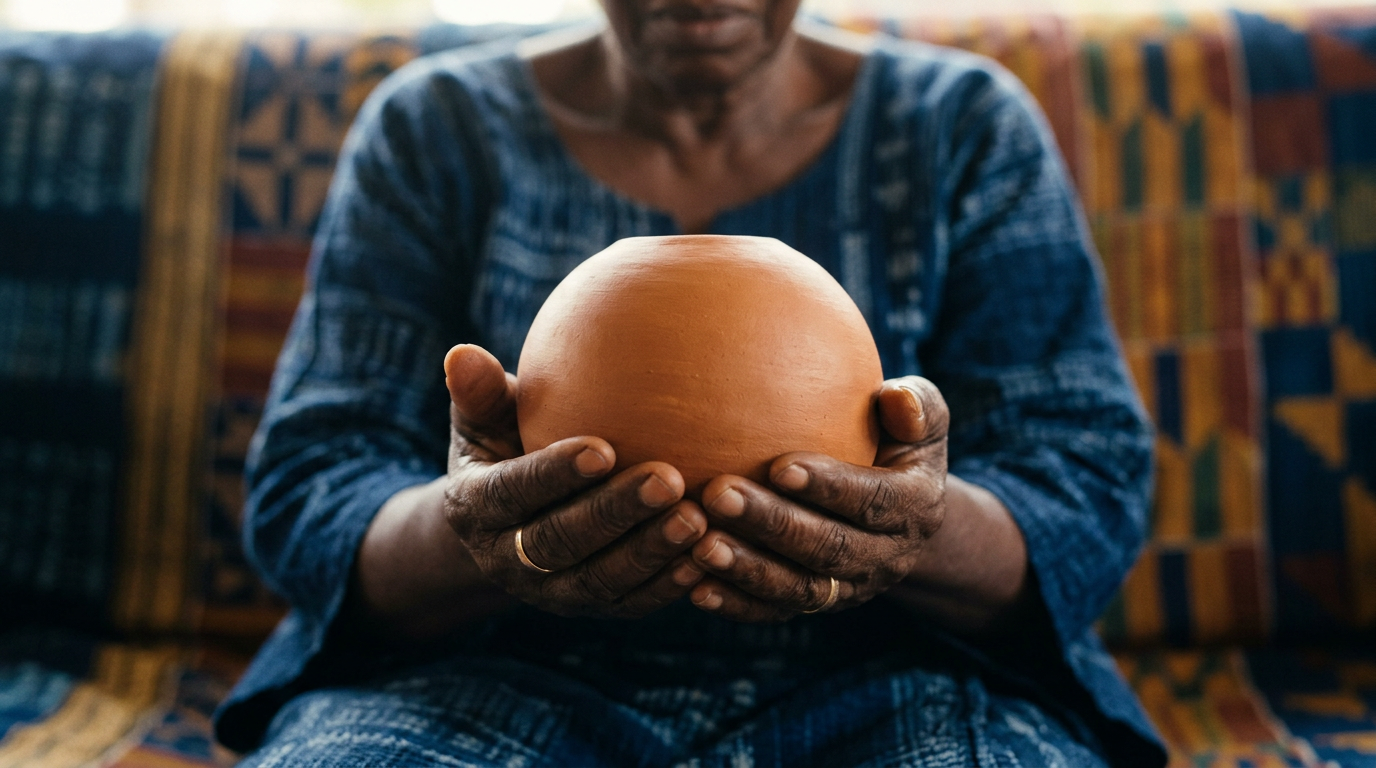
Before the soul enters Ayé (the physical world), it passes through Ọ̀run carrying its chosen Orí. Traditional accounts describe the physical Orí-heads as crafted by Àjàlá Mòpín, a divine potter in Ọ̀run. Widely cited accounts describe Àjàlá as occasionally careless, which explains — within the cosmological framework — why some souls arrive with imperfect or difficult destinies. The narrative is less a moral judgment on those who struggle and more a traditional caution: choosing carefully, and caring for what you chose, matters.
When the soul crosses from Ọ̀run into Ayé, the memory of its selection is forgotten. Ifá divination exists partly to help individuals re-member what they chose — to recognize the shape of the destiny already encoded in their Orí.
Why Orí Is Called the Bearer of Destiny
Every Orí carries its own specific configuration of possibility: relationships, vocations, spiritual callings, obstacles. The tradition refers to this configuration as one's destiny-portion, and Orí bears it the way a vessel bears water. The vessel doesn't generate the water, but without the vessel, nothing flows. This is why caring for your Orí is not optional supplementary practice — it is the foundational act.
Orí in the Odù Ifá Literary Corpus
Orí's centrality is not folk wisdom passed informally between generations. It is systematically encoded in the Ifá literary tradition itself.
Key Odù That Speak to the Primacy of Orí
The Odù Ifá corpus contains 256 Odù, each a vast collection of verses (ẹsẹ), narratives, proverbs, and prescriptions. Across multiple Odù, passages affirm Orí's foundational status. Widely cited passages from the corpus make claims as sweeping as "Orí was who created Ọya in the land of Ira; Orí was who created Ṣàngó in Koso" — framing Orí not merely as superior to the Òrìṣà but as the condition of their existence. (Specific Odù attributions for these verses vary across lineages and regions; a babalawo or iyanifá should be consulted before treating any single attribution as authoritative.)
What is consistent across lineages is the principle: Orí precedes and encompasses the Òrìṣà in matters of personal destiny.
Ẹsẹ Ifá and Oríkì That Honor Orí
Ẹsẹ Ifá are the individual verse units within each Odù — narratives that encode spiritual teachings through story, dialogue, and resolution. Alongside these, Oríkì (praise poems) function as a distinct literary and ritual genre. Oríkì are chanted or recited to invoke the spiritual essence of a person, deity, or lineage — and a personal Oríkì, when recited sincerely, serves as a form of spiritual activation and self-affirmation rooted in the specific character and destiny-signatures of the individual. Receiving your personal Oríkì from a knowledgeable elder is considered a significant spiritual gift.
Lessons From Orí's Relationship With Other Òrìṣà
The ẹsẹ Ifá do not frame the relationship between Orí and the Òrìṣà as competitive. Rather, the Òrìṣà are understood as cosmic forces that align with your journey when your Orí is strong and oriented correctly. The teaching is cooperative, not hierarchical in a dominating sense: a healthy Orí draws the right Òrìṣà to it. A neglected or troubled Orí may receive their approach but cannot hold their blessings.
Orí and the Òrìṣà: Why Orí Comes First
A common misunderstanding in diaspora contexts is that Ifá practice is primarily about petitioning specific Òrìṣà — Ọṣun for love, Ògún for obstacles, and so on. This framing, while not entirely wrong, inverts the traditional priority.
The Hierarchy of Spiritual Forces in Yoruba Thought
Understanding the Òrìṣà requires placing them within Yoruba cosmology's layered structure. Olódùmarè sits supreme. The Òrìṣà are divine intermediary forces. Orí occupies a singular position: not above Olódùmarè, but uniquely proximate to an individual in a way no Òrìṣà can match. The Yoruba proverb widely cited across practitioner traditions captures this precisely — Orí la ba bo, a ba f'orisa sile: "It is the inner self we ought to venerate, and let the divinities be." Multiple translations exist across different practitioner sources, but the core instruction is consistent.
Your Orí knows your specific destiny-configuration. The Òrìṣà know their domains. The match between what an Òrìṣà offers and what you need must pass through your Orí to stick.
When Òrìṣà Cannot Help Without Orí's Consent
Practitioners sometimes encounter situations where considerable ritual work toward an Òrìṣà produces no discernible shift. Traditional diagnosis frequently points here: the Orí may be out of alignment, weakened, or in conflict with the direction of the petitions. You cannot route around your own inner head. Addressing Orí first — or simultaneously — is not an optional step that can be skipped in favor of more dramatic Òrìṣà work. The tradition is emphatic on this.
Signs of Misalignment With Your Orí

Most people who seek Ifá divination for the first time arrive carrying recognizable patterns — cycles that repeat despite their efforts, a vague but persistent sense that they are living beside their actual life rather than inside it.
Spiritual Symptoms of an Unbalanced Orí
Traditional indicators of what is called Orí burúkú — a troubled or misaligned inner head — include: repeating harmful relationship patterns regardless of the partners involved; stagnation that persists despite sustained effort and apparent opportunity; persistent confusion about life direction that doesn't resolve with time or decision-making; and unceasing conflict in close relationships that seems to follow you rather than originate in any single person or situation. These are traditional indicators, not diagnostic categories in a clinical sense. They describe patterns that experienced practitioners recognize as Orí-rooted.
The Yoruba framework offers two useful diagnostic lenses here. Ibi refers to spiritual imbalance arising from within — from neglect of Orí, character failures, or ancestral patterns. Òṣòbò refers to external spiritual pressures or opposition. Distinguishing them matters because the remedies differ. Divination clarifies which force is at work.
How Divination Reveals Orí's Condition
Ifá divination (see introduction to Ifá divination) is the primary diagnostic instrument for Orí's condition. During a reading, the Odù that emerges speaks directly to the state of the querent's Orí — whether it is aligned with their chosen destiny, whether offerings are needed, and what specific actions will strengthen or restore it. The Odù doesn't diagnose generically; it identifies the particular configuration of your situation. This is why self-diagnosis of Orí misalignment, while useful for awareness, stops short of what an actual consultation provides.
Borí: The Sacred Ceremony of Feeding the Head

Borí — sometimes called Ibori — is the tradition's principal ritual response to a troubled, weakened, or simply in-need-of-strengthening Orí. The name translates directly: to feed the head.
What Happens During a Borí Ceremony
A borí ceremony involves ritual prayers directed specifically to Orí Inú, the application of prescribed materials to the crown of the head, and praise recitations calling upon the individual's Orí by its spiritual nature. The ceremony may be performed privately by an individual in simpler forms, or conducted by a babalawo or iyanifá in a fuller ceremonial context when specific conditions revealed in divination warrant it. The ceremony is not a generic spiritual wellness practice — it responds to specific needs and prescriptions. What it consistently does is re-establish the relationship between a person and their inner head, strengthening the channel through which destiny flows.
Materials, Prayers, and Intentions in Borí
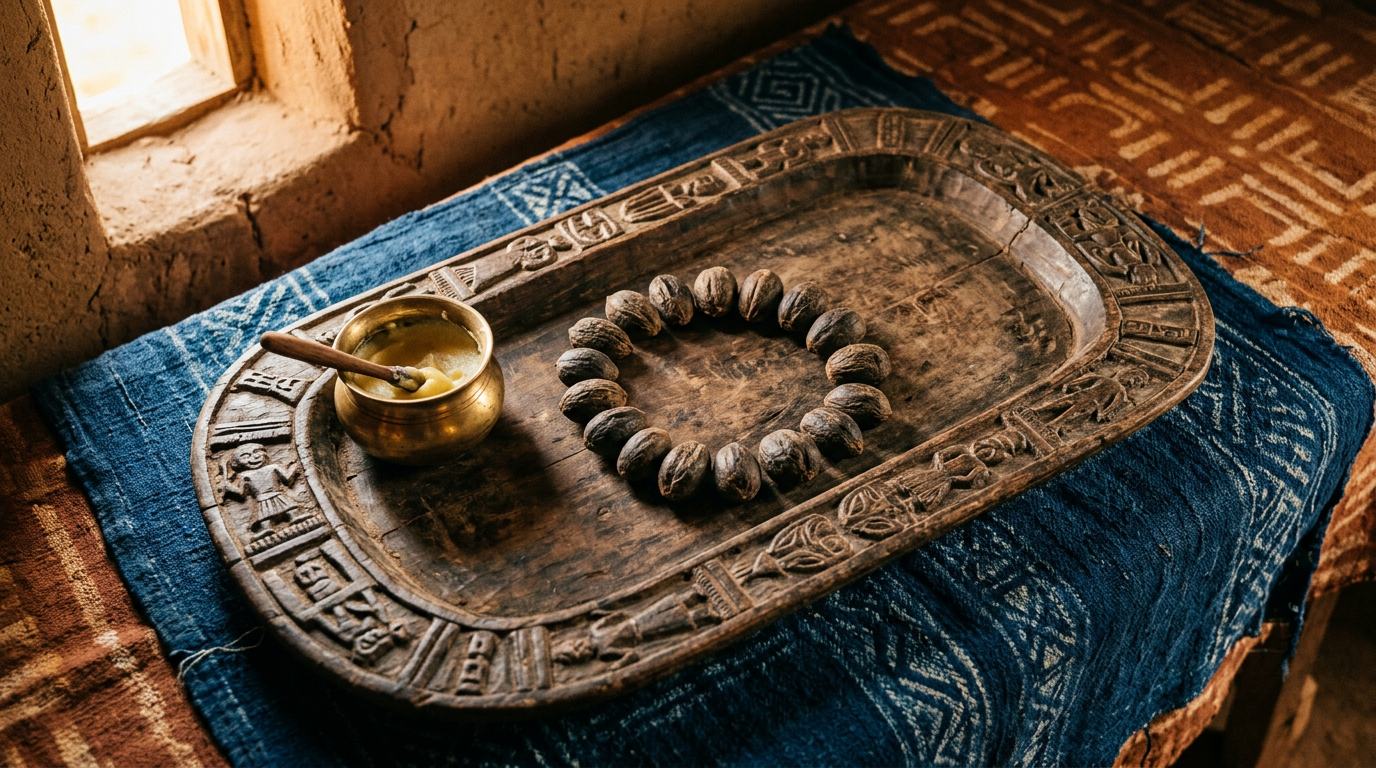
Commonly cited traditional offerings in borí include cool water, honey, kola nut, bitter kola, shea butter, and red palm oil applied to the crown. The specific combination prescribed for any individual, however, emerges from divination rather than from a fixed universal formula — your Orí's needs are as particular to you as your destiny. What remains consistent across accounts is the principle: the materials are cooling, nurturing, and sweetening in their symbolic register, intended to pacify a troubled Orí and invite its strength.
Prayers are spoken directly to Orí Inú, addressing it as the personal deity it is — not symbolically, but literally.
When and Why Borí Is Prescribed
Borí is commonly prescribed when Ifá divination reveals Orí misalignment, before major life transitions (marriage, relocation, new professional undertakings), or when persistent signs of Orí burúkú are present and have not resolved through everyday alignment practices. It may also be part of initiatory processes. The specifics — timing, materials, number of repetitions — require guidance from an elder with recognized lineage. A ceremony conducted without proper consultation and preparation may not carry the àṣẹ needed to be effective.
Daily Practices for Aligning With Your Orí
The borí ceremony addresses acute or deep Orí conditions. But the everyday work of Orí alignment is less dramatic and arguably more foundational.
Ìwà Pẹ̀lẹ́: Good Character as Alignment
Ìwà Pẹ̀lẹ́ — gentle, measured, good character — is the primary daily practice for strengthening Orí Inú. Yoruba concepts of character and ìwà pẹ̀lẹ́ are not abstract ethical ideals. They are understood as directly functional: practicing patience, honesty, generosity, and emotional steadiness literally feeds your Orí Inú. Character and spiritual health are not parallel tracks in Yoruba thought — they are the same track.
This means that ethical failure is not merely a moral problem. It weakens Orí. Sustained ìwà pẹ̀lẹ́ strengthens it. For well-balanced individuals, the tradition holds that consistent good character combined with sincere veneration is sufficient to nurture the inner head without elaborate ritual.
Prayer, Meditation, and Conversation With Orí
Practitioners commonly address Orí directly in morning prayer — not through intermediary Òrìṣà, but speaking to Orí Inú itself. "Let my Orí guide me today. Let my chosen destiny find me." This directness matters; it treats Orí as the personal deity it actually is. Sitting quietly, orienting inward, reciting your personal Oríkì if you have received one — these are acts of relationship maintenance with your own deepest self. They do not require elaborate ceremony. They require consistency.
Living in Accordance With Your Chosen Destiny
The most integrative alignment practice is deceptively simple: making choices that reflect your actual values and callings rather than external pressures, social performance, or fear. Àkúnlẹ̀yàn means you already know, at some level, what you came to do. The obstacles are usually internal — fear, unprocessed wounds, distraction — and those are precisely the conditions that weaken Orí. Returning repeatedly to questions like "Does this choice reflect who I genuinely am?" is, in the Yoruba framework, a spiritual practice, not mere therapy.
Orí in the Modern World: Reclaiming Indigenous Self-Knowledge
Orí and the African Diaspora
For Yoruba practitioners in the diaspora — particularly descendants of those enslaved and forcibly removed from African soil — engaging with Orí is simultaneously a spiritual act and something else entirely. Yoruba spiritual systems were actively suppressed through enslavement and Christian missionary campaigns across West Africa and the Atlantic diaspora. Reclaiming Orí means reclaiming a framework for self-knowledge that was deliberately severed. Ifá College, a practitioner institution based in Nigeria, describes this engagement directly: what practitioners across the diaspora are recovering is not nostalgia but active identity — the recognition that your Orí persists regardless of what history attempted to take.
Widely cited accounts within the diaspora community describe Orí work as anchoring people who might otherwise reach for inadequate substitutes: generic self-help frameworks, decontextualized meditation practices, or hybrid spiritual systems that maintain Yoruba aesthetics while discarding Yoruba epistemology.
Distinguishing Authentic Teaching From Cultural Dilution
New Age and self-help communities have increasingly adopted language — "inner self," "higher consciousness," "aligning with your true purpose" — that superficially resembles Orí teaching. The resemblance is surface-level. Authentic Orí teaching is embedded in specific Odù, lineage traditions, verifiable proverbs, and community ritual structures. It is not a portable philosophy transferable to any spiritual container without loss. The specificity is the integrity.
This means that seeking instruction about Orí from teachers with recognized lineage is not gatekeeping for its own sake — it is how you access a living tradition rather than a translated fragment of one. A babalawo or iyanifá with verifiable lineage, familiarity with relevant Odù, and community accountability remains the appropriate guide for deep Orí work.
Finding Your Way Forward
Orí is one of those concepts that rewards sitting with over time. Reading about it is a beginning. Receiving Ifá divination that addresses your specific Orí's condition is different in kind — it is the tradition speaking your particular language back to you.
If you are new to this work, a reasonable starting point is simply to begin treating your inner head as what it is: a deity worthy of daily address, worthy of your best character, worthy of honest inquiry. Not as a metaphor. Not as a New Age reframe. As the actual, specific, cosmologically grounded presence Yoruba tradition has always known it to be.
The Odù know your Orí by its configuration. Àjàlá crafted the head you chose. And every day you live in ìwà pẹ̀lẹ́, you are feeding it.