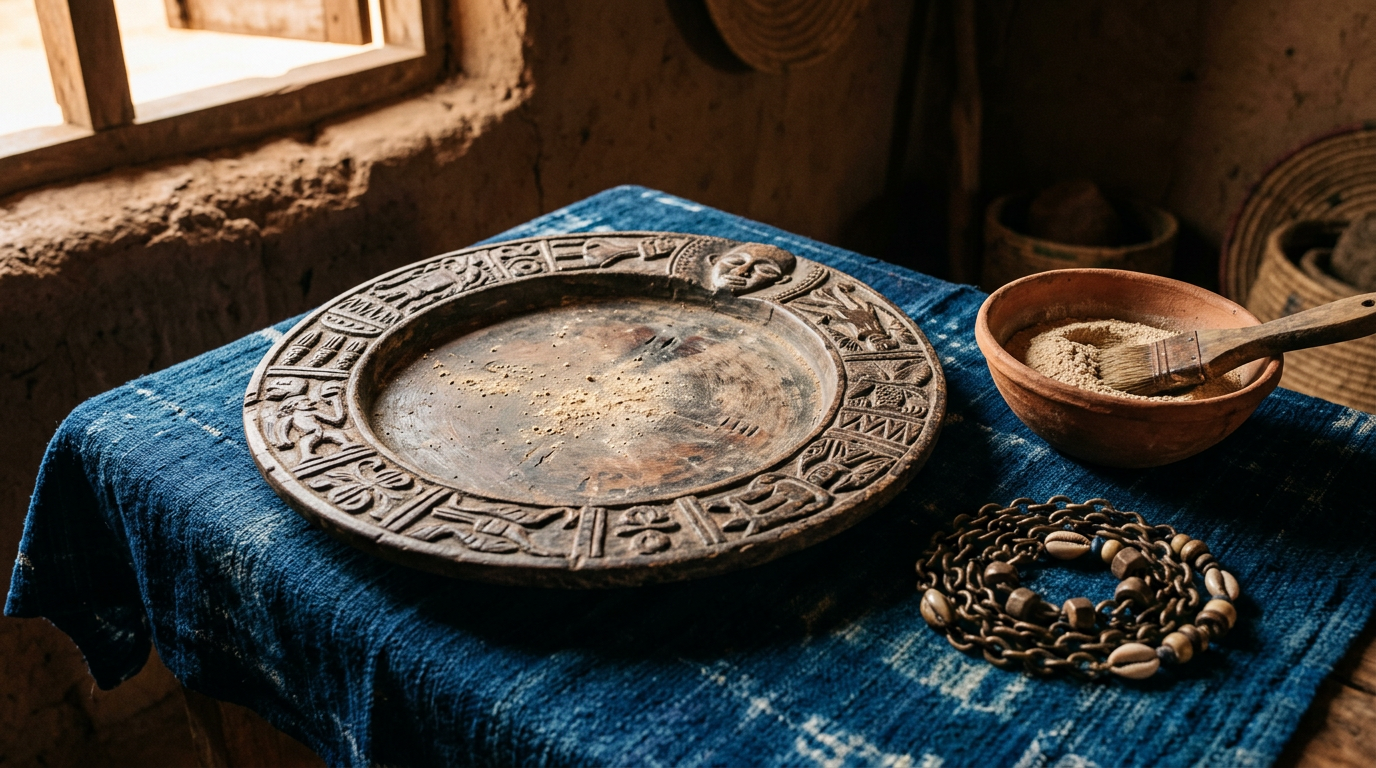
Healing Òrìṣà: Yorùbá Correspondences Between Deities and Healing
Yorùbá tradition holds that the body is never simply a biological machine — and that healing, properly understood, is never simply the repair of one. The Òrìṣà who govern medicine, water, leaves, and clay are not symbols of health. They are active forces within a cosmological framework in which every illness signals something deeper than a malfunction. What follows is a structured guide to that framework: which Òrìṣà hold healing authority, how correspondences between deity and body are understood within the tradition, and how Ifá divination, ritual, and personal responsibility work together in the work of restoration.
This spoke is part of our broader guide to Yoruba spiritual healing traditions — which sets the wider context for the correspondences between Òrìṣà and healing.
The Yorùbá Understanding of Health and Spiritual Balance
Health in Yorùbá tradition is the proper, unobstructed flow of àṣẹ through a person, their relationships, and their environment. When that flow is disrupted — by broken obligations, misaligned choices, or forces of imbalance — illness enters.
This is not metaphor. Within Yorùbá cosmology, àṣẹ is the divine life-force that animates all things, and its proper movement through a person is the very definition of wellness. Physical symptoms are real, but they are understood as downstream expressions of deeper disruption.
Àṣẹ as the Foundation of Wellness
Àṣẹ does not belong to any single domain of existence. It moves through leaves and water, through prayer and breath, through the correct performance of ritual and the cultivation of good character. When a healer activates a medicinal plant with the right words and the right intention, what the tradition describes is the release of àṣẹ that was already present in that plant — waiting.
This is why herbal remedies in Yorùbá practice are never reducible to their pharmacological properties alone. The plant works because the plant is alive with àṣẹ, and that àṣẹ must be properly engaged.
How Illness Is Understood in Yorùbá Cosmology
Scholars working in this area commonly describe a distinction in Yorùbá thought between aìsàn — sickness in the ordinary, temporary sense — and àrùn, which carries connotations of deeper, entrenched illness rooted in spiritual imbalance. Both exist within a framework in which the Yorùbá healing system treats the social, spiritual, and physical dimensions of a person as inseparable.
Illness, in this view, is diagnostic information. It points toward something out of alignment: an unfulfilled obligation, a disrupted relationship with an Òrìṣà, a weakened Orí. The healer's first task is not to suppress symptoms but to read what those symptoms are communicating.
Key Òrìṣà Associated with Healing
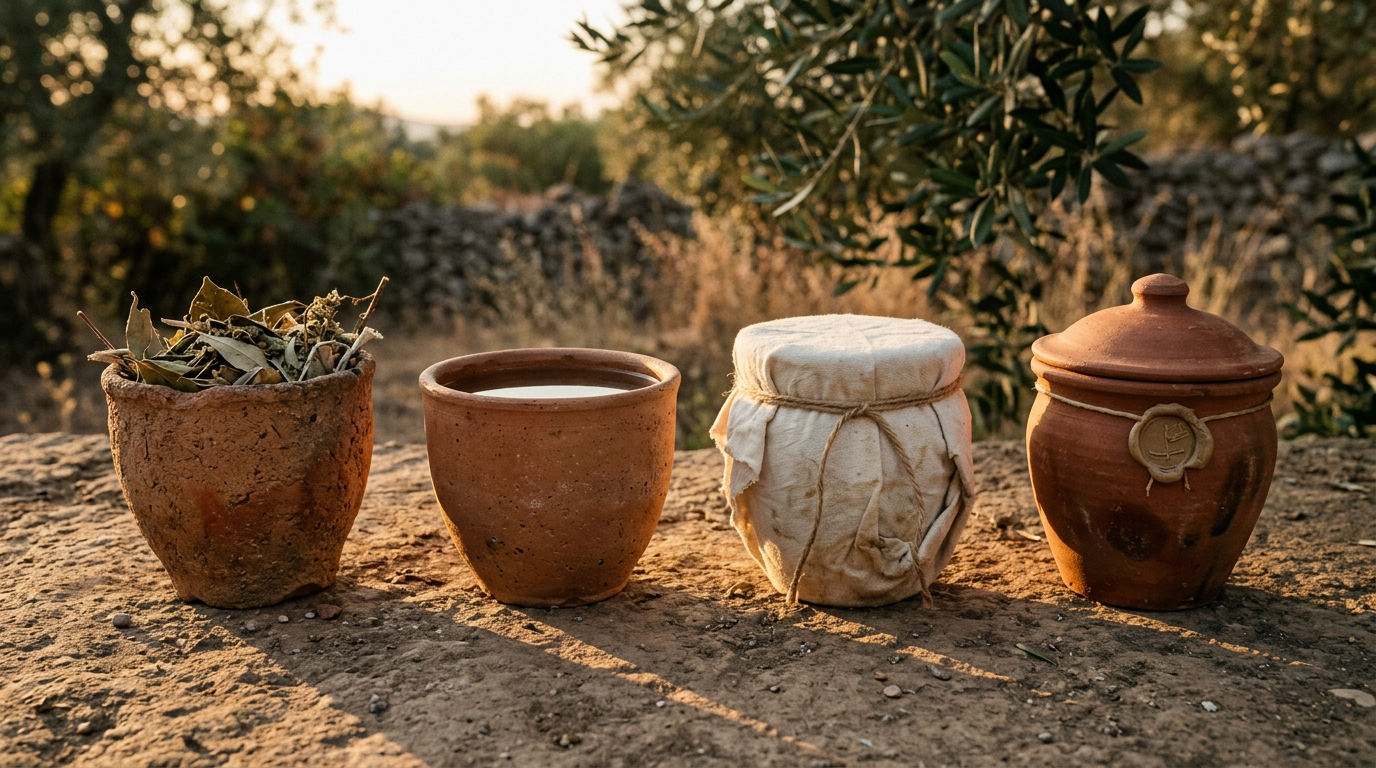
The major healing Òrìṣà in Yorùbá tradition each govern a distinct domain — disease and restoration, plants and medicine, emotional nurturing, mental clarity — and understanding those domains is essential to understanding how healing work is directed within the tradition.
Ọ̀sanyìn: Òrìṣà of Herbal Medicine
Ọ̀sanyìn holds sovereignty over all leaves, herbs, and plant life. He is the primary source of herbal healing knowledge in the tradition, understood as the one who taught the practical science of plant medicine to the other divinities. No healing that involves plants is considered complete without his presence, and no leaf is approached casually by practitioners who take the tradition seriously.
An oral tradition widely preserved among practitioners holds that Ọ̀sanyìn shared his knowledge of all herbal uses with Ọrúnmìlà, the Òrìṣà of wisdom and Ifá divination — which is why no healing prescription that emerges from an Ifá consultation is purely herbal. The plant and the verse are always co-present. To learn more about this relationship, see Yorùbá herbal medicine and Ọ̀sanyìn.
It's also worth knowing that Ọ̀sanyìn's knowledge is considered restricted and esoteric in many lineages. Practitioners hold that specific herb-Òrìṣà correspondences belong within initiatory contexts — a boundary this article respects rather than transgresses.
Babalú-Ayé: Òrìṣà of Illness and Restoration
Babalú-Ayé governs contagious disease and epidemic illness — and simultaneously holds the power to restore those he has afflicted. He is both the source of the affliction and the path out of it. That dual nature is not a contradiction; it is the theological point. Babalú-Ayé is feared and petitioned in the same breath, and his devotees are often those who have already been brought low by illness and survived.
His historical association with smallpox is consistent across Yorùbá religious sources. One note of sensitivity: in some diaspora lineages and historically in Yorùbáland itself, one of the names associated with this Òrìṣà was the subject of a royal suppression, making its use outside proper initiatory context a matter of care among practitioners. The article does not enumerate that name here.
Yemọja and Ọ̀ṣun: Nurturing and Emotional Healing
Yemọja is the Òrìṣà of rivers — specifically, in original Yorùbá practice, the Ogun River in what is now Nigeria. Her domains include nurturing, emotional healing, maternal protection, and the care of women and children. In diaspora contexts, particularly in Cuba, Brazil, and the Caribbean, Yemọja's identity expanded to encompass the ocean — a shift in correspondence worth noting for practitioners navigating between continental Yorùbá practice and Lucumí, Candomblé, or Santería lineages. The correspondences are related but not identical.
Ọ̀ṣun governs fresh waters, love, and fertility. Her healing authority extends to emotional wounds, reproductive health, and the renewal of vitality. She is associated with the womb, with sweetness, with the sustaining quality of water that does not rush to overwhelm but nourishes quietly. Where Yemọja's healing is protective and maternal, Ọ̀ṣun's is intimate and restorative — concerned with the inner life and with what has been depleted.
A single sentence to hold both: the waters heal, but which waters, and how, depends on the nature of what is wounded.
ỌBàtálá: Clarity, Peace, and Mental Wellness
Ọbàtálá created the human body from clay. That cosmological fact is the basis for his healing authority, not an illustration of it. As the one who fashioned human physical form, Ọbàtálá is understood as the owner of all Orí — every person's inner head, the seat of divine consciousness — until an individual undergoes initiation into another Òrìṣà's priesthood. That structural ownership is why Ọbàtálá is invoked in cases of mental imbalance, confusion, and conditions affecting the bones, joints, and the physical form of the body. His domain is not symbolic peace; it is cosmological order rooted in his role as maker.
Practitioners who work with Ọbàtálá emphasize that his primary requirements are clarity and purity — he is not petitioned through force or complexity but through stillness, white cloth, and the slow work of moral cultivation.
Understanding Correspondences: Herbs, Elements, and Body Systems
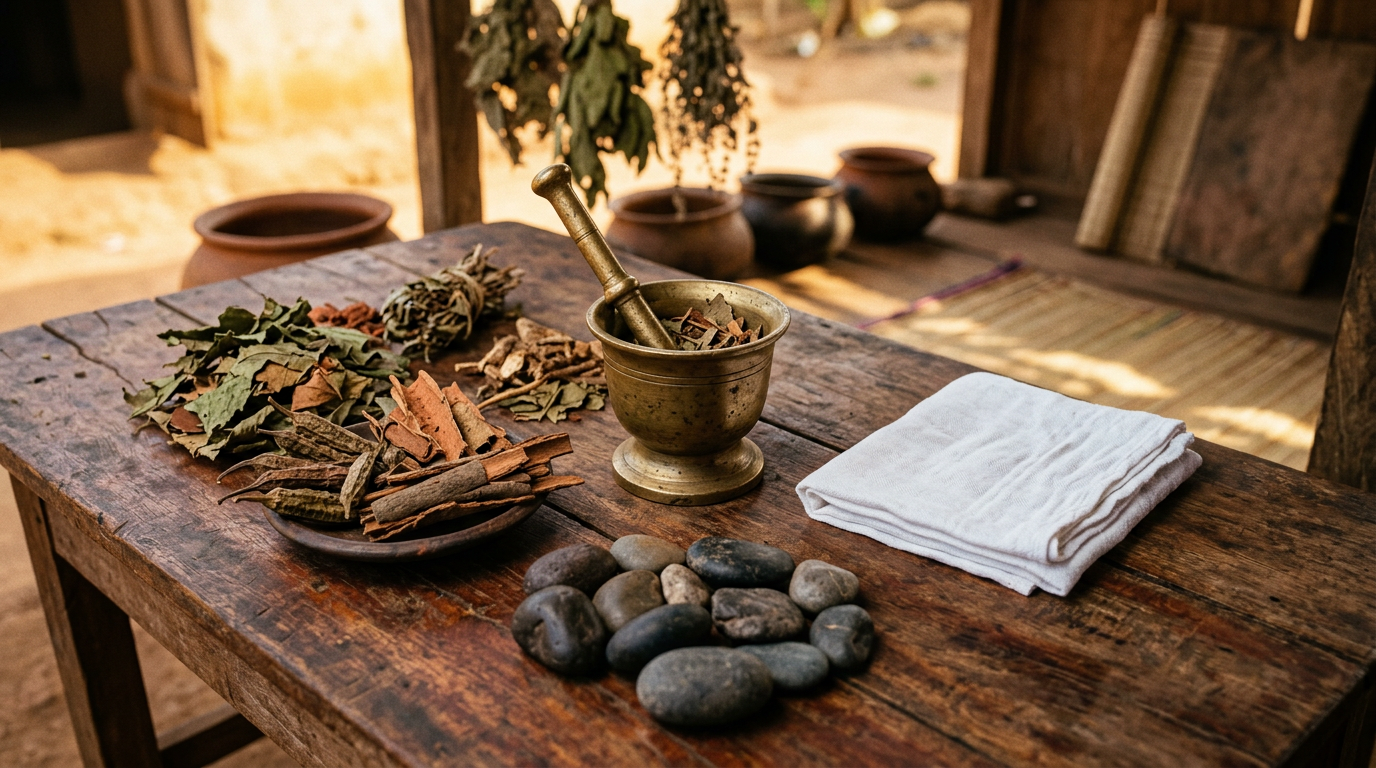
Òrìṣà correspondences in Yorùbá tradition are not a lookup table. They are an integrated knowledge system in which deity, plant, natural element, and body system share fundamental àṣẹ — which is why working with one dimension of that system naturally engages the others.
How Òrìṣà Map to the Physical Body
Each major healing Òrìṣà is associated with specific domains of the physical body, and those associations follow from each deity's cosmological nature rather than from arbitrary assignment. Ọbàtálá, as the sculptor of the human form, corresponds to the bones, head, and the structural integrity of the body. Ọ̀ṣun's fresh-water domain extends to reproductive organs, blood, and the fluids that carry vitality through the body's interior. Yemọja's nurturing authority is associated with the kidneys, the emotional body, and the body's capacity to process and release.
These correspondences hold within the continental Yorùbá tradition. Practitioners working within diaspora lineages — Lucumí, Candomblé, or Santería — may encounter variations. Those variations are legitimate within their own lineages, not errors, but they are also not interchangeable with continental Yorùbá practice.
Sacred Plants and Their Spiritual Associations
Ọ̀sanyìn's sovereignty over all leaves means that every medicinal plant belongs, in some sense, to his domain. Within that broad authority, certain plants carry stronger àṣẹ for particular Òrìṣà, and those associations are central to how healing preparations are constructed.
This is one area where the tradition's esoteric dimension requires restraint. The specific plant-Òrìṣà correspondences that guide herbal preparations are knowledge held within initiatory lineages, transmitted through relationship with a Babaláwo or Oníṣègùn, not through published inventories. What this article can affirm is the logic: the plant's àṣẹ, the Òrìṣà's domain, and the patient's diagnosed condition must align. When they do, the preparation carries not just chemistry but spiritual authority.
The Role of Ifá Divination in Healing
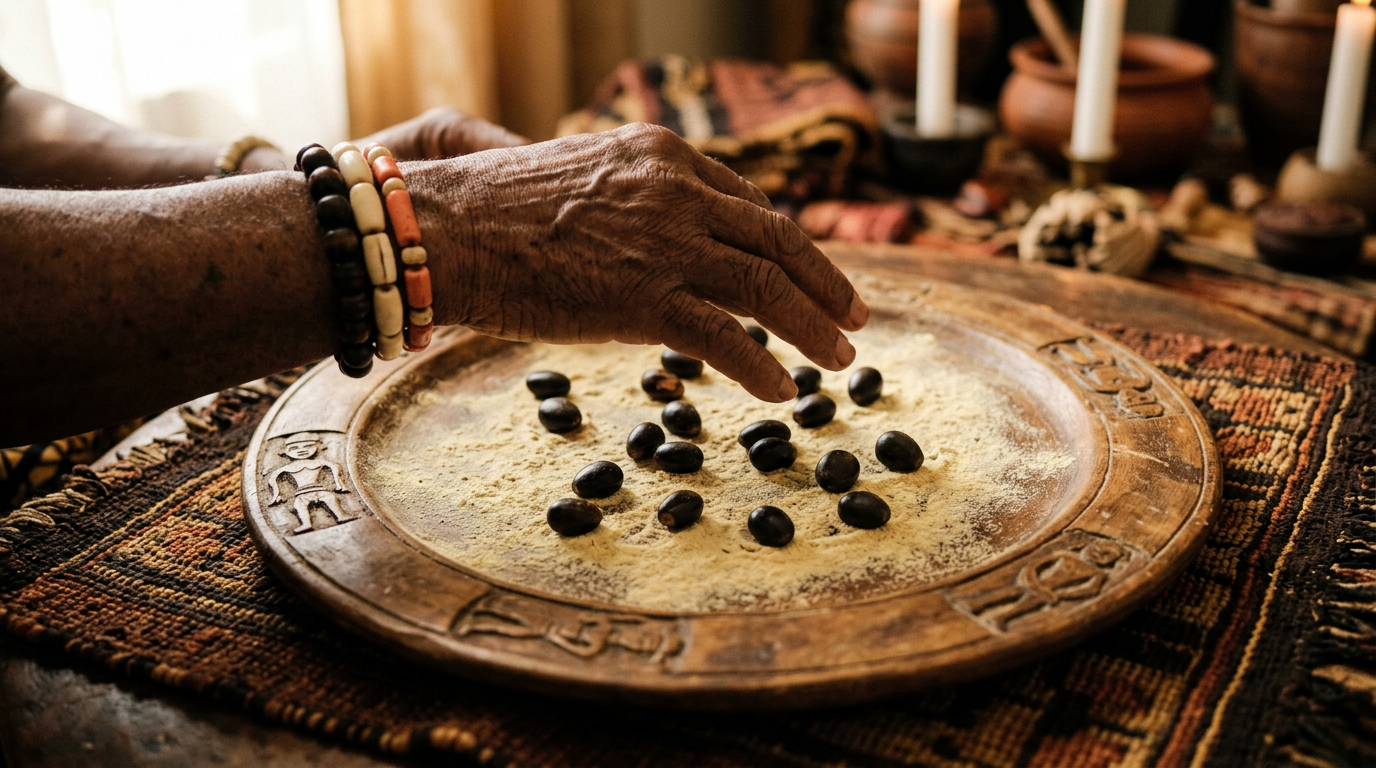
Ifá divination is not a supplementary layer added onto Yorùbá healing — it is the diagnostic mechanism that determines which Òrìṣà, which plants, and which ritual obligations apply to a given condition. The Ifá divination system was inscribed by UNESCO onto the Representative List of the Intangible Cultural Heritage of Humanity, a formal recognition that what Ifá represents is a structured knowledge system built on 256 Odù, each subdivided into ese (sacred verses), not a collection of folk beliefs.
How Odù Ifá Guides Healing Prescriptions
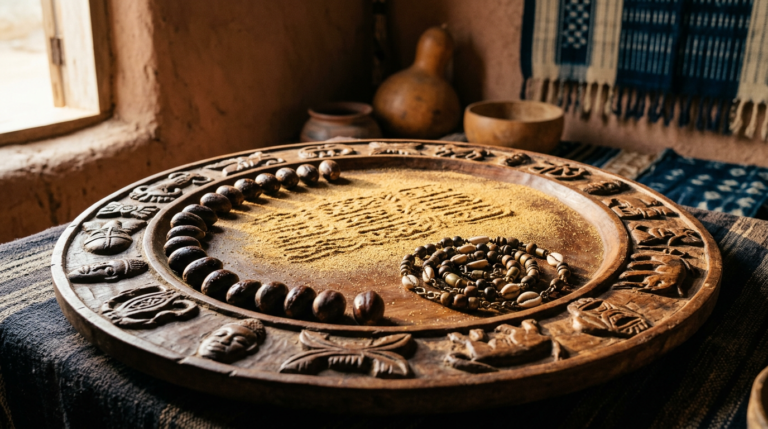
A Babaláwo — a trained divination specialist — uses either the opele (divination chain) or ikin (sacred palm nuts) to identify which Odù governs a client's condition. That Odù is not a vague category; it is a specific body of knowledge that includes narrative, prescription, and precedent. From the Odù, the Babaláwo derives the appropriate ẹbọ, herbal preparations, and any other required interventions.
Experienced practitioners are clear that the specific correspondences between Odù and healing protocols are oral, lineage-held knowledge — not a published manual anyone can consult. This article describes the mechanism, not the content. The content belongs to initiated practice.
The Relationship Between Babaláwo and Oníṣègùn
The Babaláwo and the Oníṣègùn — the herbalist specialist — are distinct roles. The Babaláwo diagnoses through divination and may direct a client to the Oníṣègùn for the preparation of specific herbal remedies the Odù prescribes. The Oníṣègùn's knowledge of plants is specialized and deep; they are not simply executing the Babaláwo's instructions but contributing their own cultivated expertise in the healing process.
This division of labor reflects the tradition's precision. Different specialists hold different knowledge, and that knowledge is not fungible. A thorough account of this relationship appears in academic work on Yorùbá traditional medicine, including the research of Oyelakin, whose published work explicitly distinguishes these complementary roles.
Healing as Devotion: Ritual, Prayer, and Offering
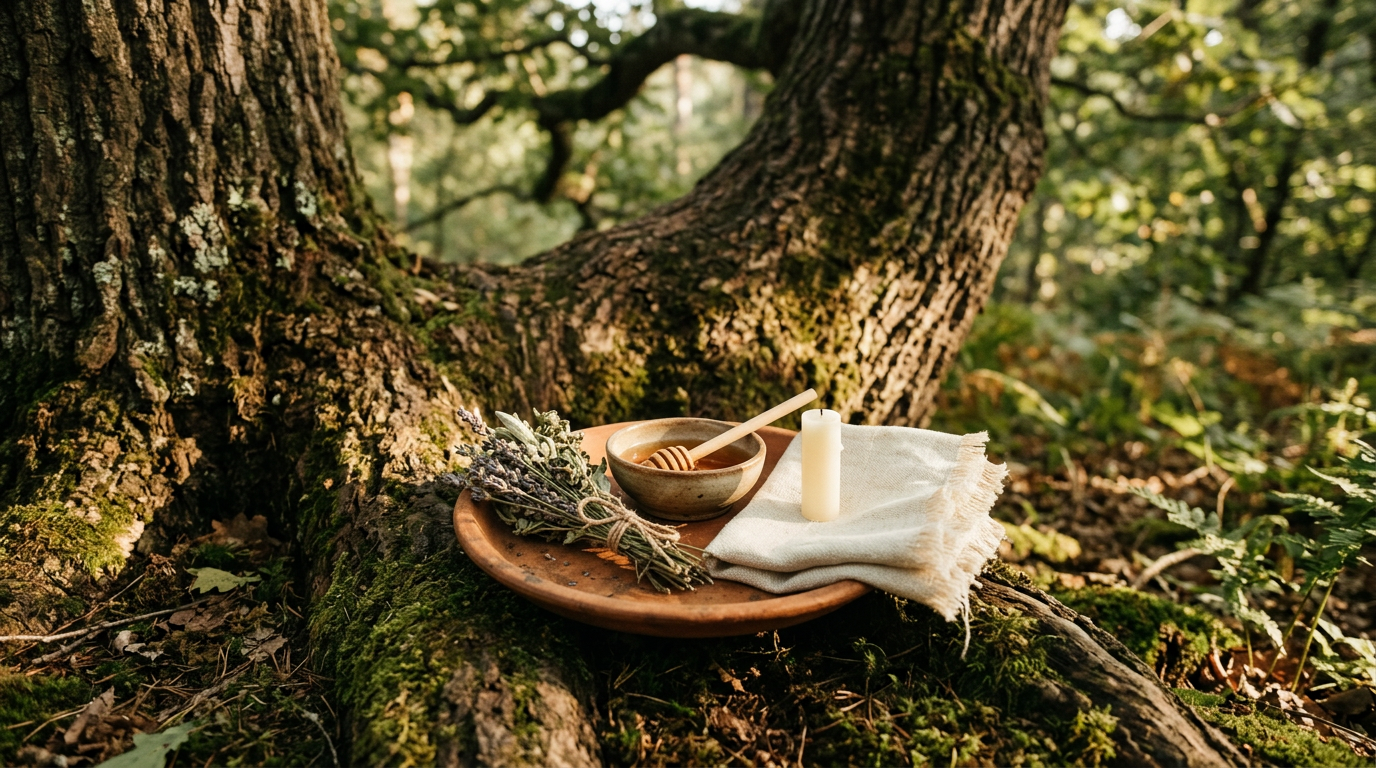
Healing in Yorùbá tradition is not something that happens to a person. It is something a person participates in — through obligation, devotion, and the willingness to address whatever the Odù has revealed as the source of imbalance.
ẸBọ and Its Role in Restoring Health
Ẹbọ in Yorùbá tradition is not reducible to sacrifice in the popular sense of the word. It functions as active spiritual participation — a precise mechanism for restoring alignment between a person and the cosmos after Odù has identified a state of ìṣọgbé (challenge or imbalance). Think of it as spiritual medicine: as specific as a prescription, and as ineffective when imprecisely administered.
Ẹbọ may involve offerings to a specific Òrìṣà, herbal preparations, acts of charity, ritual observance, or some combination of these. What determines the form is the Odù and the Babaláwo's reading — not the practitioner's preference.
Orí and Personal Healing Responsibility
Before any Òrìṣà is invoked, before any prescription is followed, Yorùbá tradition places primary responsibility for wellness in the Orí. Orí in Yorùbá spirituality is the inner head — the divine consciousness each individual selects before incarnating — and it is understood as the most intimate spiritual dimension of the self. Strengthening Orí through ìwà pẹ̀lẹ́ (good character) is not a preliminary step to healing; it is an ongoing requirement for it.
An Orí weakened by ethical failure, broken relationships, or sustained misalignment cannot receive the full benefit of even the most precisely prescribed ẹbọ. Healing work and character work are not separate tracks.
Approaching Òrìṣà Healing with Cultural Integrity
The Yorùbá healing tradition is a living system, held and transmitted by initiated communities, lineage-based practitioners, and the diasporic descendants of people who preserved these teachings across centuries and through deliberate historical suppression. It is not a body of information available for selective adoption.
That framing matters for anyone approaching this tradition from outside its initiatory structures. Curiosity is welcome. Study is appropriate. But the tradition distinguishes clearly between learning about and being properly positioned to practice. The correspondences described in this article are orientation, not instruction. Genuine engagement begins with relationship — with a Babaláwo, with a lineage community, with the slow process of building proper standing within the tradition.
Documenting these teachings in writing carries its own responsibility. Recording what is shareable supports preservation and counters the erasure that colonial histories imposed on indigenous African knowledge systems. But some knowledge is not for publication — it belongs to lineage transmission — and a mark of respect for any serious student is knowing where that line sits. The tradition is alive. The people who hold it are the primary source.
Where to Go from Here
For practitioners and students who want to deepen their engagement with Yorùbá healing correspondences, the path runs through community and relationship rather than further reading alone. Explore who are the Òrìṣà if you are building foundational cosmological knowledge. Pursue an introduction to Ifá divination to understand the diagnostic framework more fully. Seek out initiated practitioners and lineage communities who can speak to these teachings with the authority of direct transmission.
The healing Òrìṣà described here — Ọ̀sanyìn with his leaves, Babalú-Ayé with his difficult mercy, Yemọja and Ọ̀ṣun with their waters, Ọbàtálá with his clay and his quiet — are not figures from a distant mythology. Within this tradition, they are present and active, and they are properly approached through the structures the tradition itself has established for that approach.