Yoruba Ancestral Healing Prayers: Practice, Purpose, and How to Begin
Many people arrive at Yoruba ancestral prayer not through a class or a book, but through a feeling — something missing, something calling. This article offers a tradition-rooted map: what these prayers actually are within the Ifá worldview, the specific spiritual outcomes they address, and how to take your first steps even if you're starting from scratch.
This spoke is part of our broader guide to Yoruba spiritual healing traditions — which sets the wider context for Yoruba ancestral healing prayers.
Why Ancestral Healing Prayers Matter in Yoruba Tradition
Ancestral healing prayers are not peripheral devotional acts — they are structurally necessary within Yoruba cosmology, as central to spiritual life as breath is to the body.
The Relationship Between the Living and the Departed
The Yoruba cosmos is layered: Olódùmarè as supreme creator, the Òrìṣà as divine forces governing the natural and social world, and the ancestors as active bridges between all of it and the living. When that bridge goes untended, the consequences are concrete. Ancestral neglect disrupts a working reciprocal relationship with real results: diminished spiritual protection, weakened alignment with one's destiny, and a breakdown of the moral and social fabric that lineage helps sustain.
That framing matters. This is not sentiment. The ancestors are not passive memories held warmly in the heart — they are participants in the life of their descendants. They intercede. They warn. They protect. And they require acknowledgment.
Healing as a Communal and Spiritual Act
Western wellness culture tends to locate healing inside the individual. You work through your trauma; you do your inner child repair; you optimize. Yoruba ancestral healing works differently. Healing one person heals the lineage — backward toward those who came before, forward toward those not yet born.
The Egúngún masquerade tradition, for example, doesn't merely mourn the dead. When Egúngún appears in the community, it reinforces behavioral norms, adjudicates social conflicts, and makes visible the reality that the departed are still present among the living. Healing, in this frame, is always communal. The individual is inseparable from the family line.
Key Concepts Behind Yoruba Ancestral Prayer
A little vocabulary goes a long way here. These three concepts — Egúngún, Orí, and Odù — form the conceptual backbone of ancestral prayer practice.
Egúngún: the Collective Power of the Ancestors
Egúngún (pronounced roughly eh-GOON-goon) refers both to the collective ancestral spirits and to the masquerade institution through which those spirits are made visible. According to peer-reviewed ethnographic research, the Egúngún institution represents a distinctly Yoruba masking culture in which the spirits of long-dead ancestors are believed to manifest in bodily form, making re-visitations to the communities they once inhabited.
This is worth sitting with. The tradition does not frame Egúngún as symbolic or metaphorical. The ancestors literally return. Their presence restores ontological balance — a technical way of saying they help put the world back in right order. Egúngún communities exist not only across West Africa, but throughout the African diaspora: in Brazil, Cuba, the Dominican Republic, Barbados, and the United States. If you have ancestry from any of these places, this institution may be closer to your roots than you realized.
Orí and Ancestral Alignment
Orí is your inner head — the metaphysical seat of consciousness, personal destiny, and divine intuition. In Yoruba thought, Orí is a practitioner's primary personal deity, and tradition holds that no Òrìṣà blessing can take root without that person's Orí first consenting. It is the most intimate point of contact between you and the divine.
Ancestral healing prayers connect directly to Orí alignment. When your lineage carries unresolved burdens — grief that was never processed, wrongs that were never repaired, trauma coded into the family pattern — those burdens press against the Orí's clarity. Prayer to your ancestors isn't separate from aligning your personal destiny. It is part of aligning it.
The Role of Odù in Ancestral Communication
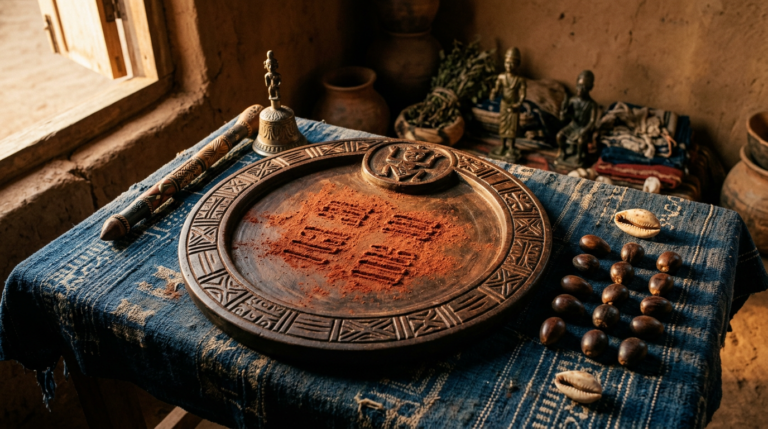
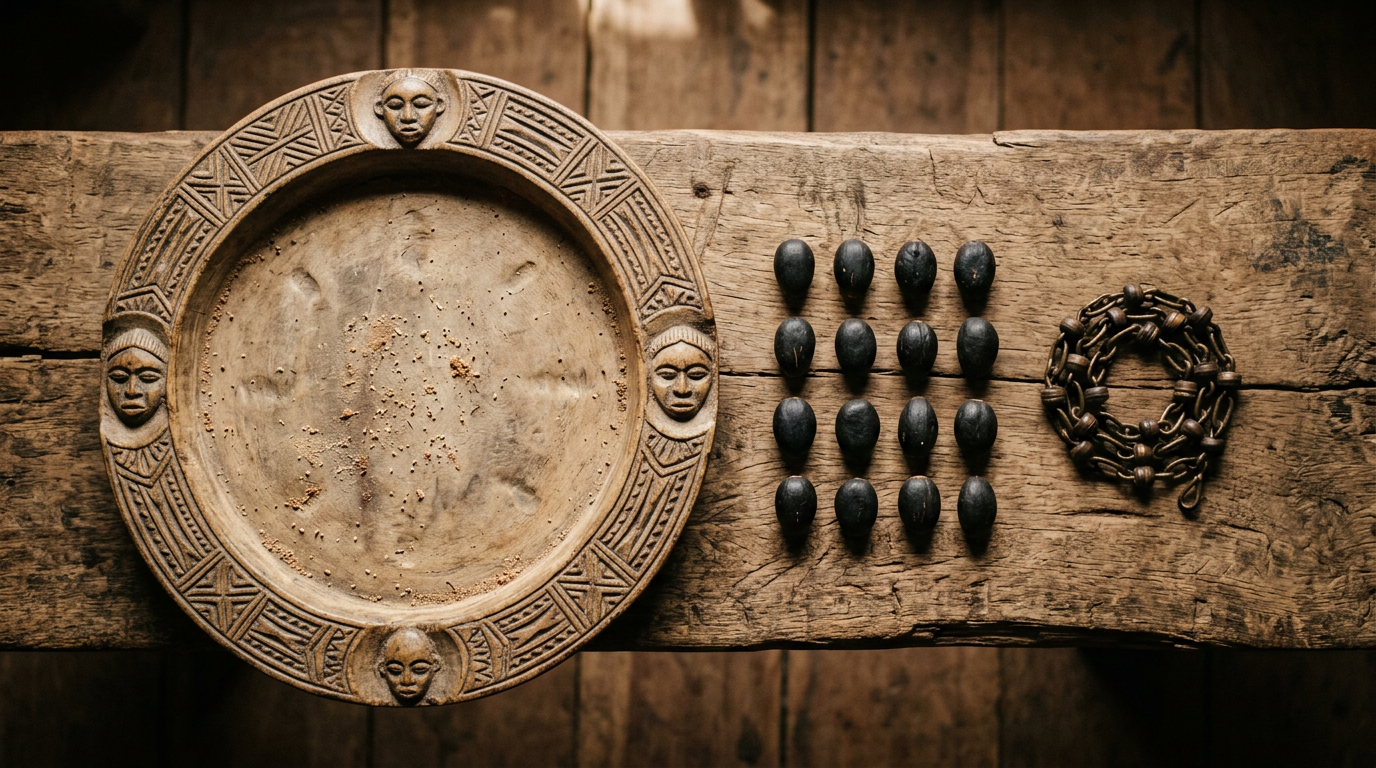
Ifá's literary corpus, called Odù, consists of 256 sacred configurations: 16 principal Odù and 240 combinations, each containing hundreds of verses (ese) that encode prescriptions for healing, ancestral communication, and destiny work. The UNESCO inscription of Ifá — first proclaimed a Masterpiece of the Oral and Intangible Heritage of Humanity in 2005, then formally inscribed in 2008 — recognized this corpus as one of humanity's extraordinary intellectual achievements.
For the practitioner seeking ancestral guidance, Odù is the archive the Babaláwo reads. Each verse carries accumulated wisdom about how ancestors communicate, what they require, and how their blessings flow to the living. You don't need to memorize Odù to pray to your ancestors — but knowing it exists, and that a skilled Ifá divination consultation can read it on your behalf, tells you how deep the tradition's resources actually go.
The Purpose of Ancestral Healing Prayers
These prayers serve specific, tradition-defined ends. They are not general good-feeling rituals.
Seeking Guidance and Clarity
Ancestors who have been properly elevated carry wisdom accumulated through lifetimes — their own, and those of the ancestors who preceded them. Calling on them with intention and respect opens a channel to that accumulated intelligence. Practitioners commonly report receiving guidance through dreams, sudden clarity, or the appearance of unexpected opportunities after sustained ancestral prayer. The tradition frames this not as coincidence but as the ancestors doing their work.
Releasing Inherited Spiritual Burdens
Ancestral healing prayer in the Yoruba tradition directly addresses what some accounts describe as generational burdens — inherited trauma, unresolved wrongs, negative energy patterns passed down through family lines — with the understanding that elevating the souls of the departed benefits both the deceased and the living lineage.
This is one place where Yoruba practice and contemporary psychology find unexpected common ground, though the tradition predates modern trauma science by centuries. The mechanism differs: where a therapist works with memory and narrative, Yoruba ancestral prayer works with spiritual relationship, offering, and the literal elevation of souls who may still be carrying what they never resolved in life.
Restoring Balance Across Generations
Widely cited accounts describe what happens when ancestors are not properly transitioned after death: some sources suggest the emi (soul/breath) risks remaining earthbound rather than completing the journey toward reincarnation. Ifá funeral rites are designed to guide that transition smoothly. When it doesn't go smoothly — because of sudden death, improper burial, or rites never performed — the living family line can carry the weight of that incompletion.
Ancestral healing prayers, combined with proper ceremony over time, work to resolve those gaps. The goal is not to dwell in the past but to free both the ancestors and the living to move forward.
What a Traditional Ancestral Prayer Practice Looks Like
There is no single universal protocol — specific practices vary by lineage, regional tradition, and whether the practice is rooted in Oyó Yoruba, Ekiti Yoruba, or one of the diaspora continuations like Candomblé or Lucumí. What follows describes the broad, shared contours.
Elements of an Ancestor Altar
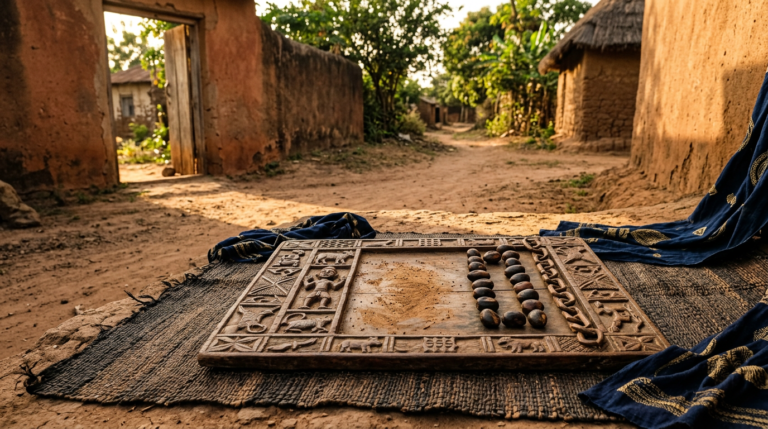
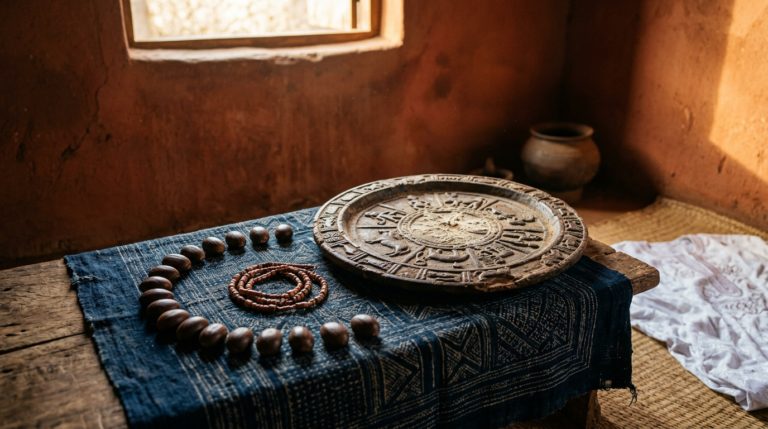
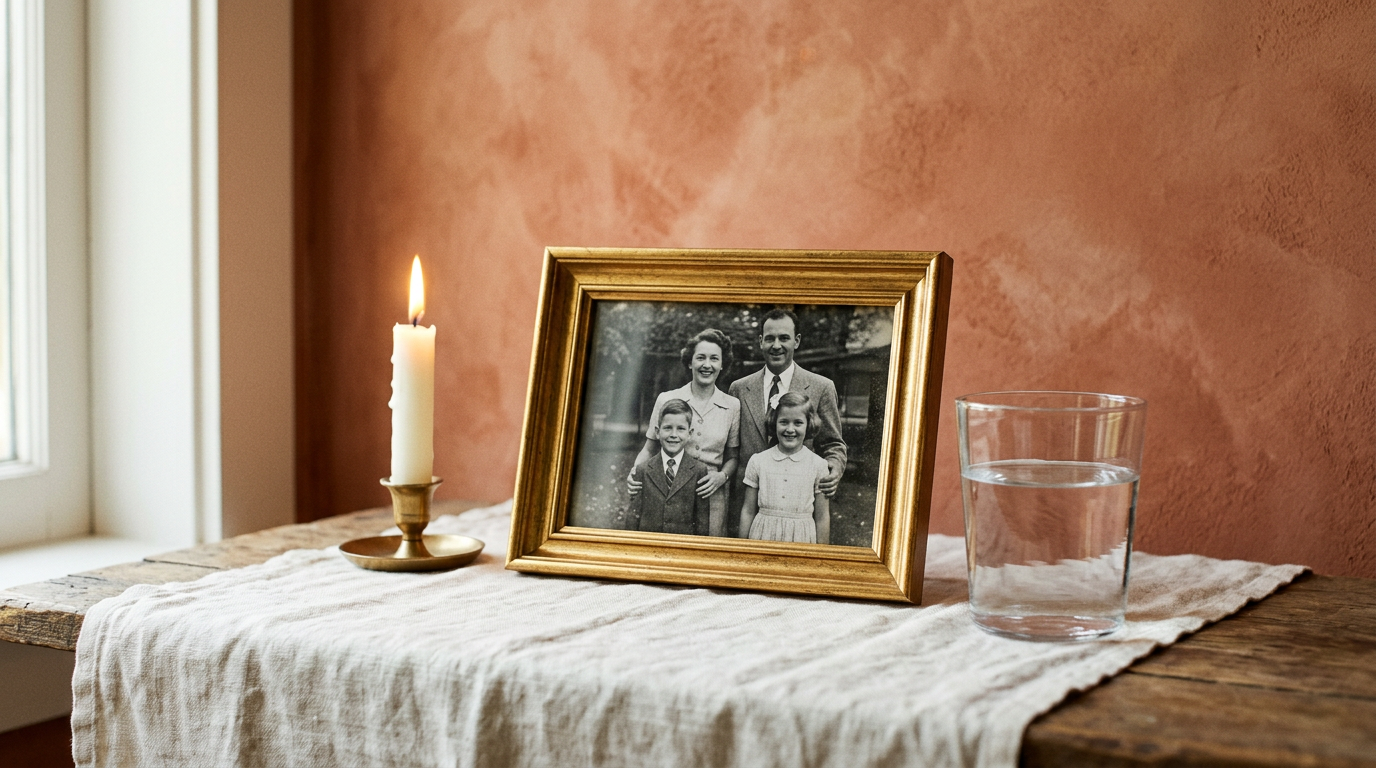
Widely cited practitioner sources recommend that setting up an ancestor altar is the first step for anyone entering this tradition, including those who haven't been formally initiated. The altar, called an Egun altar, creates a dedicated physical space that signals intention to the ancestors and establishes a consistent point of contact.
Common altar elements include a photograph or image of a known ancestor, a glass of cool water (the water is not decorative — it represents purification and a clear channel), a white cloth, and any personal items the ancestor valued in life. The altar doesn't need to be elaborate. A small, clean surface with sincere intention carries more weight than an ornate setup approached carelessly.
Offerings, Libations, and Invocations
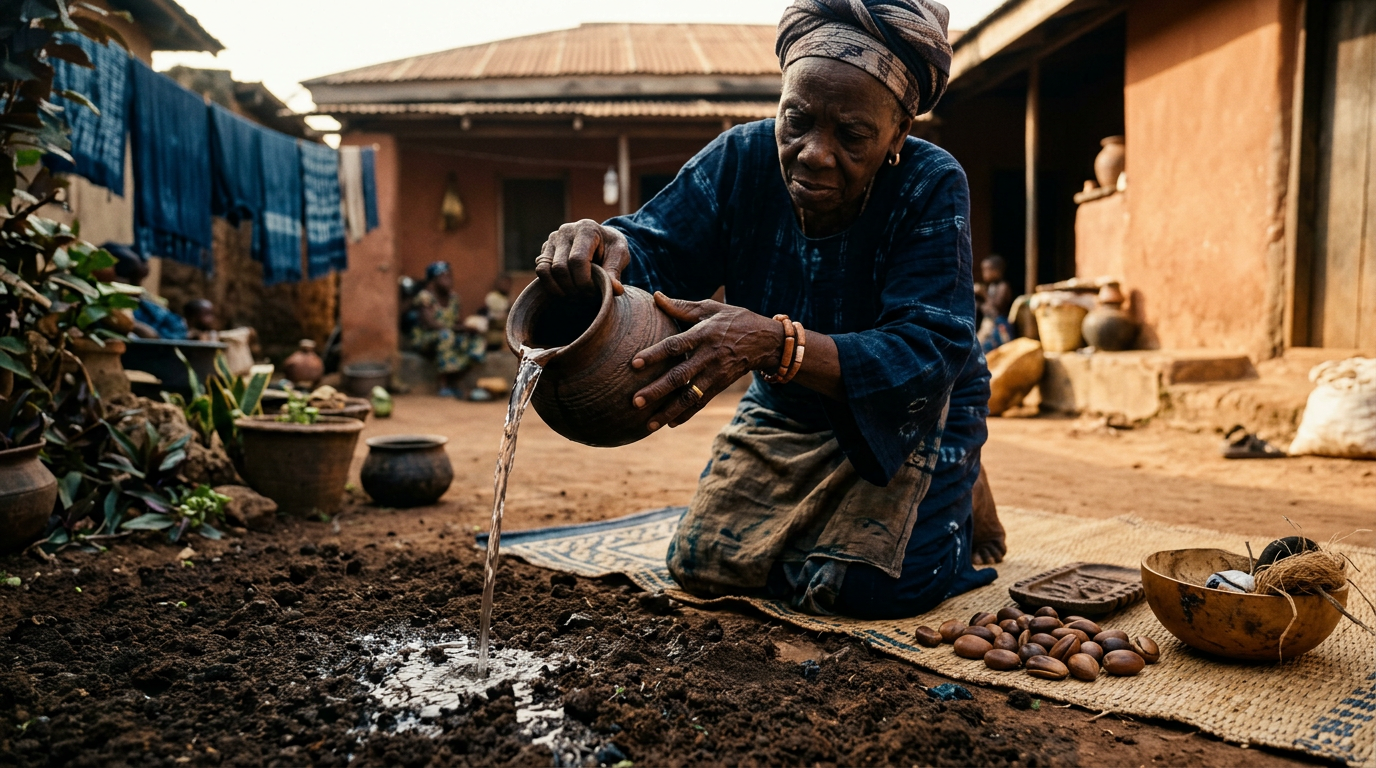
Pouring libation, called ìtù omi or omi tútù (cool water) in Yoruba, is among the most fundamental acts in ancestral prayer. This is a sacred gesture of calling the ancestors, cooling the path between worlds, and restoring spiritual balance. You pour the water slowly, speaking the names of those you know, acknowledging those you don't, and asking for their presence and guidance.
Traditional offerings — called adimu egun — may include a small portion of food, water, coffee, or other drinks. These are gestures of reciprocity and honored remembrance, not attempts to literally feed a spirit. In diaspora communities, offerings sometimes include items like cigars or specific flowers, practices that reflect local adaptations over generations. These should be understood as diaspora forms, which may differ from West African source practice depending on lineage and region.
The invocation itself need not be in Yoruba to be sincere. Speaking plainly — naming who you are, naming your ancestors by whatever names you know, stating your need or your gratitude — is how most beginners start.
How to Begin Your Own Ancestral Healing Prayer Practice

The most important thing to know before you start: formal initiation into Ifá is not a prerequisite for ancestral prayer. Ancestor veneration is the recommended entry point precisely because it is accessible and because Egun (ancestral spirits) act as your primary intermediaries and protectors as you go deeper into any African spiritual practice.
Starting with What You Know
Begin with your known dead: grandparents, great-grandparents, anyone in your family line who has passed. If you know they lived with integrity — or at minimum, that they meant well by their family — call on them. You don't need certainty about their spiritual status. The act of calling with love and respect initiates the relationship.
For those whose family lines were disrupted by the transatlantic slave trade or colonial displacement, not knowing your ancestors' names does not close the door. You can call on the collective ancestors of your lineage, on the nameless mothers and fathers who carried your line forward. The tradition has always had room for this.
Creating a Simple Ancestor Space
Find a surface that can stay clean and undisturbed — a small shelf, a corner of a dresser, a dedicated table. Cover it with white cloth. Place a photograph if you have one; a glass of fresh water; something simple that connects you to your family history. Light a white candle when you pray.
Keep it simple and keep it consistent. Consistency signals commitment. A maintained altar, visited briefly every day, builds more relationship than an elaborate one touched once a month.
A Foundational Daily Prayer Framework
Morning is traditional in many lineages, but the right time is the time you'll actually keep. Stand or sit before your altar. Pour fresh water. Speak aloud. Begin with gratitude — thank your ancestors for the protection that got you through the night, the food you have, the breath in your body. Then name your dead, whoever you know. Ask for their guidance and protection. Close by asking that your Orí be clear and aligned to your highest destiny.
That's it. Two minutes of sincere daily prayer, consistently offered, is the foundation. Everything else — ceremony, divination, deeper initiatory practice — grows from this root.
Common Questions and Respectful Boundaries
Two questions come up almost universally among people beginning this practice. Both deserve a direct answer.
Do I Need an Elder or Babáláwo to Start?
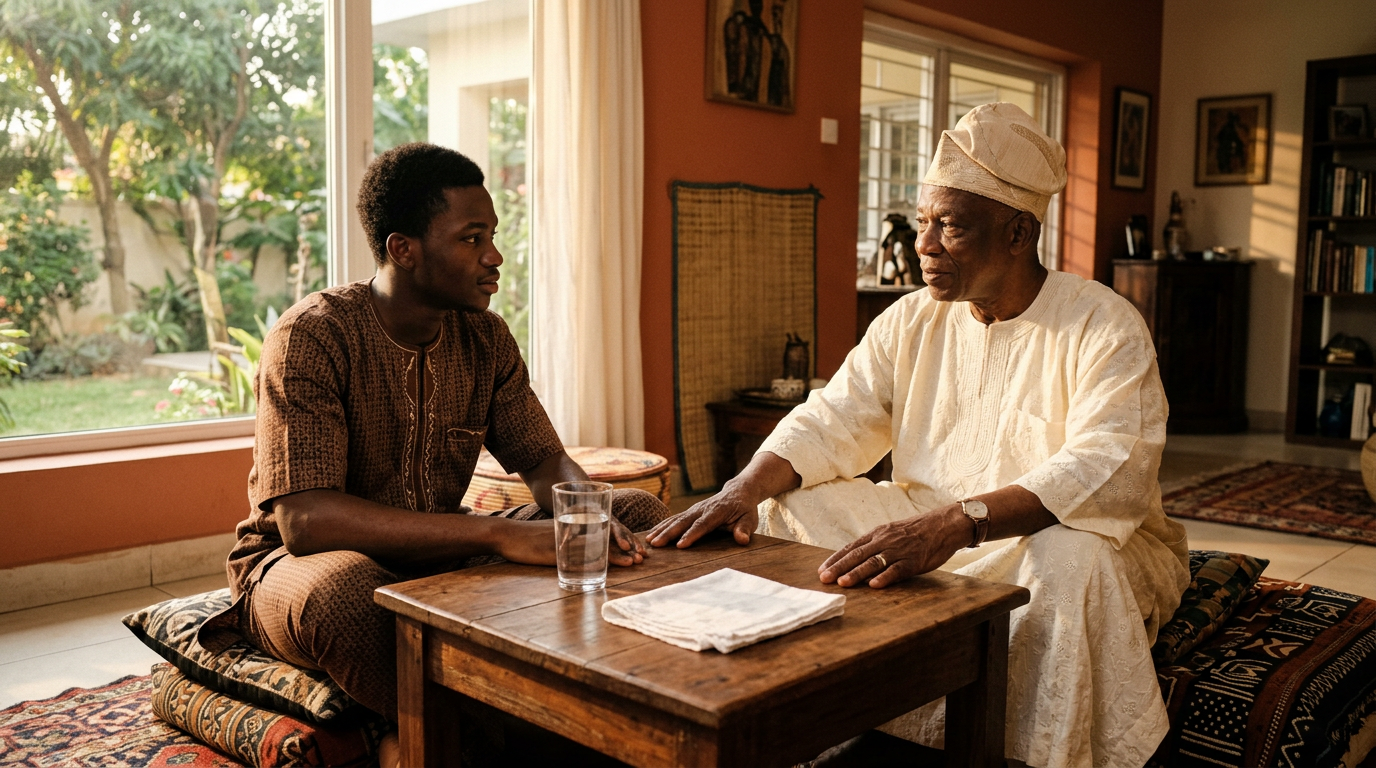
You don't need a Babáláwo or elder to begin basic ancestral prayer. Pouring water, speaking your ancestors' names, keeping a clean and tended altar space — these are available to anyone who approaches them with sincerity and respect.
What an elder or qualified Babáláwo provides is irreplaceable at a certain depth: formal divination to understand what your specific ancestral line requires, guidance on ceremony, and the ability to read Odù on your behalf. Think of it the way you might think of first aid versus surgery. You can handle a lot yourself. Some things genuinely require a specialist. As your practice deepens, the guidance of an initiated elder becomes not just useful but essential.
What if I Don't Know My Ancestors' Names?
This concern is especially common among people of African descent whose family histories were fractured by slavery and colonization. The tradition's answer is compassionate and practical: you call on your lineage anyway.
Phrases like "all my ancestors of blood and spirit, known and unknown" are widely used in diaspora communities precisely because the disruption was real and the tradition has adapted to meet it. You address the ones you know by name. For the rest, you acknowledge that you carry their blood, that you are here because they persisted, and that you are reaching back to honor them. That acknowledgment is the prayer. The ancestors hear it.
Taking the First Step
Yoruba ancestral healing prayers are not a trend, and they're not a branch of generic "ancestor work" spirituality that floats free of cultural roots. They are a living practice embedded in one of humanity's most sophisticated spiritual traditions — one that UNESCO recognized and that millions of people in West Africa and the diaspora have maintained across centuries of pressure.
If you're reading this, something drew you here. That pull is worth following. Start with a glass of water, a clean surface, and the names of your dead. Speak plainly. Show up again tomorrow. From that beginning, everything else becomes possible.
Want to begin your own ancestral prayer practice? Our curated collection 20 Powerful Ancestral Healing Prayers — sourced from Yoruba lineage tradition — is a starting point crafted for readers new to the path.