Yoruba Spiritual Baths: Ìwẹ̀, Ifá, and the Logic of Cleansing
Water does not simply wash in Yoruba cosmology. It participates. Understanding that single distinction unlocks why spiritual bathing in the Ifá tradition is a precision practice guided by divination, prescribed by trained priests, and deeply tied to who you are and where your life is going.
This spoke is part of our broader guide to Yoruba spiritual healing traditions — which sets the wider context for Yoruba spiritual bath practices.
What Is a Spiritual Bath in Yoruba Tradition?
ÌWẹ̀: the Concept of Ritual Bathing
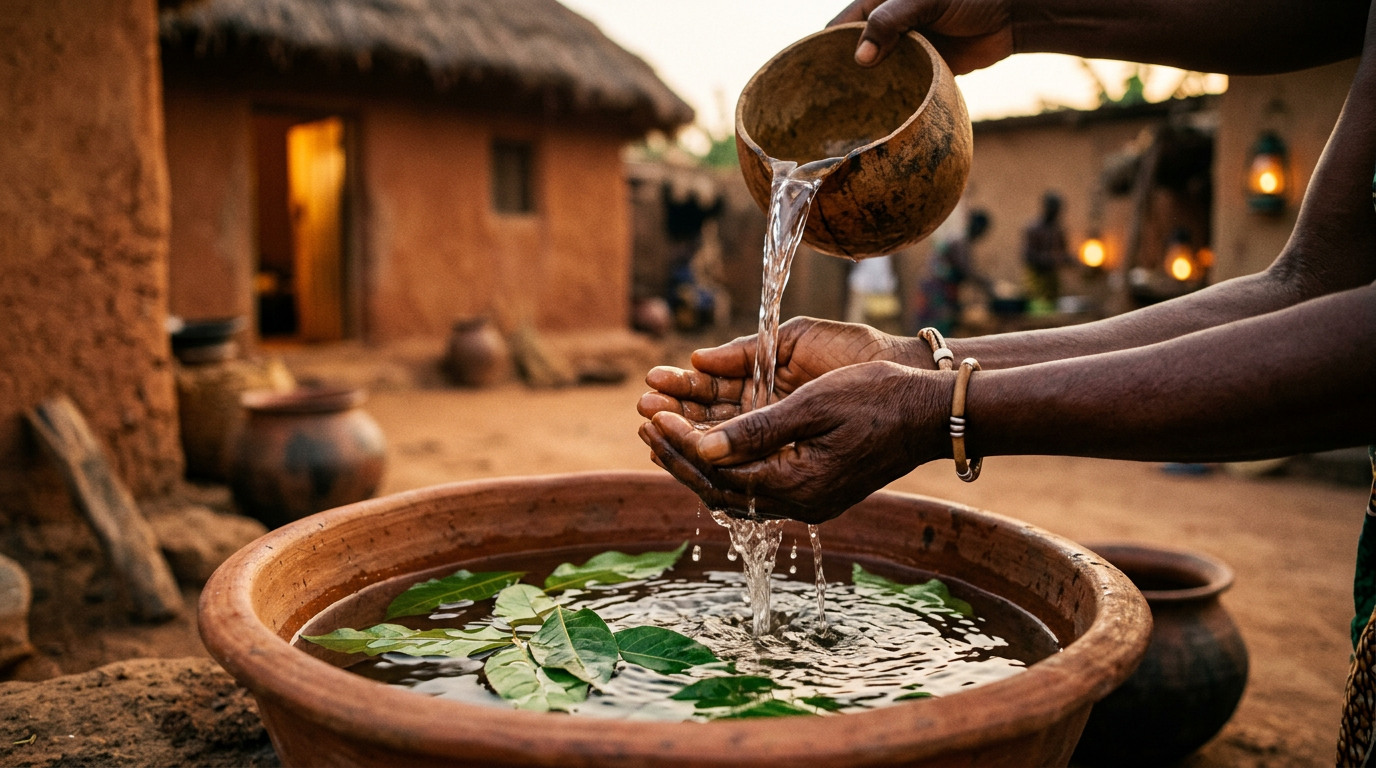
A Yoruba spiritual bath is a consecrated act, not a wellness routine. The term ìwẹ̀ àṣẹ names what is happening precisely: a bathing that carries àṣẹ, the animating divine power that runs through all living things, all speech, all ritual. This is central to initiation in Yorùbá religion and to the broader architecture of purification rites — not as ceremony for ceremony's sake, but as a functional intervention in a person's spiritual condition.
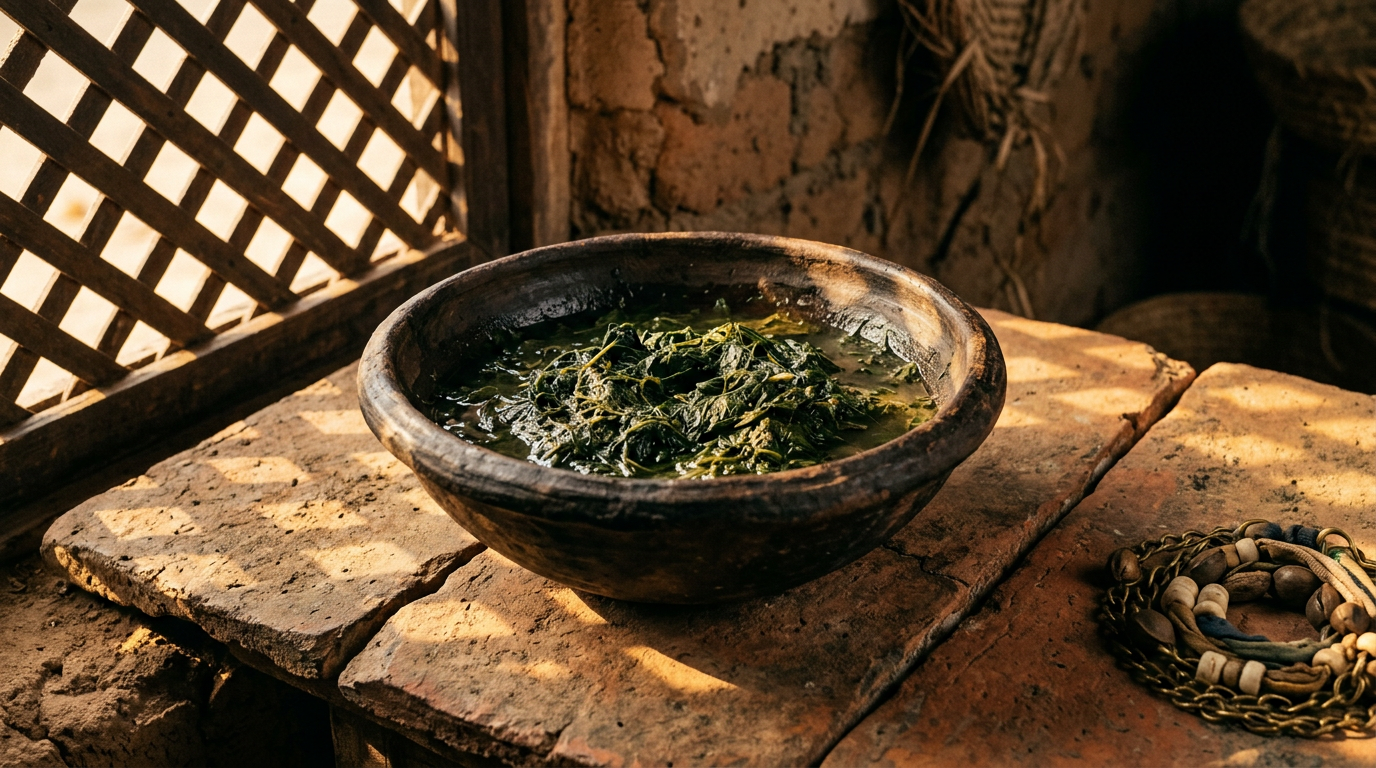
A related and commonly used term is omi ero, a cleansing bath that Ifá tradition describes as one of the most common healing rituals in Yoruba practice. What sets omi ero apart immediately is that it is individually prescribed. No two people receive the same formula.
How Spiritual Baths Differ from Everyday Hygiene
The difference is cosmological before it is procedural. In Yoruba thought, water is a living spiritual force — creative, destructive, and conscious in its own way. When a practitioner steps into a ritually prepared bath, the water is not a passive medium. It is understood to actively receive and carry away spiritual impurities, or, depending on the prescription, to draw something desirable toward the person.
Ordinary bathing cleans the physical body. Ìwẹ̀ àṣẹ addresses the condition of the whole person — including dimensions of existence that soap and water cannot reach.
The Role of Spiritual Cleansing in the Ifá Tradition
How Odù Ifá Prescribes Cleansing
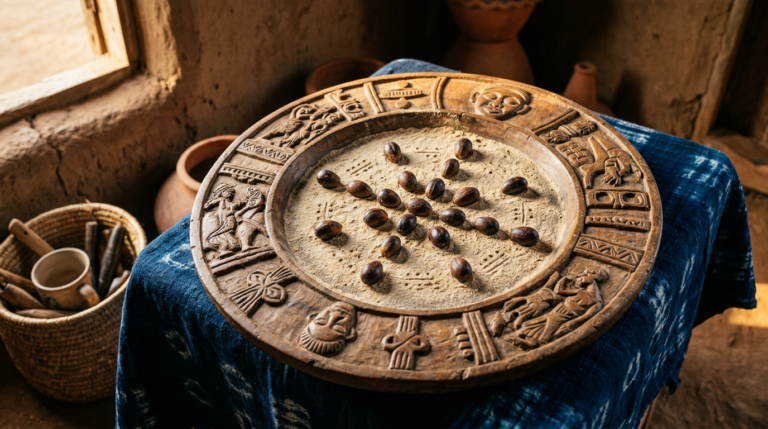
Every prescription for a spiritual bath begins with divination. The Ifá divination system, recognized by UNESCO, is organized into 256 Odù — the primary configurations of the corpus — each subdivided into verses called Ẹsẹ̀, with approximately 800 Ẹsẹ̀ per Odù. When a Babaláwo or Ìyánífá casts for a client and a specific Odù emerges, that Odù carries embedded remedies. A ritual bath may be one of them.
The prescription is not generic. The Odù revealed in divination diagnoses the precise nature of the spiritual obstruction or need, and the bath that follows is formulated to address that specific situation. Understanding Odù Ifá is therefore inseparable from understanding why any particular cleansing is prescribed.
The Relationship between orí, Àṣẹ, and Purification
Orí — the divine inner head — is the metaphysical seat of personal consciousness, àṣẹ, and individual destiny in Yoruba cosmology. When Orí is obscured by spiritual pollution, broken relationships, or choices that run against one's path, the disruption isn't merely emotional or psychological. According to tradition, it affects the entire trajectory of a person's life.
Spiritual baths that cleanse and align the Orí are therefore acts of destiny maintenance. Ritual washing, in this light, is understood to restore the purity necessary for effective divination and deeper spiritual communion — as detailed in peer-reviewed research on water symbolism in Yorùbá culture — because water washes away the impurities that block that communion. The bath doesn't just clean a body. It works on the interface between a person and their àṣẹ.
Common Elements Used in Yoruba Spiritual Baths
Sacred Herbs and Leaves (Ewé)
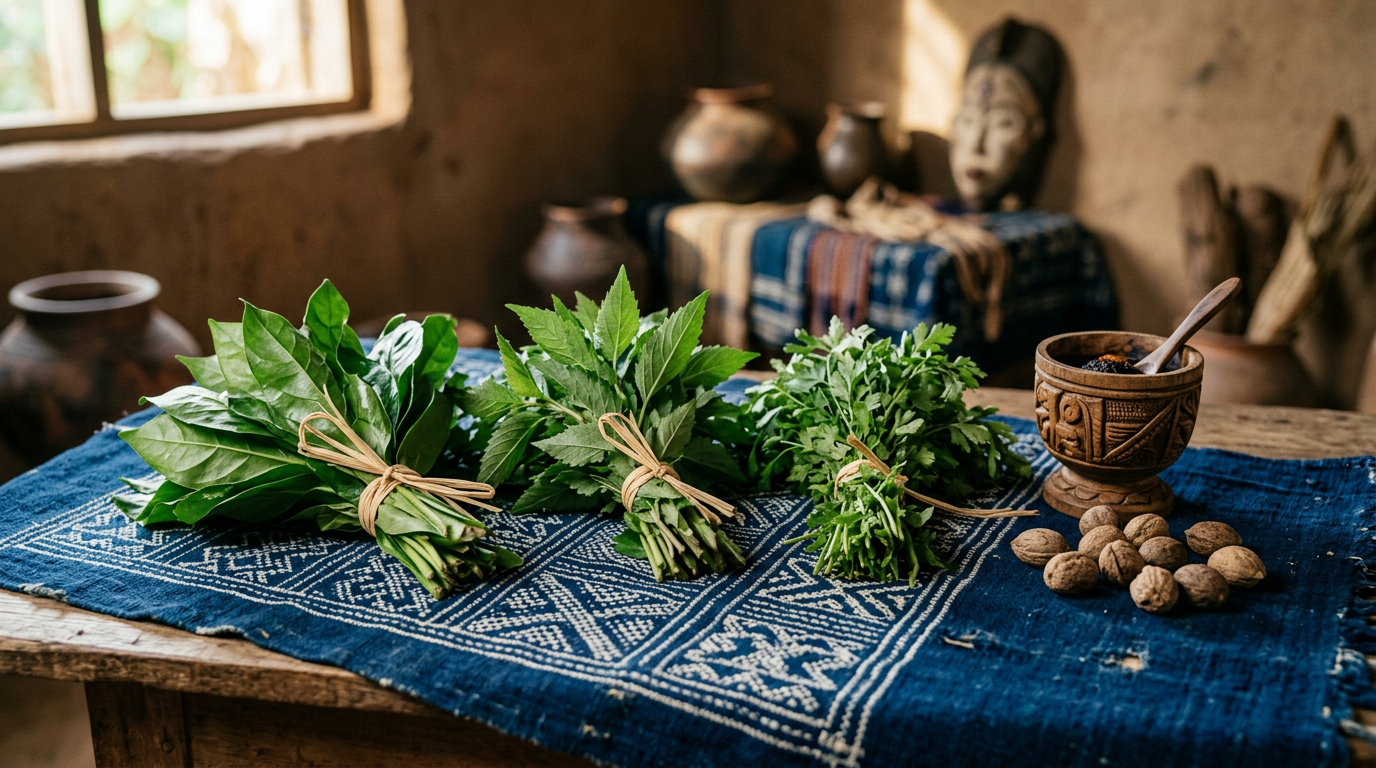
Ewé — sacred herbs and leaves — are the pharmacological and spiritual core of most Yoruba ritual baths. Specific leaves may be prescribed following an Ifá divination to address identified spiritual imbalances; scholars commonly cite examples such as ewe àlùkò (indigo leaf) and ewe èpè, though exact prescriptions vary by lineage and the Odù cast.
Herbal knowledge in the Yoruba tradition is not secular botany. Widely cited accounts describe all plant knowledge as governed by Osanyin (also called Osain), the Òrìṣà of herbs and the forest. Gathering plants for a ritual bath requires spiritual permission and proper protocol — every herb belongs, in a foundational sense, to Osanyin. This is why Yoruba sacred herbs and their spiritual uses constitute their own discipline within the tradition, not merely a list of ingredients.
Water Sources and Their Significance
Not all water is equivalent in Yoruba spiritual bathing. River water, rain water, ocean water, and water collected at specific times or locations each carry distinct spiritual properties. Baths prepared for work connected to Ọ̀ṣun, for example, commonly incorporate fresh river water, aligned with that Òrìṣà's domain. The source of the water is itself a ritual choice, not incidental.
Crucially, the bath does not end at the moment of bathing. What is done with the used water, spent plant matter, and other ingredients afterward — disposal at crossroads, rivers, or designated locations — is itself a ritual act, prescribed by the Odù. Omitting this step is understood to leave the work incomplete.
Prayers, Incantations, and oríkì
The spoken word carries àṣẹ. This is not metaphor in Yoruba tradition — it is operational principle. Oríkì (praise poetry), Ofo (incantations), and prayer are integral to a ritually effective spiritual bath, not optional accompaniments. Without the correct spoken components, the physical ingredients alone do not constitute a complete ritual. The voice activates the work.
Types of Spiritual Baths and Their Purposes
Baths for Spiritual Cleansing and Removal of Negativity
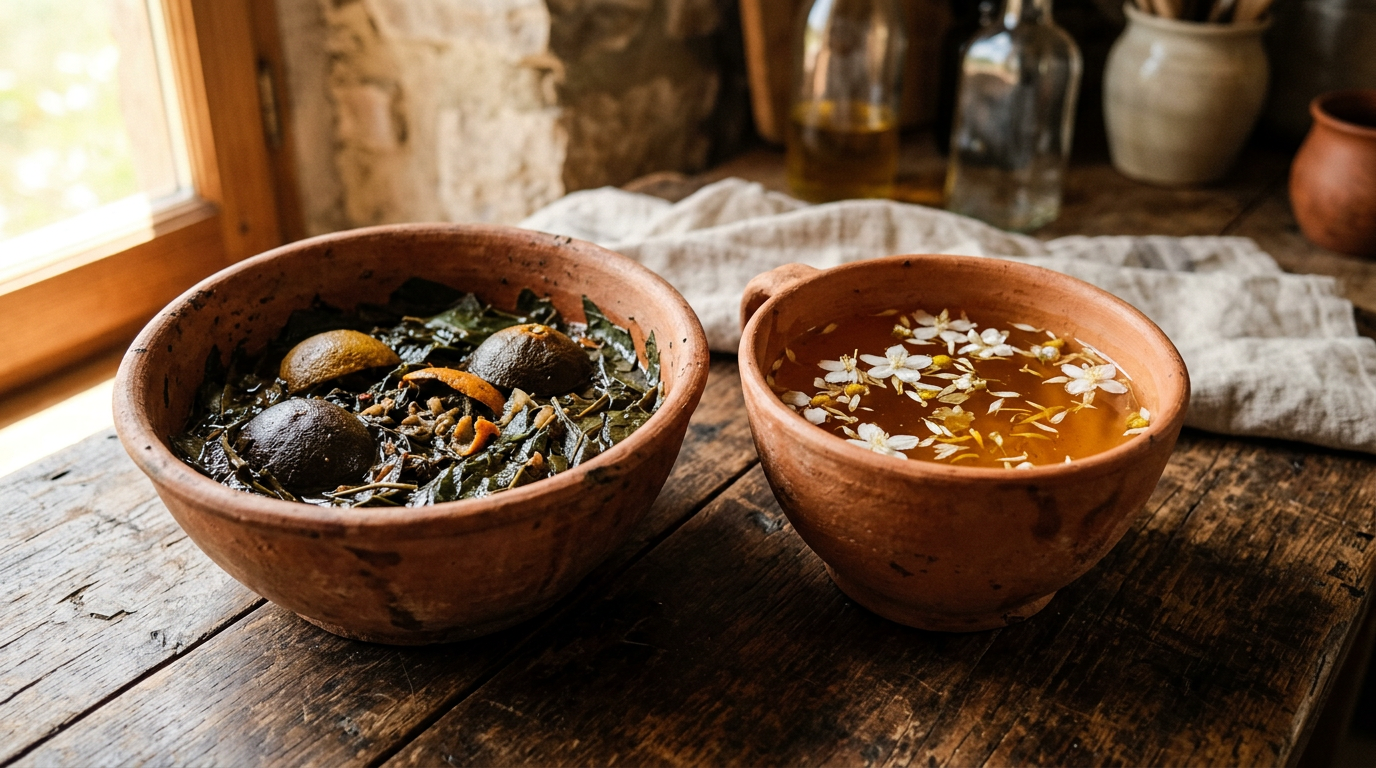
One broad category of spiritual bath is oriented toward removal: clearing negative energies, spiritual debris, or conditions that have accumulated around a person and impede their àṣẹ. These are sometimes called "sour" baths in practitioner accounts — formulated with ingredients understood to cut, dispel, or repel. One initiated practitioner account describes receiving an Ifá prescription that combined both sour and sweet baths administered on alternating days, a protocol consistent with how many practitioners describe common prescriptions, though specific formulations vary by lineage.
The logic is directional. A sour bath moves something outward and away. It is not a punishment or an emergency measure — it is maintenance, often prescribed simply because the Odù identified accumulated spiritual weight rather than an acute crisis.
Baths for Attraction, Prosperity, and Coolness
The counterpart to the sour bath is the "sweet" bath: preparations formulated to draw blessings, cool a heated spiritual state, or open pathways for prosperity and good fortune. Sweetness in Yoruba spiritual practice is a precise concept. It signals alignment, welcome, and favorable conditions — the state in which àṣẹ flows freely rather than meeting obstruction.
Widely cited practitioner accounts describe that healing prescriptions from Ifá may include three components simultaneously: an agbo (herbal drink) for the physical body, a ritual leaf bath for the spirit, and an offering to an Òrìṣà for destiny alignment. The bath does not stand alone; it is typically one movement within a larger, coordinated prescription.
Baths Linked to Specific Òrìṣà
Some baths are prepared in alignment with a specific Òrìṣà whose energy and domain address the client's need. Each Òrìṣà corresponds to particular herbs, colors, water sources, and spiritual qualities. Widely cited examples include baths for Ọ̀ṣun — who governs love, rivers, and fertility — connected to fresh water and sweet ingredients, and baths aligned with Obatala, which emphasize coolness, white substances, and purity.
These should be understood as illustrative correspondences, not rigid universal formulas. Specific preparations vary across lineages and houses, and Òrìṣà and their attributes encompass more nuance than any single summary can hold. What remains consistent is the principle: the bath speaks the Òrìṣà's language, and that specificity is the point.
Protocol and Reverence: How Spiritual Baths Are Properly Administered
The Role of the Babaláwo or Ìyánífá
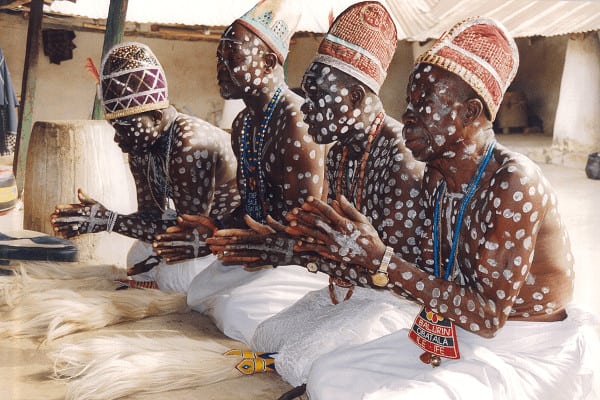
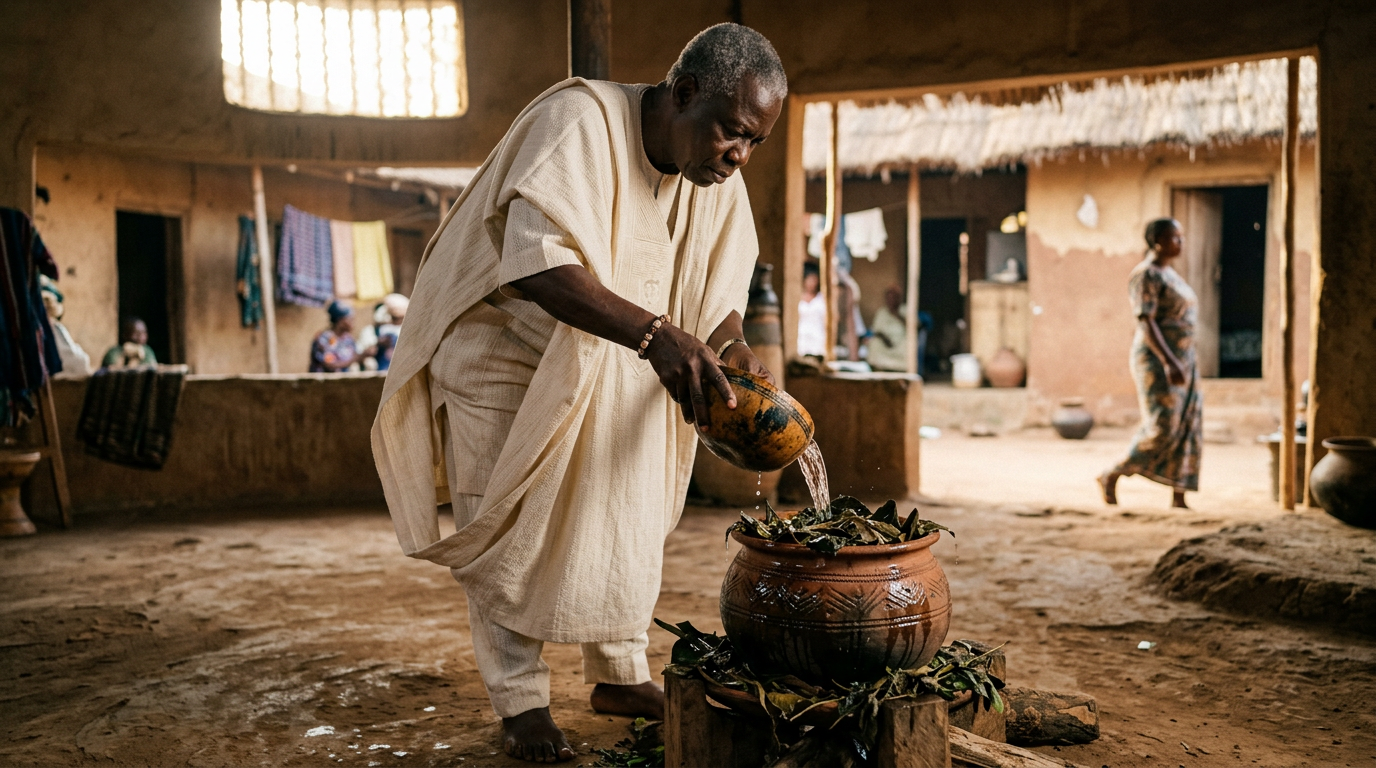
A ritual bath prescribed through Ifá is administered under the guidance of a trained, initiated priest. A Babaláwo (male Ifá priest) or Ìyánífá (female Ifá priestess) interprets the Odù revealed during divination and identifies what remedies that Odù requires — including whether a bath is indicated, what type, and what components it should contain. The role of the Babaláwo in Ifá practice is that of both diagnostician and prescription-giver, not merely a ceremonial officiant.
One important note: the scope of the Ìyánífá title is not settled uniformly across all lineages. Some Nigerian and Cuban lineages hold different positions on the extent of women's Ifá priestly authority. This variation exists within the living tradition and is worth acknowledging rather than papering over.
Timing, Setting, and Ritual Etiquette
Timing matters. The day of the week, time of day, and lunar phase may all be relevant to the specific prescription. The setting must be prepared appropriately — this is not drawn casually. The person receiving the bath typically enters with specific instructions about their state of mind, what they should or should not eat beforehand, and how they should conduct themselves after.
These protocols are lineage-specific in their fine details, and that specificity is not bureaucracy. Each element of the prescription traces back to what the Odù revealed. Changing one component — substituting a herb, skipping the spoken words, pouring the water in the wrong location — alters the ritual's coherence. Reverence, in this context, means precision.
Honoring the Tradition: Where Sincerity Meets Accountability
Yoruba spiritual bathing has survived the Middle Passage, colonial suppression, and the systematic pathologizing of African healing by missionary and colonial authority in southwestern Nigeria. Its persistence across the diaspora — in Candomblé, in Lucumí and Santería, in communities reconnecting with Ifá isẹ̀ẹ̀ (original, unsyncretic Ifá) — is a testament to the practice's depth, not its simplicity.
That diaspora context matters for contemporary practitioners. Syncretic Afro-Caribbean traditions share overlapping bath vocabulary (omiero, baño blanco) and genuine historical roots in Yoruba practice, but they are distinct traditions with their own lineages and protocols. Conflating them with continental Yoruba Ifá practice is a common and sensitive error worth being deliberate about.
Commercially sold "Yoruba spiritual bath kits" and social-media bath tutorials are a different concern entirely. A single formula marketed to everyone contradicts the foundational principle that Ifá prescriptions are individualized after divination. A kit cannot read your Odù. What distinguishes tradition-grounded practice from commodified imitation is precisely the chain of accountability: divination, a trained priest, a specific prescription, and correct completion of the full protocol — including what you do with the water when you're done.
For those approaching this practice as sincere seekers, the most honest starting point is an introduction to Ifá divination and, when ready, sitting with a lineage-holding Babaláwo or Ìyánífá. The bath is meaningful because of what precedes it. Begin there.