
Orí in Yoruba Spirituality: Destiny, Inner Head, and Purpose
Orí is not simply the Yoruba word for "head" — though that translation is where most accounts stop. For practitioners and students of Ifá, the concept operates across three simultaneous registers: physical head, metaphysical consciousness, and personal divinity. Understanding how those layers interact, and how Orí relates to destiny, the Òrìṣà, and daily ethical life, is the work this article undertakes.
What Is Orí in Yoruba Cosmology?
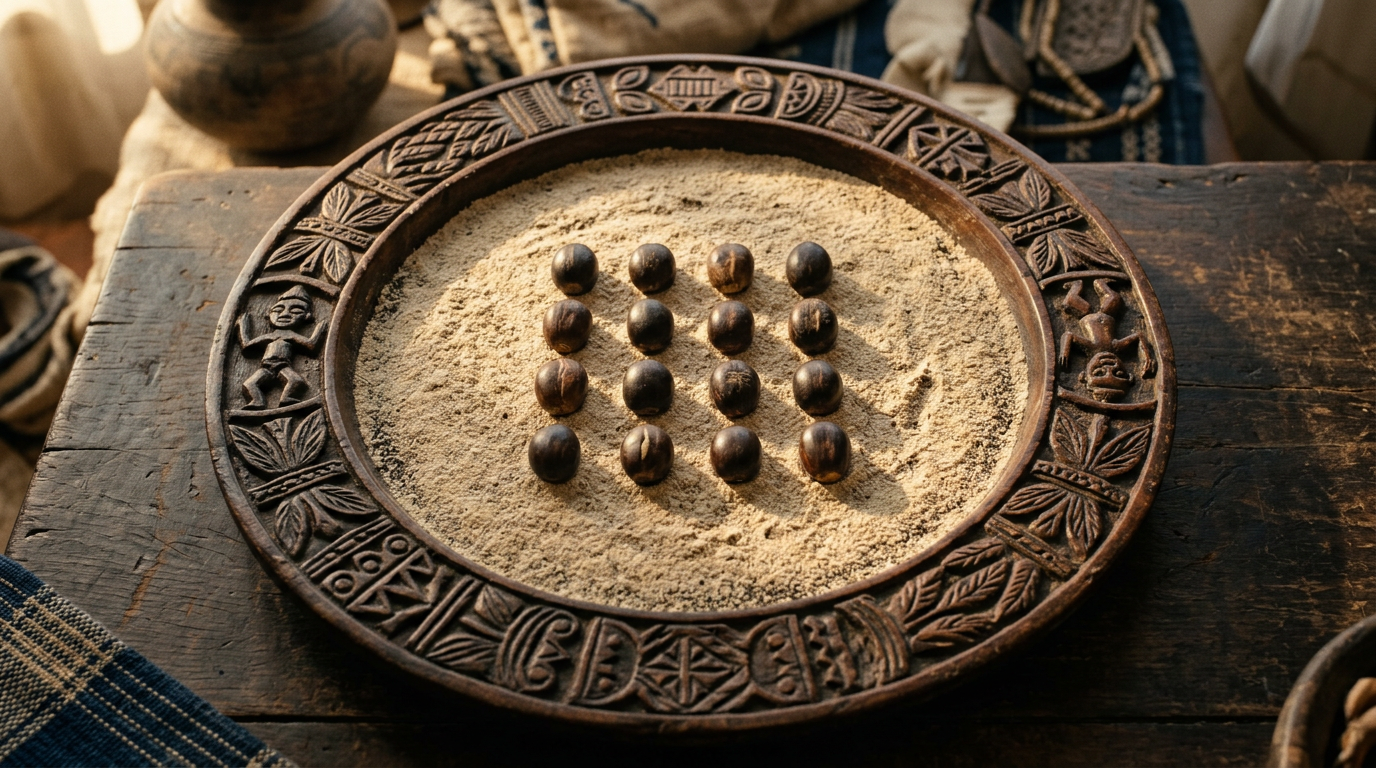
This piece is part of our broader beginner’s guide to Yoruba religion — see the pillar for a full map of Ifá theology, Òrìṣà worship, and the practical framework that gives Orí its context.
Orí constitutes the cosmic potential of each human being and their purpose for existence — a formulation that resists reduction to anything like the Western concept of "fate" or the psychological notion of a "higher self." The University of Alabama's Global Critical Philosophy of Religion project positions Orí as foundational to Yoruba philosophy of mind and personhood, not as a minor devotional concept. Encyclopaedia Britannica similarly identifies Orí as definitional to Yoruba thought, noting that a Yoruba philosopher will resist separating "head" from "destiny" — the two are not analogous concepts that happen to share a word; they are a single reality described from different angles.
What makes the concept philosophically serious is precisely this refusal to split the physical from the metaphysical. The head holds the body's knowledge. The head is its destiny.
Orí Òde and Orí inú: The Outer and Inner Head
Yoruba philosophy distinguishes between two dimensions of Orí. Orí Òde is the outer or physical head — the seat of visible character, demeanor, and behavior as expressed in the world. Orí Inú is the inner, metaphysical head: the seat of consciousness, destiny, and divine intuition. In philosophical discourse, when scholars refer to "Orí" without qualification, they almost always mean Orí Inú, though the two dimensions are not fully divorced from each other.
This distinction matters practically. A person's outward conduct (Orí Òde) both reflects and affects the condition of the inner head. They are in constant dialogue.
Orí as a Divinity in Its Own Right
Within the Yoruba spiritual framework, Orí is not merely a philosophical category — Orí is honored as a personal divinity, the one divine force most immediately and specifically concerned with a given individual's existence. No Òrìṣà, however powerful, governs your specific life the way your Orí does. That is a structural claim within the tradition, not devotional hyperbole, and it shapes every dimension of practice discussed below.
The Choosing of Destiny: Orí and Àyànmọ́
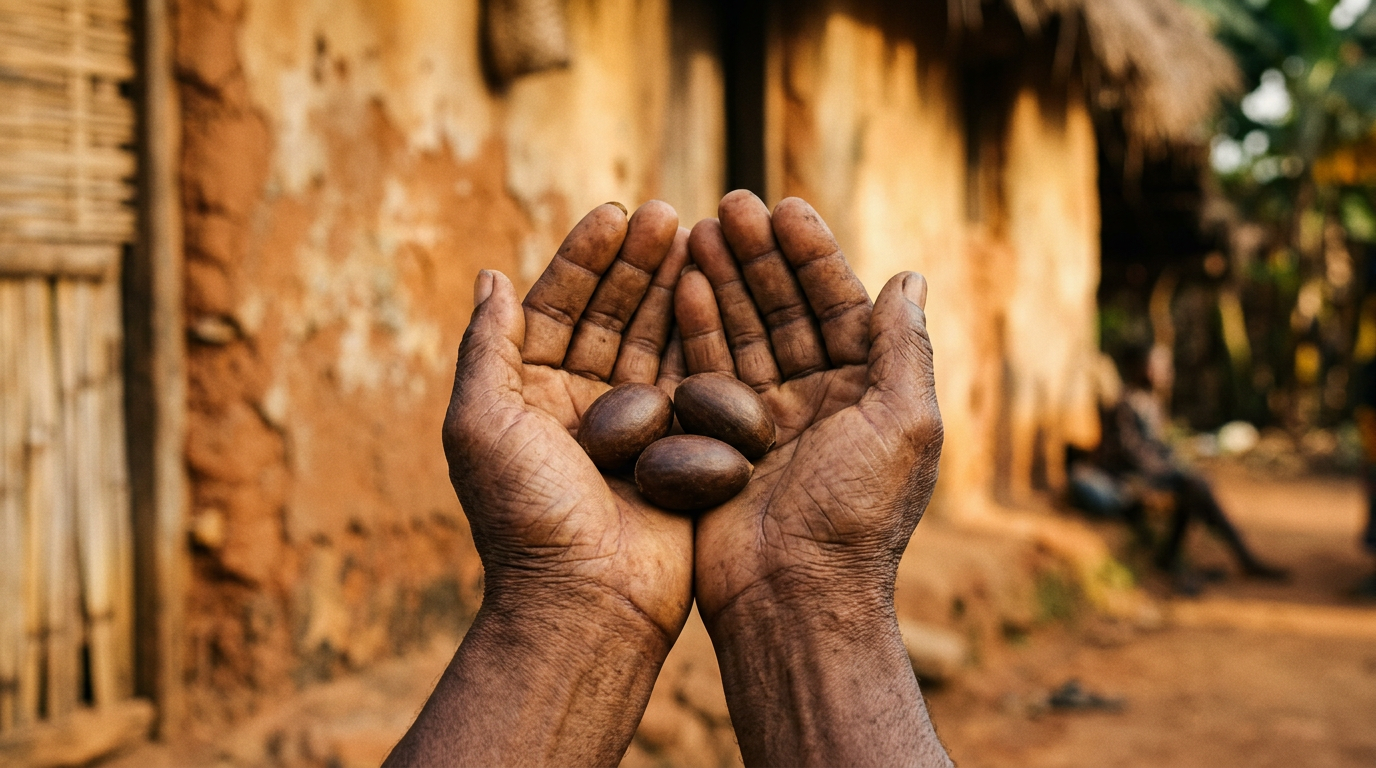
The Yoruba teaching on destiny is not fatalism. As the University of Alabama source frames it, Orí frames destiny as a dynamic interplay between pre-birth choice and earthly effort — an arena serious enough to carry a live philosophical debate about free will, personal responsibility, and the limits of cosmic order. That debate has never been resolved within the tradition, and the tradition is honest about that.
Kneeling Before Àjàlá: The Pre-Birth Selection
Widely cited accounts in Ifá practitioner sources describe what happens before incarnation: each soul travels to the celestial realm, Ọ̀run, and selects an Orí — a destiny-head — from heads fashioned by the divine potter Àjàlá Mòpín. The soul kneels before Àjàlá and chooses. That act of kneeling is encoded in the very language the tradition uses for this moment.
The cosmological weight of Àjàlá's role extends beyond the mechanics of the myth. Àjàlá is portrayed as sometimes careless — a potter who occasionally produces flawed or poorly fired heads. This is not incidental detail. The Àjàlá story is Yoruba cosmology's explanation for why human lives vary so dramatically in fortune and struggle, and it does so without reducing suffering to individual moral failure. The variation in destiny is partly a feature of the potter's craft, not purely the soul's fault.
Àyànmọ́, Àkúnlẹ̀yàn, and Àkúnlẹ̀gbà
The tradition encodes the structure of destiny in three distinct terms, each doing specific conceptual work. Àyànmọ́ is the immutable portion of fate — what is sealed and cannot, according to one reading, be renegotiated. Àkúnlẹ̀yàn names the act itself: "that which is chosen while kneeling," the soul's pre-birth selection. Àkúnlẹ̀gbà refers to what is received in that same moment — the assignments, tests, and resources accompanying the chosen path.
Whether Àyànmọ́ is truly immutable or can be modified through Ẹbọ (sacrifice) and sustained spiritual practice is a live debate within Ifá scholarship and community discourse. Some teachers hold that certain aspects of destiny are fixed; others maintain that diligent practice and appropriate Ẹbọ can shift even what seems sealed. Both positions deserve acknowledgment rather than a tidy resolution the tradition itself has not provided.
Orí and the Òrìṣà: Why Orí Comes First
Within Yoruba traditional thought, Orí holds primacy over all other spiritual forces in a person's life. The teaching is clear and widely attested across tradition sources: no external spiritual force can override a well-aligned Orí, and no amount of Òrìṣà ritual substitutes for a neglected one. This is not a claim that diminishes the Òrìṣà. The relationship is one of hierarchy within relationship — the Òrìṣà are powerful, honored, and necessary, but they operate in service of a destiny the individual's Orí already carries.
Odù References to the Primacy of Orí
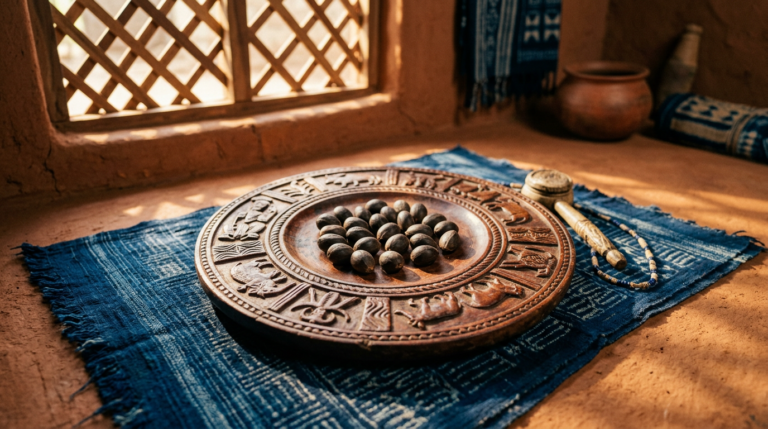
The Ifá literary corpus — the body of Odù texts that form the backbone of Ifá divination — consistently returns to Orí's precedence. The tradition places particular weight on this primacy in ese Ifá (Ifá verses) that speak directly to the Orí's role as the ultimate arbiter of a person's earthly trajectory. The epithet applied to Òrúnmìlà — Ẹlẹ́rìí Ìpín, "witness to destiny" — reflects this: Òrúnmìlà was cosmologically present at the moment each soul chose its Orí, which is precisely why Ifá divination can speak to a querent's Orí condition. The Odù revealed during a reading speaks directly to whether a person is aligned with their chosen destiny and what is required to restore or deepen that alignment.
The Relationship Between Orí and One's Tutelary Òrìṣà
The tutelary Òrìṣà — the Òrìṣà governing a person's head in the Yoruba-derived traditions — works in concert with Orí, not in competition with it. Think of it this way: the Òrìṣà provides a field of energy, orientation, and protection. The Orí provides the specific map of this individual's life. Honoring your tutelary Òrìṣà strengthens your capacity to walk your path; it does not replace the walking.
Some accounts describe Ẹnìkejì — the "celestial double" or spiritual counterpart — as the aspect of Orí that remains in Ọ̀run while the individual lives on earth, serving as intercessor and living mirror of the soul's chosen path. This concept is recognized in Ifá literature, though its precise definition varies across practitioner sources. Understanding the Òrìṣà in Yoruba tradition deepens this picture considerably.
Signs of Alignment and Misalignment with Your Orí
Alignment with Orí shows up as a quality of momentum and inner coherence: effort meeting appropriate results, a sense of purpose that persists even through difficulty, and a felt correspondence between what you are doing and what you are for. Misalignment, by contrast, tends to announce itself through sustained stagnation, recurring obstacles that don't yield to reasonable effort, and a persistent sense of living someone else's life. These are the tradition's own diagnostic categories, not modern psychological overlays.
When Orí Is in Harmony: Flow, Purpose, and Fulfillment
When Orí Inú is strong and a person is walking their chosen path, the tradition describes this as a state where earthly effort and cosmic support are moving in the same direction. Work produces results proportionate to the effort. Relationships, vocational direction, and spiritual practice feel coherent rather than fragmented. This does not mean the absence of difficulty — a chosen destiny can include trials — but difficulty of that kind tends to carry a sense of purposeful weight rather than meaningless obstruction.
Ìwà Pẹ̀lẹ́, often translated as "gentle, measured good character," functions as the primary daily practice for strengthening Orí Inú. The interdependence runs deep: Yoruba moral philosophy holds that good character and Orí are so fundamentally linked that the absence of Ìwà metaphysically degrades destiny itself. Proverbs within the tradition make this explicit — Orí and Ìwà are not separate concerns that happen to complement each other; Ìwà is how Orí is maintained.
When Orí Is Unsettled: Obstacles, Confusion, and Stagnation
Sustained misalignment with Orí tends to present as obstacles that resist ordinary remedy. Effort does not produce proportionate results. Confusion around direction persists even after reasonable reflection.
These conditions, within Ifá practice, are not first treated as psychological problems or external bad luck. They are read as signals pointing toward the Orí's condition.
The tradition's response to this recognition is practical and immediate: seek Ifá divination to assess what the Orí requires. A reading can identify whether the person has strayed from their chosen path, whether Ẹbọ is called for, and what adjustments in character or practice need to follow.
Neglect of Orí is understood as a cumulative process. Small misalignments compound over time, which is why the tradition emphasizes consistent veneration and periodic divination rather than crisis-only intervention. Waiting until life has broken down to attend to your Orí is like waiting until the dry season is catastrophic to check whether the well was maintained.
Honoring Your Orí: Prayers, Offerings, and Ritual Practice

Core Orí veneration involves prayer, prescribed offerings, and the cultivation of good character — practices that are regular and structural, not reserved for moments of crisis. This is how the tradition frames it: Orí requires ongoing relationship, not emergency management.
Traditional Orí Veneration Practices
Prayer to Orí is among the most personal of all devotional acts in Yoruba practice, precisely because Orí is the most intimate of all divinities — no intermediary is required. Direct address to one's own Orí, spoken with honesty and clarity, is itself a recognized form of veneration. The Yoruba prayers and spiritual devotion practiced within Ifá contexts treat Orí consultation as foundational to any serious spiritual life.
The broader structure of veneration includes periodic ritual attention, alignment with one's tutelary Òrìṣà, and the daily practice of Ìwà Pẹ̀lẹ́. These are not separate tracks — they reinforce each other.
Orí Feeding and Its Significance
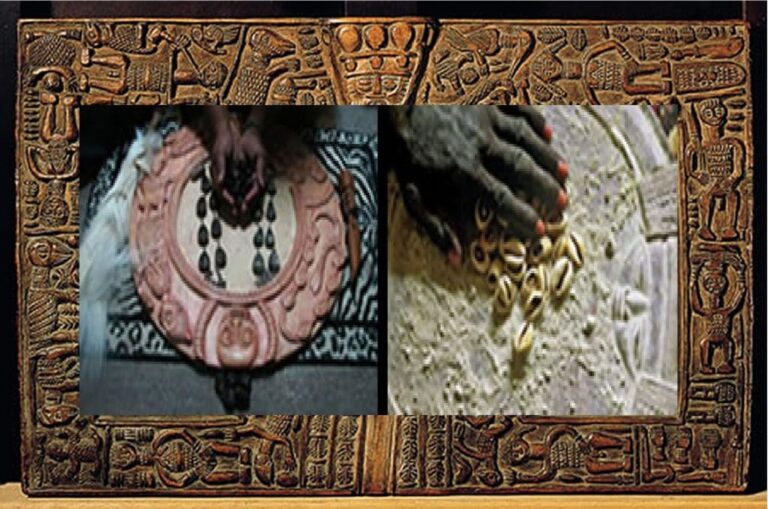
The Borí (also called Ibori) ceremony is a ritual of feeding and praising one's Orí. Across some lineages, commonly associated offerings include water, honey, obi (kola nut), shea butter, and other cooling substances, placed on the head while prayers are spoken. The logic of these substances is consistent with the tradition's broader therapeutic vocabulary: cooling, sweetening, and nourishing the inner head to restore clarity and strength.
Specific prescriptions vary by lineage and divination outcome. What a practitioner in one lineage brings to the ceremony may differ from protocols held by another community. This is by design, not inconsistency — the Odù revealed during divination shapes what a particular person's Orí requires at a particular moment. Anyone approaching the Borí ceremony for the first time should do so with the guidance of a qualified Babalawo or Ìyánifá rather than from a generalized published list.
Diaspora communities — including practitioners in Candomblé, Lucumí, and Trinidad Orisha traditions — maintain their own related practices for feeding and honoring Orí. These traditions share a common root but have developed distinct protocols; no single lineage's practice should be read as universally normative.
Orí and Personal Purpose: Living Your Chosen Path
Orí alignment is not a passive mystical state. Every dimension of the tradition covered here — the pre-birth selection, the Odù's diagnostic function, the cultivation of Ìwà Pẹ̀lẹ́, the Borí ceremony — points toward an active, ongoing, ethically grounded practice of living in correspondence with what you chose before you arrived.
The philosophical weight of the tradition's position on destiny is worth sitting with: Àyànmọ́ encodes what you selected, Àkúnlẹ̀yàn names the act of choosing, and Àkúnlẹ̀gbà names what you received in that moment. The Orí carries all three into embodied life. That is not a burden — it is, by the tradition's own account, a form of dignity. You arrived with a purpose. The work is alignment, not invention.
For practitioners, this shifts the question from "what should I do with my life?" to "what does my Orí require of me right now?" Divination answers that question in time-specific terms. Character practice answers it daily. Veneration keeps the channel clear. These are not three different projects — they are one project approached through three angles simultaneously. The Odù revealed during an Ifá reading, as the role of Odù in Ifá practice makes clear, does not merely diagnose problems; it maps the querent's position relative to their chosen destiny and points toward the next right action.
The tradition's enduring insight is that your path is not fixed and unknowable. You chose it. You carry the map inside your own head. Consistent practice keeps that map legible.
Where to Go from Here
For those looking to deepen their engagement with Orí, the entry points are practical: begin with divination to assess where you stand relative to your chosen destiny; cultivate Ìwà Pẹ̀lẹ́ as a daily orientation rather than an occasional aspiration; and seek out a qualified lineage holder before undertaking Borí or any ceremony involving direct feeding of the Orí. The tradition moves through relationship — with Orí, with qualified guides, and with the broader community of practice.
The introduction to Ifá divination system and Ajàlá and the creation of destiny in Ifá offer grounding in the cosmological framework that makes Orí comprehensible. Start there if the philosophical architecture still needs filling in. If the framework is already solid, start with your Orí directly — which is, in the end, exactly what the tradition recommends.