How to Read the Odù: A Beginner's Guide to Ifá Interpretation
Most people who first encounter Ifá expect to find a book — a canonical text they can open, read, and consult at will. What they find instead is something far older and more complex: 256 living configurations of wisdom, each containing hundreds of poetic verses, transmitted across generations through human memory and voice. This guide walks through what the Odù are, how they are cast, and what it actually means to interpret one.
What Is Odù in the Ifá Tradition?
Odù Ifá is the oral corpus of verses, proverbs, and stories that forms the central scripture of the Yorùbá Iṣẹṣe tradition. Unlike the Bible or the Quran, it has no single canonical written form. The corpus lives in the memories of trained diviners and, crucially, it continues to grow — new verses are composed by practitioners and absorbed into the living whole.
This piece is part of our broader guide to the 16 Principal Odù of Ifá — see the pillar for a full map of the sacred corpus, individual Odù teachings, and how the Odù system organizes Ifá knowledge.
That's not a flaw in the system. That's the point.
The Odù was revealed, according to Yorùbá tradition, by Ọrunmila — the Òrìṣà of wisdom, knowledge, fate, and prophecy. This origin matters because it means the corpus carries divine authority, not textual authority. When a diviner works with Odù, they are not cross-referencing an index. They are accessing a spoken scripture that has been memorized, tested, and refined across centuries of human experience.
What Makes Odù a Living Oracle Rather Than a Fixed Text?
Odù functions as a living oracle because its meaning is never fully settled by the text alone — it is completed through the encounter between the verse and the person consulting it. Each of the 256 Odù contains a range of possible applications, and which application applies depends entirely on the situation of the querent sitting before the diviner.
This is different from how most Westerners think about sacred texts. The Odù does not yield its meaning through silent reading. A verse recited before a grieving mother addresses her situation. The same verse recited for a merchant making a risky decision addresses his. The words are the same; the meaning shifts. This dynamic quality is what practitioners mean when they say Odù is "alive."
The Relationship Between Odù and Òrìṣà
Òrúnmìlà is the Òrìṣà understood as the divine witness of human destiny — present at the moment each soul chose its path before entering the world. The Babaláwo, the trained divination priest, is understood as the human custodian of Òrúnmìlà's wisdom. Their role is to access and interpret that wisdom on behalf of those seeking guidance. (Lineage practices vary regarding priestly gender roles across different traditions and communities.)
This relationship between Odù and Òrìṣà means that consulting Ifá is not a neutral information-retrieval exercise. It is an act of communication with a living cosmic intelligence, mediated through a trained human specialist. Understanding Òrìṣà in Yorùbá spirituality helps clarify why each Odù carries spiritual weight beyond its textual content.
The Structure of the 256 Odù
The Ifá divination system was inscribed on UNESCO's Representative List of the Intangible Cultural Heritage of Humanity in 2008, having been originally proclaimed a Masterpiece of the Oral and Intangible Heritage of Humanity in 2005. Part of what UNESCO recognized was the system's remarkable structural sophistication: 256 distinct Odù, each with its own identity, signature, and body of associated verses.
Understanding where that number comes from removes a lot of early confusion for beginners.
The Sixteen Olódù (Principal Odù)
At the foundation of the entire corpus are sixteen principal Odù, called the Ojú Odù — sometimes rendered as Olódù. These are the sixteen root configurations, each with its own name, personality, and primary domain of meaning. They are not merely categories; each Ojú Odù is treated as a distinct entity with its own stories, taboos, and spiritual characteristics.
The names are worth learning early. They include Ogbe, Oyeku, Iwori, Odi, Irosun, Owonrin, Obara, Okanran, Ogunda, Osa, Ika, Oturupọn, Otura, Irete, Ose, and Ofun. If you encounter Ifá study materials, these sixteen names will appear constantly. They are the alphabet from which everything else is built.
How Paired Combinations Create 256 Figures
Each of the sixteen Ojú Odù pairs with itself and with each of the other fifteen, generating the full set of 256 configurations. The sixteen self-pairings retain their root names. The remaining 240 combinations — called Amúlù Odù — are derivative figures, each inheriting characteristics from both parent Odù while developing their own distinct identity.
Think of it as a 16×16 matrix. Every cell is a unique Odù. The cell where Ogbe meets Ogbe is still Ogbe. The cell where Ogbe meets Oyeku is a different figure entirely — one that carries aspects of both but belongs fully to neither. This combinatorial logic is what allows 16 roots to generate a corpus rich enough to address virtually any human situation.
The history and origins of Ifá divination traces how this structure developed within Yorùbá cosmological thought long before it became the globally recognized system it is today.
How Odù Are Cast During Divination
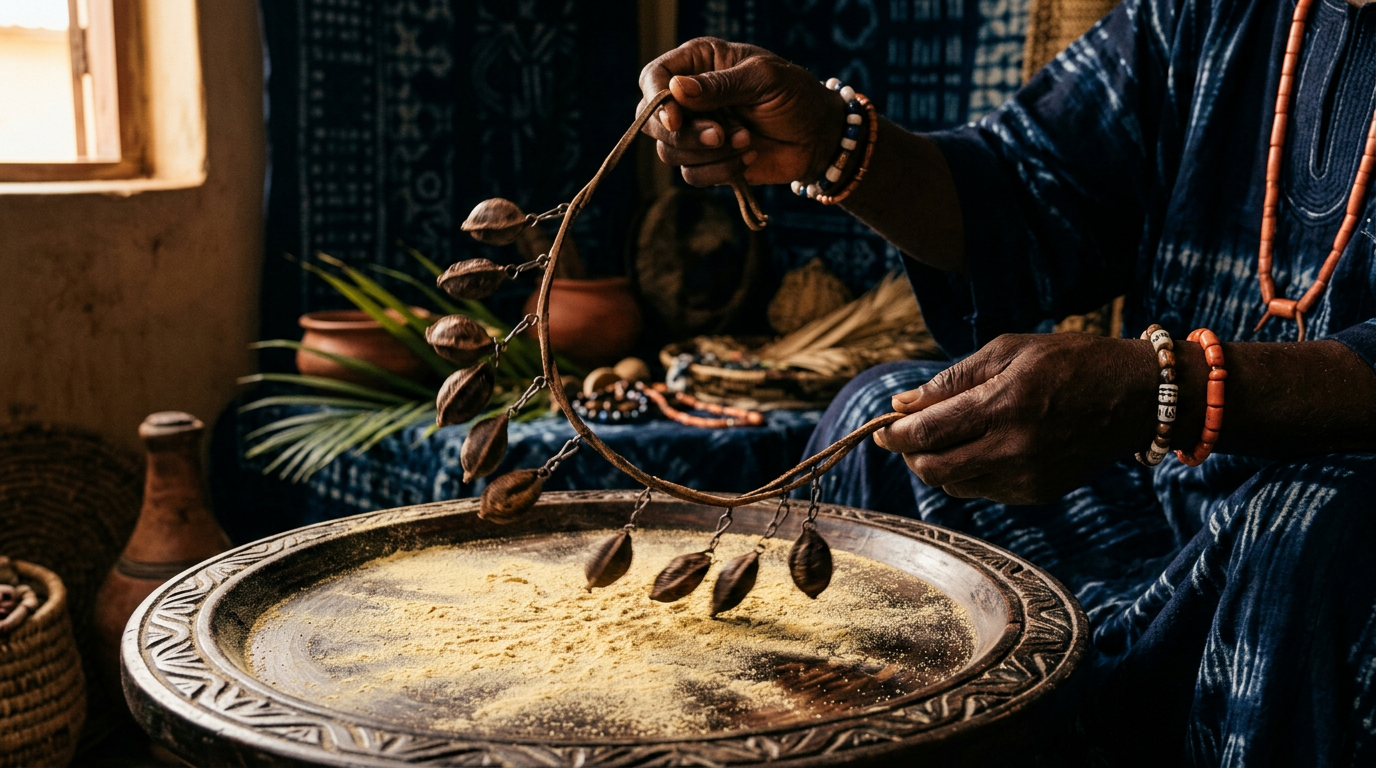
The physical ritual of casting looks simple from the outside. A diviner manipulates an object, marks something down, and reads a configuration. What is actually happening, though, is the activation of a structured binary system precise enough to isolate one of 256 distinct figures. Every mark means something. Nothing is decoration.
Divination with the Ọ̀pẹ̀lẹ̀ Chain
The Ọ̀pẹ̀lẹ̀ is a divination chain made of eight seed pods or metal pieces, each of which can fall concave-side up (representing a single mark) or concave-side down (representing a double mark). When the Babaláwo casts the Ọ̀pẹ̀lẹ̀, all eight pieces fall simultaneously, producing a configuration of eight binary values that identifies a specific Odù.
The Ọ̀pẹ̀lẹ̀ is the tool used in most everyday consultations. It is faster than the alternative method and well-suited to the rhythm of daily divination work. Think of it as the standard instrument — reliable, efficient, and appropriate for the majority of questions people bring to a Babaláwo.
Divination with Ikin (Sacred Palm Nuts)
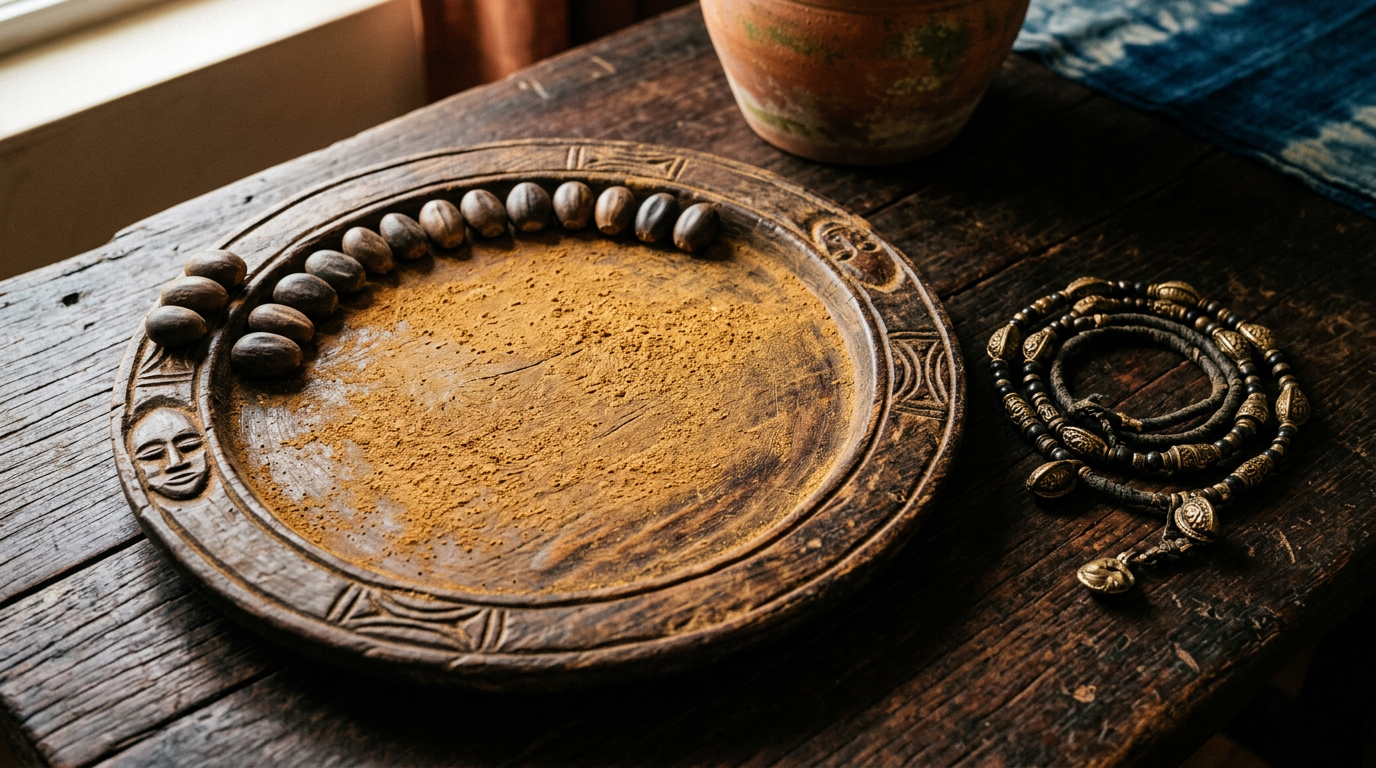
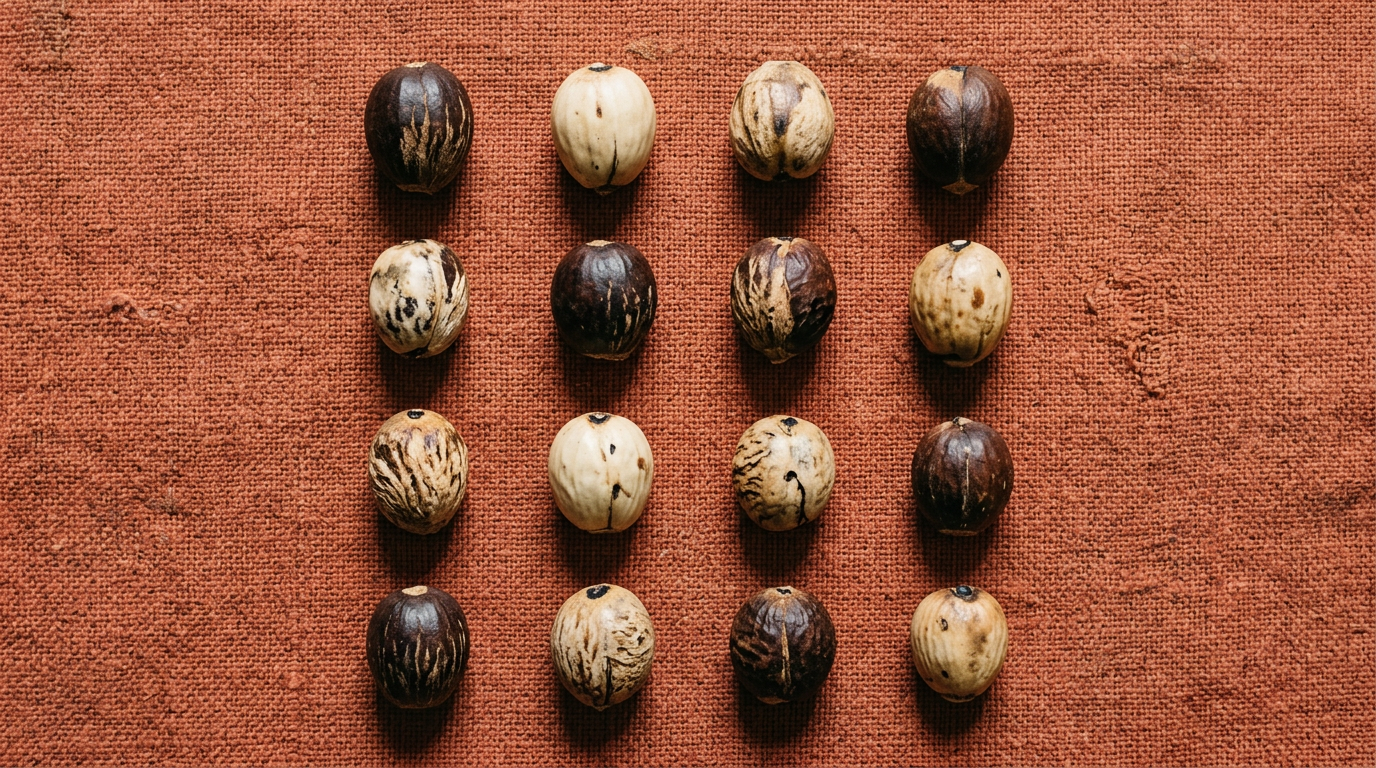
Ikin are sacred palm nuts used in a slower, more deliberate casting process. The Babaláwo takes a handful of palm nuts and passes them between the hands; the number remaining after each pass determines whether a single or double mark is recorded. The process is repeated sixteen times to build the full Odù signature, four marks at a time on the divination tray.
The Ikin are considered the physical embodiment of Ọrunmila himself. For this reason, they are reserved for more important ceremonial revelations and life-defining decisions — the consultations where the stakes are highest and the deliberateness of the process itself carries ritual meaning. Many Babaláwo receive their Ikin during initiation and maintain a lifelong relationship with them.
Reading the Binary Marks on the Divination Tray
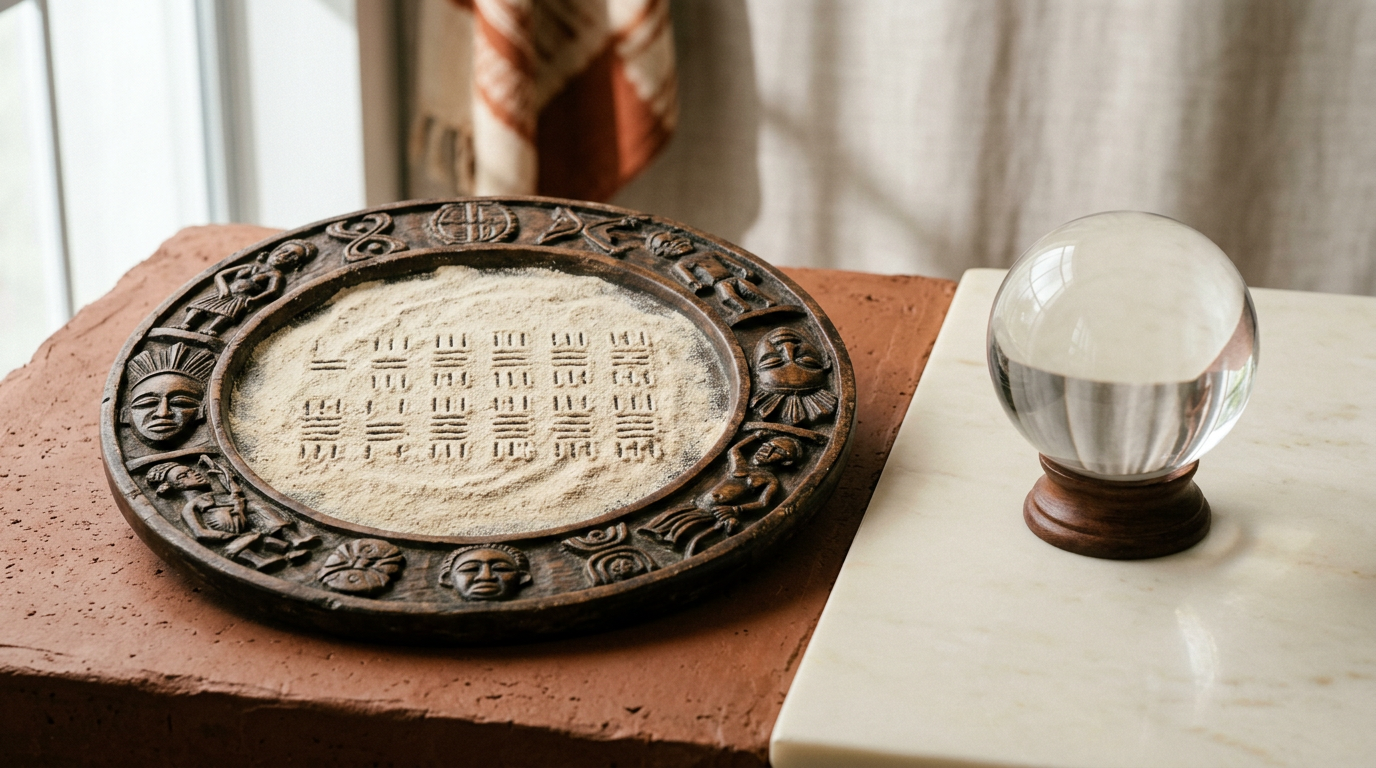
Both tools produce marks recorded on the Opon Ifá — the divination tray — dusted with iyerosun, a fine powder made from the wood of the camwood tree. A single mark (|) is drawn for certain outcomes; a double mark (||) for others. The eight positions, read in sequence, identify the Odù being addressed.
What's striking about this process, from any outside perspective, is that it is fundamentally binary. Two possible values in eight positions yields 2⁸ = 256 outcomes. Every possible consultation resolves to exactly one of those 256 configurations. Academic commentators have noted this as evidence of sophisticated indigenous mathematical thought — though some practitioners caution against framing the system as needing Western mathematical validation to be recognized as rigorous.
Interpreting an Odù: Verses, Stories, and Prescriptions
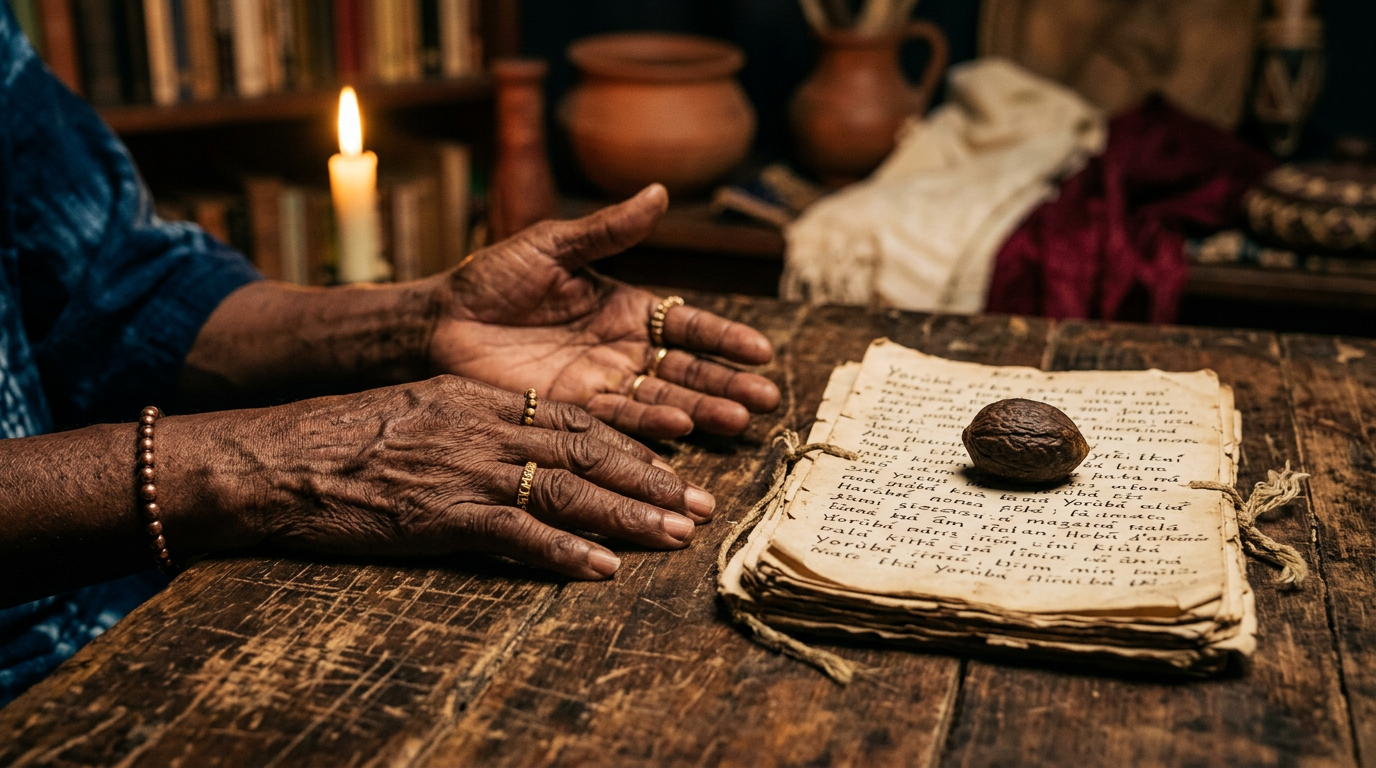
Casting identifies which Odù is present. Interpretation is a separate and more demanding task. A beginning student sometimes assumes that once the Odù is named, the meaning is automatic. The tradition disagrees.
How Do Ese Verses Carry Meaning Within Each Odù?
Ese Ifá are the individual poetic verses contained within each Odù — and there are many. UNESCO documentation of the Ifá divination system notes approximately 800 Ese per Odù, though the exact total is unknown because the corpus continues to grow as practitioners compose new verses. Across all 256 Odù, the total number of verses runs into the hundreds of thousands.
Each Ese follows a recognizable narrative pattern. Widely cited accounts describe the structure as consisting of three core elements: a human situation, a recommended response, and a projected outcome. A verse might recount how Ọ̀rúnmìlà himself faced a crisis, consulted a diviner, received a prescription, followed it, and prospered — or ignored it and suffered. The parallel between that ancient story and the querent's present situation is where the interpretation lives.
This narrative structure is not incidental. Stories carry information that propositional statements cannot. A verse about a traveler who nearly abandoned his journey three days before reaching his destination speaks differently to a person who is exhausted and tempted to quit than it does to a person who has already stopped moving.
How a Babaláwo Selects the Relevant Narrative
Scholars commonly note that the practitioner's judgment — their relational intelligence, their reading of the querent, their familiarity with hundreds of verses — is what completes an Ifá consultation. The Odù provides the framework. The Babaláwo provides the discernment.
Within a single Odù, many Ese exist. The diviner selects those whose circumstances most closely mirror what the querent describes. This is not guesswork; it is pattern recognition built through years of training. A skilled Babaláwo may recite several verses before landing on the one that makes the querent say — without prompting — "that's exactly my situation."
The consultation typically concludes with Ẹbọ, a prescribed action or offering. This is the practical ethical core of the process: Ifá's purpose is not merely to name a situation but to recommend how to move through it. Who is a Babaláwo and what do they do explores this role in greater depth.
Common Misconceptions Beginners Should Avoid
A lot of introductory material online describes Ifá in terms that would confuse anyone who then sat with a practicing Babaláwo. Two misunderstandings in particular do real damage.
Odù Is Not Fortune-Telling
Ifá divination does not predict a fixed future that the querent has no power to change. The system is built around the premise that human action shapes outcome — that is precisely why every consultation ends with a prescription. If the future were sealed, the Ẹbọ would be meaningless.
UNESCO explicitly distinguishes the Ifá system from oracular traditions that rely on trance or spirit mediumship. The Babaláwo is not possessed by a spirit. They are applying a structured interpretive system to a body of oral literature — a practice that demands memory, judgment, and ethical responsibility, not altered states. The distinction matters because it locates the tradition's authority in knowledge and discipline rather than spectacle.
Why Memorization Alone Is Not Interpretation
Some beginners approach Odù study as a memorization challenge: learn the sixteen Ojú Odù names, the 256 figure signatures, the keywords for each Odù. This is useful groundwork, but treating it as interpretation is a category error.
A list of Ogbe's associated themes (light, expansion, beginnings, the sun) does not tell you what Ogbe means for the person sitting across from you who is three months into a new business that is struggling. Getting to that meaning requires knowing the relevant Ese verses, understanding which of them speaks to that person's specific situation, and bringing enough life experience to read the human in front of you honestly. Memorization supplies the vocabulary. Interpretation requires something more — the cultivated wisdom that only comes from sustained study, supervised practice, and time.
The broader point: Ifá is consistently described by practitioners and scholars as a system for aligning human action with cosmic order, not for satisfying curiosity about future events. The question at the center of every consultation is not "what will happen?" but "what should I do?"
How to Begin Your Study of Odù Ifá
Genuine study of Odù Ifá requires more than reading. That said, respectful engagement with the tradition's concepts, history, and philosophy is both possible and encouraged for those approaching with sincerity.
Finding a Legitimate Teacher or Ilé
An Ilé is a house of Ifá practice — a community organized around a lineage holder or senior priest. Learning Odù within an Ilé means receiving transmission in context: alongside practitioners who can correct misunderstandings, clarify lineage-specific practices, and model what Ifá study actually looks like over years and decades.
Widely shared guidance in the practitioner community holds that becoming a Babaláwo requires years of disciplined study, lineage-based training, and formal initiation. Anyone who promises significant initiation in a weekend or through an online course deserves extra scrutiny. This doesn't mean all digital resources are worthless — it means that formation in Ifá is relational and cannot be compressed into a transaction. Finding an Ifá community or Ilé near you is a practical first step.
Recommended Practices for Respectful Self-Study
Before initiation or formal apprenticeship, a beginner can build meaningful foundational literacy. Reading the history and philosophy of the Yorùbá oracle system provides essential context. Learning the names and basic characters of the sixteen Ojú Odù gives you a working framework. Listening to — not just reading about — Ifá music, poetry, and oral recitation introduces you to the tradition's actual texture.
Approach diaspora variations with the same openness you bring to Yorùbá mainland practice. Lucumí traditions in Cuba and Candomblé communities in Brazil preserved the Odù structure, the authority of the divining priest, and the centrality of Ọrunmila under conditions of colonial suppression — an act of cultural endurance worth understanding on its own terms. Lineage sequences and naming conventions may differ across these traditions; no single community holds a monopoly on the corpus.
Above all, bring patience. The Ifá corpus contains, by one standard estimate, over 200,000 individual verses. Senior practitioners spend lifetimes deepening their understanding of material they have been working with for decades. A beginner who arrives humble and willing to receive instruction is already better prepared than one who arrives expecting mastery in months.
Where to Go from Here
The Odù are not a puzzle to be solved once and set aside. They are a living tradition of inquiry, refined across centuries and practiced today in Yorùbá communities, diaspora lineages, and growing circles of sincere seekers worldwide. UNESCO's 2008 recognition placed Ifá among humanity's most significant intangible cultural heritages — not as a relic, but as an active system of knowledge that continues to address human questions with depth and specificity.
Starting well means starting honestly: with an acknowledgment of what you don't yet know, a willingness to seek out qualified guidance, and a genuine respect for the tradition you are entering. Read, listen, ask questions of people who have trained properly, and allow your understanding to develop at the pace the tradition itself requires. The Odù will meet you where you are.