
Odù Èjì Ogbè: Teachings, Themes, and Practical Guidance
Few entry points into the Ifá tradition demand as much attention — or repay it as generously — as Èjì Ogbè, the first and most senior of the 16 Ojú Odù. Whether you've just begun exploring the corpus or you're returning to foundational teachings after years of practice, this Odù carries layers that reveal themselves differently at every stage of the journey. What follows is a grounded, honest look at what Èjì Ogbè actually teaches, which spiritual forces animate it, and how its wisdom translates into daily life.
Related reading: for a broader introduction to Ifá as an indigenous Yoruba spiritual tradition, see our companion overview.
This guide is part of our broader introduction to Yoruba religion and spirituality, which sets the wider context for Ifá practice, the sixteen principal Odù, and the tradition Eji Ogbe opens.
What Is Odù Èjì Ogbè in the Ifá Tradition?
Èjì Ogbè is the first and most senior of the 256 Odù that make up the introduction to the 256 Odù of Ifá, widely characterized as the manifestation of pure light and the king of the entire Odù corpus. That primacy is not ceremonial. Within the predominant Yoruba mainland sequence, Èjì Ogbè occupies the opening position precisely because it carries the widest scope: its verses address origins, cosmic order, leadership, and the full architecture of a well-lived life. Readers should note, however, that diaspora lineages in Cuba, Brazil, and elsewhere sometimes arrange the Odù differently, so claims about Èjì Ogbè's "primacy" are most accurately understood within that mainland Yoruba context.
The entire Ifá corpus contains 256 Odù, each with numerous ẹsẹ Ifá (sacred verses) used for divination, ritual counseling, and healing. Scholars have noted that each Odù can contain well over 800 narrative plots — a scope that makes any single article a beginning, not a summary.
The Position of Èjì Ogbè Among the 256 Odù
Among the 256 Odù, 16 are classified as Ojú Odù — the principal, or "face," signs from which all others derive. Èjì Ogbè heads that group. Its structural position mirrors its thematic concerns: this is the Odù of openings, of first light, and of foundational choices whose consequences extend across a lifetime.
Binary Signature and Sacred Markings
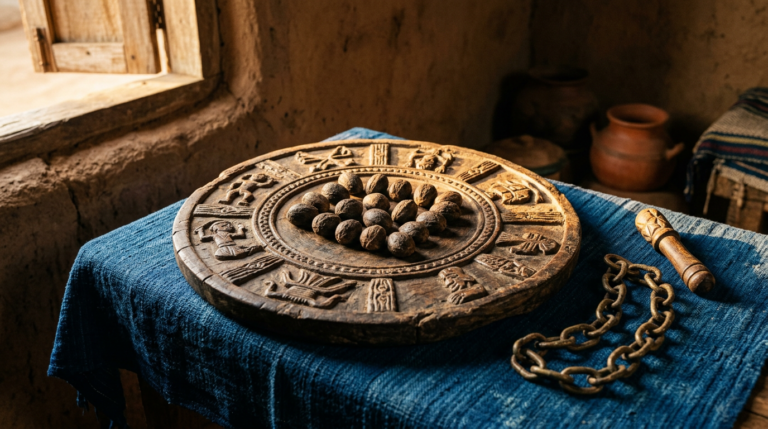
Each Odù in the Ifá system carries a unique binary signature: eight marks arranged in four pairs, cast during divination on the divination tray (opon Ifá). Widely cited accounts describe Èjì Ogbè's signature as eight single marks — all singles across all four columns. That configuration makes it the structural inverse of Òyèkú Méjì, the Odù associated with endings and transition. In symbolic terms, Èjì Ogbè's all-single signature represents maximum opening, unobstructed passage, and the fullness of light — which is why practitioners associate it with clarity, new beginnings, and the unfiltered presence of àṣẹ (divine creative power).
Core Teachings and Moral Themes of Èjì Ogbè

The central ethical message of Èjì Ogbè is this: authentic authority comes from the inside out, not the outside in. Its verses return again and again to questions of character, alignment with one's chosen destiny, and the discipline required to hold both.
Leadership, Humility, and Ìwà Pẹ̀lẹ́
Ìwà Pẹ̀lẹ́ — translated as "gentle, well-formed character" — is not a supplementary moral teaching in Ifá. It is the ethical and ontological center of the entire tradition. Èjì Ogbè places that principle at its core, framing leadership not as dominance but as the consistent expression of good character under pressure. Verses within this Odù commonly counsel leaders to act with integrity and strategic wisdom, to avoid impulsive decisions, and to lead with compassion even toward adversaries. Humility, in Èjì Ogbè's framing, is not weakness — it is the foundation that makes genuine authority possible.
For practitioners wanting to understand this concept more fully, what is Ìwà Pẹ̀lẹ́ and why it matters offers a deeper exploration of how this ethic functions across the tradition.
The Principle of Alignment With Destiny (Orí)
Orí — literally "head" — refers to one's spiritual intuition, personal divinity, and individual destiny in Yoruba cosmology. Orí is often understood as an Orisha in its own right, the innermost self that must be aligned with one's chosen path before any external assistance can fully take hold. Èjì Ogbè's verses make clear that fulfilling one's destiny is not passive. Conscious, ongoing attunement to one's inner Orí is required. The Odù teaches that you can receive the blessing of the most powerful Òrìṣà and still miss your mark if your Orí is not engaged and honored.
Exploring the role of Orí in Ifá spirituality in greater depth can help practitioners understand how this principle operates beyond Èjì Ogbè specifically.
Key Narratives and Ìtàn Associated With Èjì Ogbè
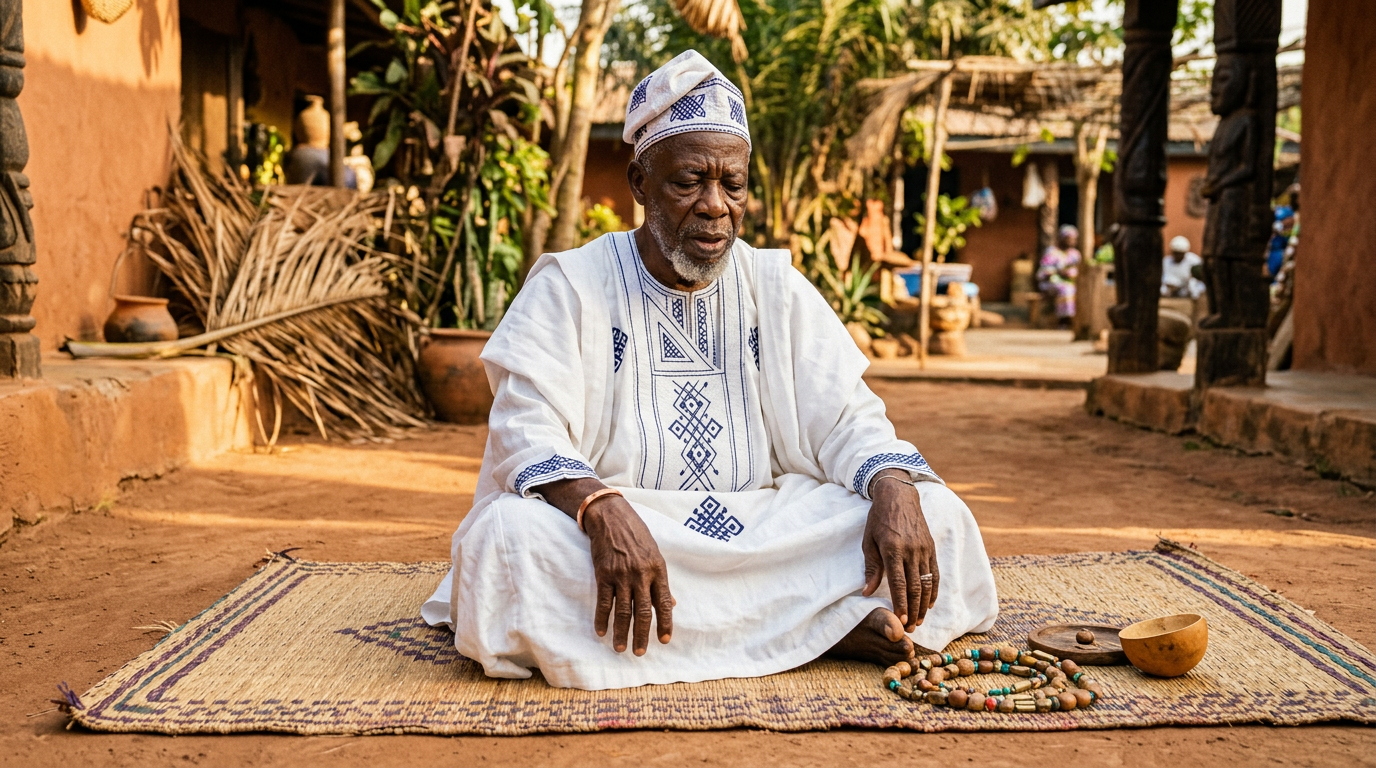
Ìtàn are the sacred narratives that carry Ifá's wisdom forward across generations. They are not myths in the diminishing sense of that word — they are precision instruments for understanding the forces shaping a person's life.
Stories of Origin and Cosmic Order
One well-known Ìtàn records that when Ọrúnmìlà was sent to make the earth habitable, divination cast Èjì Ogbè. That sign's counsel guided the mission to success, establishing this Odù's enduring association with origins, cosmic order, and fortunate beginnings. This is one lineage's account; creation narratives vary, and practitioners should always consult their own elders for the version most alive within their specific lineage. What is consistent across many tellings is the implication: when the work of creation begins, Èjì Ogbè appears. It is the Odù that greets the world at its first moment of becoming.
Lessons From the Ẹsẹ Ifá
The ẹsẹ Ifá (Ifá verses) are the living, oral vehicles through which Èjì Ogbè's teachings actually move. A babaláwo does not read these verses from a fixed text; they recite, contextualize, and adapt them through years of initiated study. The ẹsẹ of Èjì Ogbè commonly trace themes of a protagonist who faces great challenges, receives counsel from diviners, makes the prescribed offering, and ultimately achieves their destiny — not through force, but through patient alignment. The moral structure is consistent: the person who acts with integrity and follows Ifá's counsel transforms difficulty into destiny. The person who ignores it often learns the lesson the hard way.
UNESCO recognized the Ifá divination system on its Representative List of the Intangible Cultural Heritage of Humanity, originally proclaimed in 2005 and formally inscribed in 2008 — a recognition that this oral literary tradition carries genuine world-historical significance, not regional curiosity.
Òrìṣà and Spiritual Forces Linked to Èjì Ogbè
Èjì Ogbè does not stand alone. Like all Odù, it exists within a web of relationships with the Òrìṣà — the divine forces whose energies shape different dimensions of human life.
Connections to Obàtálá and Creative Authority
Many traditions associate Obàtálá closely with Èjì Ogbè's themes of light, purity, and moral clarity. Obàtálá is described in Ifá as the Orisha of purity, peace, and creative authority — the divine force responsible for shaping human consciousness and bodies. That characterization resonates directly with Èjì Ogbè's emphasis on original goodness, unobstructed light, and the sovereign dignity of a well-formed character. Practitioners working with this Odù often find Obàtálá's energy particularly present. That said, Orisha-Odù associations are lineage-dependent; readers should treat this connection as a widely recognized starting point, not a universal prescription. For a fuller picture, Obàtálá: attributes and veneration provides lineage-aware context.
The Role of Ọ̀rúnmìlà in Èjì Ogbè
Ọ̀rúnmìlà is central to every Odù, but his relationship to Èjì Ogbè carries particular weight. His epithet Ẹlẹ́rìí Ìpín means "witness to destiny": Yorùbá cosmology holds that Ọ̀rúnmìlà was present when each soul chose its Orí before incarnation, which is precisely why Ifá divination can access destiny at all. Within Èjì Ogbè, Ọ̀rúnmìlà's witnessing function is magnified — this is the Odù of first light, and Ọ̀rúnmìlà was there at the beginning. His presence within this sign assures practitioners that the path forward, however obscured it may feel, is ultimately knowable through sincere engagement with Ifá.
Practical Guidance: Applying Èjì Ogbè in Daily Life

Practical application is where Ifá's teachings meet their real test. Èjì Ogbè's wisdom is not decorative — it is meant to be lived.
Character Refinement and Decision-Making
The single most direct application of Èjì Ogbè in daily life is this: before acting, pause and assess alignment. The Odù consistently cautions against impulsive decision-making, particularly when pride or urgency are the driving forces. Practitioners working with this sign are encouraged to cultivate the habit of returning to their Orí — through prayer, quiet reflection, or brief meditation — before making consequential choices. That attunement is not mystical abstraction; it is a practical discipline for distinguishing between what you want in the moment and what your deepest self recognizes as your path.
Offerings, Ẹbọ, and Devotional Practices
Ẹbọ (offering or prescribed remedy) is the mechanism through which Ifá divination's counsel becomes action. It takes many forms: fresh fruits, ritual baths, cooked foods, and — in some circumstances — animal sacrifice. When Èjì Ogbè appears in divination, the specific ẹbọ prescribed will depend entirely on the context of the reading and the guidance of the officiating babaláwo. No article can substitute for that personalized counsel. What the Odù consistently emphasizes is that the act of making ẹbọ is itself a statement of alignment — an embodied declaration that you are choosing to move with your destiny rather than against it. For a broader grounding in this practice, understanding ẹbọ and offerings in Ifá offers essential context.
Navigating Challenges With Èjì Ogbè's Counsel
Èjì Ogbè is often understood as a sign of light and blessing, which leads to a common mistake: assuming it signals an easy road. Every Odù carries both Iré (blessings) and Osogbo (challenges and warnings). Èjì Ogbè's challenges often arrive as tests of integrity — situations that tempt a person toward shortcuts, self-aggrandizement, or neglect of their character. The Odù's counsel in those moments is consistent: hold your center, lead with humility, complete the prescribed ẹbọ, and trust that a path built on genuine Ìwà Pẹ̀lẹ́ will outlast any obstacle.
Common Misunderstandings About Èjì Ogbè
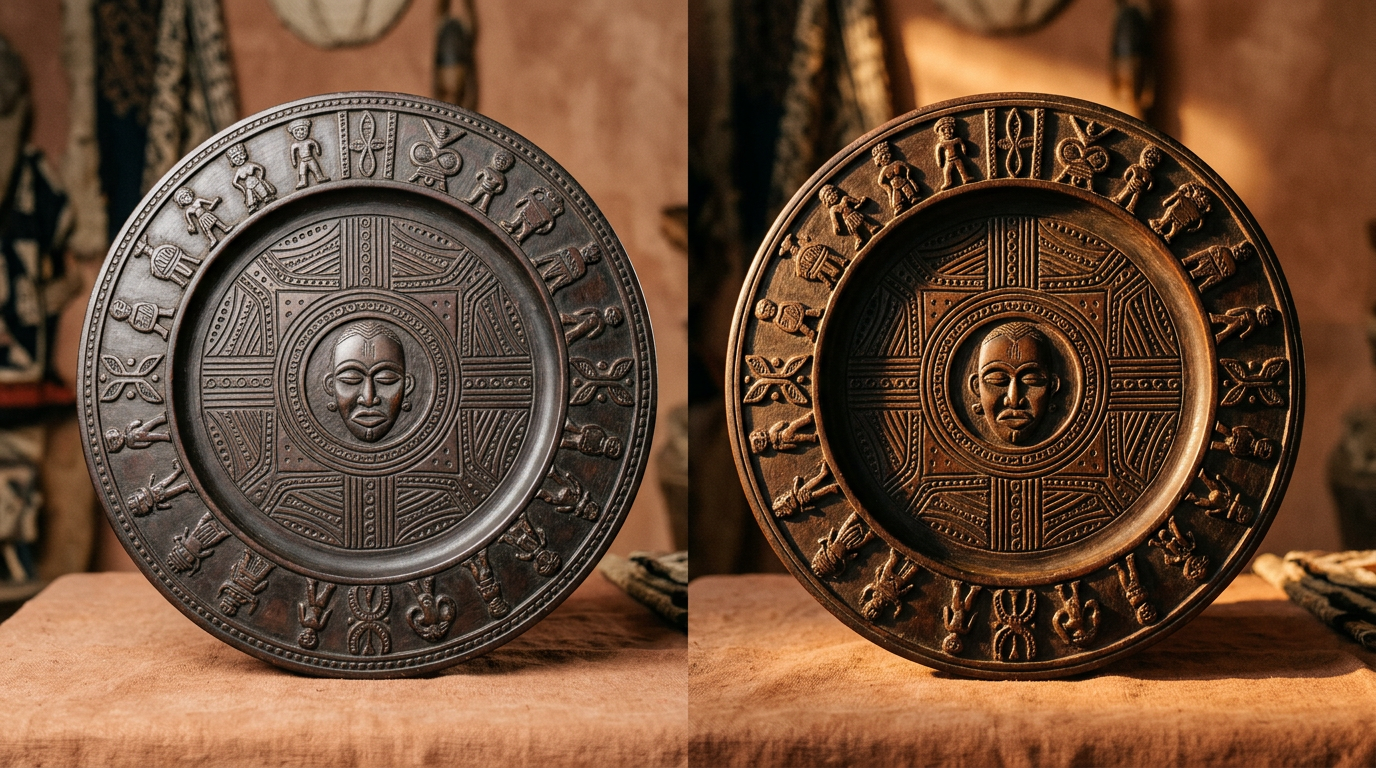
The most pervasive misunderstanding is treating Èjì Ogbè as purely a sign of good fortune. Because it is associated with light and primacy, online summaries frequently flatten it into generic positivity — omitting the Odù's substantial body of cautionary verses and its warnings about arrogance, isolation, and neglected obligations. That flattening is a distortion. The Odù's light is real, but it illuminates everything, including what needs correction.
A second common error is applying Èjì Ogbè's teachings through self-directed text study alone. The Ifá tradition is explicit: knowledge of this depth is transmitted through initiation, mentorship, and direct engagement with qualified elders and babaláwo — not through internet summaries, no matter how well-intentioned. Someone who uses an article like this one to construct their own Èjì Ogbè practice without grounded human guidance risks misapplication that can be spiritually and practically harmful.
Finally, Orisha-Odù associations — including Obàtálá's link to Èjì Ogbè — are not universal. They vary by lineage, by the specific diloggún or ikin system in use, and by regional and diasporic tradition. Any source that presents these associations as fixed facts is likely oversimplifying. When in doubt, consult an elder from your own lineage.
Deepening Your Relationship With Èjì Ogbè
Reading about Èjì Ogbè is a beginning. Actually knowing it — the way a babaláwo knows it, through years of recitation, reflection, and lived engagement — is a different order of experience entirely.
Study, Mentorship, and Community
The ẹsẹ Ifá are oral compositions. They are best encountered in relationship: recited by a teacher, contextualized by an elder, discussed within a community of practitioners who carry them forward. Seeking out a qualified babaláwo or Ifá-practicing community is the irreplaceable step. Books matter — the published scholarship on Ifá oral poetry provides genuine grounding — but they are supplements to human transmission, not replacements for it.
Continued Divination and Reflection
Divination is not a one-time event. Returning regularly to consult with Ifá — whether through a babaláwo, a trained Ifá practitioner, or structured community divination — allows the teachings of Èjì Ogbè (or whichever Odù speaks to your life in a given period) to function dynamically rather than as a static reference point. The Odù speaks differently at different moments. A verse you heard two years ago may mean something entirely new today. That living responsiveness is the tradition's greatest asset.
Where to Go From Here
Èjì Ogbè is the Odù that greets every beginning — the first light, the first word, the first honest look at who you are and what you are here to do. Its teachings on Ìwà Pẹ̀lẹ́, Orí alignment, and the leadership that comes from genuine character are not abstract philosophies. They are a practical map for anyone willing to do the internal work. Use this article as an orientation, not a destination. Seek out a qualified babaláwo, engage your community, and let the living tradition teach you what no written summary can fully hold.