Ifá vs. Santería, Lucumí, and Candomblé: Key Differences
You've probably heard the names used almost interchangeably — Ifá, Santería, Lucumí, Candomblé — and walked away more puzzled than when you started. That confusion is understandable and deserved. These traditions share deep Yorùbá roots, overlapping vocabulary, and some of the same spiritual beings, yet each is its own living system with a distinct history, theology, and practice. This article maps those distinctions clearly, so you can speak about each tradition accurately and pursue your path — or your curiosity — with real grounding.
Why People Confuse Ifá, Lucumí, Candomblé, and Santería
The confusion starts in the vocabulary. All four traditions draw from the same Yorùbá-language well: Òrìṣà (divine forces or deities), Odù (the sacred configurations that govern fate), àṣẹ (divine energy or power), orí (personal spiritual head and destiny). If you encounter any of these traditions in ceremony, in conversation, or in reading, you will hear those same words. It is natural to assume you are hearing about the same thing.
Shared roots reinforce that impression. Lucumí, Candomblé, and Santería all trace their origins to Yorùbá-speaking West Africa, the same cultural region that produced Ifá. They were not invented from nothing — they carry forward Yorùbá cosmology, ethics, and spiritual relationships that enslaved Africans refused to abandon across the Middle Passage. The family resemblance is real. The distinctions, however, matter — to practitioners, to history, and to anyone who wants to engage these traditions with integrity.
Ifá as the Source Tradition in Yorùbá Culture
Ifá is a divination system and philosophical tradition originating among the Yorùbá people of present-day southwestern Nigeria and the Republic of Benin. It is not simply a religious label or a general term for Yorùbá spirituality — it is a specific, structured body of knowledge organized around divination, oral scripture, and a defined priestly role.
The Role of Ọ̀rúnmìlà and the Babaláwo
At the center of Ifá stands Ọ̀rúnmìlà, sometimes called Èlà or Àgbọnnìrègún depending on lineage — the Òrìṣà of wisdom and the witness of human destiny. Ọ̀rúnmìlà is understood to have been present at the moment each soul chose its path before entering the world, which is why the Babaláwo in Ifá — the Babaláwo (meaning "father of secrets") — can access guidance about that destiny through divination.
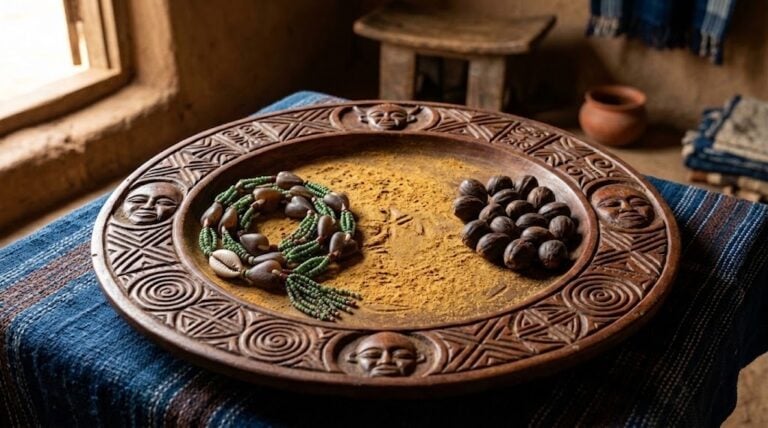
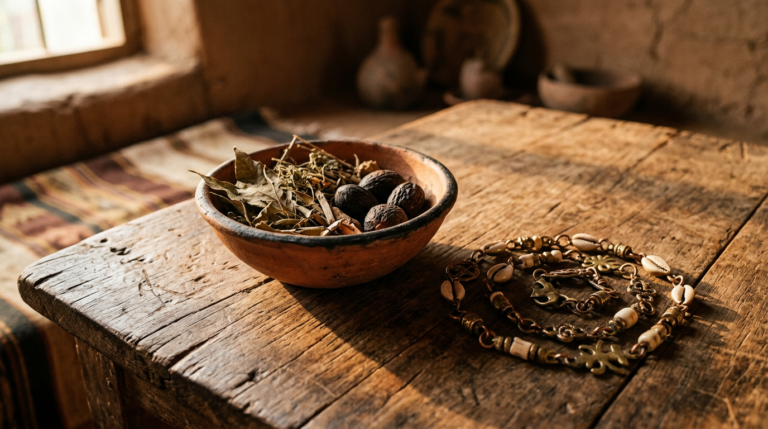
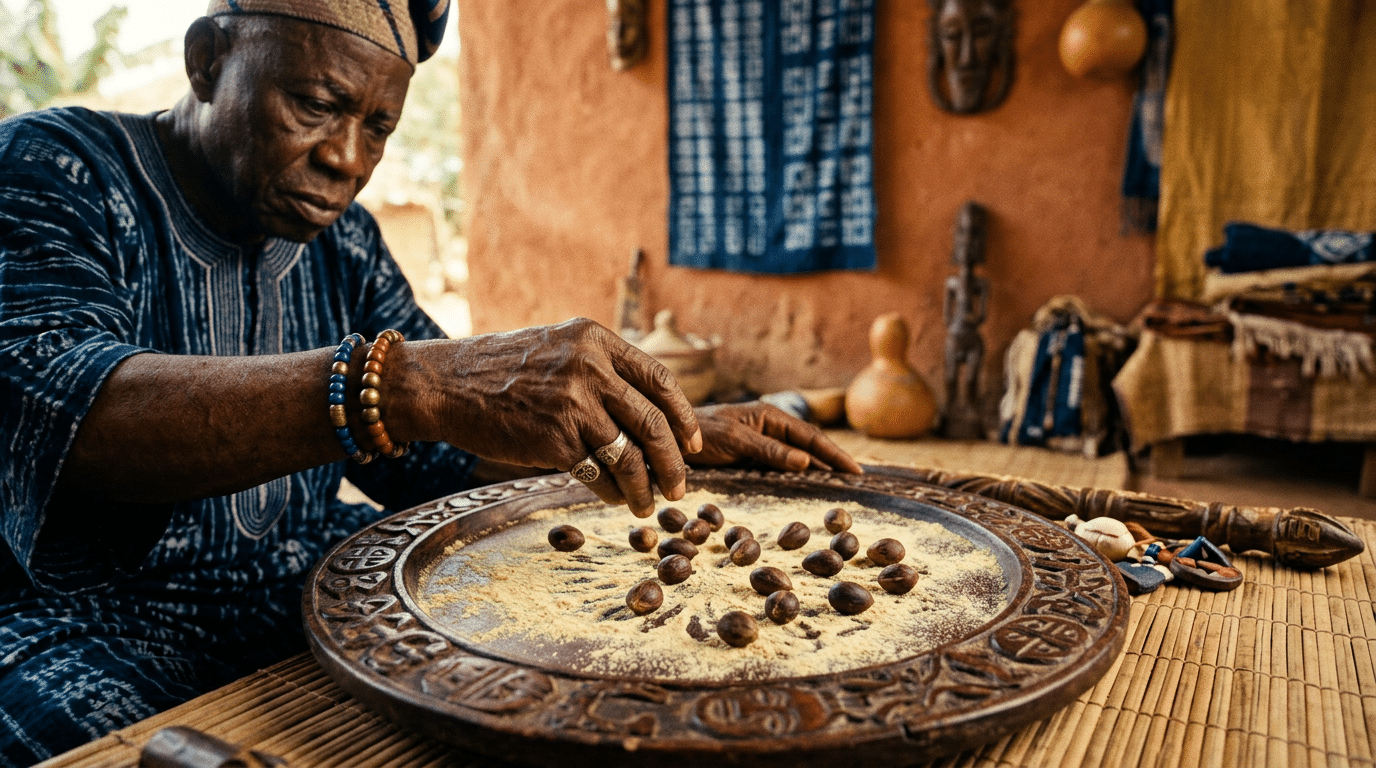
The Babaláwo uses either the ikin (sacred palm nuts) or the ọ̀pẹ̀lẹ̀ (a divining chain) to determine which Odù speaks to a client's situation. This is not a role anyone steps into casually. Training is extensive, the corpus to be internalized is vast, and the responsibility to the client and to the tradition is weighty.
Odù Ifá as the Scriptural Foundation
The Odù Ifá corpus comprises 256 principal Odù, each containing a large body of sacred verses called ese Ifá. Together, these verses encode Yorùbá cosmology, ethics, medicine, history, and practical guidance for nearly every human situation. Think of the Odù less as chapters of a single book and more as 256 distinct universes of knowledge, each with its own character, warnings, prescriptions, and stories.
Understanding Odù Ifá is a lifelong pursuit for a Babaláwo. The oral nature of this scripture — transmitted from elder to student through years of study — is not incidental. It is the mechanism by which the tradition maintains its living quality across generations.
How the Diaspora Shaped Lucumí, Candomblé, and Santería

None of Ifá's diasporic descendants emerged in a vacuum. They were forged under conditions of extraordinary violence and loss, and understanding those conditions is the only way to understand how the traditions differ.
The Transatlantic Journey and Cultural Syncretism
The transatlantic slave trade severed enslaved Yorùbá people from geographic, linguistic, and institutional continuity with their homeland. The priests who survived the Middle Passage could no longer simply return to Ilé-Ifẹ̀ — the ancient Yorùbá city understood as the cosmogonic center of the world — for training, lineage confirmation, or sacred materials. Traditions had to be reconstructed from memory, adapted to new environments, and kept alive under active suppression.
What Lucumí, Candomblé, and Santería represent, then, is not a degradation of something pure. They are creative theological responses to rupture — traditions that grew from shared Yorùbá seeds under the crushing pressures of enslavement and colonialism, and that developed their own integrity in the process.
Candomblé developed in Brazil, primarily in the state of Bahia, among enslaved Africans of Yorùbá, Fon, and Bantu origins. This mixed heritage produced multiple nações (nations) — Ketu, Jêje, and Angola among them — each reflecting different African ethnic roots. Lucumí took shape in Cuba under Spanish colonial rule, preserving and adapting Yorùbá tradition among enslaved communities there.
Catholic Influence and the Masking of Òrìṣà
One of the most visible features distinguishing Lucumí and Candomblé from traditional Ifá is the presence of Catholic saints alongside the Òrìṣà. Ṣàngó, Òrìṣà of thunder, was identified with Saint Barbara; Ọṣun, Òrìṣà of rivers and sweetness, was associated with Our Lady of Charity. This alignment became a way for practitioners to survive colonial religious persecution while continuing to honor their Òrìṣà.
Scholars widely describe this identification as a survival strategy, a form of protective concealment worn out of necessity. But that framing carries a caveat many practitioners would insist on: for significant numbers of Lucumí and Candomblé adherents today, the relationship between Òrìṣà and saint is not merely a historical disguise — it carries genuine theological meaning and reflects a real spiritual synthesis that belongs to those traditions on its own terms. Traditional Ifá practice in Yorùbáland, by contrast, does not incorporate Catholic saints, and many contemporary Ifá practitioners distinguish their tradition from syncretic diasporic forms on precisely this point.
Key Theological and Liturgical Differences

Shared ancestry does not mean shared structure. When you look at how divination works, how initiation unfolds, and how scripture is held, the differences between these traditions become concrete and specific.
Divination Methods: Ifá, Diloggún, and Jogo de Búzios
Divination is the clearest axis of distinction because it is the most structured ritual element in each tradition. In Ifá, divination is performed exclusively by a Babaláwo using the ikin or ọ̀pẹ̀lẹ̀, accessing any of the 256 Odù.
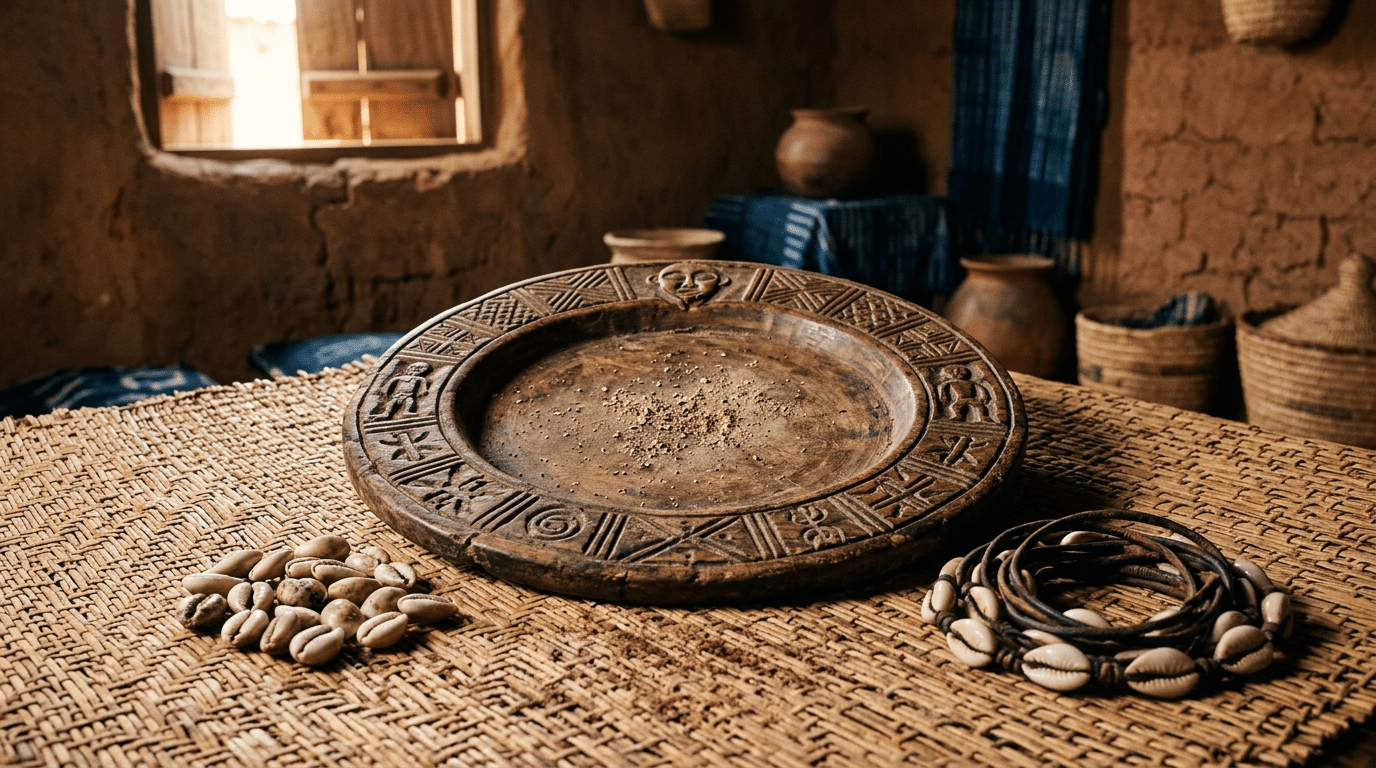
In Lucumí, non-Babaláwo priests — called Olorisha — use the diloggún, a set of sixteen cowrie shells, through which a subset of Odù are read. Widely cited accounts describe this subset as commonly around twelve, though practitioners and lineages differ on the exact number and on which Odù are understood to require a Babaláwo to interpret them. The point is structural: the diloggún opens a portion of the Odù corpus, not the full expanse.
In Candomblé, the practice known as jogo de búzios (casting of cowrie shells) shares structural similarities with cowrie-based divination in both Ifá and Lucumí but developed its own interpretive frameworks under Brazilian cultural conditions. Same shells, related logic, distinct system.
Initiation Structures and Priesthood Hierarchies
How one enters priestly life also differs significantly. In Ifá, a person undergoes Itẹ́fá — often called "receiving the hand of Ifá" — as part of the path toward becoming a Babaláwo. In Lucumí, the crowning ceremony known as Kariocha (sometimes called "making ocha") seats a specific Òrìṣà on the initiate's head, marking them as an Olorisha dedicated to that Òrìṣà's service.
The question of gender and priesthood also surfaces differently across these traditions. Traditional Yorùbá Ifá has restricted the title of Babaláwo to men, while Candomblé has a long history of powerful female religious leadership through the Iyalorixá (Mãe de Santo) institution. Whether women can or should hold the role of Babaláwo is an actively debated question across lineages and continents — one that will not be resolved here, but that any honest account of these traditions must acknowledge.
Relationship to Odù and Oral Scripture
In traditional Ifá, the full 256 Odù and their ese Ifá — including the patakí (sacred narratives, the story-teachings woven into each Odù) and the broader itan (oral histories) — form a comprehensive scriptural system that a Babaláwo spends a lifetime absorbing. Knowledge of these narratives exists in Lucumí practice as well, but it is organized around the Odù accessible through the diloggún and shaped by the Cuban lineage structures that preserved it. In Candomblé, the relationship to Odù as a formal corpus is generally less central than the embodied practice of possessão (possession by the Òrìṣà, called Orixá in Brazil), which is itself a liturgical emphasis less foregrounded in traditional Ifá contexts.
Common Misconceptions and Respectful Distinctions

Why Interchanging the Names Causes Harm
Calling Lucumí practitioners "Ifá practitioners," or describing a Candomblé ceremony as "Santería," does more than confuse — it erases history that people fought to preserve. Each of these names carries a specific community's survival story.
The word Santería itself is a case in point. It arose as an outsider label, referencing practitioners' apparent devotion to Catholic saints, and many in the Lucumí community reject it as pejorative and reductive. Others have reclaimed it. Whether you use the term should depend on how the person or community in front of you uses it — not on your comfort with the label.
Appreciating Each Tradition on Its Own Terms
Describing Ifá as the "original" tradition and Lucumí or Candomblé as derivative can slide into implying hierarchy — that diasporic forms are lesser or corrupted versions of something purer in Yorùbáland. That framing disrespects the theological creativity and communal sacrifice that built those traditions under conditions Ifá practitioners in Nigeria and Benin did not face.
The honest position is this: Ifá is a distinct Yorùbá philosophical and divinatory system with its own internal logic. Lucumí, Candomblé, and what many call Santería are distinct traditions — shaped by diaspora, adaptation, and survival — that share Yorùbá ancestry but are not lesser copies of it. Difference does not imply rank.
Finding Your Path Within or Alongside These Traditions
If you are drawn to any of these traditions, the single most important next step is conversation with a living elder who holds deep knowledge of the specific lineage you are exploring. No article — including this one — substitutes for that relationship.
Some seekers find that learning these distinctions clarifies which tradition resonates most clearly. Others discover that their existing practice — perhaps initiated in Lucumí — deepens when they understand its Yorùbá roots. And some, particularly those already practicing in a diasporic tradition, find themselves drawn toward re-Africanization: moving closer to traditional Yorùbá Ifá structures by choice, reconnecting with the source frameworks their tradition carries in adapted form. All of these paths are real and legitimate.
If Ifá specifically is calling you, how to consult an Ifá diviner is a natural first step — not to convert or commit, but to enter into direct dialogue with the tradition through its primary medium. The Òrìṣà and their significance in Yorùbá tradition also offer a wider frame for understanding the beings at the center of all these practices.
What all of these traditions share is a conviction that human beings are not navigating the world alone — that knowledge, relationship, and practice are available to those who seek them seriously. The distinctions matter. So does the willingness to approach each tradition with the respect its depth demands.