
Odù Odi Meji: Meaning, Ebo, and Spiritual Counsel
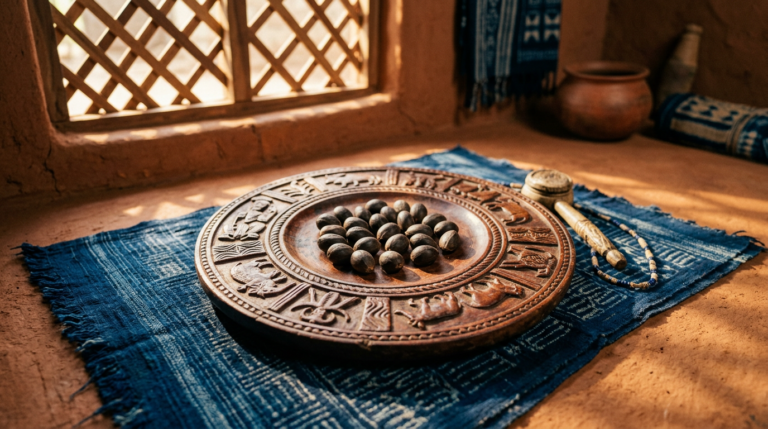
When Odi Meji appears on the divination tray, the message is rarely subtle: something is sealed, something is gestating, and the way forward requires boundaries rather than exposure. This guide walks through the Odù's position within the Ifá corpus, its core spiritual themes, the ebo traditionally associated with its verses, and the counsel it carries for daily life — drawing on practitioner sources across lineages while flagging where traditions diverge.
This guide is part of our broader introduction to Yoruba religion and spirituality, which sets the wider context for Ifá divination, the sixteen principal Odù, and the counsel Odi Meji offers.
What Is Odù Odi Meji?

This piece is one spoke in our broader guide to the 16 Principal Odù of Ifá’s foundational corpus.
Odi Meji is one of the sixteen principal Odù, the foundational signs at the heart of the Ifá literary corpus. To understand it fully, you need to know both where it sits in the larger architecture of Ifá and what its structural signature tells you about its essential character.
Odi Meji in the Ifá Literary Corpus
Widely cited accounts place Odi Meji as the fourth of the sixteen Ojú Odù, the principal signs from which all 256 Odù in the complete corpus are derived. The 16 principal Odù of the Ifá sacred corpus each carry foundational narratives linking them to the Òrìṣà, encoding Yoruba myth, history, medicine, proverbs, and communal guidance designed to navigate an entire life — and Odi Meji is no exception. The full Ifá divination system, within which Odi Meji holds this honored position, was inscribed on UNESCO's Representative List of the Intangible Cultural Heritage of Humanity in 2008, having first been proclaimed in 2005.
Its range is remarkable. Tradition in some Nigerian practitioner lineages holds that Olodumare charged Odi Meji with the knowledge of healing all ailments — making it, in that framing, the healer among the Odù. This designation does not appear universally across all branches of the tradition, so it is worth holding it as a lineage-specific teaching rather than a fixed rule, but the consistent emphasis on medicine, restoration, and closure across sources points to something real at this Odù's center.
The Binary Signature of Odi Meji
Every Odù is represented by a unique binary pattern of single and double marks on the Opón Ifá (the sacred divination tray), a structure scholars and practitioners alike have compared to a binary code. "Meji" means "two equal" — signaling that the sign is doubled, its pattern appearing identically in both columns. This doubling amplifies the Odù's qualities without dilution, making Odi Meji a concentrated expression of its own essence.
Practitioners commonly gloss the name Odi (sometimes rendered Idi) as "the seal," connecting it to the spirit of the female reproductive organs. The image is precise: what is sealed in ceremony is guaranteed to manifest, just as birth, once initiated, is irreversible. The womb here is not merely a biological reference but a cosmological metaphor — any creative or spiritual process that must mature in darkness before emerging into light falls under this Odù's governance.
Core Meaning and Themes of Odi Meji

Odi Meji's central teaching is that not all progress comes through expansion. Some paths are refined through enclosure, discipline, and strategic silence.
Symbolism of Closure, Protection, and Inner Truth
Odi Meji governs enclosure, containment, boundaries, and hidden structures. Where other Odù might urge a person outward — toward new relationships, new ventures, greater visibility — Odi Meji often turns the gaze inward. The question it asks is not "what can I acquire?" but "what must I protect?"
Central to this teaching is Ori (the inner spiritual head, the seat of individual destiny). Odi Meji consistently teaches that Ori must be actively guarded through discretion and appropriate boundaries, because exposure, misplaced trust, or excess can disrupt a person's destined path. A practitioner sitting with this Odù is being asked to examine what they are allowing in, what they are giving away too freely, and whether the environment around their most important work is spiritually secure.
The womb metaphor carries through here. Gestation requires enclosure — the right conditions, the right timing, protection from interference. Odi Meji applies that logic to wealth, relationships, creative work, and spiritual development alike.
Key Ese Ifá Associated with Odi Meji
The ese Ifá (sacred verses) of Odi Meji span a wide range of human situations, but certain recurring narrative structures anchor its identity. Healing features prominently: the emblem material associated with this Odù in some lineages — the Idi herbal leaf ground with cowrie shell — is said to close open wounds, a detail that grounds the metaphor of the seal in actual herbalist practice.
Fertility and creative potential are equally present. Stories within Odi Meji's verse corpus often involve characters who possess something valuable but are in danger of losing it to interference, envy, or their own lack of caution. The resolution typically comes through protective action, proper ceremony, and patient timing. These narratives make Odi Meji especially relevant for people navigating pregnancy, new projects, financial recovery, or any situation where something important is still too vulnerable to expose.
Ebo and Offerings Prescribed in Odi Meji
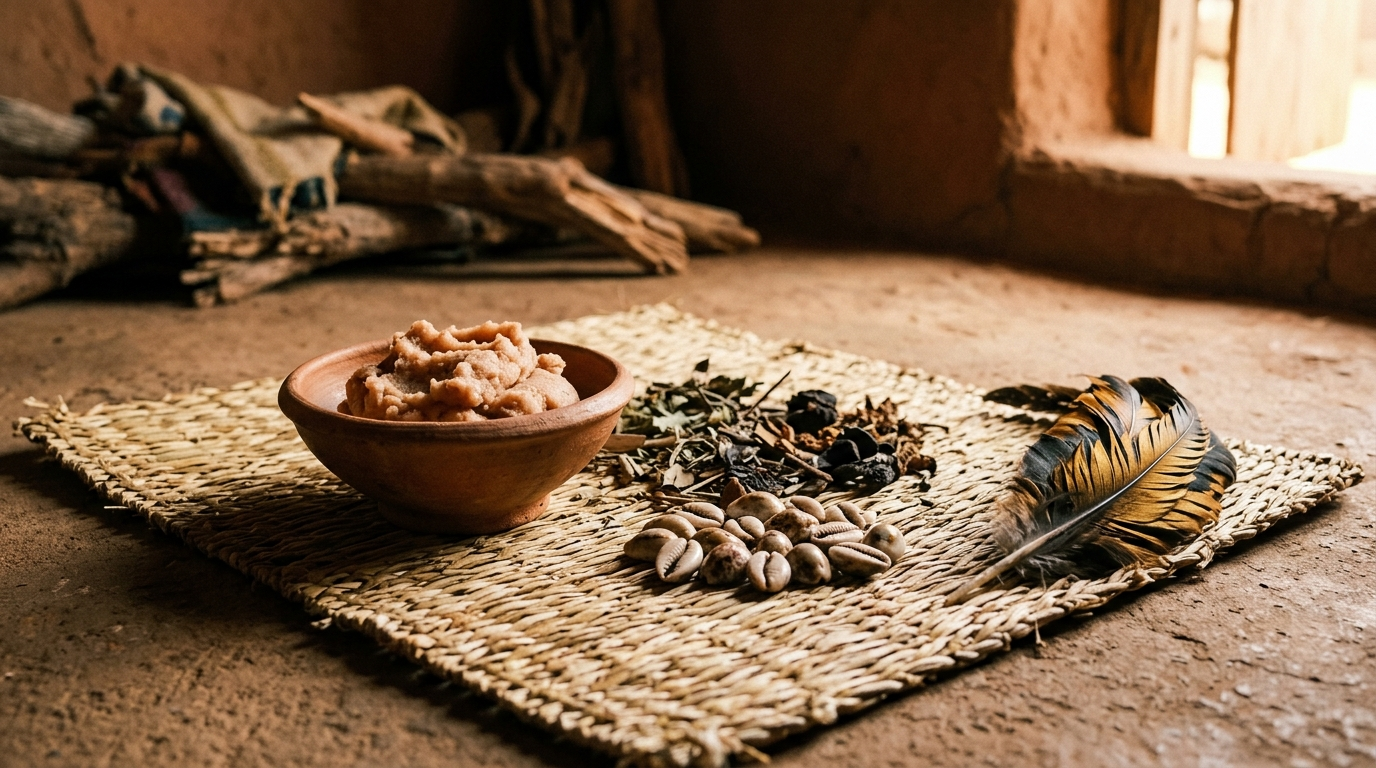
Ebo is the prescribed remedy that emerges from Ifá divination — a combination of materials that symbolically addresses the client's specific situation. Its completion is considered essential for the blessings indicated in divination to take root.
Types of Ebo Connected to Odi Meji
Among the offerings that practitioner verse commentaries, particularly from Lucumí lineage sources, associate with Odi Meji ese: goat offered to Esù, hen and rooster, and foodstuffs including mashed yam. The intention behind these materials varies by verse — some prescriptions target the averting of conflict, others the opening of paths related to fertility, and others the restoration of prosperity that has been blocked or diverted.
The herbal dimension matters here too. Because Odi Meji carries a strong association with medicine and wound-closure in its mythic corpus, plant materials often appear alongside animal and food offerings in this Odù's remedies. The logic is continuous with the Odù's broader teaching: just as the Idi leaf closes a wound, the properly assembled ebo closes a spiritual opening through which harm has been entering.
When and Why Ebo Is Performed
Ebo is never a generic prescription — this point cannot be overstated. The specific materials, timing, and structure of any ebo arising from Odi Meji must be determined through actual divination by a qualified Babaláwo (Ifá priest) for a specific person and circumstance. What practitioner sources and verse commentaries provide is a map of the terrain, not a personalized route.
That said, understanding why ebo is performed under this Odù illuminates its logic. Odi Meji teaches that what one produces must be spiritually protected or it may be enjoyed by others. Secret enemies, envy, and betrayal are specifically named as threats to the prosperity this Odù otherwise promises. Ebo in this context is an act of boundary-setting at the spiritual level — a disciplined, timely action that mirrors the Odù's own counsel. For a fuller grounding in what ebo means within Ifá practice, the concept deserves study on its own terms before approaching any specific prescription.
Spiritual Counsel and Life Guidance from Odi Meji
Odi Meji speaks on two frequencies simultaneously: it warns, and it assures. Neither cancels the other.
Warnings and Taboos
The clearest warnings in Odi Meji center on disclosure. Sharing plans, resources, or vulnerabilities with the wrong people is a specific danger this Odù flags — prosperity is present, but it can be diverted by those who observe it with envy before it has had time to take root. The counsel is not paranoia; rather, Odi Meji is asking the practitioner to distinguish between genuine allies and those whose interest in their affairs is extractive.
Excess and overreach carry similar warnings. This Odù counsels against pushing past natural limits in an effort to appear generous, powerful, or abundant before the right season arrives. The womb teaches this: premature exposure interrupts what would otherwise reach its full form. Taboos vary by lineage and verse, but the pattern of restraint runs through nearly all of them.
Positive Assurances and Blessings
Odi Meji is not a difficult Odù in the sense of being purely cautionary. Its assurances are genuine and strong. Hardships are never permanent — the tradition consistently teaches that no matter how long the night, the dawn will break, and that patience aligned with divine timing ensures the fulfillment of one's destiny.
Healing is available. Fertility — of children, of ideas, of wealth — is present in this Odù's promises. For those who have been working quietly, protecting what matters, and trusting the process, Odi Meji confirms that the labor is not wasted. What has been sealed will emerge.
Òrìṣà and Spiritual Forces Linked to Odi Meji

No Odù exists in isolation from the broader network of Òrìṣà and spiritual forces that animate Ifá practice. Odi Meji has particular resonances with several of them — though associations vary across lineages, and the relationships described here should be understood as traditional connections rather than universal rules.
Associated Òrìṣà
Three Òrìṣà are most prominently linked to Odi Meji across practitioner sources: Ògún, Olókun, and Ṣàngó. Ògún governs iron, perseverance, and the clearing of paths — his presence in Odi Meji connects to the Odù's themes of disciplined effort and the removal of obstacles that block what is gestating. Olókun, ruler of the ocean's depths, carries associations with hidden wealth, resilience under pressure, and the mysteries that lie beneath the surface — a direct resonance with Odi Meji's governing imagery of enclosure and inner truth. Ṣàngó brings fire, justice, and disciplined power, reinforcing the Odù's counsel against tolerating injustice while also warning against reckless displays of force.
For a richer sense of how Òrìṣà and their roles shape Ifá counsel, their individual characteristics reward sustained study alongside the Odù in which they appear.
How These Relationships Shape the Odù's Message
The Òrìṣà associated with Odi Meji are not decorative — they actively texture what this Odù is saying to a given client. When Ògún appears in the constellation of Odi Meji, the counsel around protected effort and path-clearing becomes more urgent. When Olókun's energy is foregrounded, the hidden dimension of wealth and the long patience of deep water become the operative frame.
Understanding these relationships turns Odi Meji from a static sign into a living conversation. The Odù itself is the structure; the Òrìṣà are the voices speaking through it in a specific moment for a specific person. This is why the understanding Ifá divination process matters as much as the content of any individual Odù — context shapes meaning.
Living with Odi Meji: Applying the Odù's Wisdom
What Odi Meji asks, ultimately, is not complicated — but it is demanding. Seal what needs sealing. Protect what is still forming. Trust the process happening in the dark.
Practically, this means taking seriously the counsel around disclosure and timing. If you have received Odi Meji in divination, the question worth sitting with is not only "what am I working toward?" but "who knows about it, and should they?" The Odù's emphasis on Ori-protection translates directly into attention to your spiritual environment: the relationships you maintain, the spaces you frequent, the information you share before a venture is strong enough to withstand scrutiny.
Ebo, when prescribed through actual divination, is the formal expression of this alignment — but the daily practice of Odi Meji is also found in smaller acts of boundary-setting, patience, and trust. Every quiet choice to let something mature rather than rush it is an echo of this Odù's teaching.
The assurances are worth returning to when the waiting feels long. Odi Meji does not promise that the path will be easy, only that what has been properly tended will emerge. The night described in this Odù's verses is real, but so is the dawn it promises. That combination — honest about difficulty, steadfast about outcome — is what makes this Odù such a reliable companion for anyone navigating a period of protected, purposeful transformation.
Where to Go from Here
Odi Meji rewards slow study. A single reading of its themes will open doors; returning to them across different seasons of your life will show you how many more doors are behind those.
For those who have encountered this Odù in divination, the most grounded next step is consultation with a qualified Babaláwo who can interpret the specific verse configuration, prescribe any ebo that applies to your situation, and offer the lineage-specific counsel that no article can substitute. For those approaching Odi Meji as students of the corpus, pairing this overview with a deeper study of the introduction to the 16 Meji Odù and the glossary of Ifá and Yorùbá spiritual terms will build the connective tissue that makes each Odù's meaning more legible in context.
The tradition is vast. Odi Meji alone could fill a library. But the thread running through all of it — enclosure, healing, patient timing, protected creation — is consistent enough that once you feel it, you recognize it everywhere.