Ẹbọ in Ifá Practice: Sacrifice, Offerings, and Correction
Most people outside the Ifá tradition encounter the word "sacrifice" and immediately reach for the wrong mental image. This article works to replace that image with something more accurate: a detailed look at what ẹbọ actually is, how it arises from divination, why it takes the forms it does, and what makes it an act of spiritual intelligence rather than superstition.
Ẹbọ makes sense only against the backdrop of the wider tradition it belongs to. For a full walk-through of that system — the 256 Odù, the Babaláwo’s role, and how a consultation actually unfolds — see our complete guide to Ifá divination.
What Is Ẹbọ in the Ifá Tradition?
Prescribing and directing ẹbọ correctly is the practical work of a trained Babaláwo. If you are curious about the initiation, apprenticeship, and lineage requirements to reach that role, see our guide on how one becomes a Babaláwo.
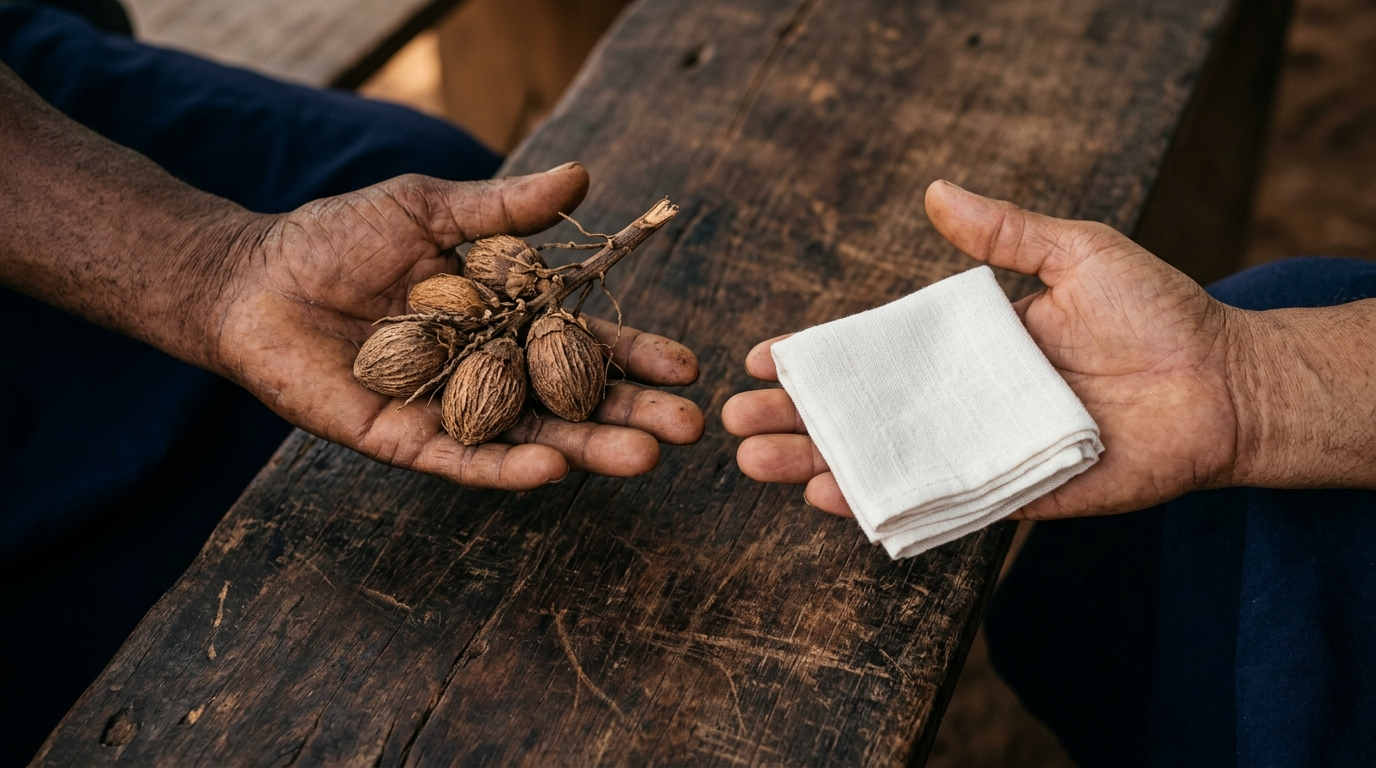
Ẹbọ is the practice at the center of Ifá's remedial and relational work — a formalized offering or sacrifice that moves energy between a person and the forces governing their life. Understanding it well enough to engage with it honestly requires letting go of inherited vocabulary and starting with the tradition's own terms.
The Literal and Spiritual Meaning of Ẹbọ
The Yorùbá word ẹbọ translates literally as "offering" or "sacrifice," but the literal translation carries only part of the meaning. Within the tradition, ẹbọ encompasses reciprocity — a recognition that life is a continual exchange of energy between human beings, ancestors, and the divine. No offering exists in isolation from relationship. Every ẹbọ is, at its core, an act of communication.
That communication moves across two interpenetrating realms that Yorùbá cosmology holds as the structure of all existence: Aiyé, the visible, material world, and Òrun, the invisible, spiritual world. Physical offerings serve as vehicles that carry intention, prayer, and àṣẹ (divine life-force) across that threshold. This cosmological framework is not decorative theology; it is the structural logic that gives ẹbọ its coherence. Once you understand that the material and spiritual worlds are in constant dialogue, the idea of a physical offering carrying spiritual weight stops being mysterious.
How Ẹbọ Differs From Western Notions of Sacrifice
The negative weight the English word "sacrifice" carries comes largely from cultural conditioning rather than from any accurate understanding of Yorùbá practice. The Ifa Foundation describes ẹbọ to Western audiences as the normal "give and take" of life, pointing out that the word's sinister overtones come from years of Hollywood imagery and particular religious influences — not from the practice itself.
Colonial missionaries and anthropologists compounded the problem. Widely cited accounts describe how colonial-era religious scholarship systematically elevated Western Christian practices as normative while framing African sacrifice as primitive or sinister — a distortion that shaped the English vocabulary used to discuss the practice for generations, and one that contemporary practitioners actively name and work to correct. Ẹbọ is not an act of desperation or appeasement. It is an expression of a covenantal relationship: ongoing, structured, and mutual.
The Role of Ẹbọ in Ifá Divination
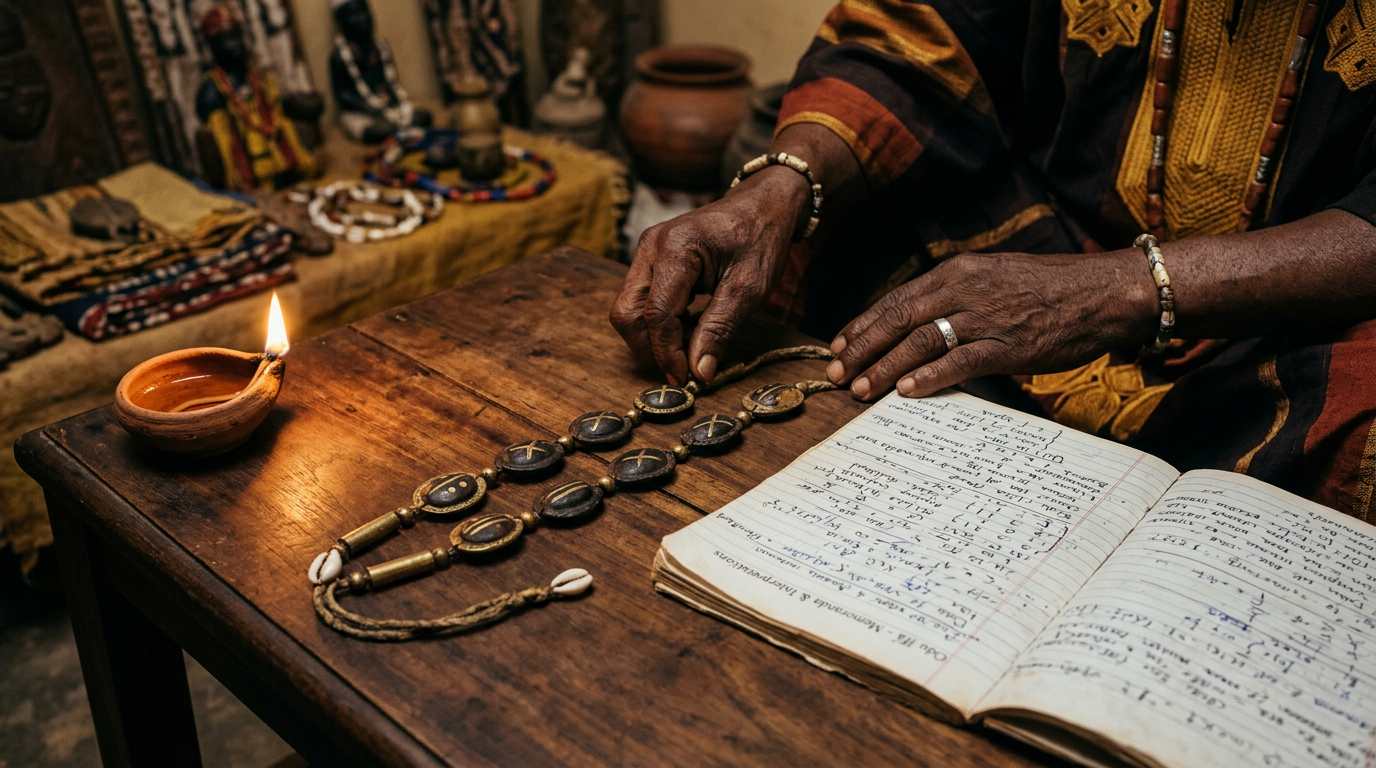
Ẹbọ does not appear on its own terms. It is always a response — a prescribed action that emerges from a specific consultation, not a general practice someone picks up and applies at will.
How Odù Prescribes Ẹbọ
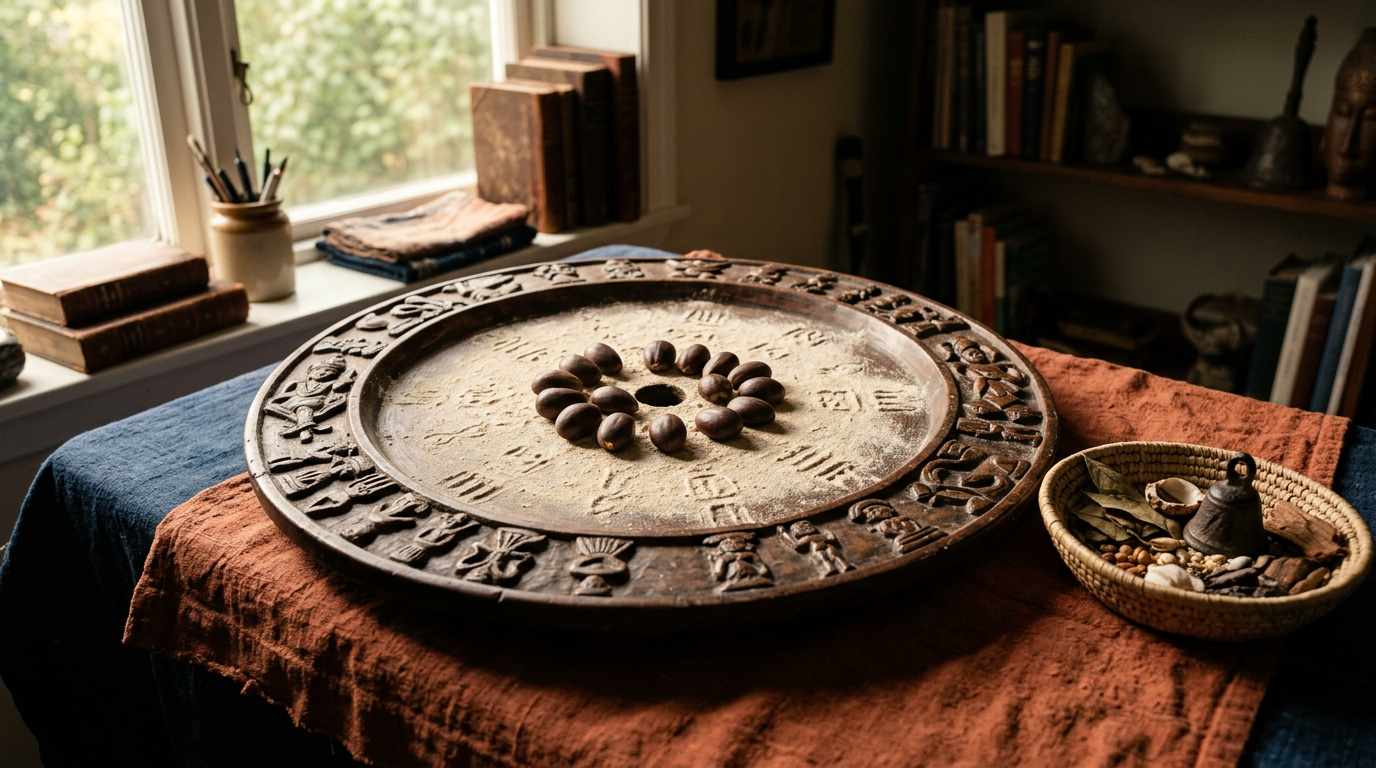
The Ifá corpus consists of 256 Odù — sacred sign-complexes, each containing verses called Ẹsẹ Ifá that encode specific spiritual diagnoses and ẹbọ prescriptions. These 256 Odù form the literary and ritual basis from which all sacrifice is drawn. When a client consults Ifá, the divination process surfaces a governing Odù, and the verses associated with that Odù carry both a diagnosis of the person's situation and explicit prescriptions for what ẹbọ is required. The prescription is not invented by the diviner; it is drawn from the corpus.
Scholars and practitioners widely note that no ingredient specified by an Odù should be omitted, because each component is understood to address a specific aspect of the client's spiritual situation. This specificity is what distinguishes ẹbọ from generic votive offering. A prescribed ẹbọ is assembled with precision. Every element has a reason, even when the client cannot see it.
The Relationship Between Ẹbọ and the Diviner
Ẹbọ is never self-prescribed. It emerges from a structured divination consultation, with the role of the Babaláwo — or the Iyanifá, the female authority in the tradition — serving as the authoritative intermediary. This intermediary role is not incidental. The Babaláwo or Iyanifá is trained to read which Odù is speaking, identify what it requires, and communicate that to the client with clarity and integrity. Someone attempting to prescribe their own ẹbọ outside of a legitimate consultation is not engaging in the tradition; they are missing its primary mechanism.
This matters practically: the diviner bears responsibility for what is prescribed. That responsibility reinforces why the ethics of the diviner's character are inseparable from the efficacy of the whole process.
Types of Ẹbọ and Their Purposes
Ẹbọ is not one thing. Practitioners recognize distinct functional categories, each oriented toward a different aspect of a person's spiritual situation. Any single classification should be understood as one tradition's map rather than a universal taxonomy, since specific typologies vary across lineages and diaspora contexts. With that caveat clearly in place, the broad categories serve as a useful orientation.
Ẹbọ for Correction and Realignment
Some ẹbọ is prescribed when a person has moved out of alignment — when their actions, choices, or circumstances have pulled them away from the path their Orí came to walk. These corrective offerings are aimed at restoring the connection between the person and their spiritual agreements. They are not punishments. They are course corrections, the spiritual equivalent of resetting a dislocated joint.
Ẹbọ for Protection and Prevention
Propitiatory ẹbọ addresses what is coming rather than what has already arrived. Divination may reveal an approaching difficulty, a vulnerability in a person's energetic situation, or a confluence of forces that could cause harm. Ẹbọ prescribed in these situations acts as a protective measure, redirecting or neutralizing the approaching challenge before it materializes fully in Aiyé.
Ẹbọ for Gratitude and Reciprocity
Practitioners also recognize Ẹbọ Ọpẹ́ — offerings of thanksgiving given when a blessing has arrived or a prayer has been answered. These offerings complete the relational cycle. Receiving a benefit and offering nothing in return leaves the relationship unbalanced, which is itself a form of misalignment. Ẹbọ Ọpẹ́ is not obligatory in a legal sense; it is obligatory in the sense that integrity demands acknowledging what you have received.
Ẹbọ as Spiritual Correction — Restoring Balance

Perhaps the deepest function of ẹbọ is corrective. To understand why, you have to understand how Ifá thinks about destiny and about what can go wrong.
The Concept of Àjàkálẹ̀ Ọrùn and Earthly Misalignment
Before a soul descends to Aiyé, it makes a series of spiritual agreements in Òrun — choices about the life it intends to live, the paths it will walk, the blessings it will pursue and the character it will embody. This blueprint, sometimes referenced as Àjàkálẹ̀ Ọrùn (what was agreed in heaven), is the soul's intended course. Life on earth, with its pressures and distractions and losses, can pull a person away from that course. When misalignment accumulates — through wrong choices, broken agreements, neglected relationships with the Òrìṣà or ancestors — the distance between the life a person is living and the life they came to live grows wider.
Ifá does not teach fatalism here. While certain structural destinies (Àyànmọ́) are considered fixed by many practitioners, much of one's course is understood to be improvable through ẹbọ, correct decisions, and character transformation. This majority position in the tradition makes sacrifice a mechanism of active spiritual agency, not passive resignation. That said, how the boundary between fixed and improvable destiny is drawn varies across lineages, and no single house's position should be taken as universal doctrine.
How Ẹbọ Reconnects a Person to Their Orí
Orí — the inner spiritual head chosen by a soul before descending to earth — governs personal destiny in Yorùbá cosmology. When a person has drifted from the life they came to live, ẹbọ can be directed specifically to Orí to restore that alignment. The meaning and importance of orí in Yorùbá spirituality is its own deep subject, but its connection to ẹbọ is direct: you cannot separate the offering from the one it is meant to reconnect you to.
This is why ẹbọ in Ifá is experienced by practitioners not as a ritual formality but as a genuine intervention. The offering creates the conditions under which Orí can move more freely toward the destiny it chose — and under which the obstacles that accumulated through misalignment can begin to dissolve.
Common Misconceptions About Ẹbọ

The misconceptions about ẹbọ are not random. Most of them trace to specific historical forces, and most of them share a common structural error: treating a practice from inside a coherent theological system as though it can be understood from outside, using a foreign vocabulary.
Ẹbọ Is Not Bribery or Appeasement
Calling ẹbọ a bribe or an act of appeasement assumes that the Òrìṣà and ancestors are capricious authorities who can be bought off. That is not how the tradition understands them. The Òrìṣà are not temperamental bureaucrats demanding payment for services rendered. The relationship between a practitioner and their Òrìṣà is covenantal and ongoing — reciprocal in the same way that any deep relationship requires mutual care and acknowledgment. Ẹbọ honors that relationship. It does not purchase a favor.
The bribery framing also misses something functionally important: ẹbọ prescribed through Odù is specific, not negotiable. You cannot substitute more expensive ingredients to get a better outcome, because the prescription is not a price list. It is a diagnosis with a treatment.
Why Ẹbọ Cannot Be Reduced to Superstition
Superstition, as the term is commonly used, describes a belief that action A produces outcome B through no intelligible mechanism — pure magical thinking. Ẹbọ operates within a fully articulated cosmological framework. Action in Aiyé moves àṣẹ across to Òrun. Specific ingredients correspond to specific spiritual forces. The entire structure is logically coherent within its own premises.
Colonial misrepresentation pushed African religious practice into the "superstition" category as part of a broader project of cultural devaluation — one that widely cited scholarship on the history of African religion has documented carefully. Understanding Ifá sacrifice and offerings on its own terms, within its own framework, requires setting that inherited framing aside entirely.
The Ethics and Integrity of Ẹbọ
Ẹbọ is governed by ethical principles, and those principles are not optional add-ons. They are structural features of how the tradition understands sacrifice to work.
The first and most foundational principle is proper authority. Ẹbọ prescribed outside of a legitimate divination consultation lacks the structural grounding the tradition requires. Someone prescribing ẹbọ for another person must have the training, lineage standing, and responsibility that comes with the role of Babaláwo or Iyanifá. This is not gatekeeping for its own sake — it is the condition under which the process retains integrity.
Sincerity is equally non-negotiable. Ẹbọ performed without genuine intention, or performed only to satisfy an external obligation while internally resisting its meaning, is widely understood among practitioners as incomplete at best. The àṣẹ moving through an offering is carried by intention. A hollow offering carries little.
Then there is the matter of character. Widely cited across practitioner communities is the principle that Ìwà-Pẹ̀lẹ́ — good character, specifically the kind of patient, gentle, ethical disposition that Ifá holds as central to human development — is the third structural element of destiny fulfillment alongside Orí and ẹbọ. Ìwà pẹ̀lẹ́ and good character in Ifá is treated as such a foundational topic within the tradition precisely because ritual action without it is considered structurally incomplete. You can perform every ẹbọ prescribed to the letter and still undermine the result through dishonesty, cruelty, or willful ignorance of what the tradition asks of your character.
Ẹbọ, then, is not a spiritual shortcut. It is one element of a complete way of living.
Where to Go From Here
Ẹbọ makes sense once you stop trying to understand it through categories the tradition did not invent. It is not sacrifice in the Hollywood sense, not appeasement in the political sense, and not superstition in the colonial sense. Within Ifá, it is a precise, relational, cosmologically grounded act of communication between a person and the forces that shape their life — prescribed through divination, performed with integrity, and embedded in an ongoing commitment to good character.
If you want to go deeper, the next natural places to explore are understanding Odù in Ifá divination — the 256 sacred sign-complexes that generate every ẹbọ prescription — and introduction to Òrìṣà and their relationship to Ifá, which gives fuller context for the beings that many ẹbọ are directed toward. Both will clarify why ẹbọ is structured the way it is, and why that structure carries the weight it does.