How to Become a Babaláwo: Training, Initiation, and the Path of Ifá
The path to becoming a Babaláwo is one of the most demanding spiritual commitments in any living tradition. This article walks through every stage — from recognizing the call, through years of apprenticeship, to initiation and the lifelong obligations that follow — so you can assess this path with clear eyes rather than romanticized expectations.
What Is a Babaláwo and Why Does the Role Matter in Ifá?
The Babaláwo is the high priest of the Ifá oracle in Yorùbá tradition, and the role carries responsibilities that extend far beyond what most Western concepts of "priest" convey. Understanding what the title actually means — and what it demands — is the first step for anyone considering this path.
The Meaning of Babaláwo in Yorùbá Cosmology
The word Babaláwo comes directly from two Yorùbá roots: baba, meaning father, and awo, meaning secrets or mysteries. Together they produce "father of secrets" or "father of mysteries" — a description that points toward function, not just rank. The Babaláwo does not simply memorize sacred texts; he holds and transmits the living mystery of Ọ̀rúnmìlà's wisdom on behalf of an entire community.
Ọ̀rúnmìlà is the Òrìṣà of wisdom, knowledge, fate, prophecy, and divination — venerated in Yorùbá tradition as the originator and custodian of the Ifá system. The Babaláwo serves as Ọ̀rúnmìlà's living earthly representative, which means the role carries both sacred authority and sacred accountability. That weight is structural to the calling, not incidental to it.
How the Babaláwo Serves Community and the Òrìṣà
The Babaláwo presides over birth, death, marriage, and health consultations, serving as the primary link between the community and the Ifá oracle in decisions that exceed ordinary human counsel. Where a crisis has no obvious resolution, where illness persists without explanation, where a family faces a crossroads — these are the moments when the community turns to the Babaláwo. His role is diagnostic, advisory, ritual, and therapeutic, often simultaneously.
That function is why the Ifá divination system was inscribed by UNESCO in 2005 on its Representative List of the Intangible Cultural Heritage of Humanity. The inscription acknowledged not just the literary depth of the Ifá corpus, but its living social function — a tradition actively serving communities across West Africa and the diaspora.
Distinguishing a Babaláwo from Other Ifá and Òrìṣà Practitioners
The Ifá tradition includes many roles, and conflating them causes real confusion for seekers. A practitioner of Òrìṣà worship — someone who has received initiation into Ògún, Ọ̀ṣun, or another Òrìṣà — is not automatically a Babaláwo and does not perform Ifá divination. Herbalists (Onísègùn) hold specialized knowledge of medicinal plants but occupy a distinct role. In some lineages, women who have received Ifá initiation hold the title Ìyánífá, though this designation is itself contested across traditions and regions (more on that below).
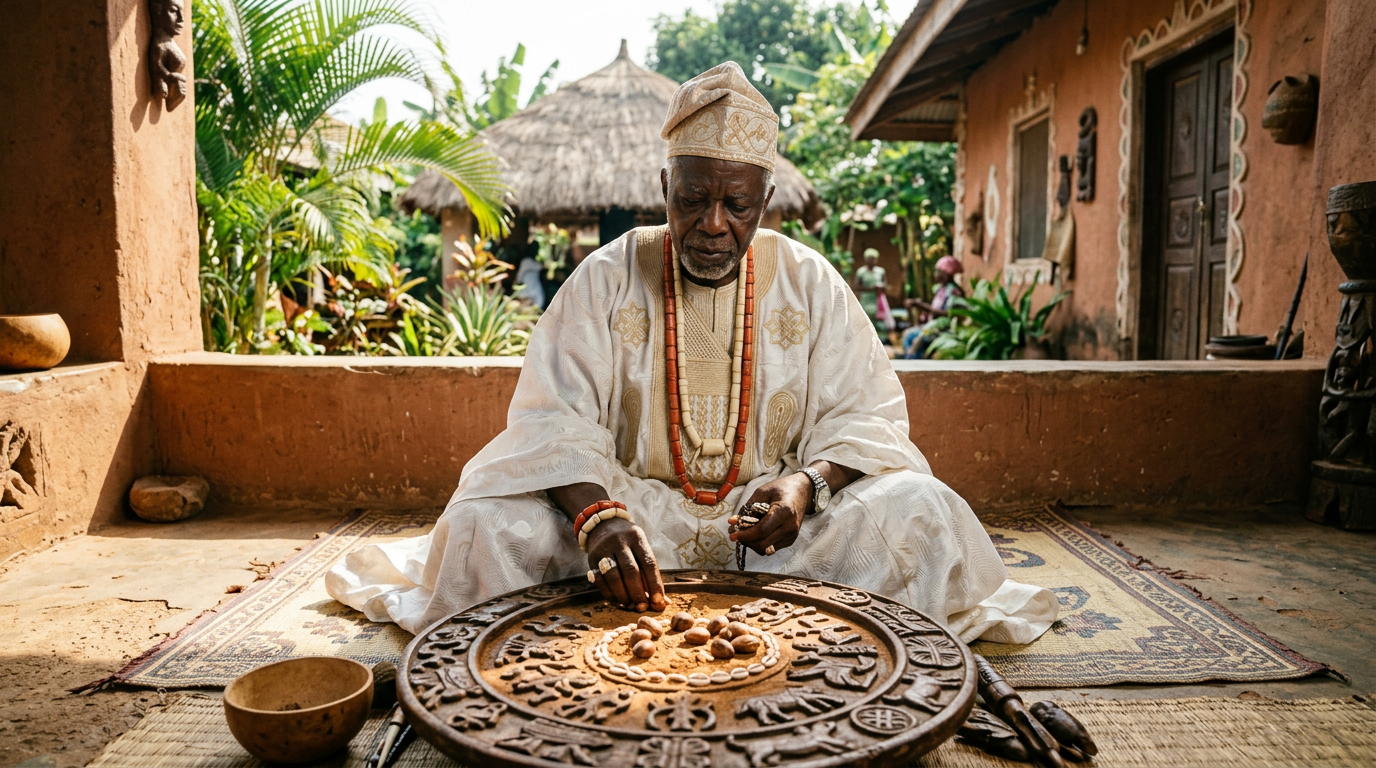
The Babaláwo's defining function is access to and mastery of the full Ifá corpus through the Ikin (sacred palm nuts) and the capacity to interpret the 256 Odù and their verses. That is the bright line separating this role from all others in the broader Ifá and Òrìṣà ecosystem.
Signs That You May Be Called to the Path of Ifá
The path begins before any formal training. In Yorùbá tradition, the call to Ifá priesthood is not something a person simply decides — it is something that gets confirmed.
Spiritual Signs and Divination Confirmations
Persistent spiritual experiences — repeated dreams involving Ọ̀rúnmìlà or the Ifá oracle, inexplicable draws toward the tradition, recurring patterns of illness or disruption that conventional remedies don't resolve — are among the signs practitioners commonly point to as indicators of a calling. These experiences are taken seriously, but they are not treated as self-authenticating. The tradition requires external confirmation.
That confirmation comes through divination, typically from a recognized and qualified Babaláwo. No legitimate elder will simply affirm that someone is called because they feel strongly about it. The Ifá oracle itself must speak. This requirement protects the tradition from being populated by people whose sincerity is real but whose calling is not confirmed — and it protects seekers from investing years in a path that Ifá has not actually opened for them.
The Role of Lineage, Destiny, and Orí in the Calling
Yorùbá cosmology teaches that Orí — the spiritual inner head, understood as the seat of individual destiny — carries the blueprint of a person's life path. Widely cited accounts across practitioner traditions describe the call to Ifá priesthood as something encoded in a person's Orí, not invented by personal ambition. A divination consultation can reveal whether that path is genuinely part of someone's destiny, and whether the timing is right.
Lineage matters here too. In traditional Yorùbá communities, Babaláwo families transmitted the knowledge across generations, and a child born into such a family would often show signs of the calling early. The transatlantic slave trade severed many of those lineage connections by removing younger, able-bodied people rather than fully trained elders. This historical rupture explains the gaps in diaspora practice today and why contemporary seekers often have to search beyond their immediate community to find legitimate lineage holders.
Prerequisites and Requirements Before Training Begins
Before any formal training is offered, there are foundational requirements. These are not bureaucratic hurdles. They reflect the tradition's understanding that Ifá knowledge in the hands of someone without the right character is actively dangerous.
Character, Discipline, and Moral Foundations (Ìwà Pẹ̀lẹ́)
Ìwà Pẹ̀lẹ́ — meaning "gentle character" — is regarded in the Ifá corpus as the most important of all moral values and the foundational prerequisite for both spiritual and personal development. Before any elder will agree to train a student, they are watching for evidence of this quality: patience, honesty, humility, respect for elders, and the kind of steady reliability that sustained practice demands.
This is not a personality test that can be gamed. Training happens in close proximity — often in the same household — and character reveals itself over time. A student who is dishonest, arrogant, or mercenary will be observed and, in most legitimate lineages, redirected or refused. The importance of Ìwà Pẹ̀lẹ́ in Yorùbá spirituality cannot be overstated as a practical gateway to everything that follows.
Gender Considerations and Traditional Protocols
The question of whether women can be fully initiated into Ifá is one of the most actively debated topics across lineages and regions. Some Yorùbá communities permit full initiation for women and allow casting with the Ọ̀pẹ̀lẹ̀ chain; others permit only the Isẹfa or Isode ceremonies, which confer a relationship with Ifá without full priestly status; still others restrict full initiation entirely. The title used for initiated women — Ìyánífá in some lineages, Ìyáláwo in others — is itself contested, with no single form universally accepted.
Anyone approaching this question should understand that there is no single authoritative answer that spans all of Yorùbá and diaspora practice. Diaspora traditions including Lucumí (Cuban Ifá) have their own protocols on this question, which differ from root-source Yorùbá practice in important ways. The most honest guidance: bring the question directly to whatever lineage you are considering and understand their specific position before committing to a path.
Finding a Legitimate Elder or Lineage
This is, practically speaking, where most seekers encounter the greatest difficulty. A legitimate Babaláwo has traceable initiation lineage, is recognized by peers and elders in their community, does not promise outcomes they cannot guarantee, and is transparent about the requirements and timeline of training. They do not advertise priestly credentials through social media follower counts or offer initiation as a purchasable service outside of genuine spiritual assessment.
For those coming from the diaspora — particularly in North America or Europe — locating such an elder may require significant research, travel, and patience. Practitioner networks in the diaspora with traceable Nigerian lineage are the most reliable starting point. A legitimate elder will also welcome your questions about their own training and will not treat scrutiny as disrespect.
The Apprenticeship: Stages of Ifá Training
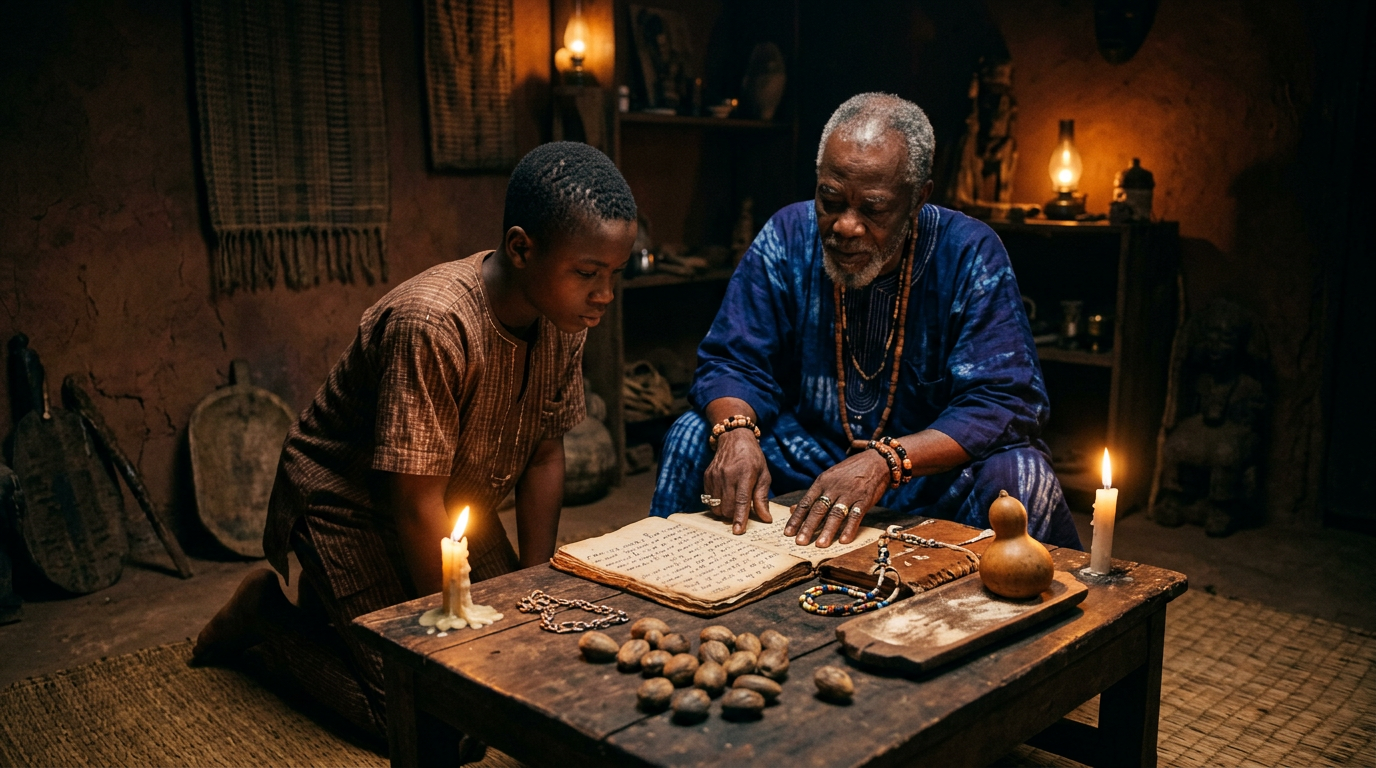
Training to become a Babaláwo traditionally requires many years of hard study and practice. Practitioners widely note that initiates typically do not serve the general public independently until their early thirties — which means training that begins in adolescence may span fifteen years or more before a priest is considered ready to stand on his own. The depth of what must be learned explains the timeline.
Memorizing the Odù Ifá and Sacred Verses (Ẹsẹ Ifá)
The Ifá literary corpus, known collectively as the Odù, consists of 256 parts, each subdivided into verses called Ẹsẹ. According to the UNESCO inscription record, each Odù contains approximately 800 Ẹsẹ, and the total number of verses is considered ever-increasing. This is a living oral and written tradition: the Ẹsẹ Ifá continue to expand through practice, meaning a Babaláwo's study is by definition never complete. There is no finish line.
For the apprentice, the immediate task is foundational memorization. The 16 principal Odù and their combinations must be internalized deeply enough that a diviner can recognize a configuration during a session and access the appropriate verses from memory. This is not mechanical recall. Each Ẹsẹ carries teachings, proverbs, histories, medicines, and ritual prescriptions that the priest must understand well enough to apply, not just recite. See introduction to Ifá divination and the Odù for a deeper look at how this corpus is structured.
Learning Divination Systems: Ikin and Ọ̀pẹ̀lẹ̀
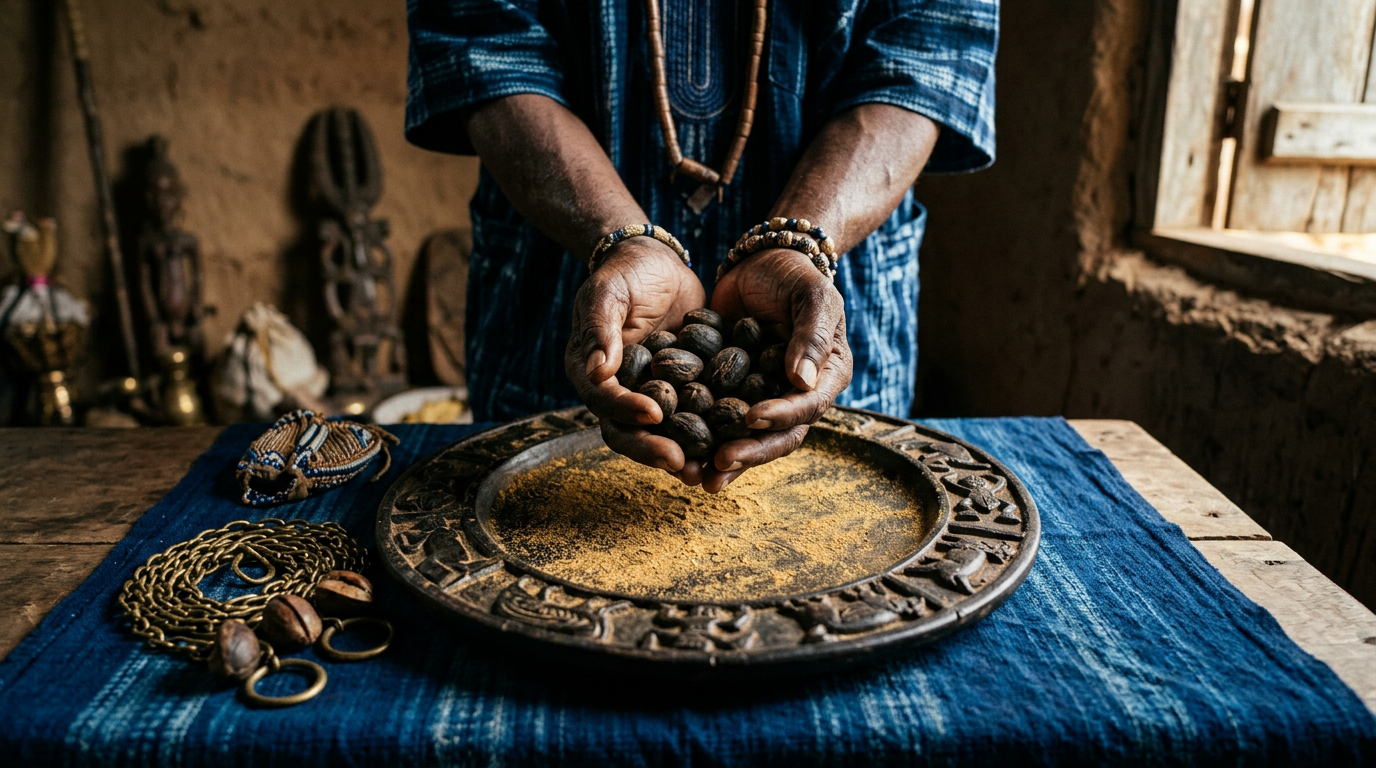
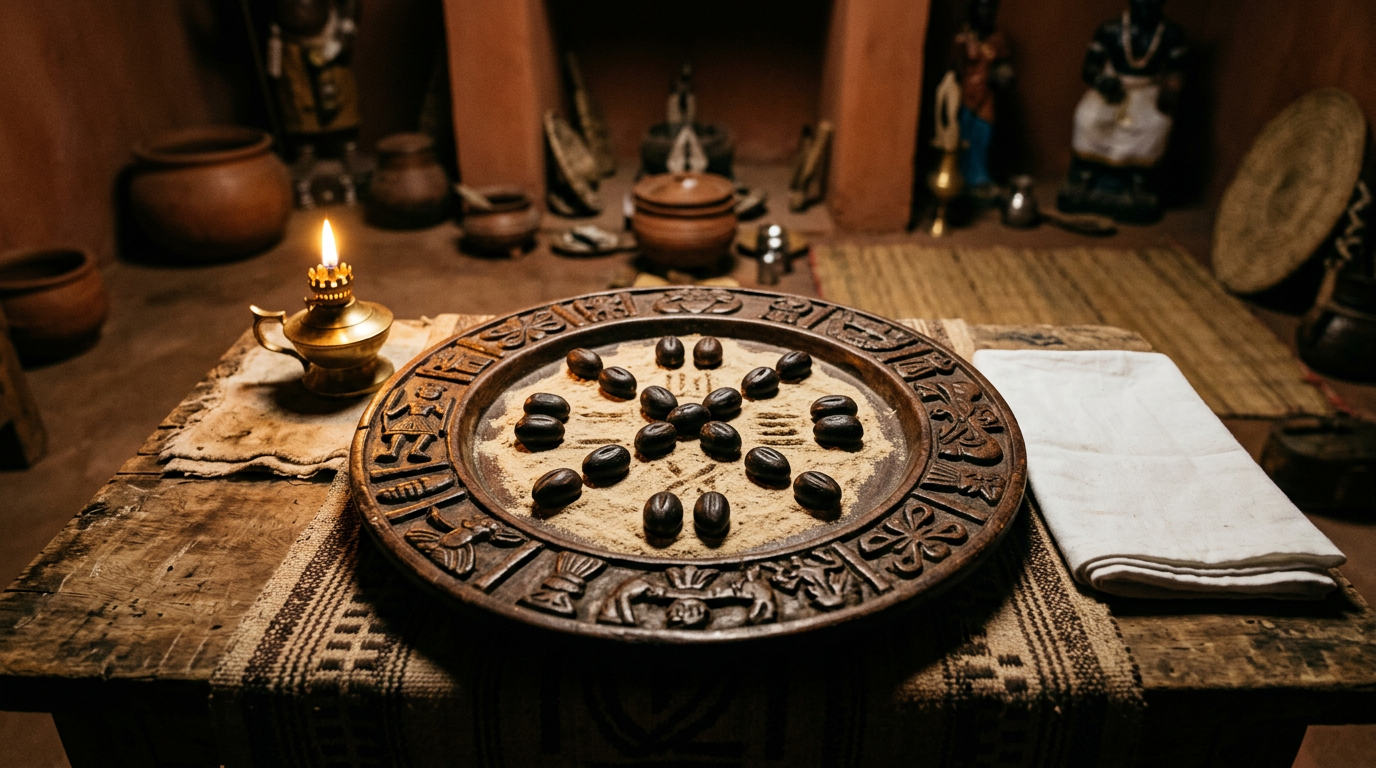
Babalawos work with two primary divination instruments. The Ikin are sacred palm nuts, cast on a divination tray (Ọpọ́n Ifá) dusted with Iyerosun powder; the pattern created by the nuts determines which Odù has arrived. The Ọ̀pẹ̀lẹ̀ is a divination chain used as a faster alternative during a session, producing the same binary patterns but with a single cast rather than the sequential palm-nut process.
Mastery of both tools is required, but they are not interchangeable in all contexts. The Ikin process is considered more rigorous and is reserved for consultations that demand it; the Ọ̀pẹ̀lẹ̀ serves daily practice. An apprentice will spend years learning the mechanics, then more years learning when and how each tool is appropriately deployed. The divination tray itself is consecrated and carries its own ritual protocols.
Herbal Knowledge, Sacrifice, and Ritual Competence
A Babaláwo's training extends well beyond text and tools. Widely cited accounts describe Babalawos as traditional healers whose competence spans divination, herbal medicine, and ritual work — with extensive knowledge of medicinal plants used in the preparation of remedies, offerings, and ritual preparations. This should not be confused with the role of a dedicated herbalist (Onísègùn), whose entire specialization lies in plant medicine. The Babaláwo's herbal knowledge serves the ritual and healing dimensions of divination work; the depth of that knowledge varies across lineages.
Sacrifice (ẹbọ) is inseparable from Ifá practice. When divination reveals a prescribed offering, the Babaláwo must know how to oversee or perform it correctly — which means understanding what is called for, why, and how the ritual is executed in a way that is spiritually effective rather than merely symbolic. This is knowledge acquired through direct participation, not books.
The Relationship Between Student and Mentor (Ojùgbọ̀nà)
The Ojùgbọ̀nà is a senior priest who serves as the guiding mentor to initiates, particularly through the Ìtẹ̀fá process itself. The relationship between student and Ojùgbọ̀nà is close, demanding, and deliberately asymmetrical — the senior priest's authority is real and the student's obedience is expected. This is not a workshop arrangement. The student typically spends extended time in the mentor's household, observing consultations, assisting with rituals, and absorbing the living practice of the tradition in a way that cannot be replicated in a classroom.
For diaspora seekers, locating a qualified Ojùgbọ̀nà may be among the most practical challenges in the entire path. Someone coming from Lucumí or Candomblé practice will bring real knowledge but may find that the protocols and expectations of a Yorùbá root-source lineage differ in meaningful ways from what they already know. Entering with humility, and without assuming that adjacent tradition knowledge substitutes for Ifá-specific transmission, is the right posture.
Itẹfá: The Initiation Ceremony Explained
Itẹfá is the formal initiation that marks the transition from student to Babaláwo. Everything before it is preparation. Nothing after it is the same.
Preparation and Spiritual Requirements for Itẹfá
The decision to initiate is not made unilaterally by the student or even by the mentor alone. Divination confirms the timing. The student must have demonstrated sufficient character and preparation — not because elders are gatekeeping, but because initiation without readiness is understood to be spiritually hazardous rather than merely premature.
Practical preparations include assembling the specific items required for the ceremony: ritual implements, specified animals, sacred materials. These requirements vary by lineage and are disclosed by the presiding elders. Financial cost is real but should be understood as covering genuine ceremonial needs, not as a fee paid for a credential.
What Happens During the Initiation Process
Some aspects of the Itẹfá ceremony are held in strict confidence within the tradition, and that boundary is appropriate. What can be said: the ceremony spans multiple days, involves the participation of the initiate's Ojùgbọ̀nà and other senior priests, and includes the formal reception of Ifá — the sacred items that will serve as the priest's foundational tools and altar for the rest of his life. Ritual, prayer, sacrifice, and divination are all present.
The initiate does not merely receive a title. He undergoes a transformation that is understood in the tradition as ontological — his relationship to Ọ̀rúnmìlà, to the Odù, and to his own destiny shifts in ways that are meant to be permanent.
There is a reason this ceremony cannot be replicated by a video call or a "distance initiation" program. The physical presence of qualified priests, the correct materials, and the active participation of the tradition's living lineage are not logistical conveniences. They are the ceremony.
Receiving Your Odù Ifá and Its Lifelong Significance
At initiation, the priest receives his personal birth Odù. This Odù — determined through divination during the ceremony itself — encodes the individual's destiny, strengths, prohibitions (ẹ̀wọ̀), and spiritual orientation. It is not a zodiac sign or personality type. The birth Odù functions as a lifelong reference point: a compass for major decisions, a source of personal spiritual counsel, and the foundation on which all subsequent Ifá practice is built.
This is perhaps the sharpest distinction between someone who studies Ifá and someone who has been initiated into it. The birth Odù is personal revelation received through the tradition's proper channel. No amount of independent study replicates it.
What Responsibilities Does a Babaláwo Carry After Initiation?
Initiation is an opening, not a completion. The responsibilities that follow are lifelong and, in many ways, more demanding than the apprenticeship that preceded them.
Ongoing Study and Deepening of Knowledge
Because the Ẹsẹ Ifá corpus is a living tradition that continues to expand, there is no point at which a Babaláwo's study ends. A priest who treated initiation as a graduation would, within a few years, find his practice becoming stale and his counsel shallower. The most respected elders in any Ifá community are those whose decades of post-initiation study have deepened their understanding of Odù to a level that younger priests cannot yet access.
Ongoing study takes many forms: continued memorization of Ẹsẹ, direct engagement with elders and senior Babalawos, participation in community ceremonies that provide fresh exposure to the tradition's full range, and personal reflection on the teachings of one's own birth Odù. The corpus is vast enough that a lifetime of practice will not exhaust it.
Ethical Obligations and Service to Community
A Babaláwo's ethical obligations are not merely aspirational. A priest who exploits clients financially, reveals what divination has disclosed in confidence, or uses Ifá knowledge to cause harm rather than heal it has violated the core of the tradition. Ìwà Pẹ̀lẹ́ does not end at initiation; if anything, the standard of character expected of a practicing priest is higher than what was required during apprenticeship.
Service to community is not optional or occasional. When the community calls — and it will — the Babaláwo answers. Births, deaths, illnesses, conflicts, and transitions all generate legitimate calls on a priest's time and knowledge. Understanding this before initiation prevents the disillusionment that some priests experience when they realize the role consumes as much as it confers.
Navigating Modern Life as a Traditional Ifá Priest
Holding traditional priestly responsibilities while navigating modern employment, family life, and digital culture creates real tensions that every contemporary Babaláwo must work through. Some priests carry their practice alongside secular careers; others build community structures that support full-time priestly work. Neither path is automatically more legitimate than the other, but both require conscious management of the priest's time, energy, and personal boundaries.