Ẹbọ Across the African Atlantic: Lucumí, Candomblé, and Vodún
The same logic that sends a Yorùbá client home from a divination session with a list of offerings has — in some recognizable form — survived the Middle Passage, survived colonial suppression, and found its way into Cuban batá-drum ceremonies, Brazilian terreiros, and Haitian peristyles. How much survived, what changed, and what those changes mean theologically: that is what this article works through, tradition by tradition and then in comparative synthesis.
What Is Ẹbọ and Why Does It Matter in Ifá
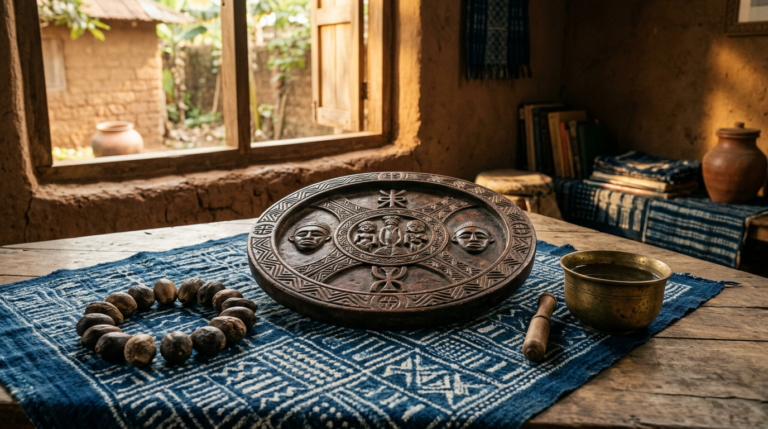
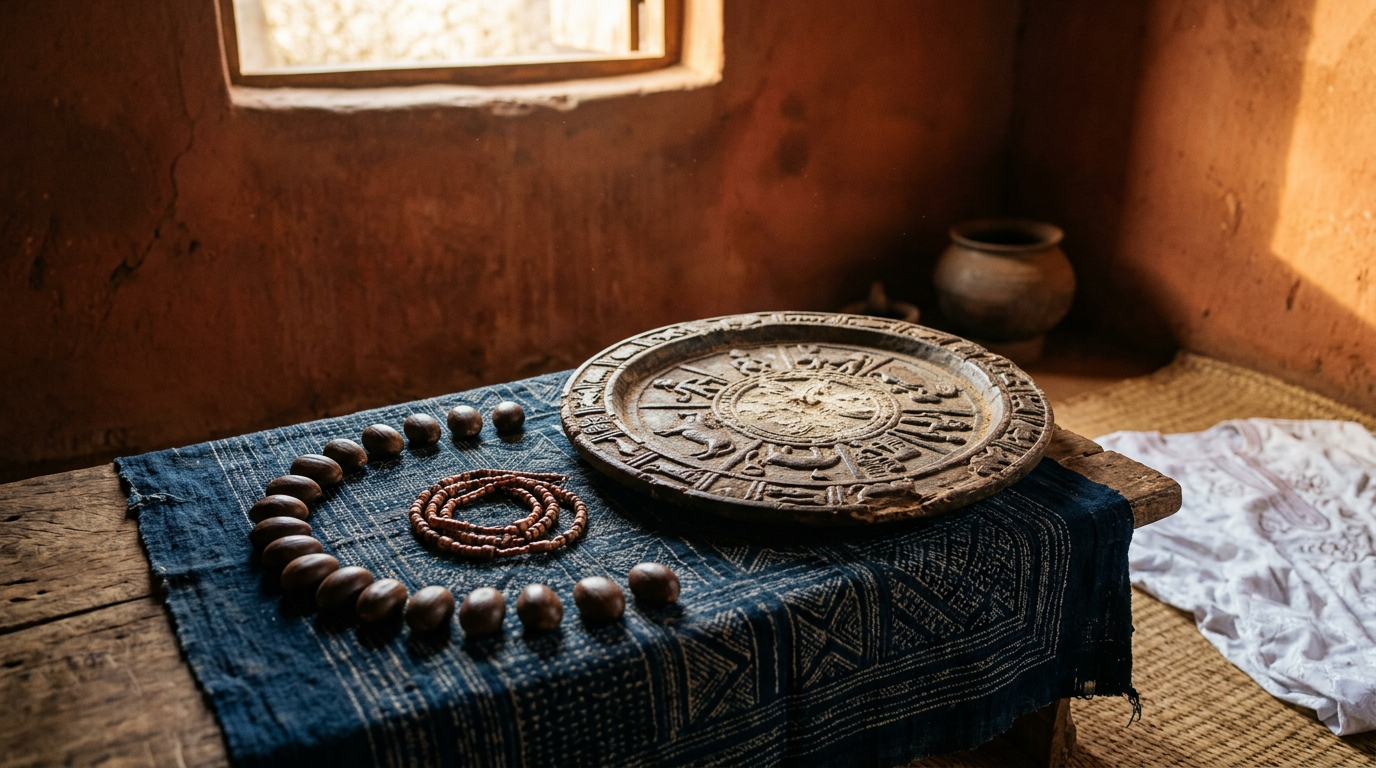
Ẹbọ is not an optional courtesy to the spirits. In Ifá practice, every divination session closes with a prescription of Ẹbọ — a required offering or ritual action aligned to whatever the Odù identified as operating in the client's life. Skip the Ẹbọ, and the divination is, at best, incomplete.
Ẹbọ as Prescribed by Odù
The Odù that falls during a consultation determines everything: the specific materials, the timing, the Òrìṣà addressed. Scholars commonly note that no ingredient prescribed by an Odù should be omitted, because each component addresses a specific aspect of the client's situation. This is not ritual formalism for its own sake. In Yorùbá cosmology, Ẹbọ embodies a living exchange between the human world (Ayé) and the spiritual realm (Ọ̀run) — a transaction that restores the flow of Àṣẹ, the vital force threading through all existence. Remove one element and you've altered the transaction.
Categories of Ẹbọ in Yorùbá Practice
Yorùbá practitioners distinguish between several categories. Ẹbọ Riru refers to animal sacrifice; Ẹbọ Omi to water-based offerings; Ẹbọ Tútù to "cool" appeasement offerings involving white or cooling materials. There are also Ẹbọ directed to Ègúngún (the ancestral collective) versus those directed to specific Òrìṣà. Understanding this taxonomy matters for the comparative discussion ahead, because diasporic traditions preserved some categories more fully than others. For deeper grounding, see our introduction to Ẹbọ in Ifá and the glossary of Yorùbá liturgical terms.
The Middle Passage and Ritual Memory
Nothing about the transmission of Yorùbá ritual across the Atlantic was clean or systematic. People were transported in violence, separated from kin, prohibited from practicing openly, and denied access to the material world their liturgies required.
How Enslaved Yorùbá Communities Carried Liturgical Knowledge
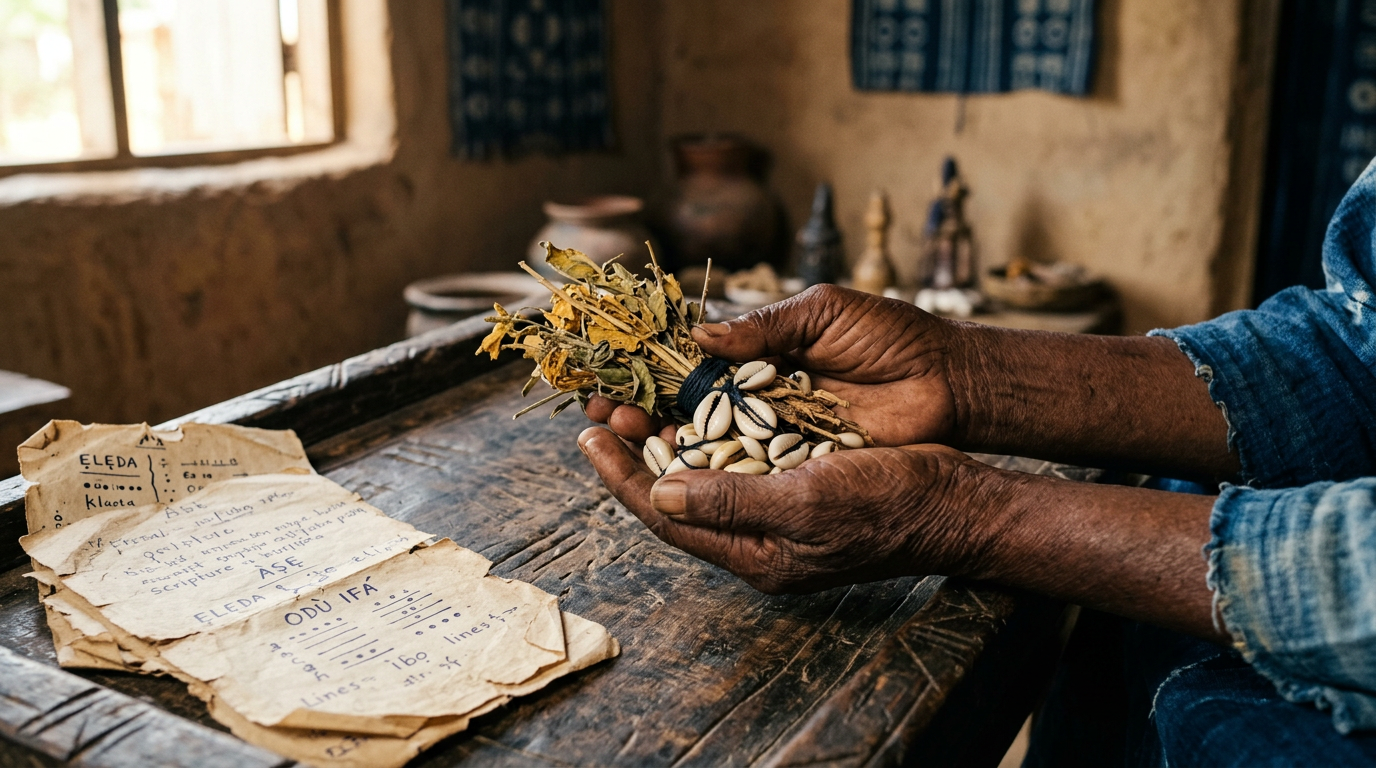
What survived the crossing was largely oral and embodied: songs, prayers, sequences of action, the logic of spiritual reciprocity. The Ifá divination system, recognized by UNESCO in 2005 and formally inscribed on the Representative List of the Intangible Cultural Heritage of Humanity in 2008, is explicitly documented as a living practice among both Yorùbá communities and African diaspora populations in the Americas and Caribbean — a rare institutional acknowledgment that what crossed the ocean was not a memory but a functioning tradition.
In Cuba and Brazil especially, enslaved practitioners maintained liturgical life partly through a strategic association of Òrìṣà and vodun with Roman Catholic saints. This was not naïve confusion. It was a protective veil that allowed Ẹbọ to continue under Catholic-facing ceremonial cover.
Environmental and Material Constraints on Ritual
The harder problem was material. Plants specified in an Odù prescription might not grow in Cuba. Animals used in West African ceremonies might not be available in nineteenth-century Bahia. The adaptive response — one of the most theologically significant features of diaspora Ẹbọ practice — was to find local equivalents that preserved cosmological intent while changing material form. The logic of structural equivalence: this plant does what that plant does, because its Àṣẹ aligns with the same Òrìṣà. That adaptive reasoning is now embedded in all three major diasporic traditions.
Ẹbọ in Lucumí: Continuity and Innovation in Cuba
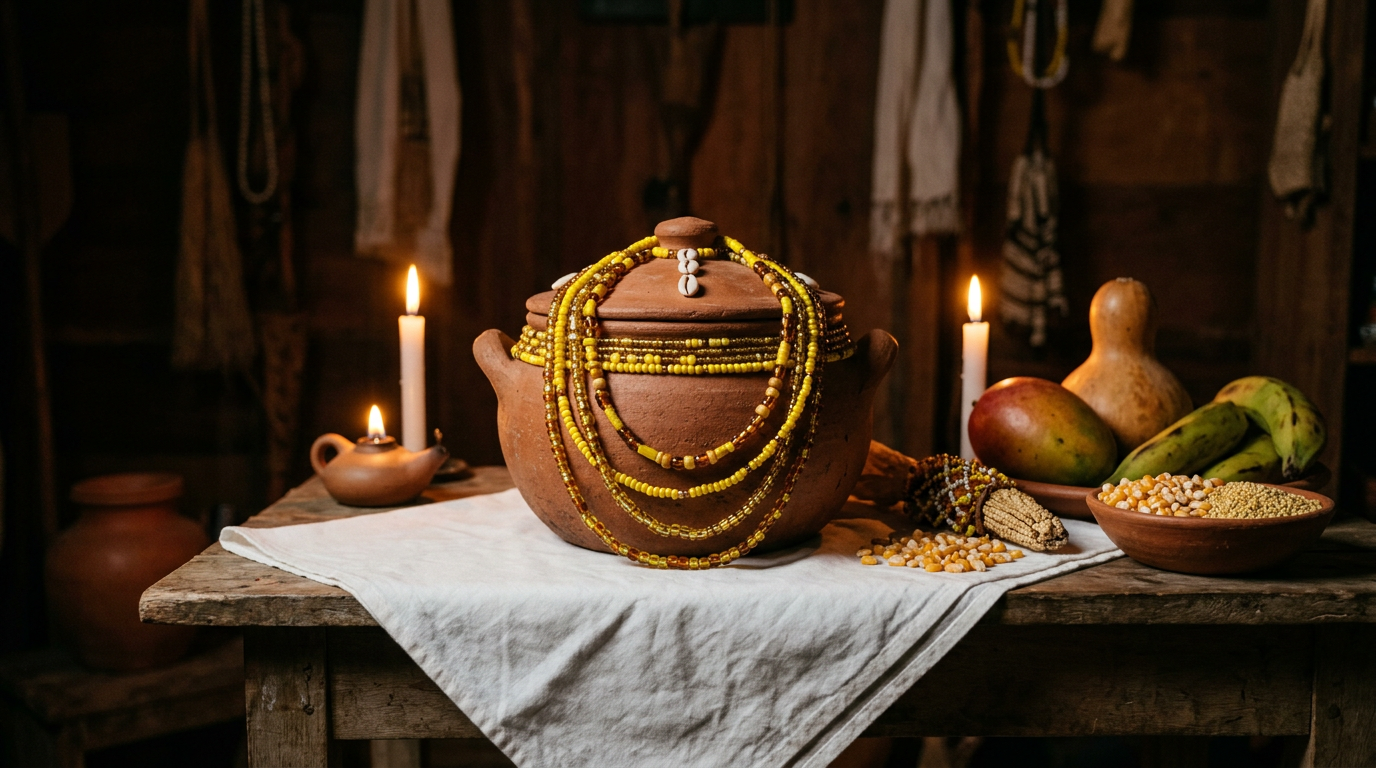
Lucumí — the tradition more commonly called Regla de Ocha or Santería — developed in Cuba through a process of syncretism between traditional Yorùbá religion, Catholicism, and Spiritism during the late nineteenth century. The Yorùbá word itself held on: practitioners say ebó, not an invented Spanish equivalent.
The Role of the Italero and Obá in Prescribing Ẹbọ
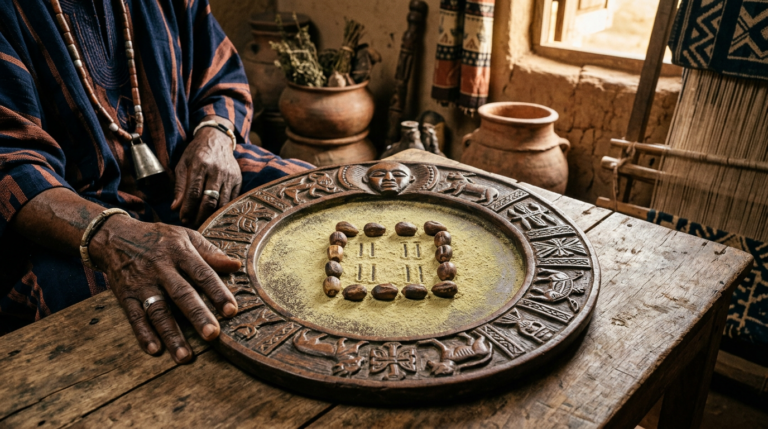
Within Lucumí, ebó prescription is the domain of initiated specialists. The Italero — a diviner trained in Diloggún, the sixteen-cowrie system — reads the Odù and specifies the offering. The Obá Oriaté, the senior liturgical authority in many Lucumí houses, oversees major ceremonial contexts in which ebó plays a central role. The structural parallel to the Yorùbá Babaláwo's role in understanding Odù and divination prescriptions is clear, though the divination instrument and the initiation lineage differ.
Material Substitutions and Liturgical Shifts
In Lucumí practice, making ebó involves complex ritual performances with offerings of objects, foods, and animals to the orishas. What is particularly striking is the retention of Lucumí liturgical language — a register derived from Yorùbá but distinct from modern standard Yorùbá, carrying archaic forms and Cuban innovations — because spoken words carry aché (àṣẹ) needed to engage the spirits. The word still does the ritual work even when its phonology has drifted. Meanwhile, Cuban herbs, Caribbean animals, and locally available foods filled the material gaps. Roosters and pigeons ubiquitous where other birds once served. The substitution logic is practical but not arbitrary — each replacement carries a cosmological rationale.
Ẹbọ in Candomblé: Brazilian Reconfigurations
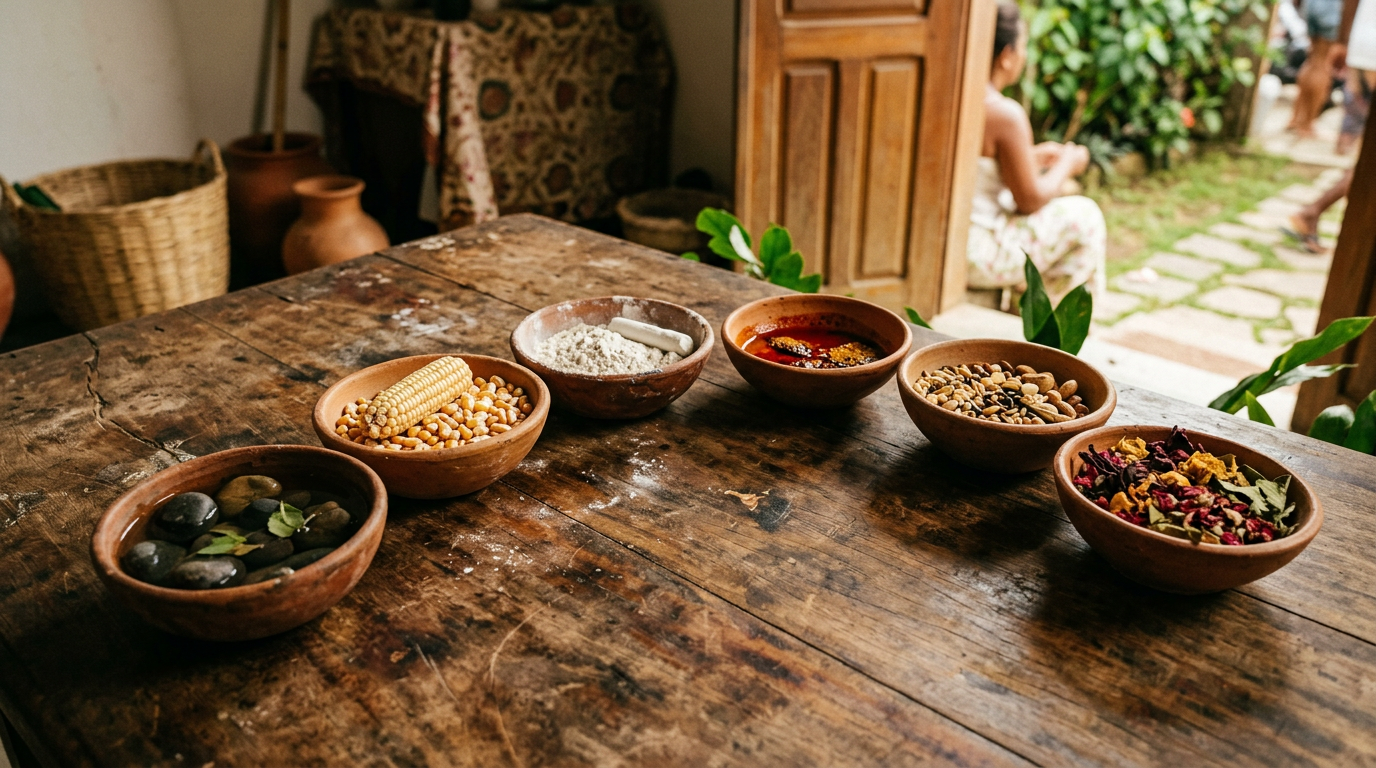
Candomblé is sometimes spoken of as a single tradition. It is not. Candomblé developed in nineteenth-century Brazil through syncretism among the traditional religions of West and Central Africa — especially Yorùbá, Bantu, and Gbe peoples — together with influences from Roman Catholicism, and it has no central authority. Autonomous terreiros, each led by a mãe or pai de santo, constitute the tradition's actual structure.
Ebó and Offerings Across Candomblé Nações
The nação (nation) system is where the comparative analysis gets specific. Candomblé is organized into six major ethno-liturgical nations — Ketu, Ijexá, Jêje, Angola, Congo, and Caboclo — each representing a distinct African ethnic identity and liturgical style. Ketu and Ijexá nations are Yorùbá-derived and carry the strongest structural continuity with Ẹbọ as prescribed in Ifá; their offering protocols most closely resemble what a Babaláwo in Yorùbáland would recognize. Jêje nations follow Fon and Ewe vodun protocols — a distinct but parallel sacrificial theology discussed further below. Angola and Congo nations use Bantu-derived nkisi offering frameworks that diverge more substantially from Yorùbá Ẹbọ logic.
It is worth resisting the temptation to rank these — to call Ketu "most authentic" or to treat other nações as diluted. As scholars like J. Lorand Matory have argued, claims about which form of diaspora practice is closest to African origins often reflect transnational Yorùbá identity politics as much as liturgical history. Each nação is whole on its own terms.
Intersection With Indigenous and Catholic Elements
Caboclo, the sixth nação, is the most syncretic — incorporating offerings and spirit categories drawn from Indigenous Brazilian traditions alongside African ones. This produced ebó forms that have no direct African antecedent. Meanwhile, across all nações, the centuries-long association of Orixás with Catholic saints shaped when and how offerings were timed (around saints' feast days, for instance). These Catholic-facing adaptations are precisely what late twentieth-century re-Africanization movements began actively dismantling.
Ẹbọ in Vodún: West African and Haitian Threads
Vodún deserves its own frame, not a derived one. The instinct to read Vodún sacrifice as a variant of Yorùbá Ẹbọ flattens a distinct theological genealogy.
Fon and Ewe Antecedents of Sacrificial Practice
The rival Dahomey (Fon) and Oyo (Yorùbá) kingdoms engaged in sustained cultural exchange over centuries — trade, warfare, diplomacy, captivity. The Smithsonian Institution documents that Fa divination (also called Ifá) is shared between Fon and Yorùbá communities in Benin, and that Dahomey consciously incorporated Yorùbá art, deities, and divination into its own belief system through this centuries-long entanglement. This means that by the time Fon-descended enslaved people arrived in Haiti and Brazil, their sacrificial logic was already an intertwined product — Fon and Yorùbá threads woven together before the crossing, not after.
In Vodún sacrificial practice, blood and divinity are linked: animal sacrifice nourishes both vodun spirits and ancestral spirits, and sharing àṣẹ occurs through the ritual consumption of the sacrificed animal. The theological logic, as the Smithsonian scholarship makes plain, is structurally parallel to Ẹbọ — but it runs on Fon rails, not borrowed Yorùbá ones.
Haitian Vodou Offerings and Their Yorùbá Echoes
In Haitian Vodou, a remote supreme creator (Bondye) delegates interaction with humanity to intermediary spirits called lwa. The parallel with Olódùmarè delegating to the Òrìṣà is direct — and it is theological kinship, not coincidence. Both structures emerge from shared West African cosmological assumptions about how the supreme divine relates to human life through intermediaries. Offerings to the lwa — food, rum, tobacco, animals — follow the lwa's known preferences and cosmological associations, the same principle by which Yorùbá Ẹbọ specifies materials aligned to a given Òrìṣà's Àṣẹ. The form differs. The operating logic does not. See our article on Òrìṣà and the Yorùbá spiritual framework for a fuller treatment of the cosmological principles at work.
Common Threads and Key Divergences
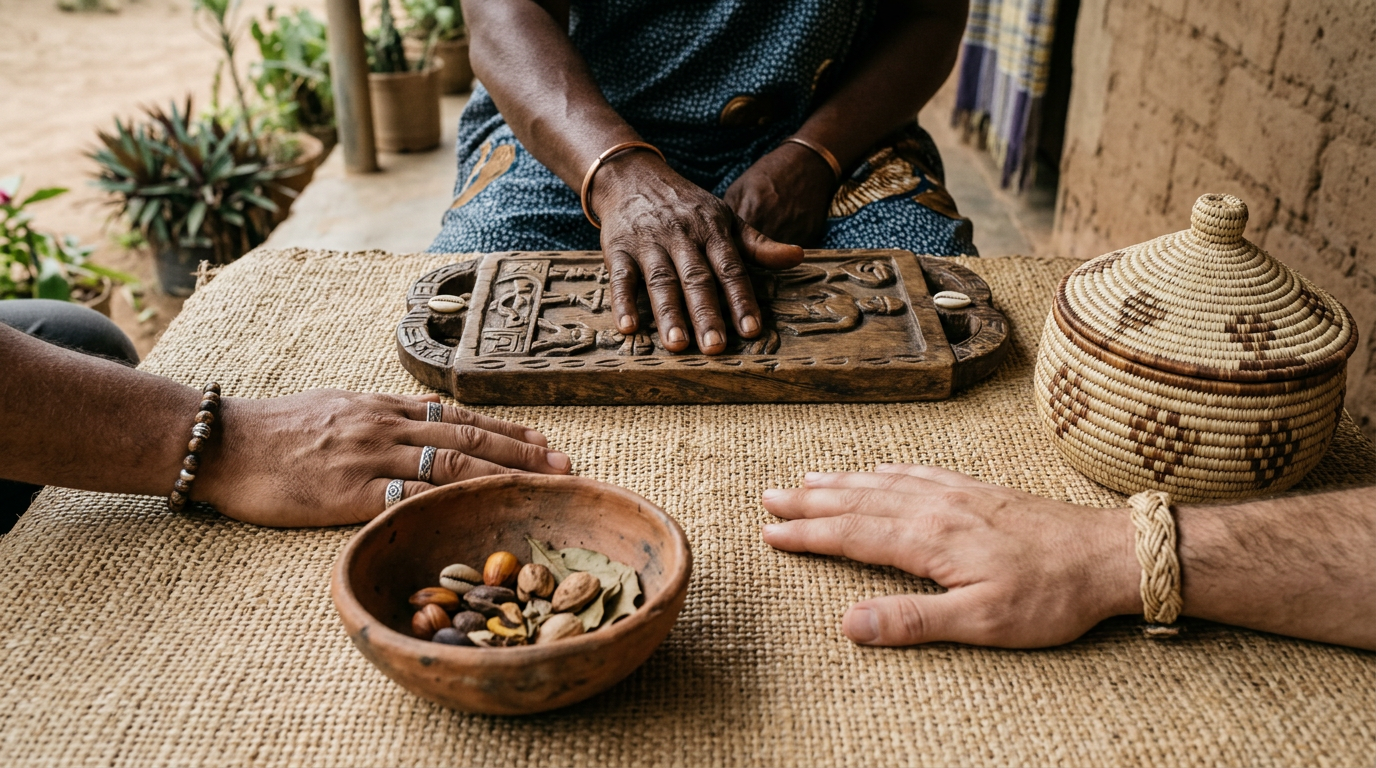
After tracing Ẹbọ through three diasporic traditions, the patterns — both of continuity and departure — become easier to name.
Shared Cosmological Principles Behind Ẹbọ
The deepest constant across Lucumí ebó, Candomblé offering, and Vodún sacrifice is the operative principle of vital force: called àṣẹ in Yorùbá, aché in Lucumí, axé in Candomblé Portuguese, and ase in certain Vodún contexts. Ritual offerings do not merely symbolize devotion — they transfer, restore, and direct this force. The offering is transactional in a cosmologically precise sense. That principle is not Yorùbá-specific; it appears in Fon, Ewe, Bantu, and Gbe theological frameworks in comparable forms. What the Atlantic crossing preserved was less a specific ritual and more a way of understanding what ritual does.
Where the Traditions Depart From One Another
The departures are real, though. Lucumí practice has, in many houses, preserved Odù-based prescription most explicitly: the cowrie reading identifies the Odù, the Odù prescribes the ebó, the ebó addresses the cosmological situation. Candomblé Ketu and Ijexá follow a structurally similar logic, but without a fully intact Odù corpus being consistently consulted in all terreiros. Candomblé Angola and Caboclo use offering frameworks whose materials and spirit categories differ substantially from Yorùbá Ẹbọ taxonomy. Haitian Vodou's lwa-offering system follows lwa preferences rather than a divination-derived prescription, which represents a meaningful structural difference from Ifá-prescribed Ẹbọ even where the underlying cosmology converges.
Ẹbọ in the Contemporary Diaspora
Since the late twentieth century, practitioners across Lucumí and Candomblé have pursued active re-Africanization — a movement aimed at removing Catholic syncretic elements and bringing practice closer to traditional Yorùbá religion. This is not without internal friction. Some practitioners reject re-Africanization as an erasure of centuries of New World innovation: the Cuban ebó, the Bahian offering, the Haitian service to the lwa are, on this view, complete traditions in their own right, not deficient versions of something in Nigeria. Others see liturgical realignment as correction.
Internet access and transatlantic travel have brought Lucumí babalawos, Candomblé priests, and Yorùbá traditionalists into direct dialogue that would have been impossible fifty years ago. Debates about correct Ẹbọ procedure, which tradition's Ifá corpus is authoritative, and whether material substitutions that made sense in colonial Cuba still make sense now are live conversations in online forums, at conferences, and during transatlantic initiations. The history of Ifá in the diaspora is still being written, in real time, by practitioners who are themselves renegotiating what it means to carry this knowledge across geography and time.
What the Tradition of Ẹbọ Tells Us Across Borders
Ẹbọ traveled because it had to, and it changed because it had to. What the comparative view across Lucumí, Candomblé, and Vodún reveals is that the changes were not random — they followed a coherent adaptive logic that prioritized cosmological function over material form. The vital-force transaction at the heart of Ẹbọ proved durable enough to survive slavery, colonial prohibition, environmental displacement, and a century of Catholic overlay.
Whether your entry point is an Ifá consultation in Lagos, a Diloggún reading in Havana, a Candomblé Ketu ceremony in Salvador, or a Vodou peristyle in Port-au-Prince, the question being answered is the same: what does the spiritual situation require, and how does the human world respond in kind? The answers differ by tradition. The question is the same.