Ìwà-Pẹ̀lẹ́ in the Diaspora: Yorùbá Ethics Across Lucumí and Candomblé
The same ethical concept that Yorùbá priests articulate in Lagos and Ile-Ife today can be found — sometimes under a different name, sometimes woven into ritual silence — in the terreiros of Salvador da Bahia and the ilés of Havana and New York. That concept is Ìwà-Pẹ̀lẹ́, and tracing its journey across the Atlantic is not a story of perfect preservation. It is something more remarkable: a story of moral philosophy surviving, transforming, and continuing to shape communities across centuries and continents.
What Is Ìwà-Pẹ̀lẹ́? Grounding the Concept in Yorùbá Thought
Ìwà-Pẹ̀lẹ́ as the Foundation of Yorùbá Moral Philosophy
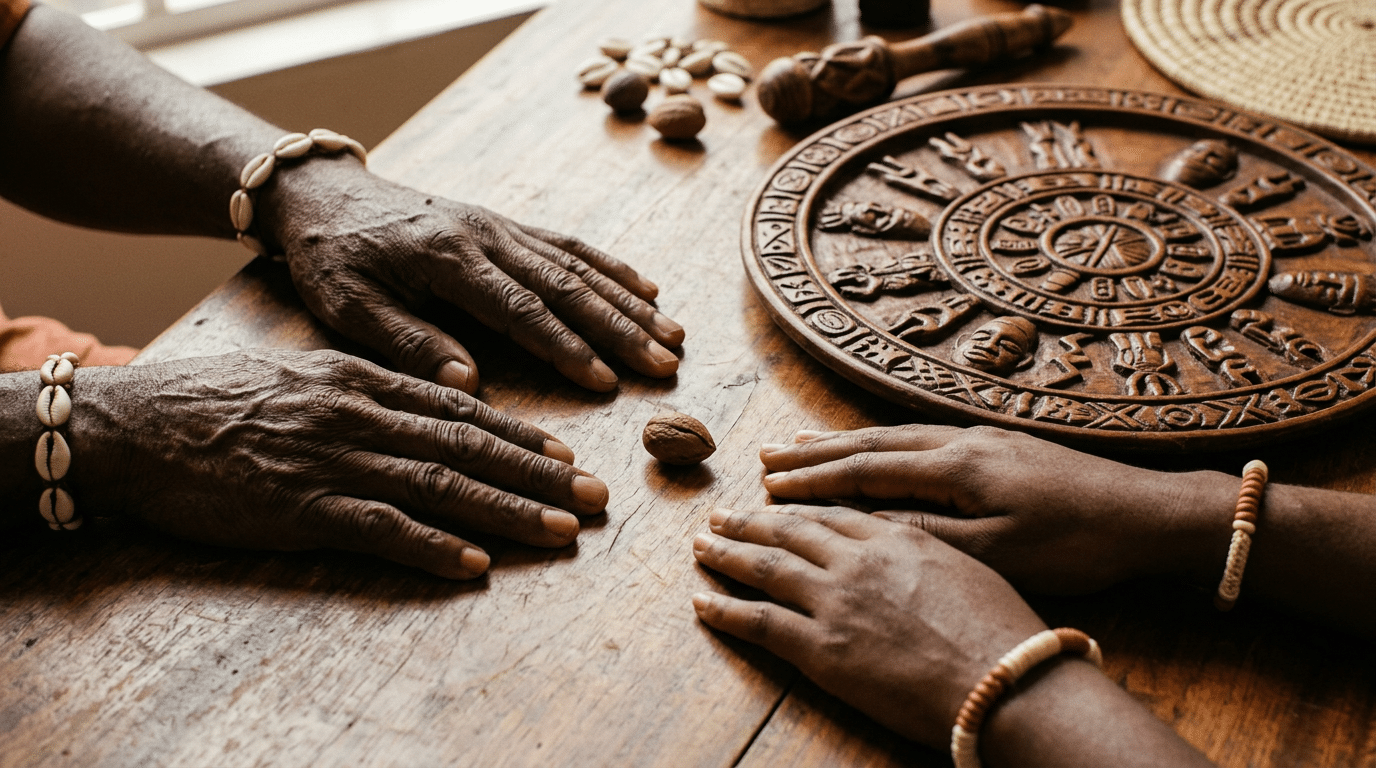
Ìwà-Pẹ̀lẹ́ means "gentle and balanced character," and it sits at the heart of what Yorùbá thought considers a well-lived life. The concept is not simply an aspiration toward politeness or good manners. In Ifá cosmology, the word Ìwà carries a dual weight: it means "character," but it also functions as a nominal form of the verb wà, which means "to exist" or "to be located in time and space." Character and being, in Yorùbá thought, are not separate categories. Who you are is how you exist. That ontological grounding distinguishes Ìwà-Pẹ̀lẹ́ from Western ethical frameworks that treat morality as a set of rules applied from the outside.
Ìwà-Pẹ̀lẹ́ is also inseparable from the Yorùbá ideal of Omolúwàbí — the person of good breeding and exemplary conduct. Crucially, Yorùbá ethics is never purely private. Character is always communally legible, always socially accountable. A person who possesses Ìwà-Pẹ̀lẹ́ is recognized as such by their community, not merely in their own conscience. This social dimension matters enormously for understanding how the concept traveled and took root in diasporic settings.
How Odù Ifá Frames Good Character
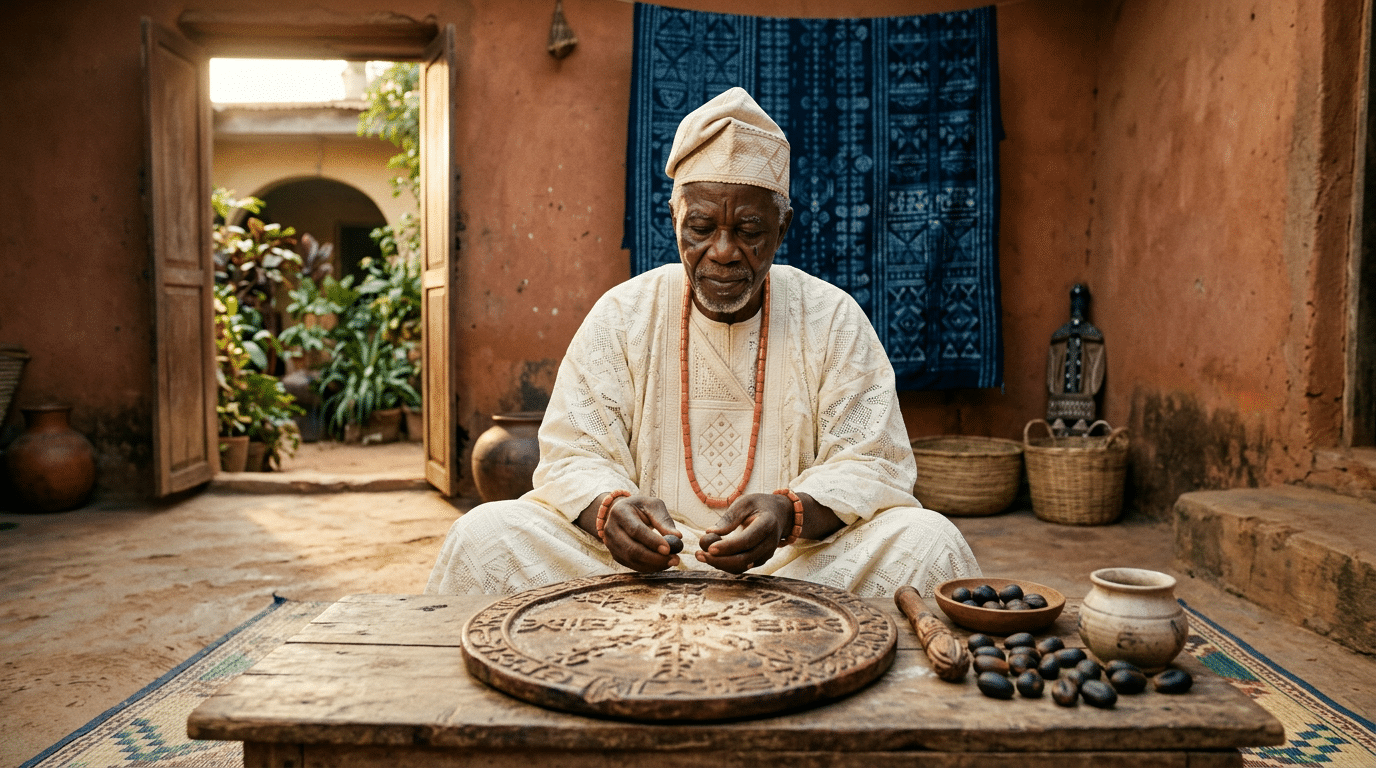
The 256-Odù Ifá corpus — the vast body of oral literature at the center of Ifá practice — returns again and again to the theme of good character as life's central pursuit. Scholars and practitioners widely describe Ìwà-Pẹ̀lẹ́ as Ifá's central ethical teaching, framing it as the alignment of a person's actions with their Orí, their divinely chosen individual destiny. In practical terms, cultivating Ìwà-Pẹ̀lẹ́ is understood as the functional condition for fulfilling one's purpose in the world — not a spiritual luxury, but a necessity. Good character, in this framework, is what makes destiny achievable. You can learn more about how the Odù encode these teachings in our overview of introduction to Ifá divination and Odù.
The Middle Passage of Ethics: How Yorùbá Moral Teachings Survived the Slave Trade

Oral Transmission and Cultural Memory
No written scriptures crossed the Atlantic. What survived did so inside human beings — in memory, in song, in the relationships between elders and initiates, in the precise repetition of ritual words that carried meaning no translator could fully render. Yorùbá religious and ethical knowledge was always oral in its transmission infrastructure, and that infrastructure, while brutally stressed, proved portable in ways that written traditions sometimes cannot be.
Yorùbá religious forms achieved a disproportionate cultural influence in Brazil and Cuba relative to other African ethnic groups. Part of the explanation lies in the adaptability of Òrìṣà worship and the structured nature of Ifá's oral transmission, which created durable networks of knowledge across even the most hostile conditions. The ethics carried by that knowledge — including Ìwà-Pẹ̀lẹ́ — traveled with it.
Adaptation Under Colonial and Plantation Systems
Enslaved Yorùbá brought to Cuba in large numbers between 1790 and 1865 did not simply carry a religion into a new geography. They built one, under conditions of constant surveillance, violence, and cultural erasure. Cabildos de nación — ethnic mutual-aid societies organized by enslaved Africans in Cuba — functioned as religious organizations under the leadership of figures versed in Yorùbá ritual lore, and became the primary institutional vehicle for preserving Lucumí spiritual and ethical knowledge under colonial rule.
The Catholic veneer adopted by both Lucumí and Candomblé communities under colonial pressure created a layered system. The saints provided cover. The moral logic organizing community life remained Yorùbá-rooted. This was not deception for its own sake — it was survival strategy as ethical creativity.
Ìwà-Pẹ̀lẹ́ in Lucumí Practice: Character and Conduct in Cuban Òrìṣà Tradition
Ethical Language in Lucumí Ritual and Divination
A note on terminology first: many practitioners prefer Lucumí, Regla de Ocha, or Regla de Ocha-Ifá over "Santería," which carries colonial-era associations. This article uses Lucumí as the primary term while acknowledging that Santería remains in common use across scholarly and popular contexts.
The Yorùbá term Ìwà-Pẹ̀lẹ́ may not always appear by name in Lucumí ritual settings. But the framework it describes — that harmony with the Òrìṣà follows from sustained good conduct — organizes how practitioners understand their relationship to the divine. Widely cited accounts describe an orientation in Lucumí practice where maintaining proper comportment, humility, and respect functions as both moral and cosmological alignment. This echoes Ìwà-Pẹ̀lẹ́'s original Yorùbá logic even when the Yorùbá vocabulary is not explicit.
It is also worth holding the tensions honestly. The relationship between Ifá (the Babalawo tradition) and Ocha (initiated Orìṣà priests) involves real jurisdictional and interpretive differences that affect how ethical guidance moves through Lucumí communities. "The tradition" is not a monolith. Different lineages, houses, and initiatory paths carry their own emphases.
The Role of Elders in Modeling Good Character
Perhaps the most direct structural continuity between Yorùbá and Lucumí ethical transmission is the role of elders. In the Lucumí tradition, new initiates known as Iyawó undergo an approximately fifty-three-week initiation period during which strict behavioral and ethical obligations — humility, avoidance of vanity, deference to those senior in initiation — actively inscribe moral formation into the body and social identity. This is not moral instruction delivered through lecture. It is ethics learned through embodied constraint, social relationship, and time.
The ilé, or house community, functions as a kinship-like unit where daily interaction with elders provides living models of proper conduct. Character is caught as much as taught. See also our discussion of the role of elders in Ifá practice for the deeper theological background on why seniority and moral formation are inseparable in these traditions.
Ìwà-Pẹ̀lẹ́ in Candomblé: Brazilian Expressions of Yorùbá Ethics
Axé, Community, and Moral Obligation
In Candomblé, axé — cognate to the Yorùbá àṣẹ — functions not merely as ritual energy but as a foundational moral and cosmological principle connecting individual well-being to communal obligation and divine order. To carry axé well is to carry it responsibly — with the kind of balanced, relational awareness that Yorùbá thought describes as Ìwà-Pẹ̀lẹ́. The concept translates across the Atlantic not as a word but as a logic: the idea that personal ethical cultivation and communal flourishing are not separate projects.
Candomblé's Ketu nation, the most Yorùbá-derived branch of the tradition, structures its terreiros around a Yorùbá cosmological framework including hierarchical priesthoods, ritual performance, and the centrality of Òrìṣà worship. Some scholars and community members raise important questions about whether Bahian re-elaboration has produced a substantially distinct moral framework rather than a continuous one — and that question deserves respect rather than easy resolution. What is clear is that the ethical scaffolding of the source tradition shaped what Candomblé communities built, even as they built something distinctly their own.
For broader context on what àṣẹ/axé means across these communities, see our piece on understanding axé in African diaspora religions.
Terreiro Life as Ethical Formation
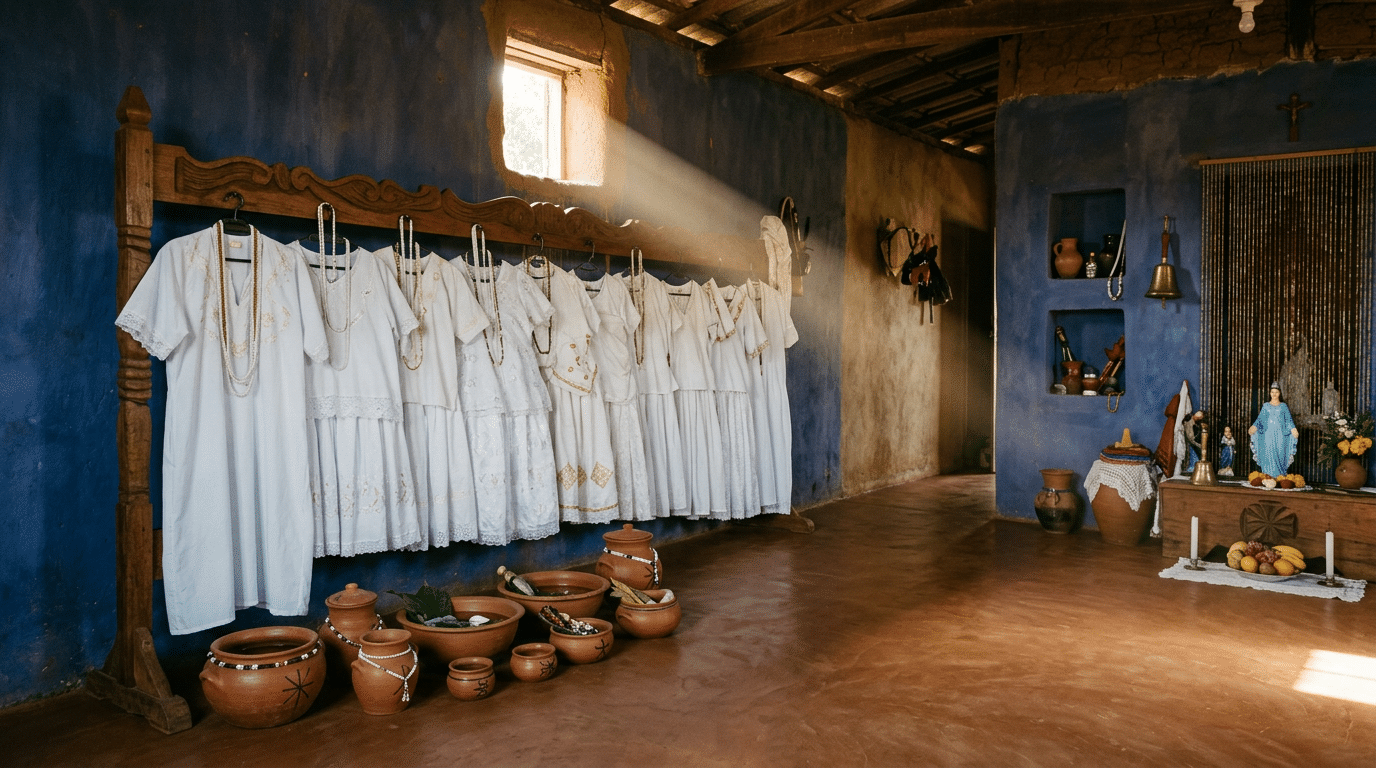
In Candomblé, terreiros function as extended family units where hierarchy based on initiation status and respect for elders supersedes external class or racial divisions, making the ritual community itself the primary site of ethical formation. That last phrase deserves emphasis. Ethics in this framework is not an individual achievement or a private spiritual practice. It is something built in relationship, through the structures of communal life over years and decades.
The terreiro as ethical micro-community mirrors the Yorùbá understanding of Ìwà-Pẹ̀lẹ́ as relational and embodied — not an abstract code applied from outside but a way of existing with others that is practiced daily. This structural parallel across Brazil and Cuba, emerging from shared Yorùbá roots, is one of the most striking continuities in the entire diaspora story.
Points of Convergence and Divergence Between Traditions
Shared Ethical Core Across Lucumí, Candomblé, and Traditional Yorùbá Practice
Three traditions. One recognizable logic. Across Yorùbá practice in West Africa, Lucumí in Cuba and its diaspora, and Candomblé in Brazil, the same core commitments reappear: the priority of good character over ritual correctness alone; the communal accountability of moral life; the elder as living model; the understanding that how you exist in relation to others is spiritually consequential. UNESCO's 2008 inscription of the Ifá divination system on its Representative List of the Intangible Cultural Heritage of Humanity explicitly recognized that the tradition is practiced among Yorùbá communities and by the African diaspora in the Americas and the Caribbean — an acknowledgment that cross-traditional continuity is real, not merely imagined.
Where Cultural Context Shaped Different Emphases
Divergence matters too. Lucumí communities developed under Cuban colonial and post-colonial conditions quite different from the Brazilian context that shaped Candomblé. The specific ways ethical obligations are articulated, the internal authority structures through which moral guidance flows, and the vocabulary used to name good conduct all differ across traditions. These differences are not failures of fidelity. They are evidence that living communities adapt inherited ethics to the conditions they actually face — which is exactly what the Yorùbá ancestors who built these traditions were doing when they built them.
Frame it as transformation and creative continuity, not as proximity to or distance from a fixed African "original." That framing would freeze what has always been alive.
Living Ìwà-Pẹ̀lẹ́ Today: Relevance for Contemporary Practitioners

Navigating Modern Ethical Challenges Through Ancestral Wisdom
Practitioners across the United States, Brazil, and Cuba increasingly describe Ìwà-Pẹ̀lẹ́ as a resource for navigating specifically contemporary problems: individualism, social fragmentation, the erosion of intergenerational knowledge, and the pressures of digital life on communal depth. The ancestral framing of ethics as embodied, relational, and communally accountable offers something that purely private or rule-based moral frameworks do not.
This is not nostalgia. It is a recognition that the conditions Yorùbá ethical thought was designed to address — how do people live well together across difference, obligation, and change? — have not disappeared.
Building Character-Centered Communities in the 21st Century
The practical inheritance for contemporary practitioners is a model of community where ethical formation is structural, not incidental. The ilé and the terreiro are not just worship spaces. They are character-building institutions that operate through daily relationship, hierarchical mentorship, and long initiation. Building or sustaining that kind of community in the 21st century requires deliberate choice — to slow down, to defer, to show up consistently, to take on the weight of being a model for those who come after.
Ìwà-Pẹ̀lẹ́ has always asked exactly that. The question, in each generation, is whether practitioners answer.
Where the Journey Continues
Ìwà-Pẹ̀lẹ́ did not survive the Middle Passage by accident. It survived because communities chose to embody it — in the cabildos of colonial Cuba, in the terreiros of Bahia, in the structured silence of an Iyawó year, in the relationship between an elder and a new initiate that looks nothing like a philosophy lecture but teaches more than one. The concept arrived in the diaspora as a living practice, and living practices transform. What Lucumí and Candomblé communities built are not imperfect copies of a Yorùbá ethical original. They are creative achievements in their own right, rooted in the same moral vision.
For practitioners seeking to go deeper, exploring Òrìṣà worship fundamentals and the history of Yorùbá spiritual traditions will provide additional grounding for understanding how the ethical and cosmological dimensions of these traditions reinforce each other across time and geography.