Ifá Divination: A Foundational Guide to the Yoruba Oracle
Most people who first encounter Ifá have the same question: is this fortune-telling? The short answer is no — and understanding why reveals one of humanity's most sophisticated systems of wisdom, ethics, and spiritual guidance. This guide walks you through what Ifá actually is, who performs it, how a session unfolds, and why millions of people across five continents still turn to it today.
Related reading: for a broader overview framed around Ifá as an African spiritual tradition, see our companion introduction.
What Is Ifá Divination?
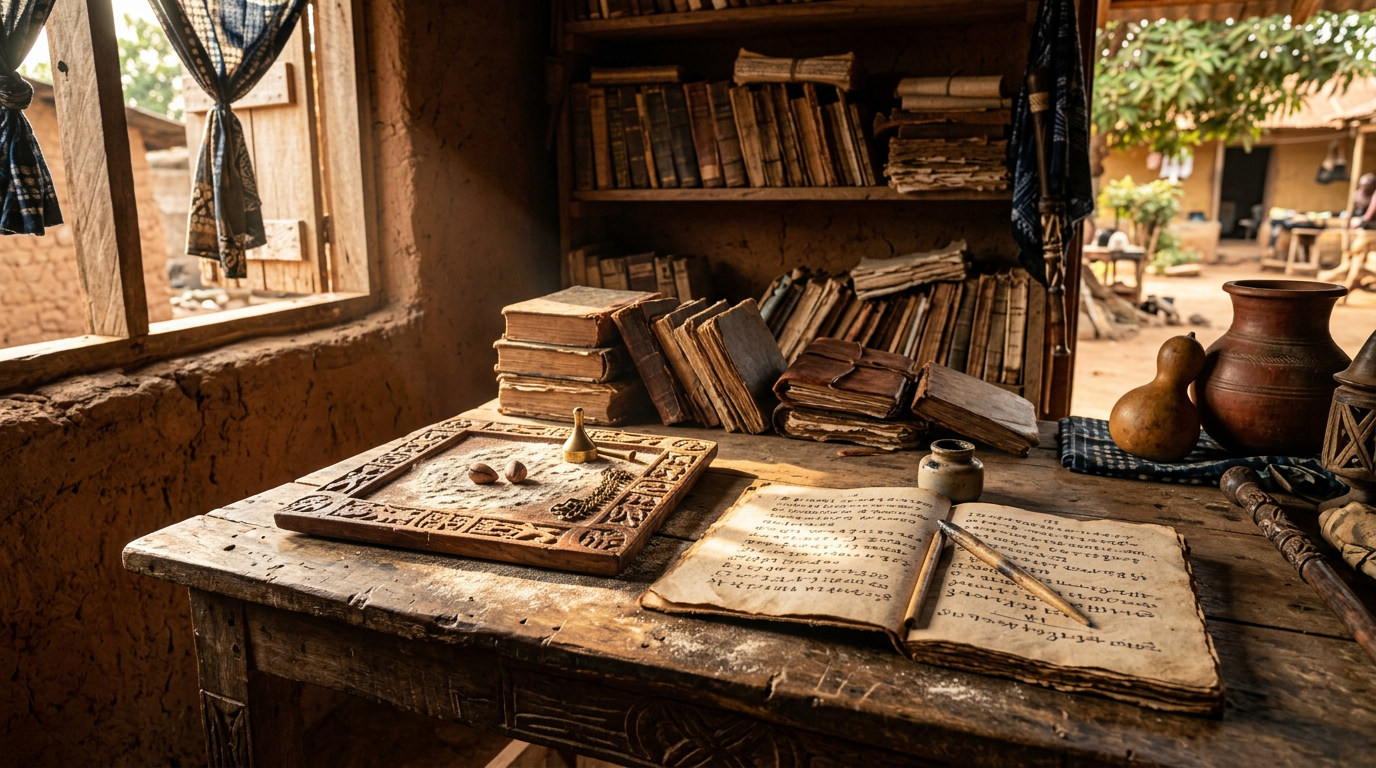
Ifá is a structured divination and wisdom system central to Yoruba religion, originating in southwestern Nigeria, that works through an extensive literary corpus and a precise set of interpretive procedures rather than spirit possession or personal oracular gifts. That distinction matters. UNESCO's intangible heritage documentation explicitly distinguishes Ifá from mediumship-based divination — Ifá practitioners interpret signs, not spirits speaking through them.
Think of it less like a psychic reading and more like consulting a vast body of encoded human wisdom that has been refined over centuries.
Ifá as a Living Spiritual System
Within Yoruba cosmology, Ifá is not typically classified as a "religion" in the Western sense — as the tradition's own account puts it, it is a way of relating to spiritual energy that helps individuals discover and align with their personal destiny. Practitioners commonly describe this alignment through the concept of Iwa-pele (gentle, good character), which serves as both the ethical core and the practical goal of divination guidance. Ifá isn't about predicting the future so much as it is about helping you become the person your destiny calls you to be.
Origins in Yoruba Cosmology
According to Yoruba tradition, Ifá originated in the sacred city of Ile-Ife — the cosmological center of Yoruba civilization — and spread from there across West Africa and eventually into the Americas. This account is the tradition's own cosmological narrative rather than an archaeologically dated historical claim, and it should be understood on those terms. What is well-documented is that the system is specific to Yoruba civilization: "African divination" is too broad a label. Ifá is Yoruba.
The Role of Òrúnmìlà and the Òrìṣà in Ifá
Ifá is sacred — not just traditional — because it is understood to transmit the will and wisdom of the Òrìṣà, the spiritual forces of Yoruba cosmology. Divination isn't a technique layered on top of spirituality; it is the spiritual act.
Òrúnmìlà: The Witness of Destiny
The Ifá system is presided over by Òrúnmìlà, the Yoruba Òrìṣà of wisdom and destiny. Scholars and practitioners widely cite his sacred title as Eleri Ipin — the Witness to Destiny in Its Creation — reflecting the tradition's teaching that Òrúnmìlà was present at the moment each soul chose its destiny before entering the world. Because he witnessed those choices, he can speak to what a person's path truly is. Every Ifá divination session is, in this sense, an act of remembering.
How the Òrìṣà Relate to Divination
Ifá operates within a larger cosmological framework involving many Òrìṣà, each governing particular domains of human and natural life. Worth noting here is Èṣù, the Òrìṣà of the crossroads between human and divine realms. Èṣù is invoked at the opening of every Ifá session as the divine messenger who carries communication from the divination space to the spiritual world. He is not, as colonial-era missionary literature repeatedly claimed, equivalent to the Christian devil. That conflation is a well-documented distortion that the tradition rejects entirely, and beginner readers should set it aside.
To explore how each Òrìṣà intersects with Ifá practice, see Ifá and the Òrìṣà tradition.
The Babaláwo: Guardian of Ifá Knowledge
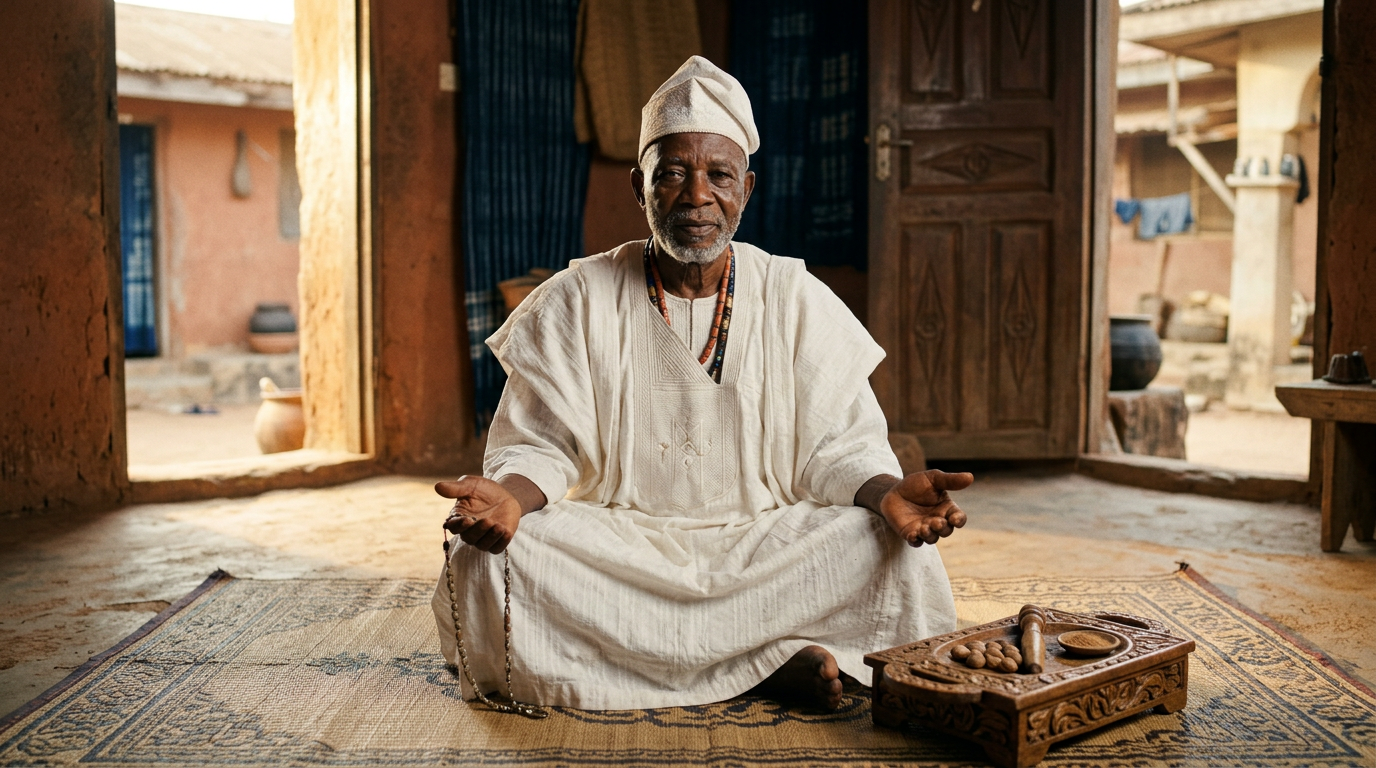
A legitimate Ifá consultation requires a legitimate practitioner. That's not gatekeeping — it reflects the sheer scale of preparation required.
Training and Initiation
Babaláwo (ba-ba-LA-wo) translates to "father of the knowledge of things material and spiritual." The title describes the job accurately. Training involves memorizing a large number of Ẹsẹ̀ Ifá (sacred verses) from each of the 256 Odù before formal initiation can take place. Given that the corpus contains approximately 800 verses per Odù, the scope of that memorization is staggering — and it doesn't happen quickly. Years of apprenticeship under an experienced Babaláwo are standard before initiation is considered.
The tradition also includes Ìyánífá, female Ifá divination priests. The scope of their role varies across lineages and geographies — some traditional lineages in Nigeria maintain restrictions on women performing full Ifá divination, while many diaspora communities fully recognize Ìyánífá in all capacities. Neither position should be presented as universal; this is an area of active, ongoing discussion within the tradition itself.
For a deeper look at the path to priesthood, see how to find a Babaláwo for consultation.
Responsibilities During Divination
During a session, the Babaláwo functions as interpreter, counselor, and ritual specialist simultaneously. He casts the instruments, identifies the Odù that emerges, recites the appropriate verses from memory, identifies the relevant story or prescription, and then works with the client to understand what the Odù is saying about their specific situation. The reading is not a performance. It requires real-time application of an enormous body of internalized knowledge.
How an Ifá Divination Session Works
An Ifá session follows a structured sequence that has remained broadly consistent across centuries and geography.
The Divination Instruments: Ikin and Ọ̀pẹ̀lẹ̀
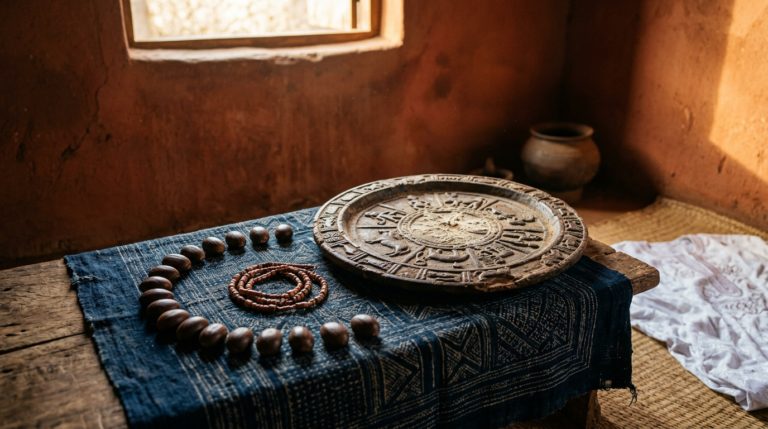
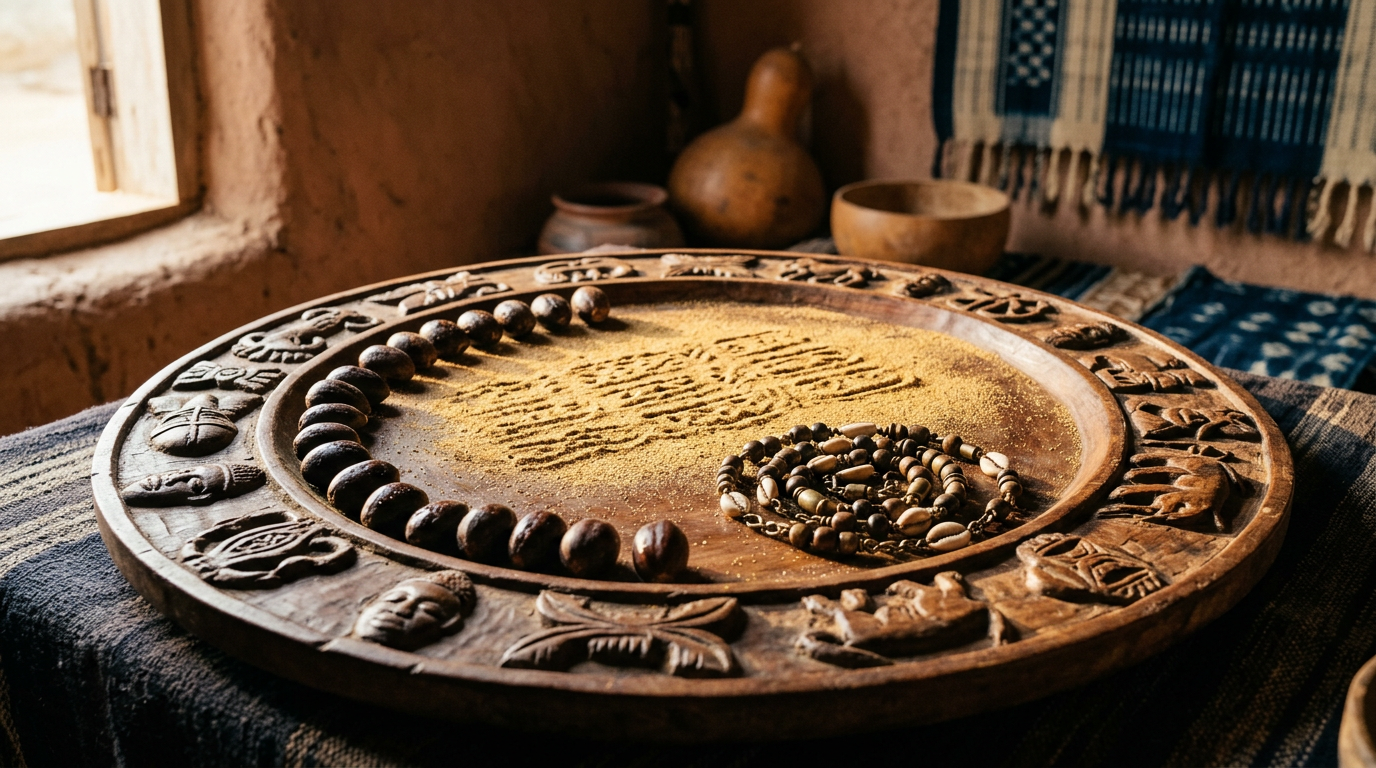
Three instruments anchor every session. The ikin are sixteen sacred palm nuts passed between the hands to generate a binary mark. The Ọ̀pẹ̀lẹ̀ is a divination chain whose eight seed-pods can fall in two positions, allowing a faster casting process suitable for less complex questions. The Opon Ifá is a wooden divination tray dusted with iyerosun powder — a sacred yellow powder made from the dust of the African camwood tree — on which the Babaláwo marks the resulting Odù signature.
Casting and Marking the Odù
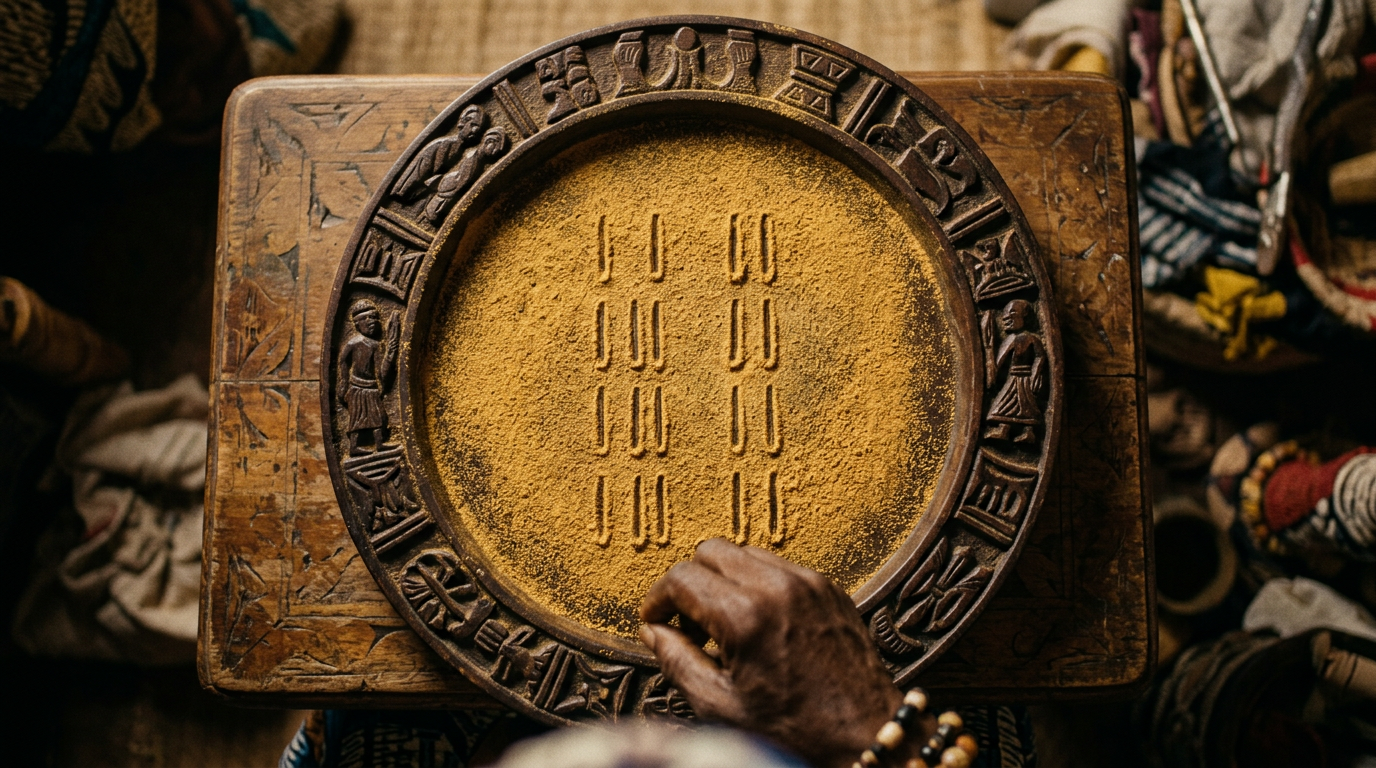
Each cast of the ikin or Ọ̀pẹ̀lẹ̀ produces a binary result: two marks or one mark in the iyerosun. Eight casts generate an eight-line signature that identifies one of the 256 Odù. The Babaláwo marks the signature on the Opon Ifá as it emerges — right column first, then left — until the complete Odù is recorded. That specific Odù then becomes the lens through which the entire session unfolds.
Receiving Guidance and Ẹbọ
Once the Odù is identified, the Babaláwo recites the relevant verses and works with the client to interpret them. The session typically closes with a prescription of Ẹbọ — a prescribed offering or ritual action designed to align the client with their destiny and address whatever challenge or opportunity the Odù identified. What is Ẹbọ in Ifá practice is worth understanding before your first consultation; the concept is central, not optional.
Understanding the Odù Ifá
The Odù corpus is the intellectual and spiritual heart of Ifá — and its sheer scale is the first thing that stops beginners cold.
The 256 Odù and Their Structure
The Ifá literary corpus is organized into 256 Odù, each representing a unique binary signature. Each Odù is subdivided into verses called Ẹsẹ̀, with approximately 800 Ẹsẹ̀ per Odù — and UNESCO notes that the total count is considered ever-growing as the oral tradition continues to be transmitted and expanded. Multiply that out: the full corpus runs into the hundreds of thousands of verses.
Each Odù also carries what might be called a personality — a set of themes, associations, stories, and prescriptions that form a coherent worldview. The binary structure means the 256 Odù map onto a mathematical framework that some researchers have compared to binary code, though the tradition's own understanding is cosmological rather than computational.
Verses, Stories, and Moral Wisdom
The Ẹsẹ̀ within each Odù are not abstract pronouncements. They are narrative: allegorical stories involving the Òrìṣà, human archetypes, animals, and natural forces that address the full range of human concerns — health, relationships, governance, conflict, abundance, grief. Each story encodes a lesson and usually a prescription. A skilled Babaláwo matches the client's situation to a specific Ẹsẹ̀ and then draws out its practical wisdom.
This is why scholars have described Ifá as a literary tradition as much as a spiritual one. For a structured introduction to the corpus, see our guide to the 256 Odù Ifá.
Why Ifá Divination Remains Relevant Today
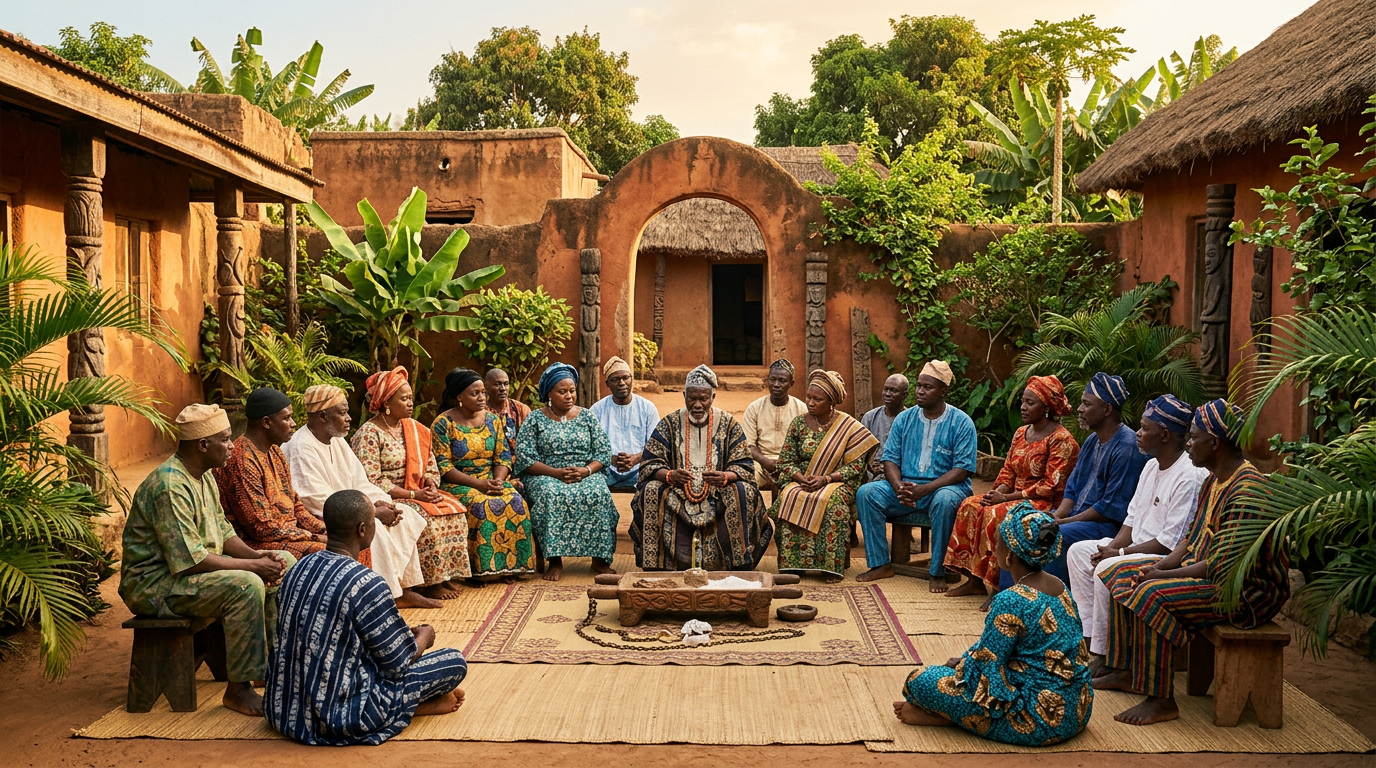
Ancient systems survive when they work. Ifá has survived five centuries of active suppression — colonial governance and missionary activity in Nigeria and across the diaspora repeatedly targeted practitioners and sought to erase the tradition — and emerged still living.
Ifá in the Diaspora
The Ifá tradition spread through the transatlantic slave trade to the Americas, where Yoruba people preserved its core elements under extreme conditions. Today it survives in diaspora forms including Candomblé in Brazil, Lucumí (often called Santería) in Cuba, and related practices in Puerto Rico and Trinidad. These are distinct living traditions that share Yoruba roots but have each developed their own integrity over centuries — calling them mere "derivatives" misses that they are complete spiritual systems in their own right.
The diaspora communities that maintained these traditions did so at considerable cost. That history shapes how the knowledge is held and transmitted today.
UNESCO Recognition and Global Interest
In 2005, Ifá was proclaimed a UNESCO Masterpiece of the Oral and Intangible Heritage of Humanity. Three years later, in 2008, it was formally inscribed on the Representative List of the Intangible Cultural Heritage of Humanity — two distinct recognitions that together reflect the international community's acknowledgment of Ifá's extraordinary cultural and intellectual significance.
Global interest has continued to grow since. Seekers from outside Yoruba communities encounter Ifá through African diaspora communities, through academic study, and increasingly through direct online access to practitioners and traditional sources.
Where to Go From Here
Ifá is not a tradition you enter quickly, and the tradition itself doesn't expect you to. Most serious practitioners spent years in curiosity before taking any formal step.
If you're a beginner, the most respectful entry points are study and community. Reading widely — especially works grounded in the tradition's own voice — builds the vocabulary you'll need to ask good questions when you're ready for consultation. Seeking out a reputable Babaláwo for a formal divination session is the natural next step for many people, and the experience is more meaningful when you understand the framework you're entering.
The key principle Ifá returns to, again and again, is Iwa-pele: gentle, good character. The tradition teaches that no divination result, no Ẹbọ, no initiation replaces the daily work of becoming a person of good character. That's not a disclaimer. That's the whole point.
When you're ready to go deeper, start with who is Òrúnmìlà for the theological foundation, then explore what a divination session actually involves. The tradition is vast. Begin where you are.
For a deeper dive into the historical, philosophical, and diaspora dimensions of this tradition, see The Yoruba Oracle System: History, Philosophy, and Diaspora Practice.