Èṣù-Ẹlégbára: Òrìṣà of Crossroads and Communication
Before you can pray, before any offering reaches its intended destination, before Ifá itself can speak — Èṣù must move first. That single fact tells you more about who Èṣù-Ẹlégbára is than any dictionary definition could. This article draws directly from Yorùbá traditional teaching and documented Ifá practice to give you a grounded, distortion-free portrait of one of the most essential and most misrepresented Òrìṣà in the tradition.
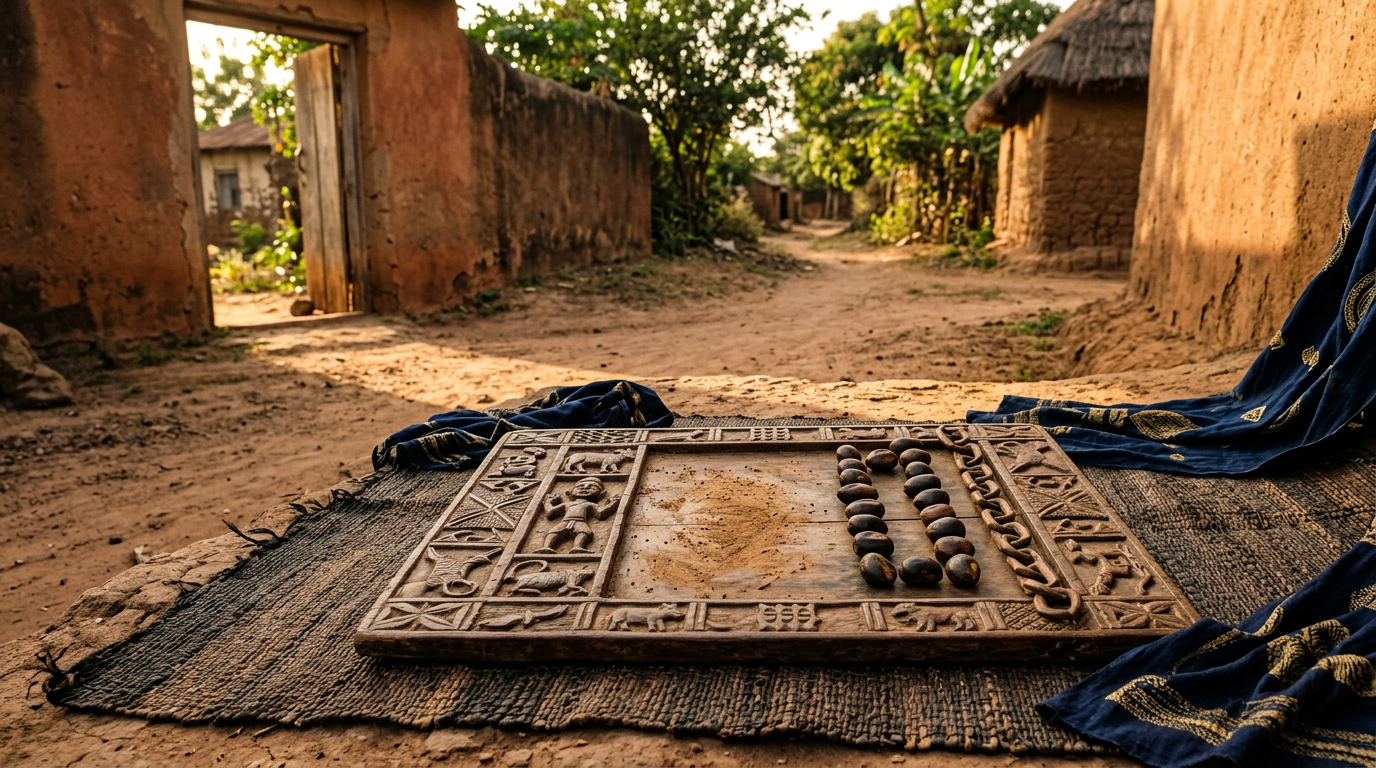
Èṣù’s role at the crossroads only makes sense against the backdrop of the Ifá divination system Èṣù enables — the full mechanics, the priestly training, and the philosophy of destiny that structures every consultation.
Èṣù-Ẹlégbára occupies a specific structural role inside a larger cosmology. Readers wanting the wider frame — what Yoruba religion is, how the Òrìṣà fit together, why messengers like Èṣù matter — can start with the complete beginner’s guide to Yoruba religion and spirituality before going deeper into Èṣù-specific theology here.
Who Is Èṣù-Ẹlégbára?
Èṣù-Ẹlégbára is a primordial Òrìṣà — specifically, a delegated Irúnmọlẹ̀ sent by Olódùmarè — who descended from Ìkọ̀lé Ọ̀run to serve as the chief enforcer of natural and divine laws. He is not a lesser spirit, not a gatekeeper in a subordinate sense, and certainly not an adversary. He is cosmologically prior to virtually every other force in Ifá practice, which is exactly why no ceremony begins without him.
The Name and Its Sacred Meaning
The full title "Èṣù-Ẹlégbára" carries two distinct but complementary meanings. Ẹlégbára is widely understood in Yorùbá tradition to mean "owner of power" or "possessor of àṣẹ" — àṣẹ being the sacred life force, the animating current running through all existence. To call him Ẹlégbára, then, is to say that he holds custody of the very force that makes reality function.
Àṣẹ is not magic in the Western pop-culture sense. It is the binding principle that connects intention to consequence, prayer to effect, ritual to result. Èṣù does not merely possess àṣẹ — he enforces it. When human action aligns with divine law, àṣẹ flows freely. When it does not, Èṣù's presence is felt as obstruction, confusion, or consequence. This is divine intelligence operating exactly as it should.
Èṣù's Place Among the Òrìṣà
Among the hundreds of Òrìṣà recognized in the Ifá tradition, Èṣù occupies a position of functional primacy. Olódùmarè appointed him as the divine intermediary — the one through whom all communication between heaven and earth must pass. His veneration has traveled across the Atlantic with the Yorùbá diaspora: in Candomblé (Brazil) he is known as Exú, in Santería/Lukumí (Cuba) he appears as Echú or Elegua, and in Haitian Vodou he is recognized as Legba. Each of these lineages carries its own distinct characteristics, and practitioners rightly resist wholesale conflation between them and Yorùbá Ìṣẹ̀ṣe — but their shared root speaks to how irreplaceable this Òrìṣà is across the entire tradition.
Èṣù as the Guardian of the Crossroads

Èṣù guards the crossroads because the crossroads, in Yorùbá cosmological thought, is where the stakes are highest. Every journey, every decision, every threshold moment passes through him.
The Crossroads as a Spiritual Concept in Yorùbá Cosmology
The Yorùbá concept of Orita — the crossroads — is not reducible to a geographic intersection. Scholars and practitioners commonly describe Yorùbá cosmology framing Orita as a sacred junction of possibility and consequence: the place where spiritual forces converge, where realms meet, and where decisions carry weight beyond the merely personal. It is the interface between Ayé (the living world) and Òrun (the spiritual realm), between human will and divine order.
This is why the crossroads appears so consistently in Ifá teaching — not as poetic metaphor, but as a cosmological category. Every significant act of choice, every petition addressed to the Òrìṣà, passes through this liminal space. And Èṣù is its guardian.
Why Every Journey Begins With Èṣù
Because Orita is the interface between realms, nothing crosses it without Èṣù's awareness and assent. That includes you, your prayers, your offerings, and your intentions. Propitiating Èṣù at the opening of any journey — literal or spiritual — is not superstition. It is a recognition of cosmic architecture. You acknowledge the gatekeeper not to flatter him but because the gate is real.
The Divine Messenger: Èṣù and Communication Between Realms

No spiritual communication in Ifá practice reaches its destination without Èṣù's mediation. That is not an overstatement — it is the foundational logic of why he is propitiated first.
Èṣù's Role in Carrying Ẹbọ and Prayer
No prayer, sacrifice, or ẹbọ reaches any Òrìṣà or Olódùmarè without first passing through Èṣù. This is well established across Ifá practice and documented in multiple Yorùbá religious sources. In practical terms, it means that a ẹbọ offered without acknowledging Èṣù is an undelivered letter. The ritual form may be correct; the destination remains unreached.
Oriki Èṣù — praise invocations addressed to him as the Divine Messenger — are recited before any other prayer or ceremony, reflecting his cosmological priority. This is not preference or custom in the casual sense. It is structural: Èṣù's position at the opening of ritual is the same as his position in the cosmos, first.
The Relationship Between Èṣù and Ọ̀rúnmìlà
The relationship between Èṣù and Ọ̀rúnmìlà is one of the most important dynamics in all of Ifá. Ọ̀rúnmìlà reveals destiny through Ifá divination; Èṣù activates and transmits it. The two are described in Yorùbá tradition as inseparable companions: Ọ̀rúnmìlà's wisdom, without Èṣù's capacity to carry it across realms, would remain inert. Together they form an operational dyad. The knowledge exists; Èṣù ensures it moves.
Think of it this way. Ọ̀rúnmìlà knows the path. Èṣù opens the road.
Correcting the Misconception: Èṣù Is Not the Devil

Èṣù is not the devil. He never was. The equivalence was manufactured — deliberately, at a specific moment in history — and its damage has been felt for over 160 years.
Colonial and Missionary Distortions
The equation of Èṣù with Satan traces directly to Bishop Samuel Ajayi Crowther's 1860 Yorùbá Bible translation, in which Crowther used Èṣù as the Yorùbá rendering of "devil." Crowther was himself a formerly enslaved Yorùbá man, which means this act cannot be reduced to simple villainy — he was operating under enormous colonial ideological pressure, within a missionary framework that systematically pathologized African religion. The structural violence of colonialism, not one man, is the more accurate target of critique.
But the theological error stands regardless of its author. The 1860 translation introduced a cosmologically false equivalence that has persisted in popular imagination ever since, particularly in West African Christian communities that inherited that framework.
Traditional Yorùbá cosmology contains no concept of a singular evil being locked in cosmic opposition to the divine. The worldview is built on balance, consequence, and alignment — not the dualistic good-versus-evil framework imported by Christian missionaries. There is no Yorùbá devil because Yorùbá cosmology has no structural need for one.
Reclaiming Èṣù Through Odù Ifá
The clearest corrective is the tradition itself. Odù Ifá — the sacred corpus of verses at the heart of Ifá divination — speaks about Èṣù with specificity and depth. He appears across multiple Odù not as a malevolent force but as a divine intelligence who tests alignment, enforces consequence, and ensures that the cosmic order Olódùmarè established continues to function.
Western scholarship has sometimes categorized Èṣù as a "trickster deity," but this framing flattens something far more precise. When Èṣù disrupts, it is because disruption is what the moment requires — a misaligned intention meeting an honest universe. That is not trickery. That is justice operating at the level of spiritual law.
Èṣù in Odù Ifá: Lessons From the Sacred Verses
The Odù Ifá corpus, recognized by UNESCO as Intangible Cultural Heritage of Humanity in 2008 (originally proclaimed in 2005), is the living foundation of everything the tradition teaches about Èṣù. Rather than reproducing specific ese Ifá here — some verses are considered sacred within particular lineages and are not appropriate for general publication — this section engages the teachings thematically.
Across multiple Odù, Èṣù appears as the force that makes everything else coherent. He is present when Ọ̀rúnmìlà first received the gift of divination. He is invoked when initiates enter the grove. He is named when practitioners need to understand why communication has broken down or why an offering has not been received. His consistency across so many Odù is itself a teaching: no part of the tradition operates independently of him.
The Odù also describe Èṣù's character with nuance. He rewards those who honor him with generosity. He makes the path of the sincere clear. He complicates the road of those whose intentions are misaligned with truth. This is not moodiness or capriciousness — it is Èṣù functioning as the enforcer of àṣẹ, exactly as Olódùmarè appointed him to do.
Honoring Èṣù-Ẹlégbára in Daily Practice
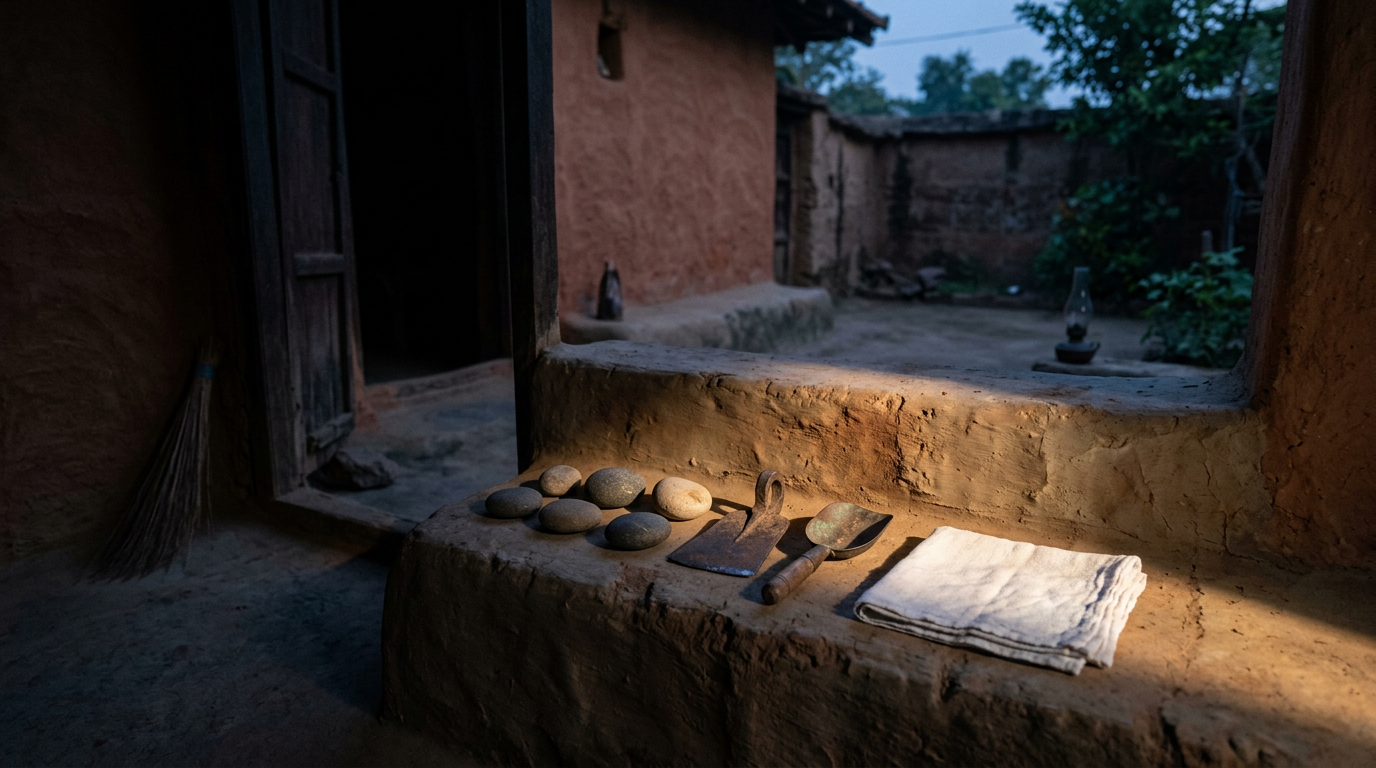
Knowing who Èṣù is changes how you approach every spiritual act. It shifts the first propitiation from a formality to an act of genuine acknowledgment.
The Importance of Propitiation Before All Rituals
In the Ifá initiation ceremony, one of the foundational ritual stages is gígún Èṣù — the making of the sacred paraphernalia of Èṣù for the would-be Babaláwo. This is not incidental. Before a new Babaláwo can carry the full authority of Ifá practice, Èṣù must be established in his life. The tradition is explicit: Ifá initiation itself begins with Èṣù.
For daily practitioners and seekers who are not yet initiated, the principle holds in proportion. Àárọ̀ — morning acknowledgment — is an opportunity to greet Èṣù before you move into the activities of the day. Not elaborately, necessarily, but sincerely. Even a simple, intentional recognition that you are about to move through his domain shifts the quality of what follows.
Approaching Èṣù With Reverence and Understanding
Reverence for Èṣù is not appeasement. That distinction matters. Appeasement implies fear of an unpredictable adversary. Reverence implies recognition of genuine authority.
Approach him with honesty. Èṣù is the enforcer of cosmic law, and deception — of him or through him — tends not to serve the deceiver. Approach with clarity of intention. Know what you are asking and why. Approach with patience; his timing is his own, and the path he opens is not always the one you expected.
What he is not is something to fear in the distorted sense that 160 years of colonial theology has produced. He is, in the fullest sense, on your side — provided your side aligns with truth.
Where to Go From Here
Èṣù-Ẹlégbára is the beginning of every genuine engagement with Ifá tradition. Understanding him is not optional background knowledge; it is the foundation without which everything else in the tradition loses coherence. You cannot fully understand Odù Ifá without him, cannot understand ẹbọ without him, cannot understand why Ifá divination works without him.
If this introduction has deepened your curiosity, the next step is spending time with the Odù themselves — through a trained Babaláwo who can contextualize the teachings for your specific situation and lineage. The tradition is oral, living, and relational. No article, however thorough, replaces that direct transmission.
Èṣù opens the road. Walk it.