Yorùbá Ancestral Veneration: What It Is and Why It Matters
You may have encountered “ancestor work” in online spiritual spaces — candles on an altar, a glass of water, names written in a journal. Some of that impulse toward ancestral connection is sincere and even beautiful. But Yorùbá ancestral veneration is something structurally different: a living, reciprocal relationship embedded in a complete cosmological system, sustained by lineage authority, communal protocol, and centuries of unbroken practice. This article lays out that system precisely — what the ancestors are, what Egúngún embodies, how practice actually works, and where the meaningful distinctions lie between a rooted tradition and its decontextualized echoes.
What Ancestral Veneration Means in Yorùbá Cosmology
Yorùbá ancestral veneration is not sentiment dressed up as spirituality. It is a structured, theologically coherent practice grounded in one of the most complete cosmological frameworks in the world — one that includes Olódùmarè (the supreme creator), the Òrìṣà (divine forces), human beings with individual destinies, and the ancestors who bridge all of it.
The Concept of Àwọn Ọkú Ọ̀run: The Living Dead
In Yorùbá cosmology, those who lived honorably and received proper funerary rites do not simply cease to exist. They transition into a category understood specifically within Yorùbá thought as “the living dead” — the Àwọn Ọkú Ọ̀run. This phrase signals something precise: these are not ghosts, not memory, and not metaphor. Worth noting: the expression “the living dead” also appears in broader African religious scholarship as a general concept, but its meaning here is specifically Yorùbá — rooted in a particular cosmological structure, not borrowed from a generic pan-African frame.
The living dead retain identity, agency, and relationship. They remain part of the family. The boundary between the living and these ancestors is permeable and purposeful, not a wall but a threshold crossed through ritual, remembrance, and proper observance.
Ancestors as Active Participants in the Lives of the Living
The relationship between the living and Àwọn Ọkú Ọ̀run is explicitly reciprocal. The living sustain the ancestors through remembrance, offerings, and ritual observance; the ancestors sustain the living through protection, guidance, and spiritual advocacy. This is not a one-directional memorial practice. It is an ongoing conversation with real stakes on both sides.
Ancestral neglect, in Yorùbá cosmological terms, is not simply disrespectful — it disrupts a working relationship. Consequences of that disruption are understood as real and tangible: diminished spiritual protection, weakened alignment with one’s destiny, and a breakdown of the social and moral fabric that lineage helps sustain. Egúngún appearances reinforce community behavioral norms directly, and we will see how that works in detail when we examine that institution.
The Relationship Between Orí, Destiny, and Lineage
Orí — the inner or spiritual head — is among the most important concepts in Yorùbá philosophy. Before birth, each person’s Orí carries the destiny they chose in the presence of Olódùmarè. That destiny is not abstract: it arrives through a specific lineage, a specific family, a specific set of ancestral relationships. This means that venerating one’s ancestors is simultaneously a practice of aligning with one’s own Orí and fulfilling one’s chosen path. The two cannot be cleanly separated.
Understanding Orí in Yorùbá spirituality as a concept deserves its own treatment, but the key point here is structural: ancestral veneration is not merely backward-looking honor. It is active participation in one’s own spiritual trajectory.
Why Ancestral Veneration Matters in Yorùbá Spiritual Life
The stakes of this practice are practical as well as spiritual. Yorùbá tradition does not treat ancestral veneration as optional enrichment. It is foundational infrastructure — for individuals, for families, and for communities.
Spiritual Protection and Guidance Through Lineage
One’s ancestral lineage constitutes the first and most intimate layer of spiritual protection available. The ancestors know you — your lineage, your family patterns, the spiritual inheritances that travel with your blood. They have walked the human road and emerged on the other side with knowledge that the living cannot yet access. Their guidance, when properly cultivated through relationship, is understood as some of the most reliable spiritual counsel a person can receive.
This protection and guidance is not automatic. It is cultivated through the discipline of regular offering, prayer, and acknowledgment. A lineage that is honored is a lineage that is active on your behalf.
The Ancestor’s Role in Divination and Odù Ifá
Ancestral presence extends into the practice of Introduction to Ifá divination and Odù. Scholars and practitioners widely note that within the Odù Ifá literary corpus — the vast body of sacred oral literature at the heart of Ifá — the ancestors are woven throughout. Commonly cited accounts describe specific Odù as addressing the importance of honoring one’s lineage and the consequences of neglecting ancestral obligations; the ways ancestors may influence divination outcomes are similarly referenced across the tradition. These attributions are worth confirming with a knowledgeable babaláwo or recognized Ifá text, as the corpus is vast and specific Odù references require practitioner verification to cite accurately.
What is clear is that Ifá divination is not a practice separate from ancestral relationship — it is one of the primary spaces where that relationship becomes legible and actionable.
Community Continuity and Moral Order
Ancestral veneration in Yorùbá culture performs a social function that is inseparable from its spiritual one. The knowledge that one’s conduct in this life will determine whether one achieves ancestor status creates genuine ethical accountability. The ancestors are not simply watching — they are the standard.
This awareness shapes behavior across generations. Egúngún appearances, as we will explore, make that standard visible and communal. The tradition is, among other things, a mechanism of moral continuity — a way of transmitting values across the threshold of death.
Egúngún: The Sacred Institution of Ancestor Manifestation
If ancestral veneration is the principle, Egúngún is its most powerful institutional embodiment. This is where cosmology becomes ceremony, where the invisible becomes visible, and where the community directly encounters its returned dead.
Origins and Cultural Significance of Egúngún
The Egúngún tradition is one of the most significant religious institutions in Yorùbá culture. It is organized around dedicated priestly societies whose members are charged with the preparation, embodiment, and governance of ancestral masquerades. Egúngún tradition and masquerade practices constitute their own deep field of study, but the core structure is this: Egúngún exists to make the return of the ancestors physically and communally real.
The tradition carries the weight of generations of practice and theological refinement. It is not a cultural performance preserved for tourism or nostalgia. It is a living institution with authority, consequence, and spiritual power.
How Egúngún Embodies the Return of the Ancestors
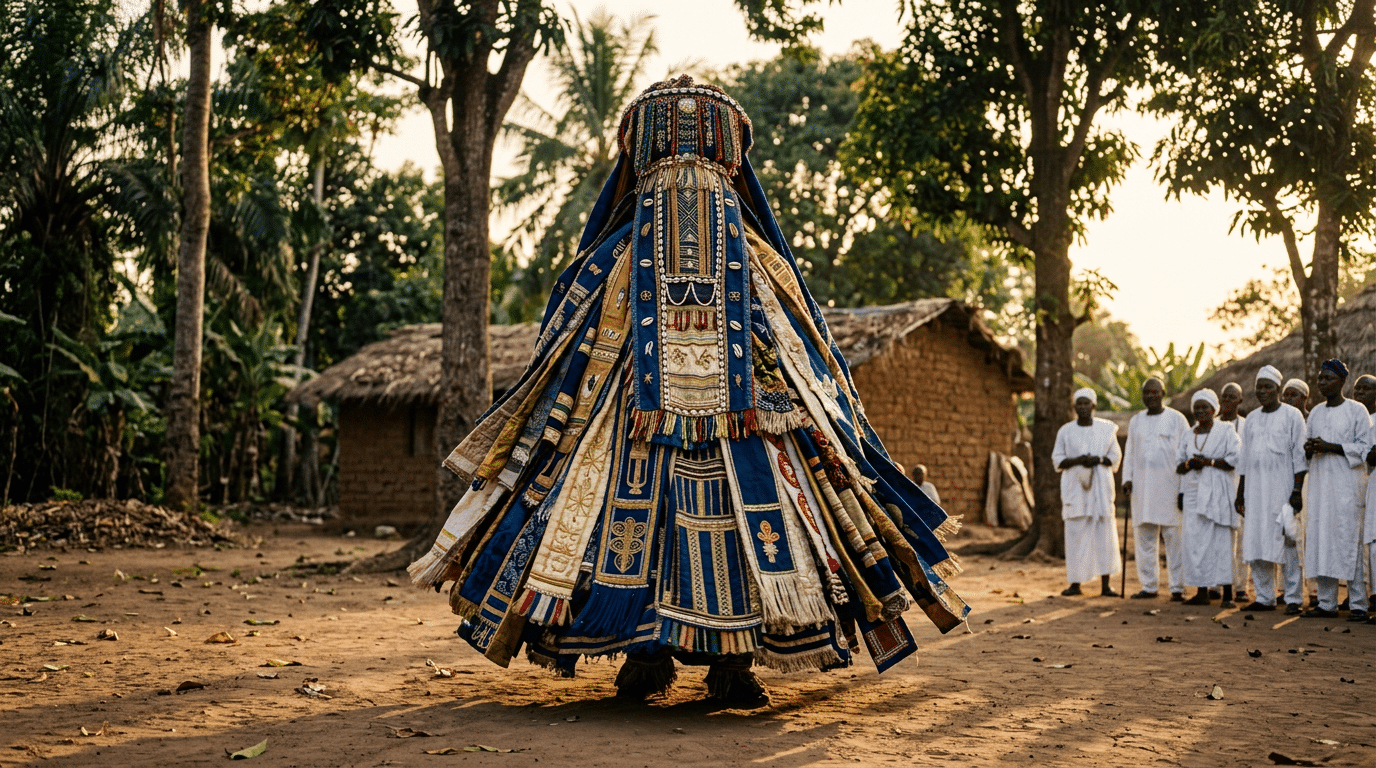
The Egúngún masquerade figure is not a symbolic representation of the ancestors. Within the tradition’s own cosmological understanding, the costumed figure is the ancestor returning — a vehicle through which ancestral presence enters the community’s space. This is how the tradition itself articulates what happens; it is not an outsider’s interpretation of the practice, and it should be understood on its own terms rather than translated into the frameworks of other religious traditions.
The distinctive costume, often elaborate and fully concealing, serves a specific function: it marks the threshold between the world of the living and the world of Àwọn Ọkú Ọ̀run. The person wearing it recedes; the ancestral presence takes precedence. Protocol around how one interacts with an Egúngún figure reflects this understanding precisely.
Egúngún Festivals and Their Role in Community Life
Egúngún festivals are liturgical events, not entertainment. They are governed by the priestly Egúngún society with strict protocols around participation, preparation, and conduct. The festivals create a structured occasion for the community to receive ancestral blessing, counsel, and correction.
During these gatherings, Egúngún may address the community directly — affirming right conduct, challenging wrongdoing, blessing families, or settling disputes. The ancestor’s voice, mediated through the masquerade, carries authority that would not carry the same weight from any living person. This is the tradition’s genius: it builds communal accountability into its most spectacular ritual expressions.
Core Practices of Yorùbá Ancestral Veneration
Understanding the cosmology is essential, but practice is where veneration becomes real. What does authentic Yorùbá ancestral veneration actually look like?
Setting and Maintaining an Ancestor Shrine
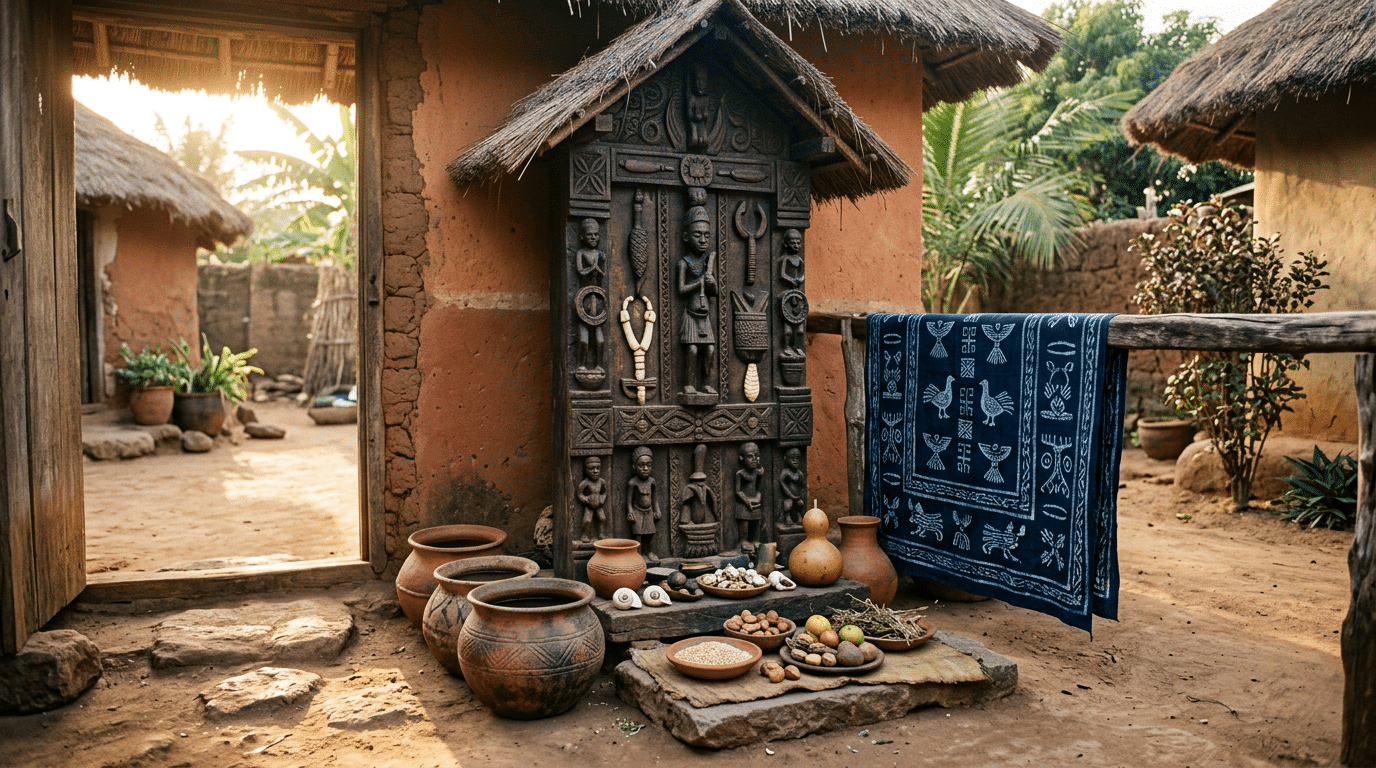
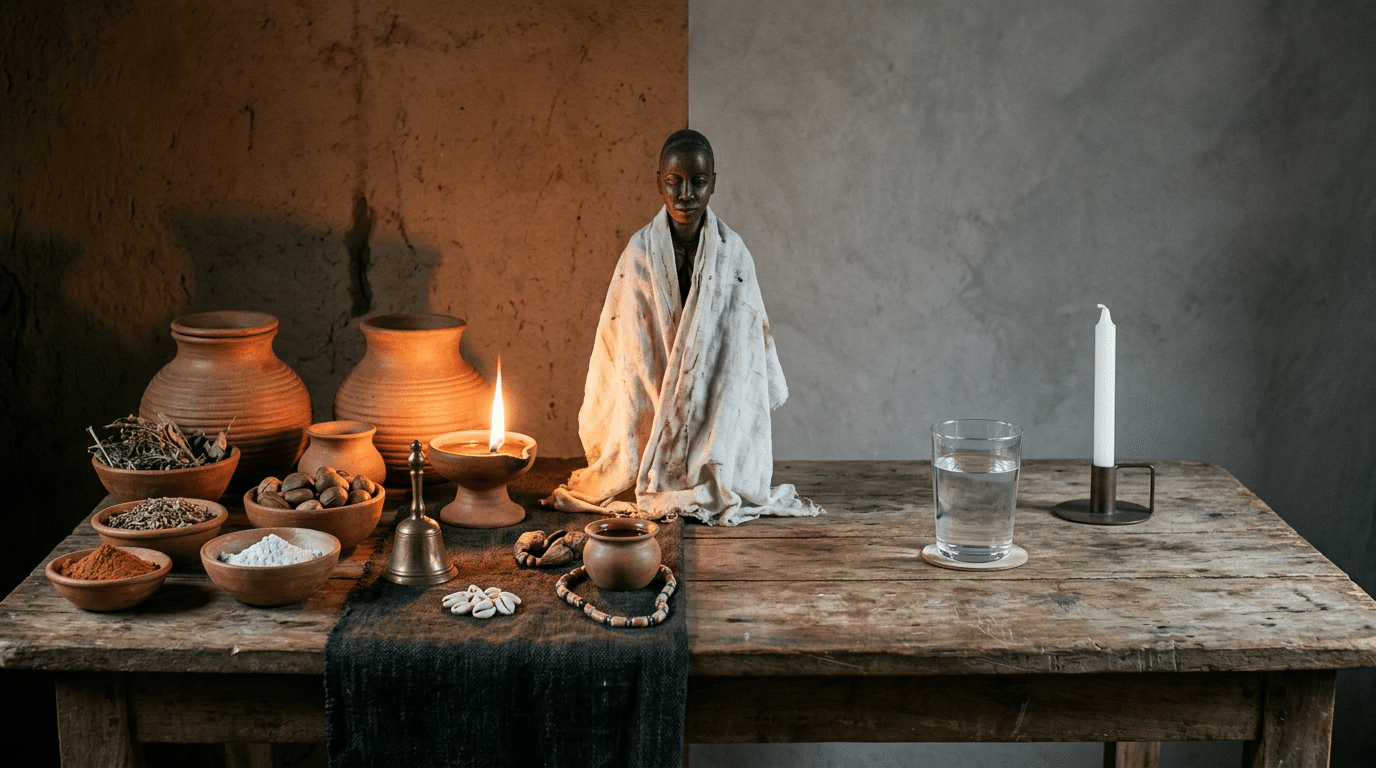
A dedicated shrine space is the physical anchor of an active ancestral relationship. This is not decorative. The shrine is the designated point of contact between the living and Àwọn Ọkú Ọ̀run — a place that is set apart, maintained with intentionality, and treated with the respect one would show to the ancestors themselves.
What the shrine contains varies by family, lineage, and guidance from elders or priests. Objects meaningful to the deceased, photographs, and items that signal recognition are common. What matters is less the specific composition than the commitment to regularity and proper protocol — the understanding that this space is alive and relational, not decorative.
Prayers, Offerings, and Libation Protocols
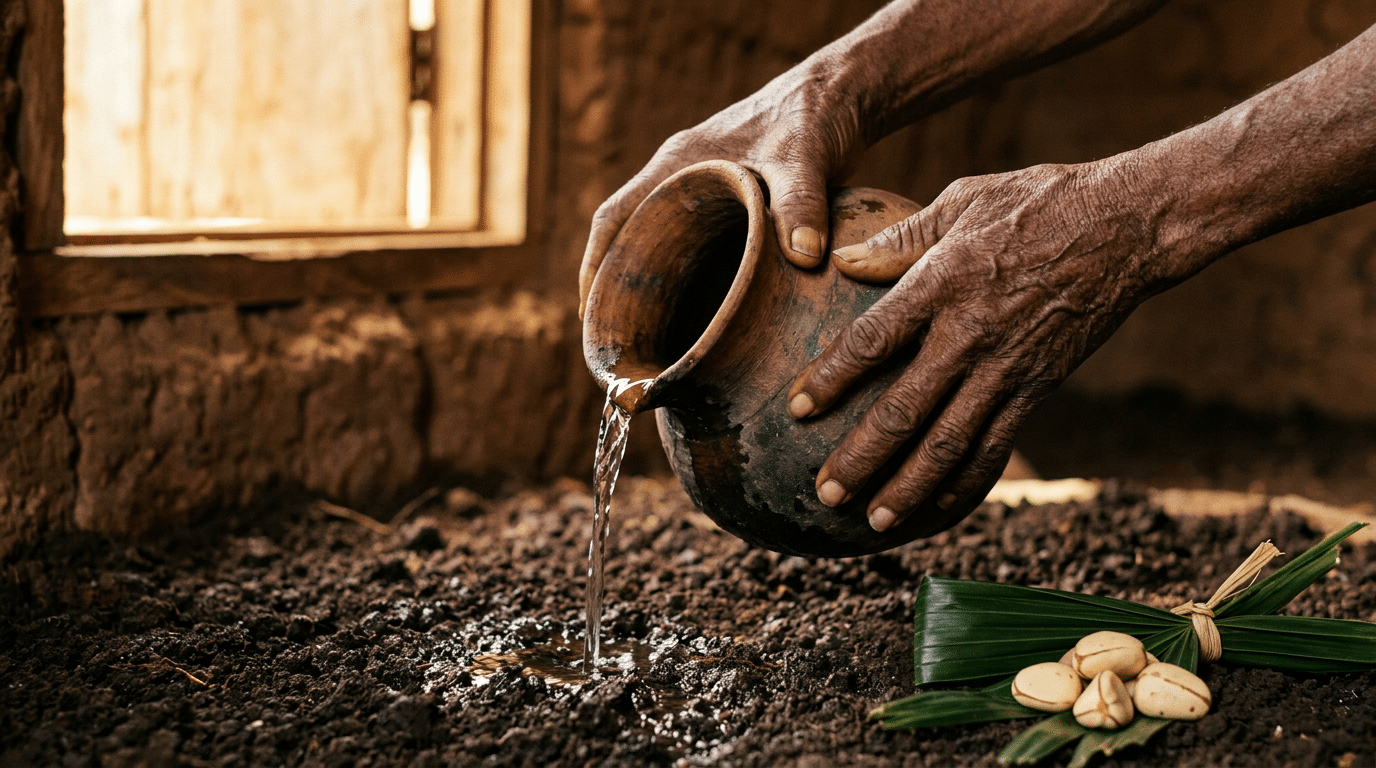
Regular offerings of water, food, and other items meaningful to the deceased are a central feature of Yorùbá ancestral practice. Libation — the ceremonial pouring of liquid as an offering and invocation — follows established cultural protocols rather than improvised personal ritual. The words spoken, the sequence observed, and the manner of offering are not arbitrary. They reflect accumulated knowledge about how communication with Àwọn Ọkú Ọ̀run is properly conducted.
This is a crucial distinction from generic ancestor work. The protocols are not decorative tradition — they are the grammar of the relationship. Speaking to the ancestors without that grammar is like sending a letter with no address.
The Role of Elders and Priests in Proper Veneration
In traditional Yorùbá practice, ancestral veneration is mediated by elders, family heads (baálé), and initiated priests who carry both the knowledge and the authority to conduct rites properly. This institutional structure exists for good reason: the relationship with Àwọn Ọkú Ọ̀run is powerful, and power without proper guidance creates hazard.
This is not gatekeeping for its own sake. It is the tradition’s built-in safeguard against spiritual harm and cultural distortion. The elder or priest is not an obstacle between you and your ancestors — they are the guide who knows the terrain.
How Yorùbá Ancestral Veneration Differs from Generic Ancestor Work
The comparison here is not about dismissing sincere seekers. It is about structural honesty. These are genuinely different things, and understanding how helps you engage the Yorùbá tradition on its own terms.
Cosmological Framework vs. Eclectic Spirituality
Yorùbá ancestral veneration is coherent because it operates inside a complete cosmological system. Olódùmarè, the Òrìṣà, the ancestors, Orí, and the living all occupy defined positions in a working theological structure. Every practice within that system makes sense because the system itself makes sense.
Generic ancestor work, as widely observed by traditional practitioners and cultural scholars, typically lacks this coherent framework. It borrows vocabulary and aesthetics — altars, offerings, invocations — from various traditions without accountability to any single tradition’s cosmological logic. The result may be sincere, but it is structurally different: assembled rather than inherited, individual rather than communal, improvised rather than governed by deep protocol.
Lineage Authority vs. Self-Directed Practice
In Yorùbá tradition, the authority to conduct ancestral veneration comes from somewhere: from lineage, from elders, from initiation, from recognized community structures. This grounding in authority is not incidental — it is what gives the practice its reliability and power. The ancestors you are contacting are your ancestors, known within your lineage, approached through protocols your tradition has refined over generations.
Self-directed practice, however well-intentioned, lacks this anchor. Without lineage authority, without elder oversight, without community accountability, the practitioner is essentially improvising — and improvisation in a powerful spiritual domain carries real risk.
Cultural Integrity vs. Decontextualized Borrowing
Òrìṣà and their relationship to ancestral lineage is one of many places where Yorùbá tradition resists being extracted piece by piece. The tradition is a system. Removing pieces of it from their context — borrowing the concept of ancestral offerings without the cosmology, or the language of the ancestors without the lineage structure — produces something that resembles the tradition superficially while missing the logic that makes it work.
This matters not only for the integrity of the tradition but for the person practicing. A decontextualized practice cannot deliver what the full tradition delivers, because the full tradition’s effectiveness depends on its completeness.
Common Misconceptions About Yorùbá Ancestral Veneration
Several persistent misunderstandings follow Yorùbá ancestral veneration into every new conversation. Clearing them away is not pedantry — it is the difference between approaching the tradition with accuracy and approaching it with assumptions borrowed from other frameworks.
It Is Not Worship of the Dead
The term “ancestor worship” appears frequently in Western academic and popular discourse, and it is a misnomer. Yorùbá practitioners widely regard this framing as inaccurate. The ancestors are not deities. They are not worshipped. They are honored, communicated with, and sustained through reciprocal relationship — but they occupy a specific position in the cosmological hierarchy that is categorically different from Olódùmarè or the Òrìṣà.
This distinction is theological, not semantic. Calling it “worship” flattens a nuanced cosmological structure and imports assumptions that simply do not apply.
It Is Not Interchangeable with Spiritualism or Mediumship
Contemporary audiences sometimes map Yorùbá ancestral contact onto frameworks drawn from Spiritualism, mediumship, or channeling. These are different systems with different cosmological assumptions, different protocols, and different understandings of what communication with the dead means and does.
In Yorùbá tradition, ancestral contact is not typically a matter of an individual medium receiving personal communications. It is embedded in communal ritual structure, governed by institutional authority, and oriented toward the collective well-being of the lineage and community — not the personal curiosity of a practitioner.
It Requires Initiation, Guidance, or Both
Some aspects of Yorùbá ancestral veneration require initiation. Others require elder guidance. The specific requirements depend on the practice, the lineage, and the context. What is consistent is the tradition’s insistence that the relationship with Àwọn Ọkú Ọ̀run is not entered casually or independently.
This is not exclusion — it is care. The tradition has developed its structures of initiation and oversight precisely because the work is powerful and because the ancestors deserve proper approach. For those who feel called to this practice and lack access to traditional structures, the answer is not to proceed without guidance — it is to seek guidance appropriate to your situation, which we will address in the final section.
Ancestral Veneration in the Diaspora: Continuity and Challenges
The history of Yorùbá practice in the diaspora is one of remarkable resilience under conditions designed to destroy it. For those in diasporic communities navigating this terrain today, that history is both sobering and instructive.
How the Tradition Survived the Transatlantic Disruption
The transatlantic slave trade deliberately severed African people from their lineages, names, languages, and ritual traditions. Under those conditions, the survival of any element of Yorùbá ancestral practice is extraordinary. Enslaved Yorùbá people and their descendants preserved elements of veneration within diasporic traditions including Lucumí/Santería, Candomblé, and other African-derived religious systems. These traditions are legitimate in their own right — they are not failed versions of continental Yorùbá practice but distinct spiritual and cultural systems that emerged from specific histories and communities.
Recognizing this matters. Diasporic traditions developed their own theological emphases, ritual structures, and forms of community shaped by the brutal realities of enslavement and colonial suppression. Honoring Yorùbá ancestral veneration does not require diminishing what survived in the diaspora.
Reconnecting with Lineage When Records Are Lost
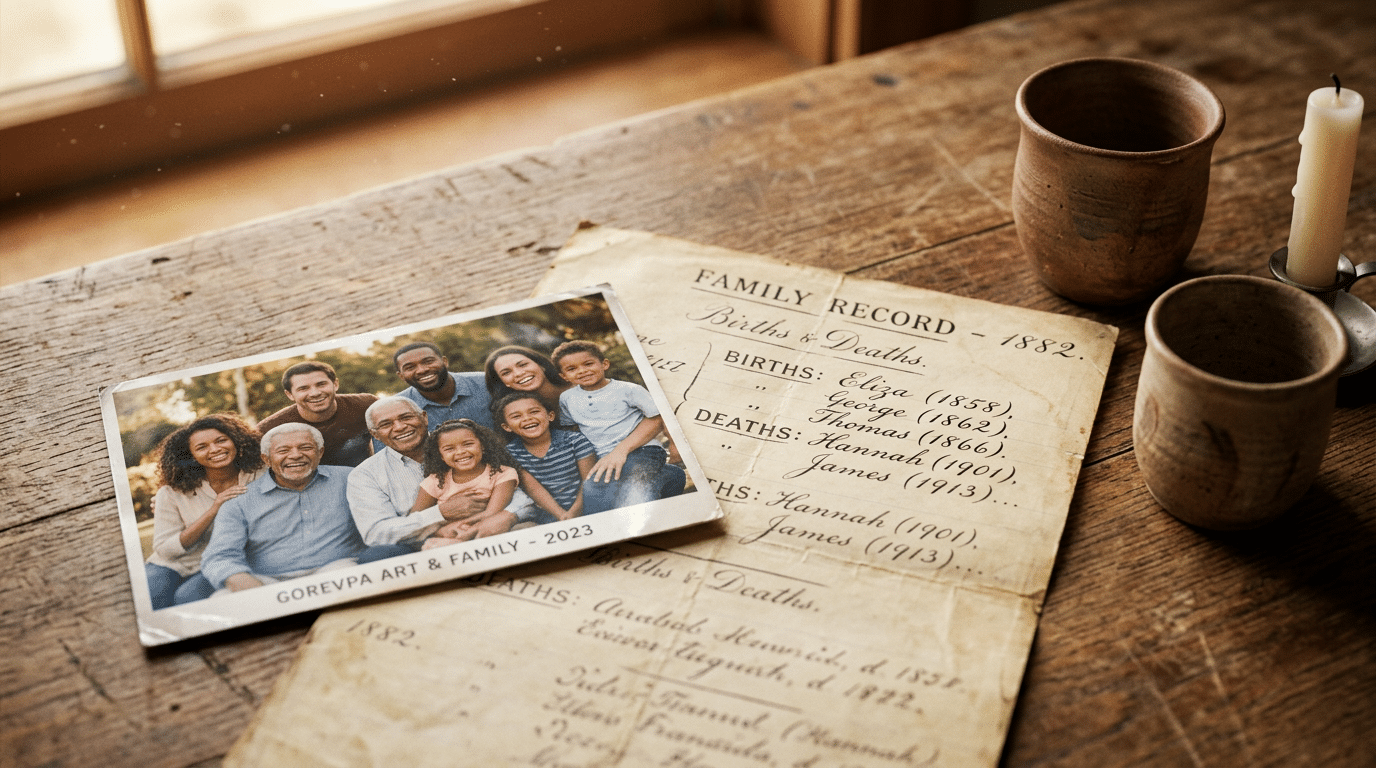
For many people of African descent in the Americas, the documentary record of lineage was systematically destroyed. Names were replaced, family structures were broken, and the paper trails that European genealogical practice relies on simply do not exist or were never created for enslaved people. This is a real and painful obstacle for those seeking to reconnect with Yorùbá ancestral practice.
The tradition has resources for this situation, though they require proper guidance to access. Working with knowledgeable elders and How to find a reputable Yorùbá spiritual elder or Ilé through established community structures can help identify pathways that are both spiritually sound and honest about what is known versus what must be rebuilt. Some accounts describe Ifá divination being consulted in this context — to help clarify an individual’s spiritual lineage and ancestral connections — though this is a process that requires the involvement of a qualified practitioner and should not be approached independently or without guidance.
Navigating Authenticity in Diasporic Practice
Authenticity in a diasporic context does not require pretending the disruption never happened. It requires honesty about where one stands, humility about what one does not yet know, and genuine effort to engage the tradition’s living structures rather than reconstructing it from secondary sources or online communities alone.
The path of integrity for a diasporic practitioner is not identical to the path of someone raised inside a Yorùbá community with unbroken lineage — and the tradition itself has resources for recognizing that difference. The key is finding community and elder guidance rather than attempting to navigate the tradition solo.
Where to Begin: Approaching Ancestral Veneration with Integrity
If this article has done its work, you now have a framework rather than a recipe. That is deliberate. Yorùbá ancestral veneration is not something learned from a single article and practiced alone. It is entered through relationship, community, and time.
Seeking Knowledgeable Elders and Reputable Ilé
An ilé — a recognized Yorùbá spiritual house or community — is the proper institutional context for approaching this tradition. A reputable ilé has living elders, established practice, accountability to recognized lineages, and a community that sustains and corrects itself over time. This is the container the tradition was designed to be transmitted through.
Finding such a community takes effort and discernment. Not every person who claims authority in this space has earned it. Patience and careful observation are appropriate here. Elders worth learning from are generally not recruiting aggressively, not charging exorbitant fees for basic access, and are willing to let you observe and build relationship before demanding commitment. Watch for those markers