Common Misconceptions About Ifá Divination, Corrected
If you’ve encountered Ifá through a Hollywood horror film, a casual internet search, or a well-meaning but uninformed conversation, chances are what you absorbed was wrong — sometimes harmlessly so, often not. This article works through the most persistent misconceptions about Ifá divination, explains where they come from, and replaces them with a clearer picture of a tradition that is far richer than its popular reputation suggests.
Why misconceptions about Ifá divination persist
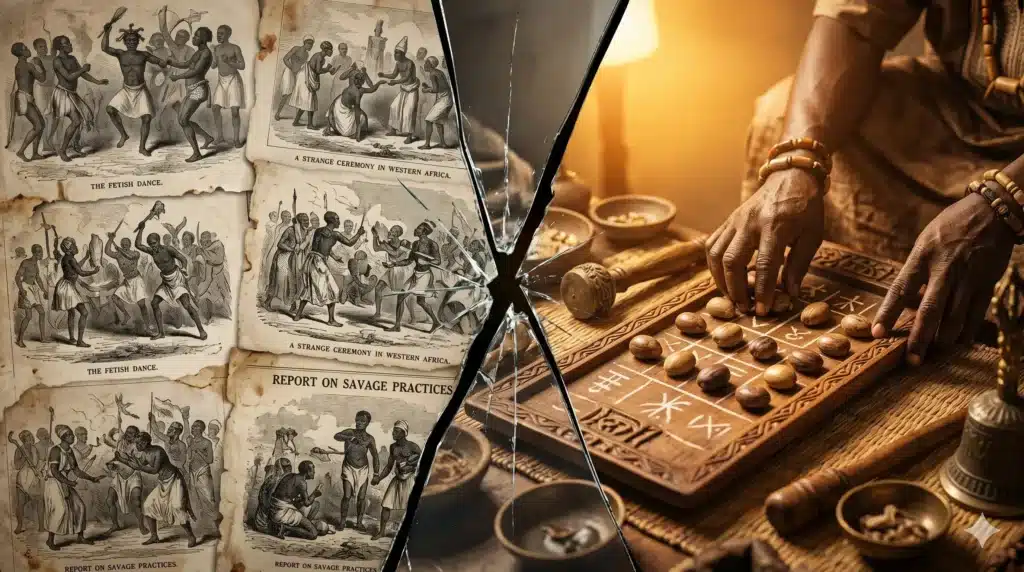
Most of what circulates about Ifá in mainstream Western culture didn’t appear from nowhere. It was built — sometimes deliberately, sometimes carelessly — over centuries of distorted representation.
Colonial narratives and religious bias
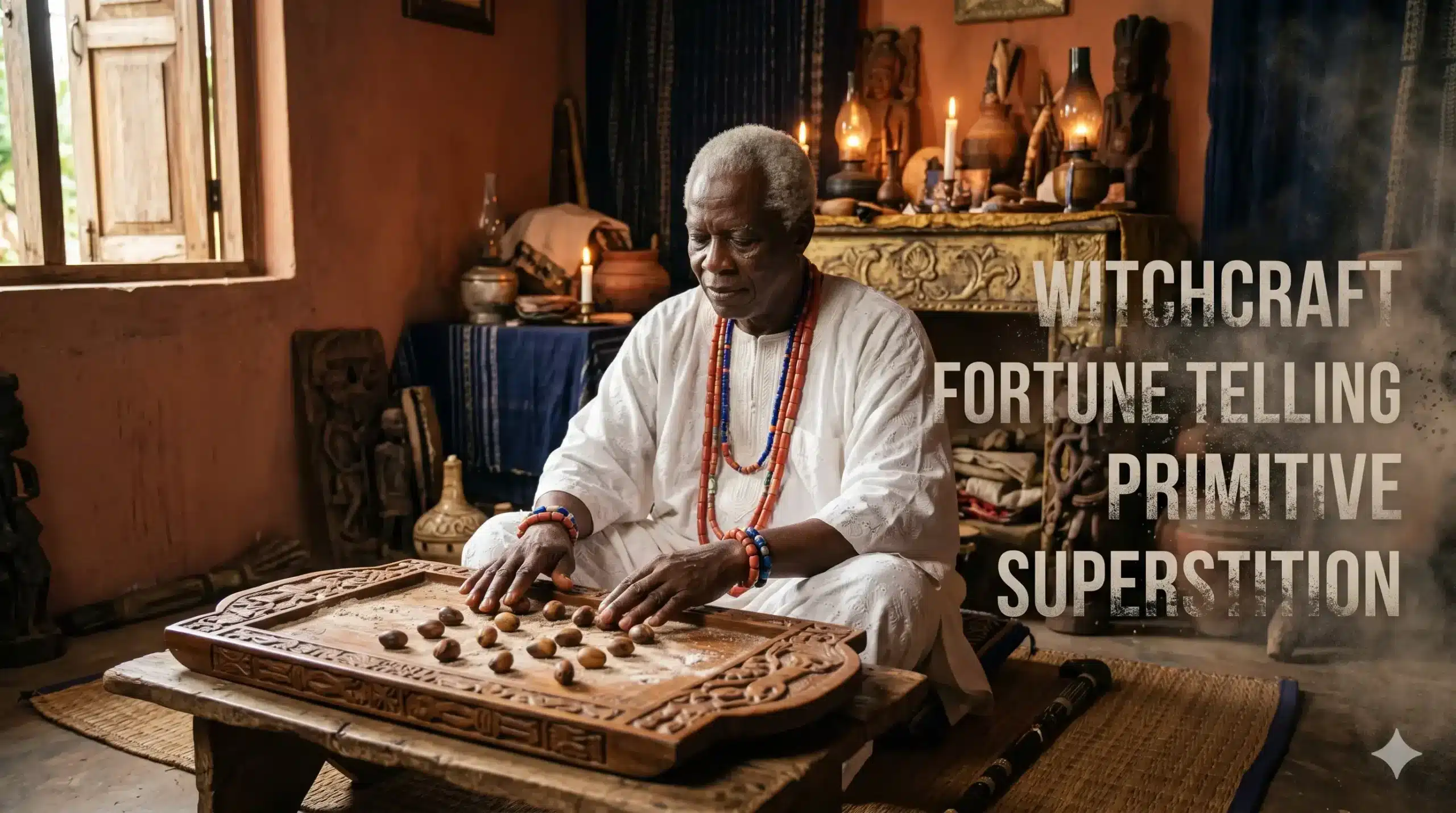
Widely cited accounts from post-colonial scholarship describe how European missionaries and colonial administrators routinely labeled African spiritual systems as devil worship, fetishism, or primitive superstition. Ifá, as one of the most elaborate and visible of those systems, absorbed more than its share of those labels. The Christian moral framework these observers brought with them had no category for a sophisticated consultative tradition rooted in an oral literary corpus, so they collapsed it into the only familiar template available: paganism to be eradicated.
That framing didn’t disappear when colonial governments did. It settled into cultural assumptions that persist today — in textbooks, in casual speech, and in the implicit hierarchies that rank some spiritual traditions as “religions” and others as “beliefs” or “superstitions.” Scholars commonly note that this history continues to shape how Ifá is perceived even in some parts of Africa where Christian and Islamic influence runs deep.
Sensationalized media portrayals
Popular media has its own share of responsibility. African-derived spiritual practices are routinely flattened into a single Hollywood image: candles, curses, blood, menace. Ifá, Vodou, Candomblé, and dozens of distinct traditions get collapsed into one threatening silhouette. This happens not always out of malice but out of a laziness toward research and a taste for exoticism. The result is an audience primed to see danger where there is philosophy.
Ifá is not fortune telling
This is the misconception you’re most likely to encounter, and it’s worth spending real time on.
The difference between divination and prediction
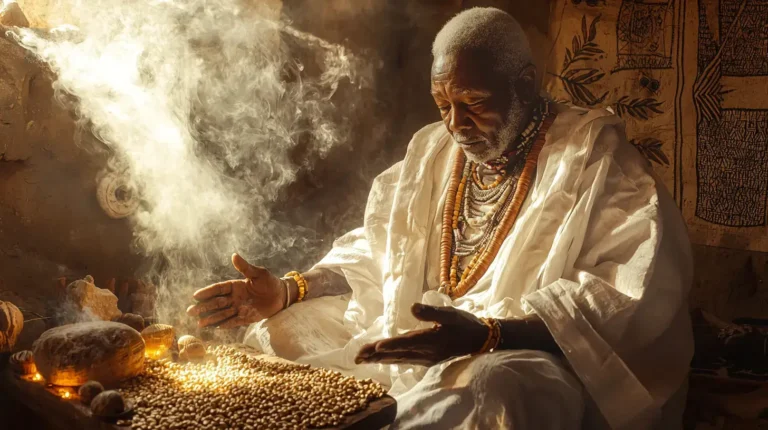
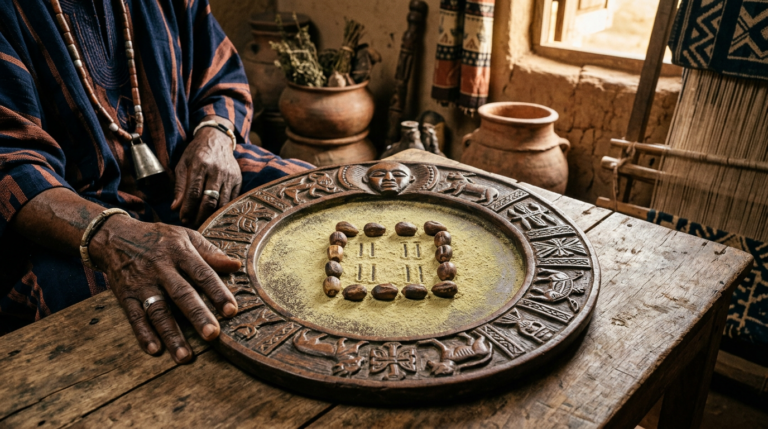
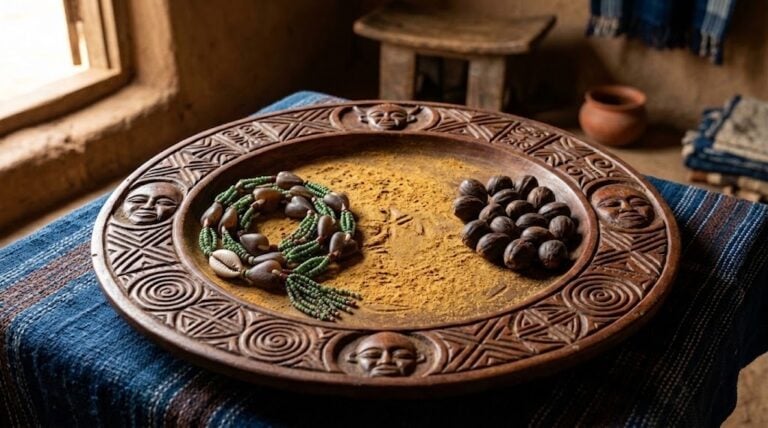
Fortune telling, in the popular sense, is passive: you sit down, a reader peers into your future, and you leave knowing what will happen. Ifá divination is structured entirely differently. A client comes with a specific question or life situation. The Babalawo — the trained priest whose name translates roughly as “father of secrets” — casts sacred instruments to reveal an Odù, one of 256 figures in the Ifá corpus. What follows is not a prediction but an interpretation: the Babalawo draws on the relevant oral verses, narratives, and prescriptions associated with that Odù to offer guidance.
The Odù Ifá and the sacred corpus is itself a vast literary body containing mythology, proverbs, ethical instruction, and medicinal knowledge. It is not a script of predetermined outcomes. It is a resource for navigation.
How Ifá functions as a decision-making framework
Think of Ifá divination less as a crystal ball and more as a consultation with a highly trained advisor who draws on an enormous body of accumulated wisdom. The client retains agency. The Babalawo does not tell you what will happen; the tradition offers you insight into what is at work in your situation and what paths are available. This is why scholars of African philosophy increasingly frame Ifá as an indigenous knowledge system — one that encompasses ethics, medicine, history, and governance — rather than a purely mystical exercise.
Understanding how Ifá divination works as a decision-making framework, rather than a prediction machine, changes everything about how the tradition should be evaluated.
Ifá is not the same as witchcraft or sorcery
Few conflations cause more harm than this one.
Where this stereotype comes from
Scholars commonly note that outside observers unfamiliar with the internal distinctions within African spiritual traditions have long collapsed them into a single demonized category. Ifá, Vodou, Candomblé, forms of medicine work, and practices that Yoruba thought would itself classify as àjé (a concept that doesn’t map cleanly onto the English word “witchcraft”) all get thrown together under one threatening label. This is roughly like collapsing Catholic confession, Buddhist meditation, and Pentecostal faith healing into “the same thing” because they all involve invisible forces. The distinctions matter enormously.
It’s also worth noting that within Yoruba thought, the concept most commonly translated as “witchcraft” carries its own specific meanings and moral valence that are not equivalent to Western usage. Pointing at Ifá and calling it witchcraft doesn’t just misname it — it imports an entirely foreign framework onto it.
The ethical and moral structure within Ifá
Ifá contains a coherent and demanding ethical framework. Central to it is the concept of ìwà pẹ̀lẹ́ — gentle or good character — which the tradition regards as essential to fulfilling one’s destiny. This is not incidental. It is foundational. The Babalawo’s role is oriented toward helping a client live well, act rightly, and align with their purpose. A tradition built around good character and ethical action is not compatible with the popular image of sinister, harm-seeking sorcery. They are describing opposite things.
Ifá is a living intellectual tradition, not a relic
The assumption that Ifá belongs to a pre-modern past that has been or should be superseded is both historically inaccurate and condescending.
UNESCO recognition and scholarly regard
UNESCO proclaimed the Ifá divination system a Masterpiece of the Oral and Intangible Heritage of Humanity — a recognition widely reported as occurring in 2005, though readers interested in the precise date should confirm against UNESCO’s official intangible heritage registry. That designation reflects an international scholarly and institutional acknowledgment that the Ifá corpus represents a significant achievement of human intellectual culture, worthy of preservation and study alongside any other canonical tradition.
Academic engagement with Ifá has grown considerably. Researchers in African philosophy, religious studies, ethics, and literature engage with the Odù Ifá as a serious body of thought — not as an anthropological curiosity.
Ifá’s relevance in contemporary life
Ifá is practiced actively today across West Africa, the Americas, Europe, and beyond. Communities of initiated practitioners exist in Nigeria, Cuba, Brazil, Trinidad, the United States, and elsewhere. The tradition has not calcified; it continues to guide people through real decisions about health, relationships, work, and purpose. That is what living traditions do.
You don’t need to be Yoruba to respect or study Ifá
This question carries genuine nuance, and it deserves a careful answer rather than a simple one.
Ifá’s global reach across the diaspora
Through the transatlantic slave trade, Ifá was carried across the Atlantic into the Americas and the Caribbean, where it became foundational to or deeply influential within traditions such as Lucumí (often called Santería or Regla de Ocha), Candomblé in Brazil, and related practices. The history of Ifá in the African diaspora is inseparable from the broader history of how enslaved Yoruba people maintained cultural and spiritual continuity under brutal conditions. The global spread of Ifá is not a modern phenomenon — it is centuries old.
Today, practitioners across multiple continents, of varied backgrounds, engage with the tradition through proper channels of initiation and community. The tradition has always been larger than one geography.
Cultural respect versus appropriation
Engagement with Ifá by non-Yoruba people is not automatically appropriation, but it does come with responsibilities. Traditional Ifá knowledge is transmitted through initiation and mentorship, not self-directed study of texts pulled from the internet. Approaching the tradition through recognized practitioners and legitimate community pathways is both more respectful and more accurate. Some practitioners and elders also hold that certain knowledge is sacred and restricted to initiates — that boundary deserves acknowledgment and respect.
The question is not whether you qualify ethnically. The question is whether you are approaching the tradition with genuine humility, through the right doors.
Ifá and monotheism are not mutually exclusive
Many people assume that embracing Ifá means abandoning monotheistic faith, or that monotheism and Ifá are irreconcilably opposed. The reality is more textured.
Yoruba cosmology recognizes Olódùmarè as a supreme deity — the ultimate source of existence. The Òrìṣà (divine forces or spirits associated with natural phenomena, human concerns, and cosmic functions) operate within a universe that Olódùmarè created and sustains. Some scholars describe this structure as a form of diffused monotheism, though that framing is itself contested — some practitioners and scholars rightly resist the pressure to validate Ifá by mapping it onto Abrahamic categories at all. Ifá stands on its own theological terms.
What matters for this conversation is that the binary — “you’re either monotheist or you follow Ifá” — is a false one. The concept of Ifá and the Yoruba concept of ori is bound up with personal destiny and the relationship between the individual and Olódùmarè. This is a tradition with its own sophisticated theology, not a blank opposition to other conceptions of the divine.
How to approach Ifá with genuine understanding
Correcting misconceptions is a starting point. What comes after matters just as much.
Learning from initiated practitioners and elders
The most reliable path toward accurate understanding of Ifá is through people who carry the tradition: initiated Babalawos, community elders, and practitioners who have committed their lives to the tradition’s proper transmission. Reading about Ifá is useful. Being in conversation with those who practice it is irreplaceable. If you have access to a local community or practitioner, that relationship is worth pursuing carefully and respectfully.
Recommended next steps for deeper study
Ethnographic studies of Yoruba religion, post-colonial scholarship on the misrepresentation of African spiritual traditions, and works authored by practitioners themselves all offer solid ground for further study. Avoid sources that treat Ifá as exotic background color or flatten it into a genre of African mysticism. Look for authors who engage the tradition seriously — its structure, its ethics, its history.
A good place to start on this site is the introduction to Ifá divination, which lays out the tradition’s foundations without the distortions this article has been working to clear away. The role of the Babalawo in Ifá practice is another useful companion piece for understanding how the tradition actually functions in practice.
Where to go from here
Ifá has survived misrepresentation by colonial administrators, sensationalized media, and internet mythology because the tradition itself is far more durable than the stereotypes applied to it. It is a sophisticated, ethically grounded, intellectually serious system of knowledge with a living global community behind it. Approaching it starts with setting down the distorted image and picking up a more honest one — which is exactly what you’ve begun doing here.