The Role of the Babaláwo in Ifá Tradition
Few spiritual roles carry as much breadth or responsibility as that of the Babaláwo. Part priest, part counselor, part living archive, the Babaláwo is the human link between a community and the vast wisdom encoded in the Ifá oracle. This article walks through who the Babaláwo is, how someone earns the title, what the work actually involves day to day, and why the role remains vital in communities from West Africa to the Americas.
Who Is the Babaláwo?
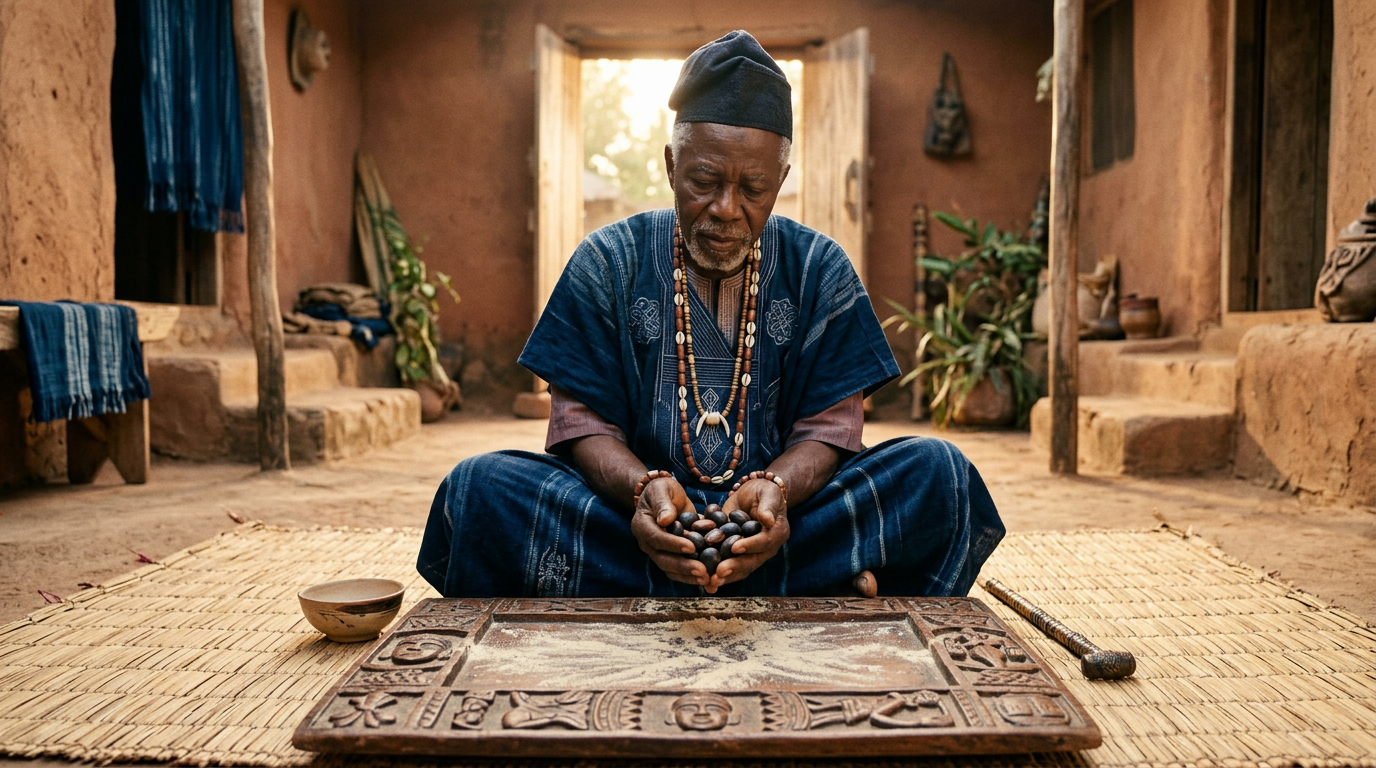
The Babaláwo is the high priest of the Ifá oracle in Yorùbá tradition, a figure whose authority rests not on personal power but on serving as a conduit for divine wisdom.
Meaning and Etymology of the Title
The word itself tells you something essential. Babaláwo comes from the Yorùbá baba (father) and awo (secrets or mysteries), giving the title its full meaning: father of secrets, or father of mysteries. That etymology is not decorative. It signals that the Babaláwo's defining function is to hold, interpret, and transmit knowledge that is sacred and closely guarded.
What he guards, specifically, is the Ifá corpus — a vast body of oral literature and spiritual knowledge that UNESCO recognized in 2005 as a Masterpiece of the Oral and Intangible Heritage of Humanity (later inscribed on the Representative List of the Intangible Cultural Heritage of Humanity in 2008). The Babaláwo is the living custodian of that heritage.
The Babaláwo's Relationship with Ọ̀rúnmìlà
The theological anchor of the Babaláwo's role is Ọ̀rúnmìlà, the Yorùbá deity of wisdom whose two principal cognomens clarify his unique position: Elérì Ìpín, meaning witness to creation and destiny, and Ibíkejì Olódùmarè, meaning second to the Creator. Every consultation a Babaláwo conducts is, in the tradition's own framing, an act of accessing Ọ̀rúnmìlà's witness-knowledge, knowledge that was present at the moment each human soul received its destiny before birth.
This is why a Babaláwo's pronouncements carry weight that goes beyond personal opinion or guesswork. He is not predicting the future from his own insight. He is serving as a channel for wisdom that the tradition holds to be older than human history.
The Path to Becoming a Babaláwo
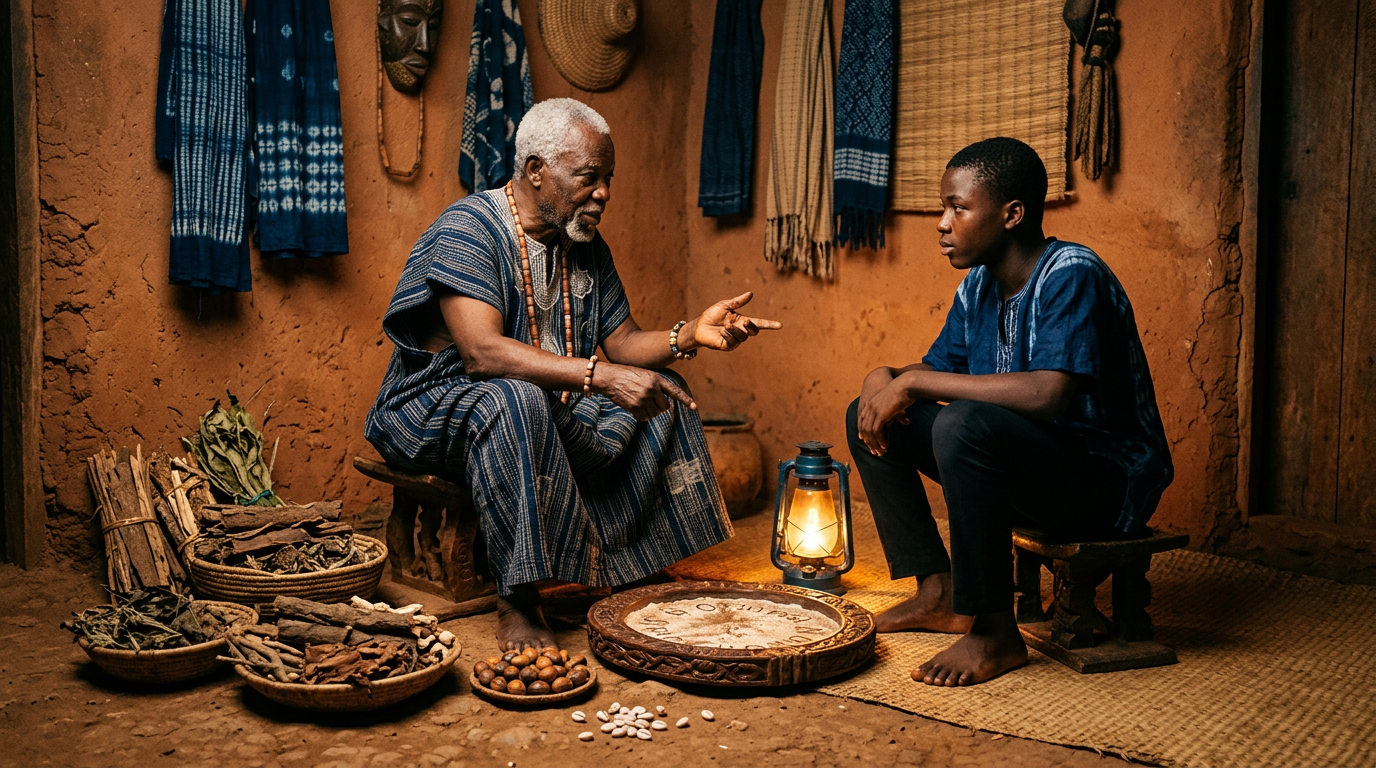
Becoming a Babaláwo is not a weekend certification. The process is long, demanding, and shaped by personal relationship with a master.
Years of Study and Apprenticeship
A man seeking the title studies under an Oluawo, an experienced Babaláwo who becomes his teacher and spiritual sponsor. How long that takes is set by the Oluawo and differs from lineage to lineage. Be careful with anyone who quotes you a fixed number of years. The training covers the memorization and interpretation of the Ifá corpus — no small undertaking, given that the corpus consists of 256 Odù, composed of 16 principal Ojú Odù and 240 minor Omo Odù, each subdivided into sacred verses called ese. An apprentice works through multiple branches of knowledge: divination technique, herbal medicine, the preparation of ritual materials, and the ethical code that governs the priesthood.
There is no standardized exam. Progress is assessed by the master, whose judgment about proficiency and character is final.
Initiation into Ifá (Ìtẹ̀fá)
When a master-priest is satisfied that a trainee is ready, the formal initiation ceremony called Ìtẹ̀fá is performed. Through Ìtẹ̀fá, the initiate receives his consecrated Ifá and — critically — his personal Odù, the specific signature within the corpus that governs his own life and spiritual identity. Without this ceremony, no matter how much a person has studied, he cannot legitimately use the title Babaláwo. The Ìtẹ̀fá is the threshold, not the endpoint.
Core Responsibilities of the Babaláwo
The Babaláwo's daily work spans roles that Western modernity has carved into separate professions. In traditional Yorùbá society, those lines do not exist.
Divination and Interpretation of Odù Ifá
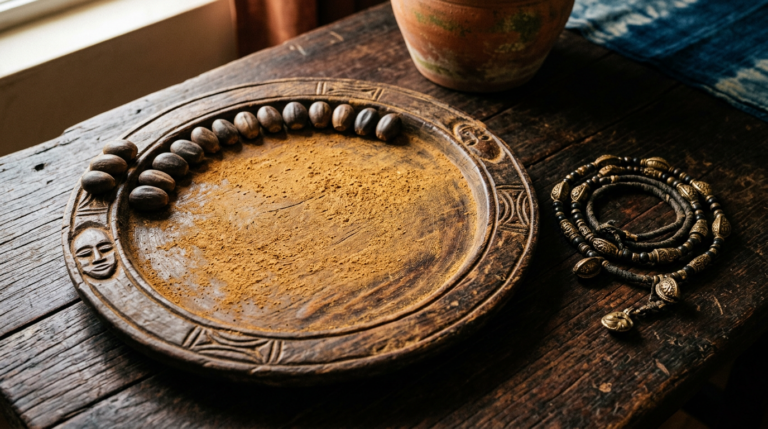
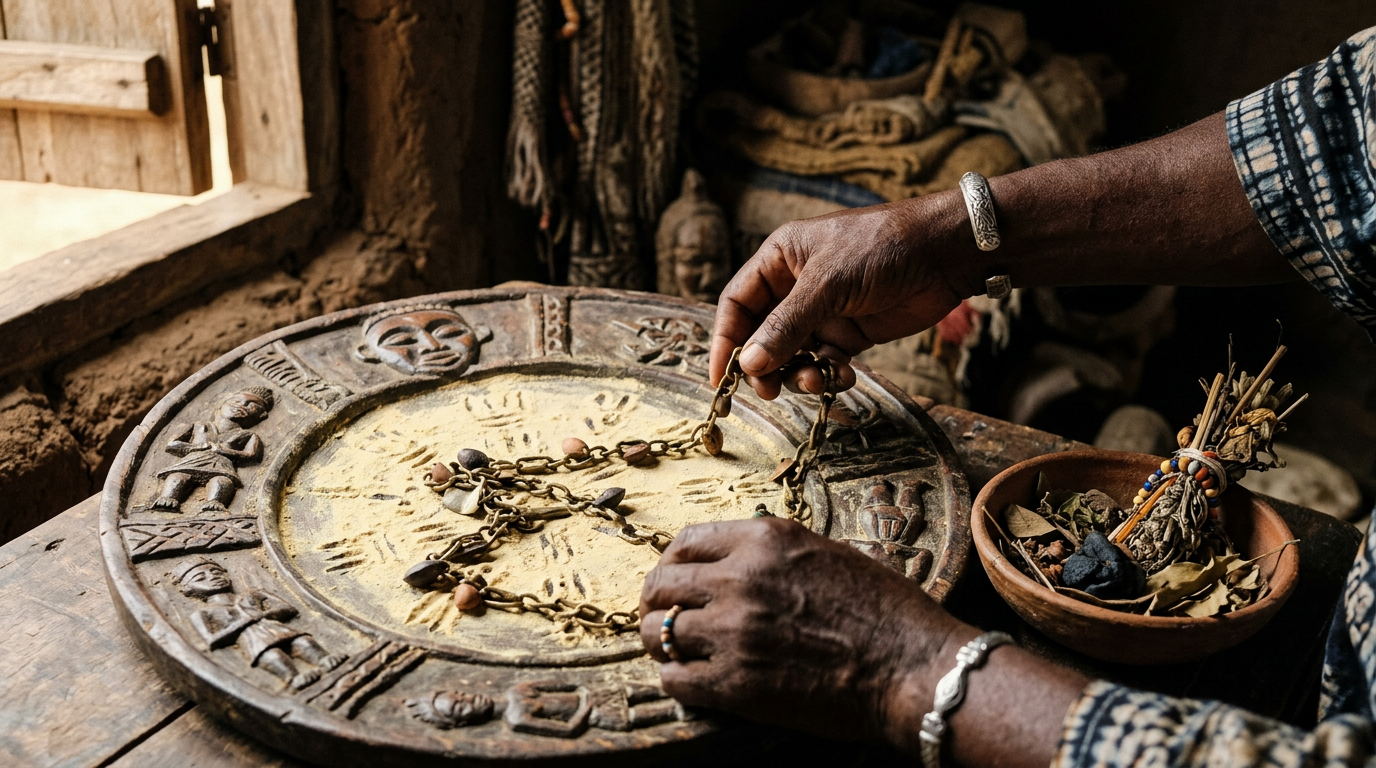
Ifá divination is the center of the Babaláwo's practice. When a client comes with a question or concern, the Babaláwo uses sacred divination tools — most commonly the opele (a divining chain) or the ikin (sacred palm nuts) — to identify which of the 256 Odù is speaking to the client's situation. Once the governing Odù is identified, the Babaláwo recites the relevant ese, the sacred verses associated with that Odù, interpreting them in light of the client's circumstances. The skill here is not mechanical. It requires both encyclopedic memory and interpretive judgment developed over years of practice.
Understanding the deeper structure of Odù Ifá is essential for anyone who wants to follow how a consultation actually unfolds.
Prescribing Ẹbọ and Spiritual Remedies
Identifying the Odù is only the first step. After that diagnosis, the Babaláwo prescribes ẹbọ — ritual offerings or sacrifices — along with herbal preparations and other spiritual remedies designed to correct imbalances and align the client with their destined path. The meaning of Ẹbọ in Ifá practice is more layered than the word "sacrifice" implies in English; ẹbọ is better understood as a form of active participation in one's own spiritual alignment.
The Babaláwo also draws on an extensive pharmacopeia of plants, minerals, and animal products to address physical ailments, from chronic illness to mental health conditions. This reflects the tradition's integrated understanding of health: spiritual well-being and physical well-being are not separate domains, so the same specialist attends to both.
Counseling and Community Guidance
Beyond formal consultations, the Babaláwo serves as a counselor and mediator. People bring him questions about relationships, livelihood, life decisions, and community disputes. His guidance is grounded not in personal preference but in what the Odù prescribes for the situation. That grounding gives the counsel a kind of accountability that purely personal advice lacks.
The Babaláwo's Place within the Ifá Community
A Babaláwo does not work alone. The role only makes sense within the web of relationships and institutions that constitute a living Ifá community.
Relationship with Other Priests and Practitioners
The Babaláwo operates alongside priests and priestesses of the various Òrìṣà, the divine forces that Ifá tradition recognizes. He does not replace them. Rather, the Babaláwo's unique function is to access the Odù, which speaks to all domains of life including which Òrìṣà a person should honor, how, and when. Think of the Ifá community as a network of specialists, and the Babaláwo as the one who reads the map.
Senior Babaláwos also take responsibility for supervising and training junior practitioners, making them at once practitioners and teachers. Continuity of the tradition depends on this master-apprentice chain, because an introduction to Ifá tradition clarifies that Ifá is transmitted primarily through memory and apprenticeship rather than through written texts. The Babaláwo is, in a very literal sense, a living archive.
Role in Festivals, Rites, and Life Transitions
Babaláwos preside over major community rituals, initiation ceremonies, and rites of passage, from birth consultations to funerary rites. They oversee Ìtẹ̀fá initiations for new priests, conduct annual Ifá festivals, and are called upon at moments when a community or an individual stands at a threshold. Life events that Western secular culture marks with paperwork, the Ifá community marks with consultation and ceremony, and the Babaláwo is almost always at the center of that process.
Ethical and Spiritual Standards of the Babaláwo
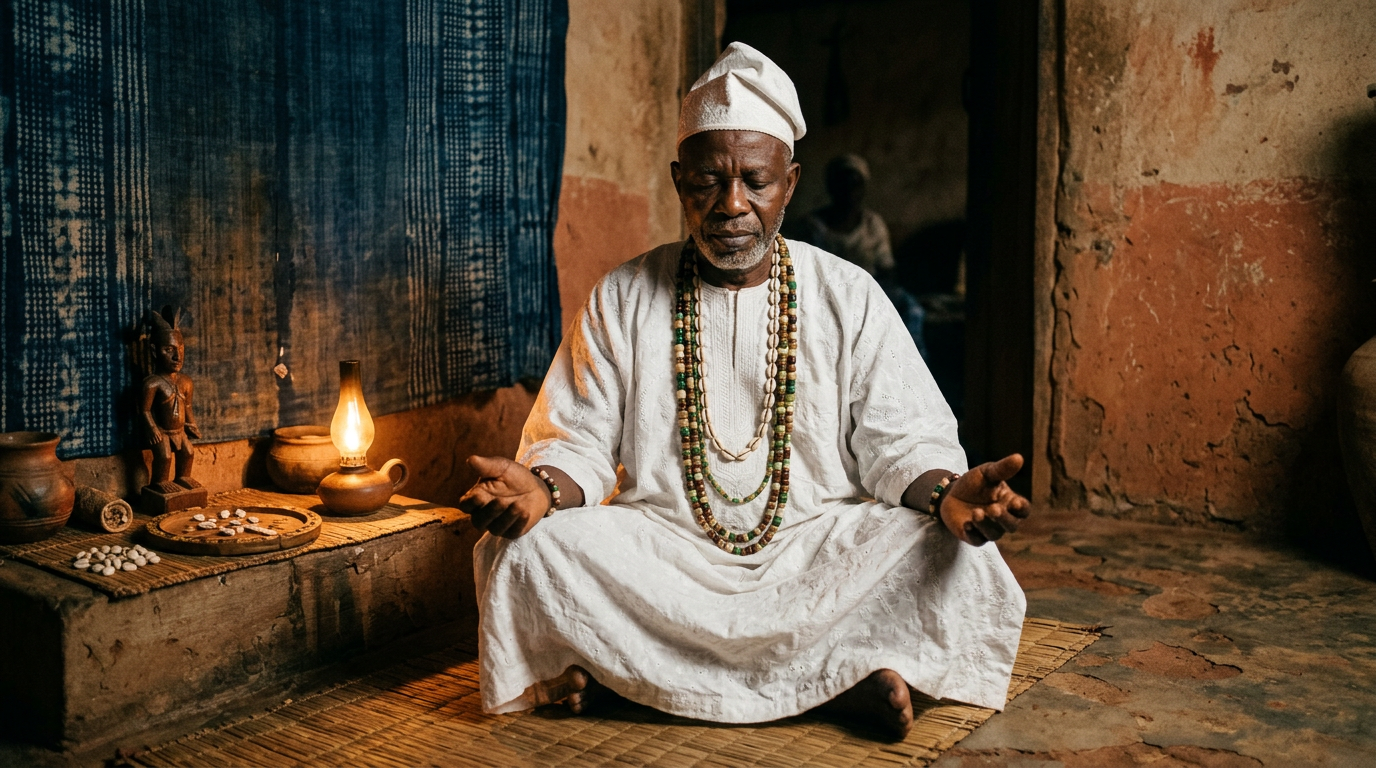
Technical skill without moral grounding does not produce a Babaláwo. It produces someone who can manipulate tools without understanding their purpose.
Ìwà Pẹ̀lẹ́ and the Emphasis on Good Character
Widely cited across tradition sources, Ìwà Pẹ̀lẹ́ — gentle or good character — is considered the supreme ethical standard in Ifá and a non-negotiable quality for any practicing Babaláwo. The concept runs deeper than politeness or reputation management. In Ifá theology, good character is itself a spiritual achievement, one that aligns a person more closely with their ori (inner spiritual essence) and with Ọ̀rúnmìlà's wisdom. A Babaláwo who lacks Ìwà Pẹ̀lẹ́ is seen as compromising not just his own standing but the integrity of every consultation he performs.
For a fuller treatment, Ìwà Pẹ̀lẹ́ and character in Yorùbá spirituality explores how this standard shapes the entire Ifá ethical framework.
Sacred Oaths and Taboos
Initiation into Ifá binds the Babaláwo to a set of sacred oaths and personal taboos (ẹwọ̀) that are specific to his Odù and lineage. These are not symbolic gestures. Violating them carries spiritual consequences the tradition takes very seriously. The specific taboos vary by lineage and personal Odù, but the underlying principle is consistent: the Babaláwo's relationship with the sacred is maintained through discipline and fidelity to covenant, not just through ritual performance.
The Babaláwo in the Modern World
The pressures of globalization, diaspora life, and digital culture have not dissolved the role. They have complicated and, in some ways, extended it.
Preserving Tradition in the Diaspora
The transatlantic slave trade brought Yorùbá people and their spiritual practices to Cuba, Brazil, Trinidad and Tobago, and the United States. Babaláwos in each of these communities have preserved the core structure of Ifá — the authority of the role, the Odù system, and key divination tools — while adapting to radically different cultural contexts. The degree of structural continuity varies. In Cuba, the Lucumí tradition developed its own forms; in Brazil, Candomblé carries recognizable Yorùbá structures with significant local inflection. Tension between Nigerian-lineage and Cuban-lineage practice remains an active discussion within the global Ifá community, and this article does not adjudicate which branch holds greater legitimacy. What is clear is that Babaláwos in each context have functioned as the primary guardians of oral and ceremonial knowledge.
Addressing Common Misconceptions
Colonial-era missionary and administrative writings frequently labeled African spiritual systems — Ifá included — as witchcraft or sorcery. That classification was a political act, not an accurate description. Widely cited accounts in tradition-based educational resources describe Ifá as a system rooted fundamentally in ethical guidance, community well-being, and the cultivation of good character. Framing the Babaláwo as a sorcerer inverts the tradition's own self-understanding.
At the same time, some scholars and practitioners argue that simply insisting "Ifá is not witchcraft" inadvertently accepts the colonial framework's terms. The more direct point is that the categories don't fit: the Babaláwo is a priest, a counselor, a healer, and a scholar working within a coherent ethical and theological system that predates European contact and does not require Western validation to be understood on its own terms.
Moving Forward with Ifá
The Babaláwo is not a relic of a pre-modern world. He is a specialist whose training is long, whose responsibilities are wide, and whose role has survived slavery, colonialism, and globalization with its core structure intact. If you are approaching Ifá for the first time, understanding what the Babaláwo does and does not claim to be is the necessary first step. If you are a practitioner, the scope described here is a reminder of what the role demands.
For those wanting to go further, exploring Ọ̀rúnmìlà and the origins of Ifá will give you the theological foundation that makes the Babaláwo's authority intelligible from within the tradition itself.