The Role of Odù in Ifá Practice: A Complete Guide
Most people who encounter Ifá for the first time hear the word Odù, and unless they have consulted Ifá, the word Odù is very foreign. Odù is scripture, cosmology, philosophy, living entity, and ethical manual all at once — and understanding how those layers fit together changes the way you relate to every part of Ifá practice. This guide walks through the full picture, from foundational definitions to the spiritual agency practitioners ascribe to the Odù themselves.
This guide focuses on Odù as Ifá’s interpretive backbone. Readers wanting the wider frame — what Yoruba religion is, how Òrìṣà fit, why Ifá sits at the center — can start with the complete beginner’s guide to Yoruba religion and spirituality before circling back to the 256 Odù details here.
For the full picture of how these 256 signs are used in practice, see our complete guide to Ifá divination — the diviner’s role, the consultation mechanics, and the philosophical framework that gives the Odù their meaning.
What Is Odù in the Context of Ifá?
Odù as the Sacred Literary Corpus
Odù is the central religious scripture of Iṣẹṣe, the indigenous Yoruba spiritual tradition within which Ifá operates. More precisely, the Odù Ifá — also called the Ifá Literary Corpus — is a vast collection of allegorical and historical proverbs (Òwe), poetic verses (Ẹsẹ̀), and narrative stories (Àlọ́ or Pàtàkì) that encode the full range of human experience and spiritual knowledge passed down through generations of Babaláwo, the initiated priests of Ifá.
What separates Odù from the scriptures of most other traditions is that it is fundamentally oral. There is no authoritative written canon. The corpus lives in the minds and mouths of trained practitioners, which means it grows over time as new Ẹsẹ̀ are composed and incorporated. According to UNESCO, the exact number of verses is unknown precisely because they are constantly increasing, with approximately 800 Ẹsẹ̀ attributed to each of the 256 Odù. An open corpus, not a closed one. That distinction matters.
The Relationship Between Odù and Ifá Divination
The relationship between Odù and Ifá divination is similar to the relationship between a legal code and a courtroom proceeding: the divination ritual is the procedure, but Odù is the body of law being consulted. Ifá divination itself is overseen by Ọ̀rúnmìlà, the Òrìṣà (divine spirit) of wisdom, regarded in Ifá teaching as the deity who transmitted this knowledge to humanity. When a person sits before a Babaláwo seeking guidance, the mechanics of the session — the casting, the calculation, the chanting — are all structured to surface a specific Odù, which then speaks to the client’s situation.
One thing worth highlighting early: Ifá divination does not depend on a priest entering trance or channeling a spirit. Unlike other oracular traditions in the region that rely on spirit mediumship, Ifá is grounded in a structured body of memorized knowledge. The Odù corpus is the oracle.
The Structure of the 256 Odù
The 16 Principal Odù (Ojú Odù)
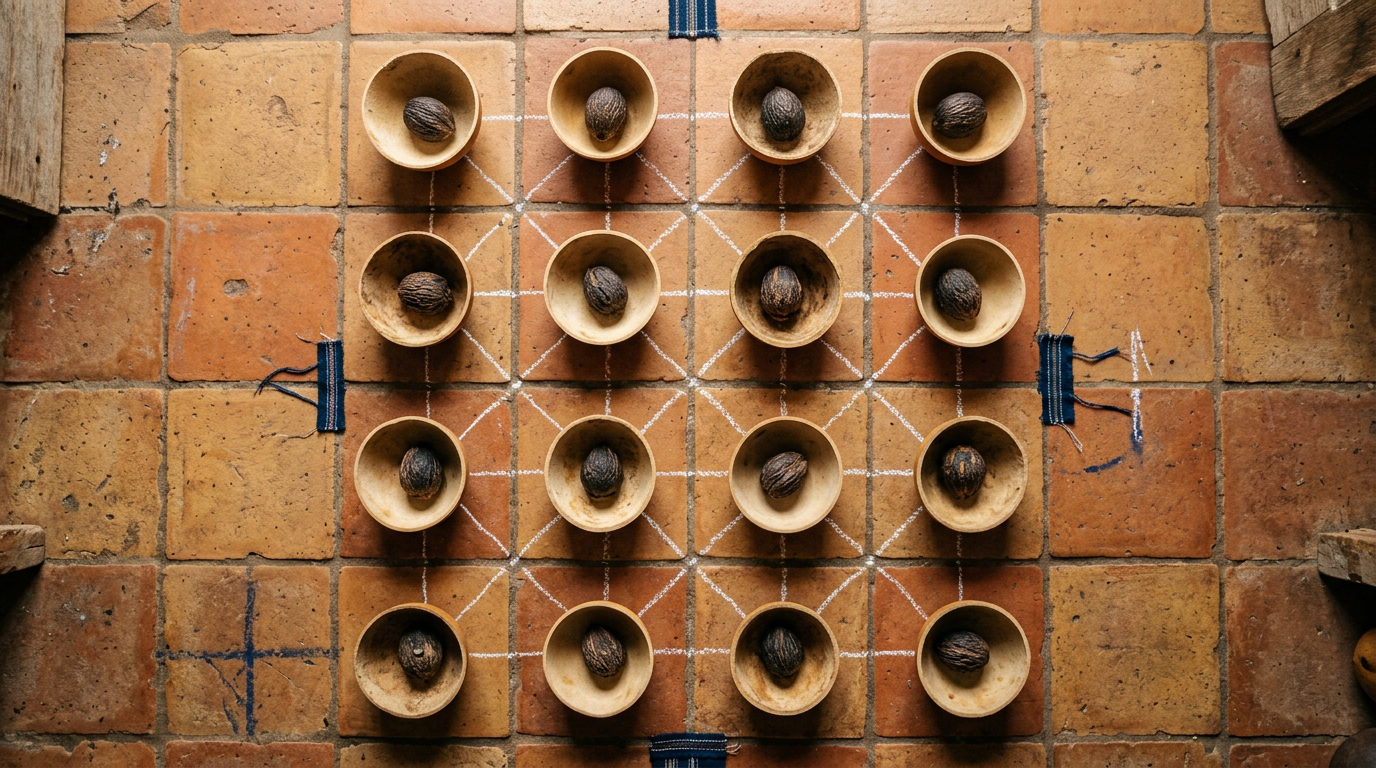
The 256 Odù are not randomly enumerated — they arise from a precise mathematical architecture. At the foundation sit 16 principal Odù, called Ojú Odù (literally “face” or “eye” of the Odù). These sixteen are the primaries from which the entire system unfolds. Each has its own name, its own governing spiritual principles, and its own extensive body of Ẹsẹ̀. In traditional training, a Babaláwo trainee must demonstrate mastery of the 16 Ojú Odù before being permitted to advance to the derivative corpus.
The 16 principal Odù explained matter beyond their foundational status: each Ojú Odù embodies a distinct mode of reality, carrying teachings about creation, relationships, illness, prosperity, conflict, and resolution. Learning them in sequence is not rote memorization; it is a structured encounter with the full range of human circumstance.
How the 240 Secondary Odù (Omo Odù) Are Derived
The remaining 240 Odù are called Omo Odù — “children” of the Odù. Each is derived from a combination of two of the 16 principal Odù, producing a binary pairing: 16 × 16 gives 256 total, minus the 16 cases where an Ojú Odù combines with itself (which yields the original 16), leaving 240 derivative configurations. Scholars have noted the structural resemblance between this combinatory logic and binary computing, though that parallel should be held lightly — Odù are not abstract data structures. They are spiritual entities with character, history, and agency. The mathematical elegance is real; reducing Odù to an algorithm misses the point entirely.
For practitioners, the 240 Omo Odù extend and nuance the teachings of their parent Ojú Odù, providing more granular guidance for specific life situations. The corpus as a whole — all 256 — forms a complete cosmological map.
How Odù Speaks During Ifá Consultation
The Process of Casting and Revealing Odù
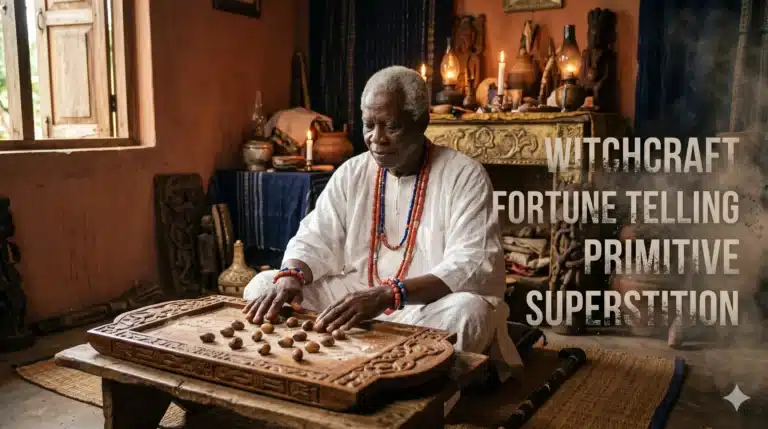
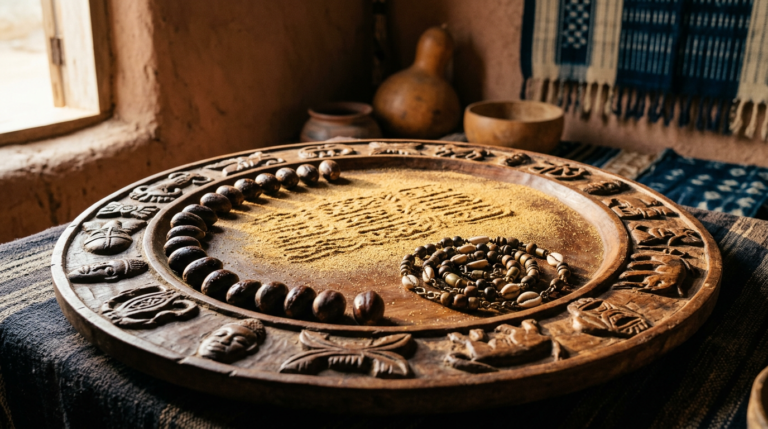
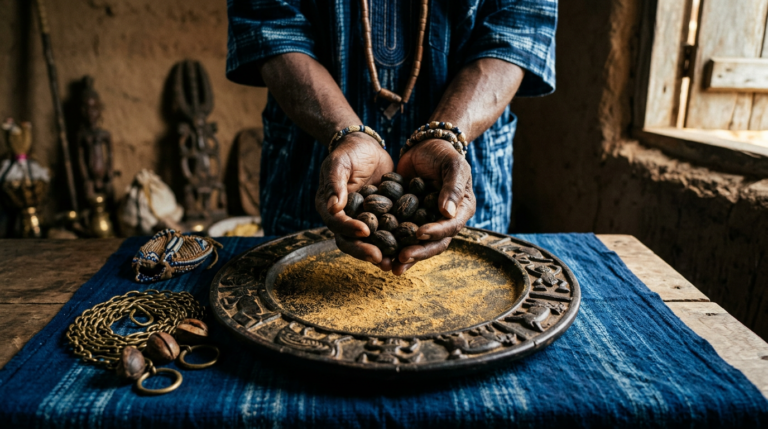
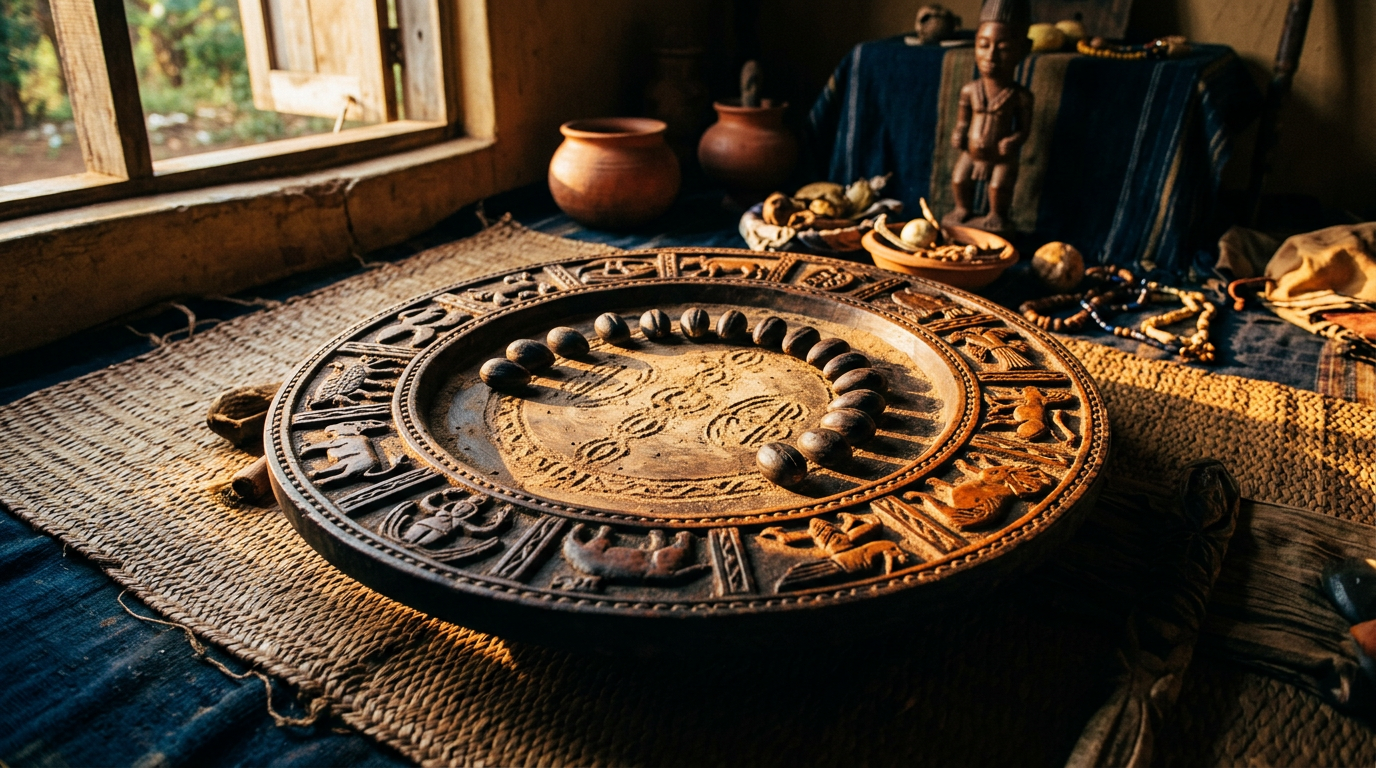
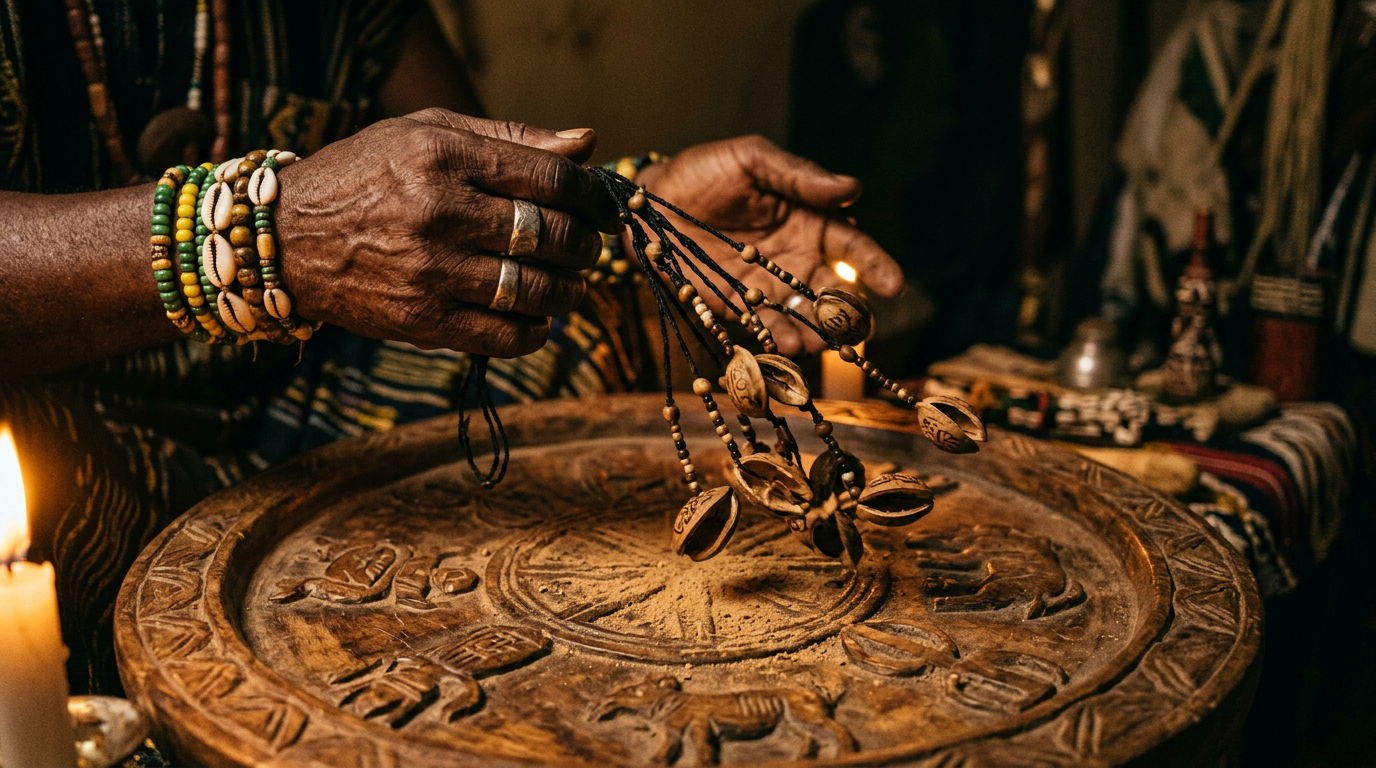
When a Babaláwo sits to divine, the goal of the casting process is to identify which of the 256 Odù is speaking to the client’s situation at that moment. Two primary instruments are used: the Ọ̀pẹ̀lẹ̀ (a divining chain with eight seed pods) and Ikin (sacred palm nuts, typically 16). The Ọ̀pẹ̀lẹ̀ is thrown and read quickly; the Ikin-based method is slower and considered more thorough. Both yield a binary pattern that maps to one of the 256 Odù, which is then marked or tracked on the Ọpọ́n Ifá, the wooden divination tray.
The physical act of casting takes perhaps a few minutes. What comes after — the interpretation — can take hours.
The Role of the Babaláwo in Interpreting Odù
Once an Odù is revealed, the Babaláwo’s knowledge base activates. A fully trained Babaláwo must have memorized all or most of the 256 Odù in order to practice — because the corpus is oral, the priest himself is the library. The Babaláwo chants relevant Ẹsẹ̀ for the revealed Odù, selecting verses that speak most directly to the client’s question. This requires not just recall but judgment: which of the hundreds of Ẹsẹ̀ within a given Odù apply? How do the client’s circumstances inflect the meaning?
This is why the role of a Babaláwo is irreplaceable by any written or digitized index of Odù. The tradition requires a living, trained human carrier — someone who has absorbed the corpus well enough to navigate it in real time, on behalf of a real person, with real consequences.
Odù as a Repository of Wisdom and Moral Guidance
Ẹsẹ̀ Ifá: The Verses Within Each Odù
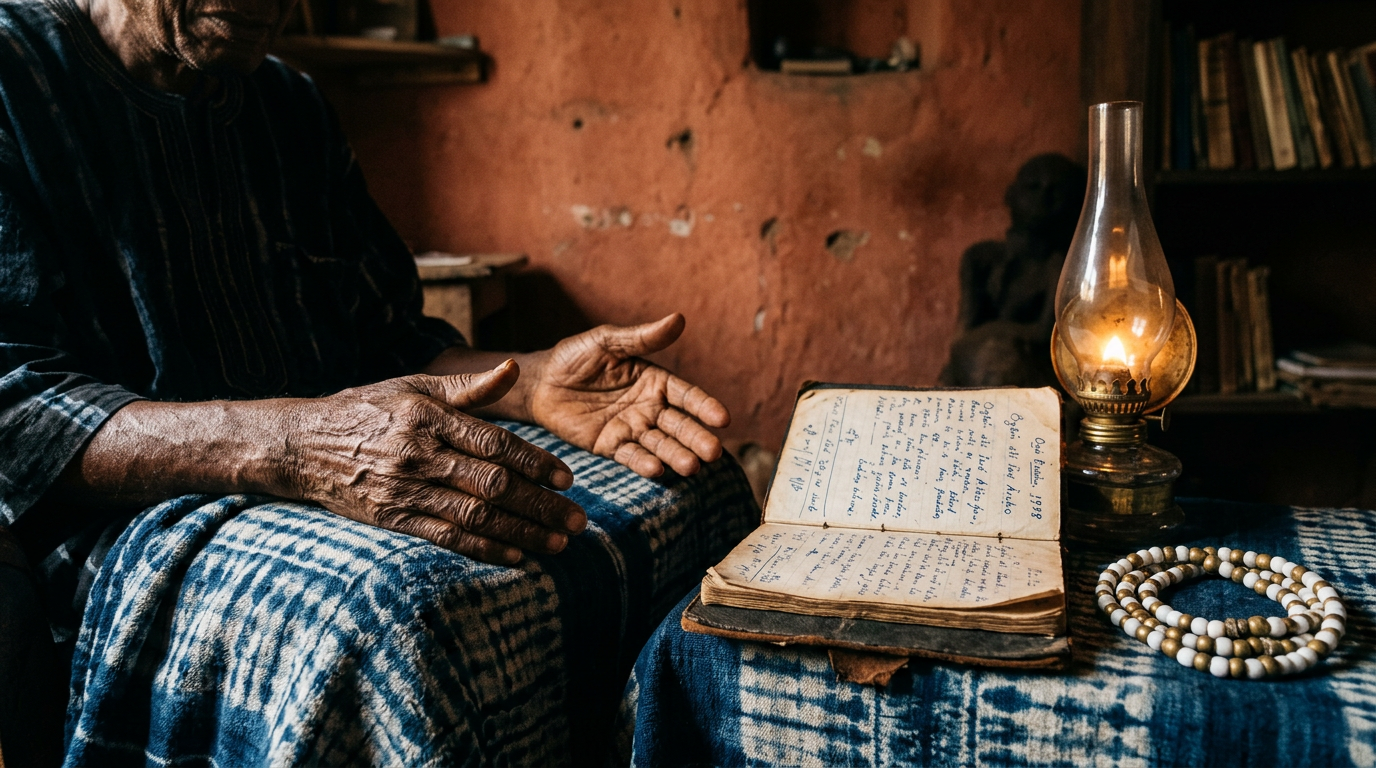
The Ẹsẹ̀ are the most important element of Ifá divination, according to UNESCO’s documentation of the tradition. They are chanted in poetic language — compressed, rhythmic, often archaic — and contain mythological references, moral teachings, accounts of historical events, and prescriptions for action. A single Ẹsẹ̀ can tell the story of a primordial character who faced a dilemma similar to the client’s, describe the sacrifice that turned the situation around, and conclude with a proverb that distills the lesson. The narrative, the prescription, and the wisdom arrive together, as a unit.
Because the corpus is oral and living, Ẹsẹ̀ continue to be composed today. That is not a departure from tradition — it is tradition functioning as it was always meant to, with each generation of Babaláwo adding new verses that address new configurations of experience.
Stories, Proverbs, and Prescriptions Embedded in Odù
The Àlọ́/Pàtàkì narratives embedded in Odù are not illustrations added to make the teachings more accessible. They are the teachings, in the form the tradition prefers. Ifá conveys ethical guidance obliquely, through story and proverb rather than direct commandment. Characters in the Pàtàkì go to consult Ifá, receive guidance, follow it or ignore it, and experience the consequences — modeling the decision-making process for the listener.
Central to the moral dimension of Odù is the concept of ìwà pẹ̀lẹ́ — gentle or good character. The Odù corpus returns to this theme across hundreds of verses: that knowledge without character is incomplete, and that authentic engagement with Ifá must produce a better human being. Prescribed ẹbọ (offerings or sacrifices) serve as mechanisms for realignment when a person has drifted out of accord with their life’s purpose. Wisdom and practical remedy, inseparable.
The Spiritual Power and Agency of Odù

Odù as Living Spiritual Forces
Here the tradition asks something significant of you: to set aside the metaphor of “sacred text” and understand Odù as something more. Within practitioner theology, Odù are widely understood as living, sentient entities — engaged in active, ongoing interaction with all of creation. Ifá teaching holds that all things are created by energy patterns called Odù, and that these patterns reappear throughout every dimension of existence. The Odù you encounter during divination is not a category label. It is a presence.
This is the understanding articulated within the tradition itself, and for practitioners and serious students of Ifá, it is the frame that makes the system coherent. A Babaláwo is not looking up answers in a reference book. He is entering into communication with a force that has its own intelligence and its own stake in the outcome.
The Sacred Nature of Odù Beyond Divination
The spiritual authority of Odù extends beyond the divination session. Certain Odù — particularly the full Odù regalia associated with the highest levels of Ifá initiation — are regarded as too powerful to be seen by those who have not undergone specific rites. The secrecy around some aspects of Odù is not gatekeeping for its own sake; it reflects a theological conviction that unmediated contact with certain Odù can be overwhelming or harmful.
Ifá initiation and what to expect involves direct engagement with the Odù in ways that casual study does not. Understanding this distinction — between encountering Odù through consultation and being initiated into a direct relationship with it — is part of how practitioners describe their own deepening relationship with the tradition over time.
Why Understanding Odù Matters for Every Ifá Practitioner
Odù is the reason an introduction to Ifá divination cannot stop at a description of the ritual mechanics. The mechanics are the surface. Odù is the substance.
For a newer practitioner, studying Odù means gradually building the internal library that makes Ifá guidance accessible. You begin to recognize which Odù governs a period of your life, which themes are speaking to your situation, which stories mirror your own choices. For a more advanced practitioner, deepening with Odù means refining the interpretive capacity that separates rote recitation from genuine divination.
The Ifá divination system was proclaimed a Masterpiece of the Oral and Intangible Heritage of Humanity by UNESCO in 2005 — not for its antiquity as a curiosity, but because it represents a living, functioning knowledge system of extraordinary sophistication. The Odù corpus is practiced today among Yoruba communities in West Africa and among diaspora practitioners across the Americas and the Caribbean, transmitted across continents through the same oral lineage it has always depended on. You, as a practitioner or student, are part of that transmission the moment you begin to learn.
Odù is not background information. It is the ground itself.
Where to Go From Here
Start where the tradition has always started: the 16 Ojú Odù. Learn their names, their governing principles, their signature Ẹsẹ̀. Sit with a trained Babaláwo if you can and observe how those verses come alive during consultation. Read what you can find, knowing that text is a supplement to oral transmission, not a replacement for it.
When you’re ready to go further, exploring understanding Èṣù in Ifá practice will deepen your grasp of how Odù moves from text to action — Èṣù being the force that activates and communicates what the Odù prescribes. Every piece of Ifá knowledge connects to every other piece. Odù is the center from which those connections radiate.