
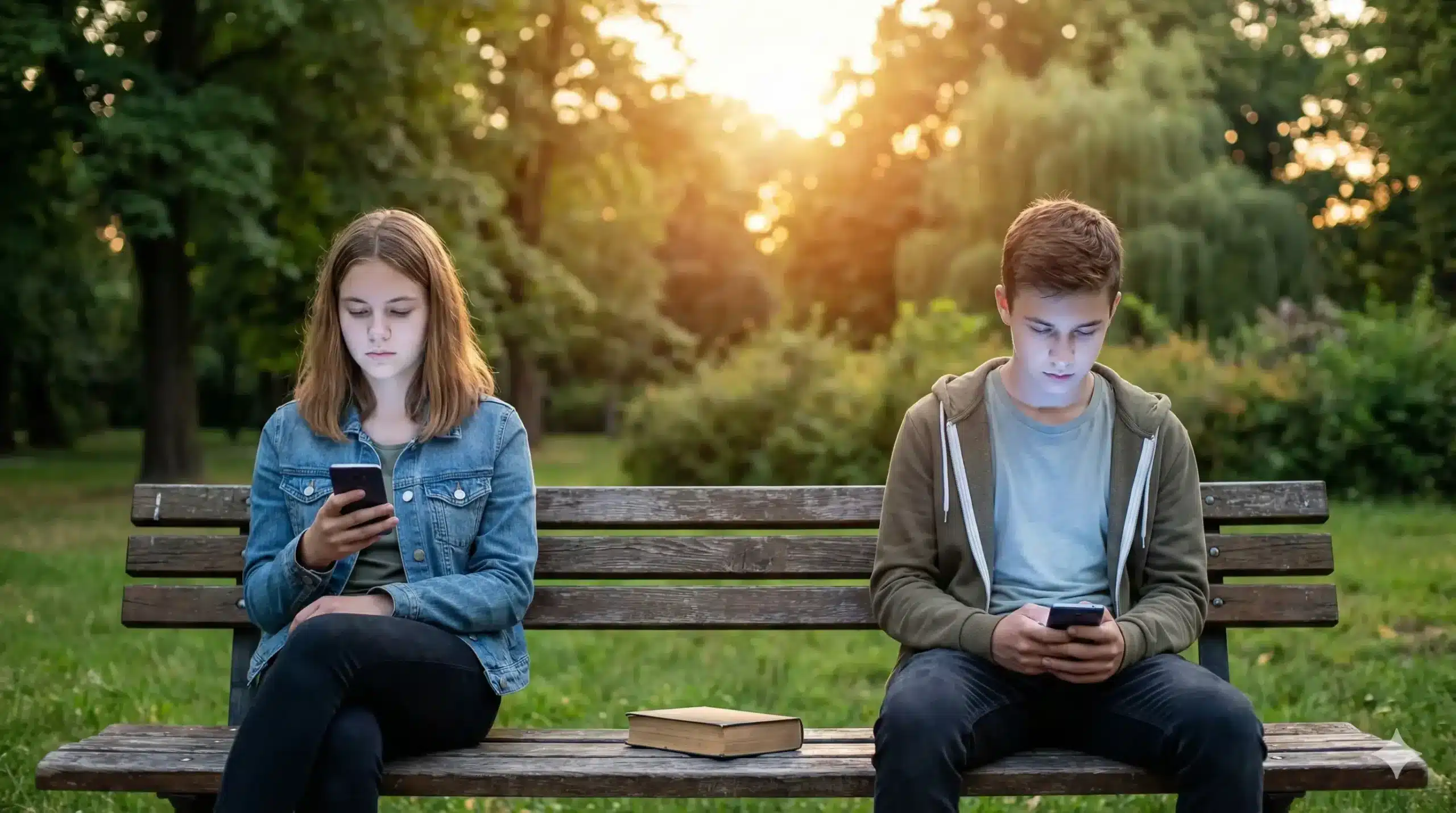
Right now, as you read this, the average American teenager is spending close to five hours every single day on social media. Five hours. That is more time than most of them spend eating, playing, or talking to the people right in front of them. And what is happening inside that young brain — during all those hours of scrolling and comparing and chasing the next notification — is something no parent should be comfortable ignoring.
I have spent more than four decades watching how the invisible things shape the visible ones. How the slow, quiet influences — the ones we barely notice — end up doing the deepest work on a person’s character, emotional health, and sense of self. And what I see in the young people coming before me now tells me something important is being stolen. Not with a loud crash. Quietly. Incrementally. Screen by screen.
The science is catching up to what some of us have been feeling in our bones. The U.S. Surgeon General has issued a formal advisory. The American Psychological Association has sounded the alarm. Top researchers at JAMA, BMC Psychology, and institutions around the world have been studying this crisis — and what they’re finding is both alarming and, thank the Creator, actionable. Because here is the part that too many people are missing: reducing social media screen time — even to just 90 minutes a week — produces measurable, dramatic, fast improvements in a young person’s mental and emotional health. Depression drops. Anxiety quiets. Sleep comes back. The person returns.
Let’s talk about what’s actually happening, what the research is saying, and what you can do about it starting this week.
Table of Contents
The Numbers That Should Keep Every Parent Up at Night
Five Hours a Day — Every Single Day
Let’s put five hours in perspective. That is 35 hours a week. Over 150 hours a month. By the time a teenager hits age 18, they will have spent the equivalent of more than eight full years of working hours staring at social media feeds — if this pattern holds. And for many of them, it is holding and intensifying.
| “Teens who spend more than 3 hours daily on social platforms have DOUBLE the risk of experiencing mental health problems like anxiety and depression.” — U.S. Surgeon General’s Advisory, 2023 |
Most of those five hours are not enriching. They are not educational. They are largely passive scrolling — watching other people’s curated lives, absorbing content engineered to trigger emotional reactions, and chasing the small dopamine hit that comes with a like or a comment. This is the reality. And it is happening inside developing brains that have no business being subjected to this kind of relentless stimulation.
Who Is Paying the Highest Price?
Not all teenagers experience this equally. The Pew Research Center, which surveyed 1,391 U.S. teens and their parents in 2024, found clear patterns in who suffers most. Kids who use social media passively — just watching, comparing, scrolling without interacting — face the worst mental health outcomes. Active users, who create and connect, tend to do somewhat better. But the passive scroll? That is where the damage accumulates.
Why Teen Girls Are Carrying the Heaviest Burden
The data on this is consistent and sobering. Thirty-four percent of teen girls say social media makes them feel worse about their own lives. For boys, that number sits at 20 percent. Girls are also more likely to report cyberbullying experiences, appearance-based comparisons, and anxiety tied directly to their online presence. The gap between how girls and boys experience these platforms is not subtle. It is significant. And it deserves to be named.
What Social Media Screen Time Is Actually Doing to Your Teen’s Brain

The Dopamine Trap Was Engineered, Not Accidental
I want you to understand something clearly: the platforms your child is using were designed — by engineers with neuroscience training — to be as addictive as possible. The variable reward system. The infinite scroll. The notification pulse. These are not accidents of design. They are features. They are modeled on the same psychological mechanics that keep people pulling the lever on a slot machine.
Every time a teen posts something and waits for the response, their brain lights up with anticipation. When the likes come in — dopamine. When no one responds — a small crash, and then the urge to try again. Over time, the brain’s reward circuitry gets calibrated to this artificial rhythm. And things that used to bring joy — reading, outdoor play, face-to-face conversation — start to feel slow, flat, and unsatisfying by comparison.
Serotonin, Stress, and the Brain Under Constant Fire
Serotonin is one of the key neurotransmitters that regulates emotional balance, stress resilience, and a sense of inner calm. Research published in peer-reviewed journals has linked heavy social media use to disruptions in serotonergic signaling in young people. That means the very chemistry that helps a teenager manage frustration, bounce back from disappointment, and feel generally okay about themselves is being eroded.
| When serotonin systems are chronically disrupted, adolescents become more reactive, more vulnerable to negative feedback, and more susceptible to anxiety and depression. The online world — with its social comparisons, public evaluations, and instant criticism — is a constant trigger for exactly this kind of disruption. |
Ages 10 to 19: The Developmental Window You Cannot Reopen
Here is something the Surgeon General’s report made very clear, and I think every parent needs to sit with: the brain is in its single most sensitive developmental window between the ages of 10 and 19. This is when identity forms. When emotional regulation patterns are established. When the neural pathways that will govern a person’s resilience, empathy, and self-worth are being laid down. What shapes those years shapes the person. Permanently. And right now, for millions of teenagers, that shaping process is being hijacked by algorithms.
The Emotional Wounds That Don’t Show Up on Any X-Ray
Anxiety That Hums Like a Radio Left On
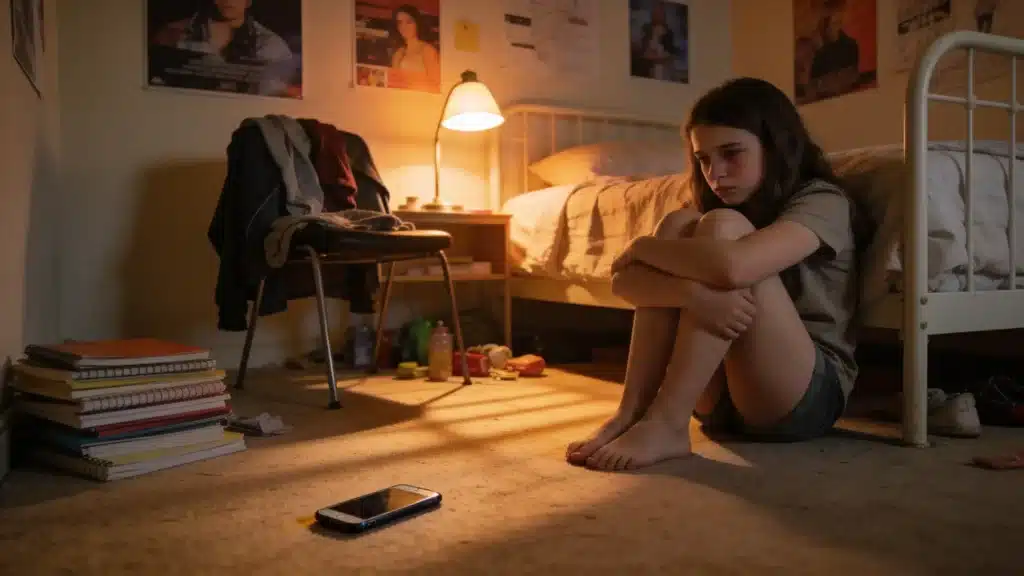
Psychologists have started using a term I find very accurate: ambient anxiety. This is not the sharp, obvious anxiety of a crisis. It is the low, constant hum of being perpetually connected, perpetually monitored, perpetually available. Teens describe feeling like they can never fully relax — because someone might be trying to reach them, or they might miss something, or something they posted might be getting judged right now. That kind of anxiety does not announce itself dramatically. It just slowly wears a young person down.
And performance anxiety compounds it. Every post is a test. Every caption is reviewed. Will people like it? Will I get enough response? Did I say the wrong thing? This creates a feedback loop where teens become increasingly dependent on external validation for any sense of inner okayness. That is a dangerous place for a developing human being to live.
Sleep Is the First Casualty
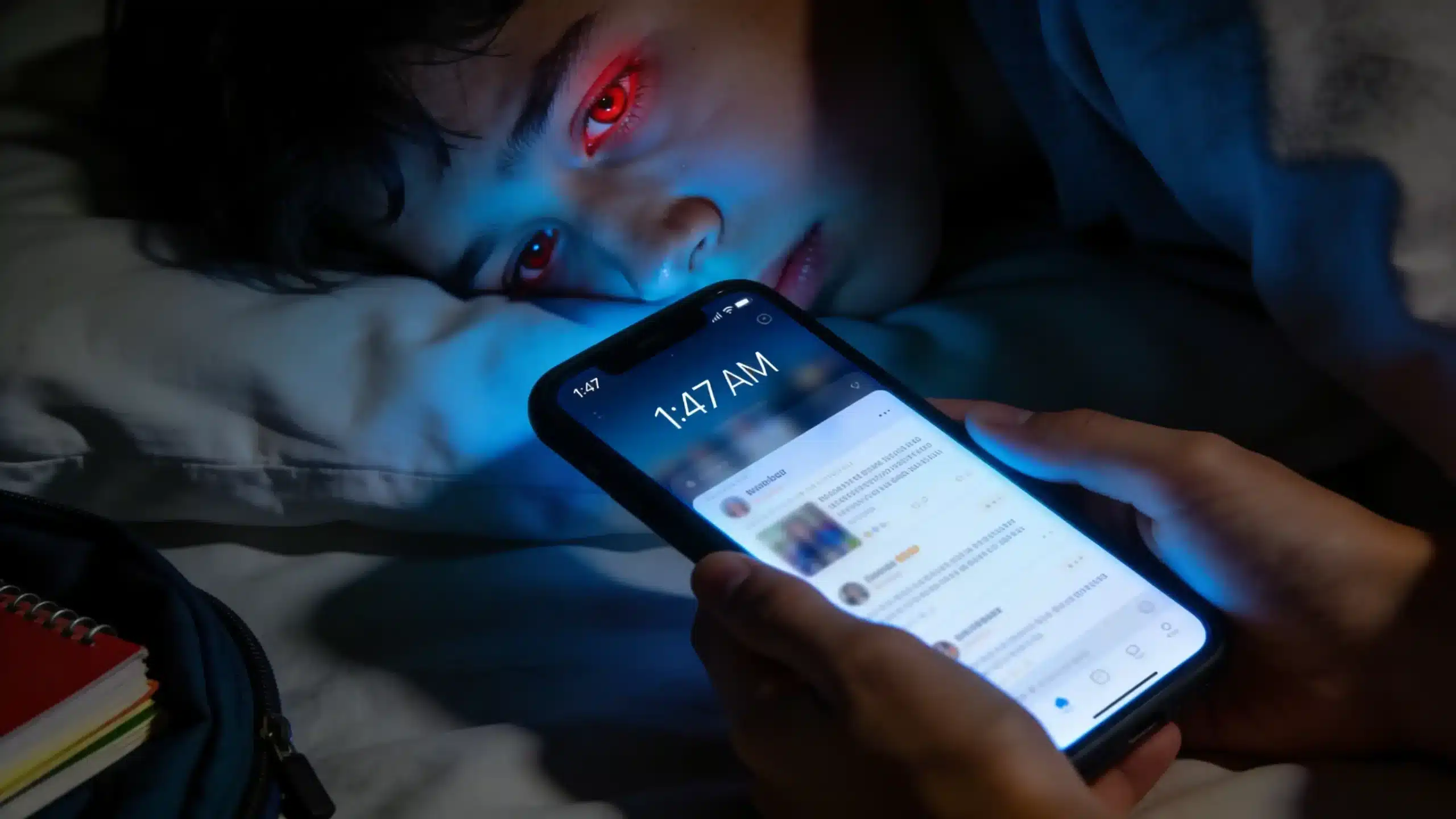
The Surgeon General’s advisory noted that nearly one-third of adolescents report using screen media until midnight or later on a typical school night. The blue light from screens suppresses melatonin production. The emotional stimulation of social media keeps the nervous system activated when it should be winding down. And poor sleep is not a minor inconvenience — it is directly linked to depression, impaired emotional regulation, and in severe cases, increased risk of self-harm. When your child is not sleeping well, nothing else is working right either.
When Self-Worth Lives Inside a Notification
One of the most painful things I observe is the way young people have outsourced their sense of value to their phones. When a post gets ignored, they feel invisible. When someone comments something unkind, it lands like a verdict. The capacity to know one’s own worth from within — independently of what others say — is being eroded in real time. And this is not a small thing. That inner knowing is the foundation of psychological health. Without it, a person is permanently at the mercy of whoever is commenting on their life today.
The Blind Spot: Teens See the Problem in Everyone Else
The ‘Other Kids’ Illusion
Here is one of the most striking pieces of data to come out of Pew Research’s 2024 survey of teenagers and their parents: 48 percent of teens now believe social media has a negative impact on people their age. That number has jumped from 32 percent in just two years. So nearly half of teenagers see that this is a problem. That part is actually encouraging.
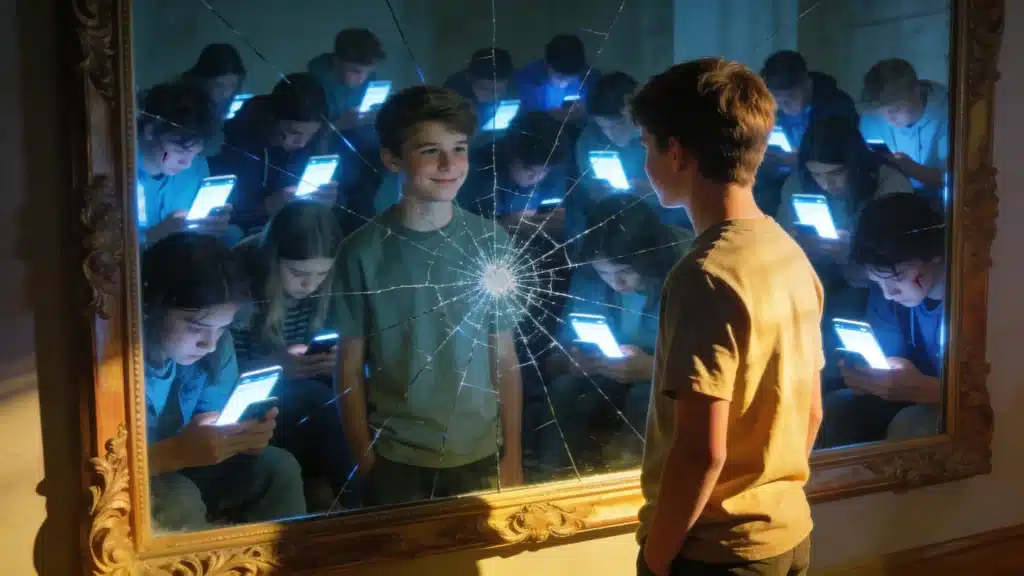
But here is the catch: only 14 percent say it affects them personally in a negative way. Less than one in seven. So most teenagers can see the damage in the broader population while simultaneously believing they are personally immune to it. Does that sound familiar? It should. It is exactly how every form of addictive behavior defends itself.
Why This Pattern Mirrors How Addiction Thinks
I am not using the word addiction loosely. Neurobiologically, the compulsive, hard-to-stop quality of heavy social media use shares real mechanisms with addiction — dopaminergic reward pathways, escalating tolerance, withdrawal discomfort when access is removed. The ‘it’s not a problem for me’ thinking that teens display is not stubbornness. It is a recognized feature of how these reward systems defend themselves. Understanding this helps parents approach the conversation with more patience and less frustration. Your teenager is not lying to you. Their brain genuinely believes it is fine. That is part of what makes this so serious.
What Cutting to 90 Minutes a Week Actually Does

The JAMA Research That Changed the Conversation
I want to walk you through what the science actually shows when teenagers and young adults reduce their social media use — because this is where things get genuinely hopeful, and I think hope that is grounded in evidence is the most useful kind.
A 2024-2025 cohort study published with JAMA tracked 373 young adults through a one-week social media detox. These were real people, tracked with passive smartphone monitoring, not just asking them what they thought they were doing. The results were striking: anxiety dropped by 16 percent. Depression dropped by nearly 25 percent. Insomnia decreased by 14.5 percent. In one week. Not a year. One week of reduced use.
| “A one-week social media detox significantly reduced symptoms of anxiety by 16.1%, depression by 24.8%, and insomnia by 14.5%.” — JAMA Cohort Study, 2024-2025 |
A separate randomized clinical trial published in JAMA Network Open tested what happened when entire families — parents included — reduced their leisure screen time for two weeks. The results showed decreased internalizing behavioral issues in children and adolescents, and significantly enhanced positive social interactions. When the family does it together, the effect is amplified. That tells you something important about the social nature of this problem and its solution.
Depression Down. Anxiety Down. Sleep Restored.
A 2024 JAMA Pediatrics study found that teens who reduced their social media use to just 30 minutes daily showed significant decreases in depression and loneliness after three weeks. Three weeks! That is how quickly the brain begins to recover when the constant stimulation is removed. The neural pathways that govern emotional regulation start to recalibrate. Sleep quality improves. Mood stabilizes. The teenager you remember — curious, present, capable of boredom without panic — starts coming back.
What Rushes in to Fill the Space
This is the question parents worry about, and it is a fair one. When you take away five hours of screen time per day, what happens? Research and lived experience both suggest the same thing: real life rushes back in. Conversations with family deepen. Physical activity increases. Creative projects get picked up again. Friendships built on actual shared experience — not just watching each other’s stories — get stronger. Boredom comes back, and boredom is not the enemy. Boredom is where imagination lives.
A Family Roadmap for Pulling Back Without a War
Starting the Conversation at the Right Time
Do not have this conversation during a conflict. Do not bring it up when you are confiscating a phone. Find a calm moment — a car ride, a meal, a walk — and start with curiosity rather than accusation. Share what you have learned. Ask your teenager what they have noticed about how social media makes them feel. You might be surprised. Many of them already know something is off. They just do not have a framework for it, and they certainly do not want to be the only one giving it up.
Pew Research found that 44 percent of teens have already tried to cut back on their social media use on their own. Your kid may be more ready for this conversation than you think. Come in as a partner, not an enforcer. That changes everything about how it lands.
Building Screen-Free Zones That Last
Some practical moves that actually stick: no phones during meals — and that means yours too. Phones off and charging outside the bedroom by 9 p.m. One day a week designated as a low-screen family day. These are not punishments. They are structures. Young people actually do better with structures. They push against them — but they do better with them. The research on family-wide interventions is clear: when parents participate in the reduction, teenagers are far more likely to stay with it.
Parents — You Are Part of This Too
I will say this plainly because it needs to be said: if you are going to ask your teenager to reduce their screen time, you need to look at your own. There is a reason the JAMA family intervention study showed stronger effects when the whole household participated. Children learn from watching, not from being told. If your phone is always in your hand, your words about screen discipline will not carry much weight. This is not blame. It is just the truth of how human beings — especially young ones — learn what is normal and acceptable.
The Generation We Still Have Time to Shape
What Boredom Builds That No Algorithm Can
There is something the engineers who built these platforms know and are counting on: a young person sitting quietly with nothing to scroll through will feel uncomfortable at first. That discomfort is not a sign that something is wrong. It is actually a sign that the recovery process has begun. The capacity to sit with one’s own thoughts — to be bored, to daydream, to wonder — is not a small thing. It is where empathy grows. It is where creativity gets born. It is where a child learns to know themselves.
Every hour of genuine boredom is an hour the brain is doing the quiet, essential work of integration — processing experiences, building identity, developing the interior life that will sustain a person through everything that comes. Social media does not build that interior life. In many cases, it actively prevents it from forming.
A Word to Every Parent, Teacher, and Community Elder
We are not powerless here. This is not one of those problems where the forces at work are too large for any individual to affect. Every family that builds healthier screen habits makes a difference — for their own children, and as a model for others. Every school that creates phone-free learning environments is changing developmental outcomes. Every adult who chooses to be genuinely present rather than digitally distracted is showing young people what presence looks like.
The generation of young people growing up right now has never known a world without social media. They have no reference point for what it felt like before — the quality of attention, the depth of conversation, the willingness to sit with a feeling rather than immediately escape it. It is our responsibility to give them that reference point. Not by lecturing. By living it. And where necessary, by setting the boundaries that protect the developmental process that cannot be rushed or replicated later.
The research is clear. The direction is clear. Cut the screen time down — sharply. Give the young brain the silence it needs. You will not regret it. Neither will they — even if right now they are telling you they will.
The Bottom Line
The evidence is in, and it is consistent across dozens of peer-reviewed studies and multiple national health advisories: excessive social media screen time is doing measurable, real harm to the emotional and psychological development of our youth. The developing brain between ages 10 and 19 — the window that determines so much of who a person becomes — is being shaped by algorithms designed for engagement, not wellbeing. Sleep is being destroyed. Anxiety is being amplified. Self-worth is being outsourced to a notification count. And the teenagers living through it often cannot see it happening to them.
But here is what gives me genuine encouragement: the turnaround is fast. Just one week of reduced use shows measurable drops in depression, anxiety, and insomnia. Three weeks of limited use produces dramatic improvements in mood and social connection. The brain is not passive in this — it wants to recover. It knows how to heal when we give it the conditions to do so. Cutting social media screen time down to 90 minutes per week is not an extreme position. It is a responsible one, backed by the best science we have. Start the conversation in your home this week. Do it together. The change you will see in your child — and perhaps in yourself — may be the most important thing you do this year.
Share your experience in the comments below. What shifts have you noticed when your family reduced screen time? Your story might be exactly what another parent needs to hear today.
Frequently Asked Questions
1. How many hours of social media per day is too much for a teenager?
Most research points to more than 3 hours per day as the threshold where mental health risks begin to significantly increase. Teens who exceed this threshold show roughly double the rate of anxiety and depression compared to those with lighter use. The American Psychological Association recommends that parents set clear limits and monitor the quality of use, not just the quantity. Passive scrolling is far more damaging than active, purposeful connection.
2. Can reducing social media screen time to 90 minutes a week really make a difference?
Yes, and the research is specific about this. A 2024-2025 JAMA cohort study found that a single week of social media detox reduced depression by nearly 25%, anxiety by 16%, and insomnia by 14.5% in young adults. The brain begins to recalibrate within days of reduced stimulation. 90 minutes per week is a dramatic reduction for most teens, but the results it produces — better sleep, improved mood, stronger real-world relationships — make it a genuinely worthwhile target.
3. My teenager insists social media does not affect them negatively. What do I say?
This response is actually very common and is partly explained by the neurological mechanics of how reward-based behaviors defend themselves. Pew Research found that while 48% of teens believe social media harms youth generally, only 14% acknowledge it affects them personally. The most effective approach is not to argue about their perception but to propose a short experiment together — a two-week family screen reduction — and then discuss what they notice. Experience is more persuasive than statistics for a teenager.
4. Are there any positive effects of social media for teenagers?
Yes, and it is important to be honest about this. For LGBTQ+ youth in unsupportive environments, for teens with chronic illness or unusual interests, and for marginalized young people, social media can provide genuine community and reduce isolation. Active engagement — creating, connecting, collaborating — tends to produce better outcomes than passive consumption. The problem is that most teenage social media use skews heavily passive. The goal is not total elimination but conscious, intentional, limited use.
5. What should replace social media time when I reduce my teen’s screen time?
The research shows that the replacement matters enormously. Physical activity, particularly team sports, has been shown to produce direct reductions in emotional symptom scores. In-person social time, creative projects, time in nature, and family conversation all show documented mental health benefits. The key is not to simply remove screens and leave a vacuum — it is to actively fill that space with activities that build the real-world social, emotional, and creative capacities that screen time was crowding out.