
You know what blows my mind? Over 30% of folks in Nigeria still turn to traditional healers when they’re feeling under the weather. That’s millions of people! And let me tell you, after spending most of my life knee-deep in Yoruba healing practices, I can see why.
I remember my first real encounter with these ancient traditions. I was maybe seven years old, watching my grandmother prepare a healing bath for my cousin who’d been sick for weeks. The way she moved, the songs she sang, the herbs she crushed between her weathered hands – it was like watching magic happen right in front of me. That moment changed everything for me.
These practices ain’t just about fixing what’s broken in your body. They’re about connecting with something bigger – our ancestors, nature, and the spiritual forces that guide our lives. After four decades of practicing and teaching these methods, I’ve seen things that would make your head spin. Sick folks getting better when doctors gave up hope. Broken families coming together through ritual. Lives transformed by the power of ancient wisdom.
Table of Contents
Understanding the Foundations of Yoruba Healing
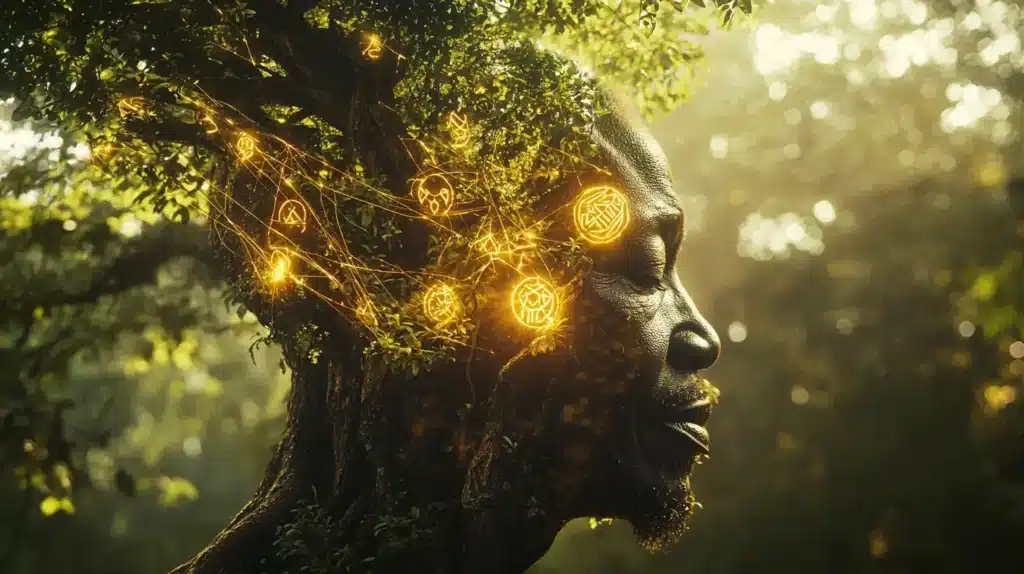
Man, where do I even start with this? Yoruba healing is like this massive tree with roots going so deep you can’t even see where they end. At its core, everything connects – your body, your spirit, your family, even the earth under your feet.
The Yoruba people, we see health different than most folks. It’s not just about popping pills when you got a headache. Health means your body, mind, and spirit are all dancing to the same rhythm. When one gets outta sync, that’s when problems start showing up. I learned this the hard way when I was younger and thought I could ignore the spiritual side of things. Boy, was I wrong!
Our ancestors play a huge role in all this. They’re not gone – they’re right here with us, guiding and protecting. I can’t count how many times I’ve called on my great-grandmother’s spirit during a healing session. Sometimes I swear I can feel her hands guiding mine as I work. That connection is real, and it’s powerful.
Nature is our pharmacy, our church, and our teacher all rolled into one. Every plant, every stone, every stream has its own energy and purpose. I spent years learning which leaves cure fever, which roots protect against evil, which barks strengthen the spirit. My teacher used to make me taste everything – some of it was nasty! But that’s how you learn. You gotta experience it yourself.
The spiritual world and physical world, they’re like two sides of the same coin. You can’t separate them. When someone comes to me sick, I’m not just looking at their symptoms. I’m looking at their whole life – their relationships, their spiritual practices, their connection to their roots. Sometimes the cure ain’t medicine at all. Sometimes it’s making peace with a family member or honoring an ancestor they forgot about.
One time, this businessman came to me. Doctors couldn’t figure out why he kept getting these terrible headaches. Turns out, he’d been ignoring his family’s traditions for years, chasing money and success. We did a simple ritual to reconnect him with his ancestors, and those headaches? Gone within a week. That’s the kind of thing that still gives me goosebumps.
Key Rituals in Yoruba Healing Practices
Let me share some of the rituals that form the backbone of our healing work. Each one has been passed down through countless generations, refined and perfected by healers who came before me.
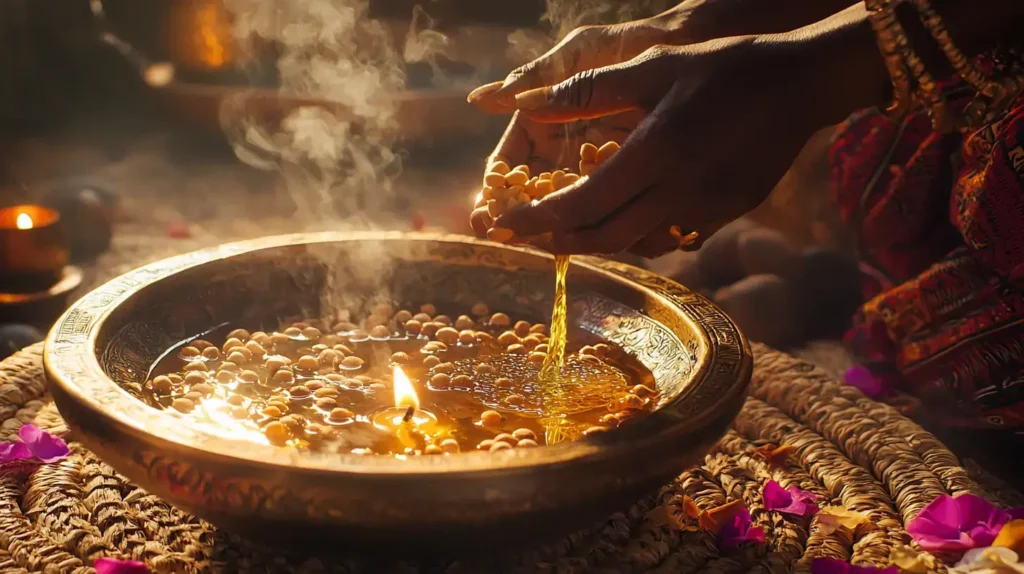
The cleansing bath ritual – now that’s something special. It’s not just about getting clean. The herbs we use, the prayers we say, the way we prepare the water – everything has meaning. I remember this young woman who came to me, couldn’t get pregnant after years of trying. We did a series of cleansing baths using specific herbs. Nine months later, she’s holding her baby girl. Coincidence? I don’t think so.
Offerings and sacrifices – people get weird about this part, but it’s really about exchange and respect. You’re asking the spiritual world for help, so you gotta give something back. Usually it’s simple stuff – some palm oil, kola nuts, a bird, maybe a 4-legged animal (if it’s serious). I had one case where a family was plagued by bad luck for years. We did a major offering ceremony, and things started turning around almost immediately. Their business picked up, health problems disappeared, even their kids started doing better in school.
Different ailments need different approaches. For spiritual attacks, we might use protective rituals involving specific incantations and symbols. For physical illness tied to emotional trauma, we combine herbal treatments with counseling and spiritual cleansing. I’ve developed my own methods over the years, combining what my teachers taught me with what I’ve learned through experience.
The divination ritual used by Ifá Awos (Male/Female Priest) is probably the most complex. It takes years to master – I’m still learning new things about it! Through the divination process, we can uncover the root cause of problems that might be hidden. Sometimes what looks like a simple illness is actually connected to something much deeper – maybe a family curse, or unfinished business with the ancestors.
There’s this ritual for restoring lost vitality that I learned from an old healer in a remote village. It involves a combination of specific drum rhythms, herbal preparations, and movement. I’ve used it to help people recovering from long illnesses, and the results can be dramatic. One man who could barely walk after months of sickness was dancing at his daughter’s wedding three weeks after we completed the ritual.
The fertility rituals are some of the most emotionally charged. When a couple desperately wants a child, the energy in the room is intense. We use special herbs, perform specific dances, and call upon the orisha of fertility. I’ve been blessed to help bring many children into this world through these practices. Each time, it reminds me why I do this work.
The Role of the Babalawo in Yoruba Healing
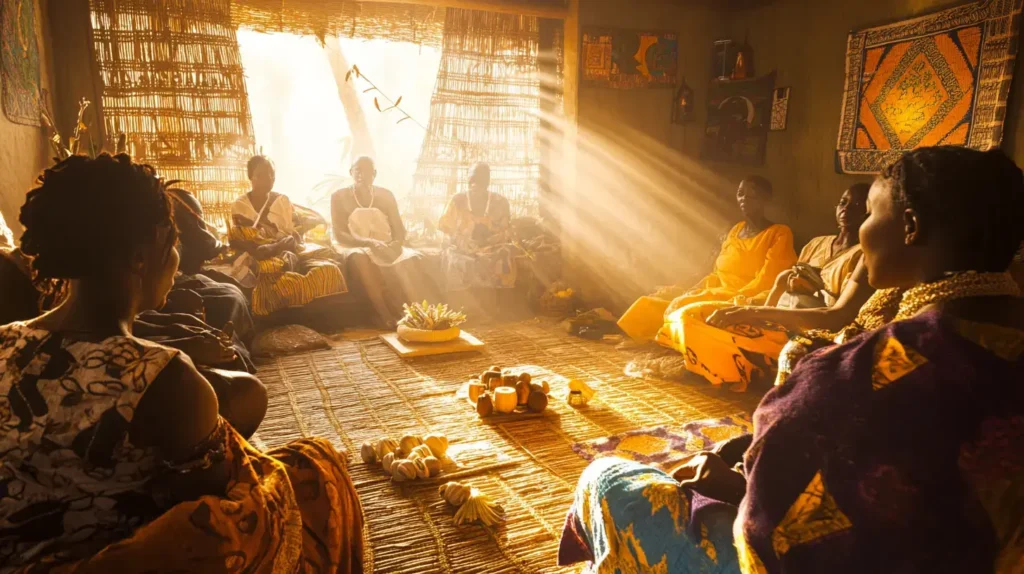
Being a Babalawo ain’t just a job – it’s a calling that consumes your whole life. People think we just throw some bones and chant some words, but there’s so much more to it. We’re healers, counselors, spiritual guides, and keepers of ancient knowledge all rolled into one.
The training alone nearly broke me. My teachers were tough as nails. Wake up before dawn for prayers, spend all day memorizing verses, learning herbs, understanding the mysteries of Ifa. Some nights I wanted to quit. But something kept pulling me back. Maybe it was destiny, maybe stubbornness. Probably both!
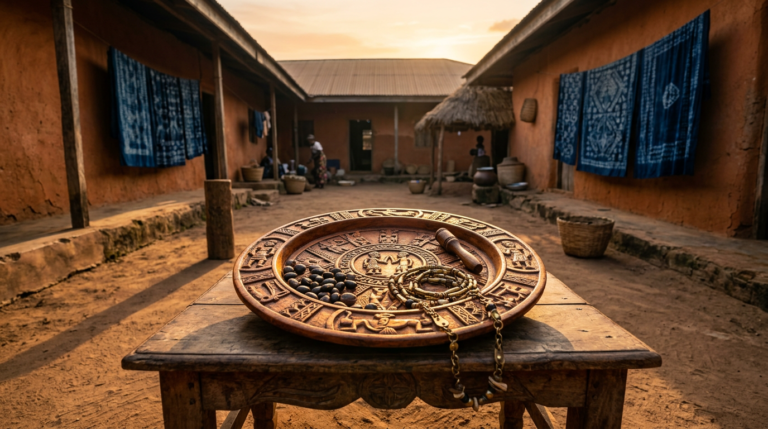
When someone comes for consultation, it’s like being a detective, psychologist, and priest at the same time. First, we divine using the opele chain or Ikins (sacred palm nuts). The patterns that emerge tell stories – about the person’s past, their current situation, what’s blocking their path. But reading the signs is just the beginning. You gotta know how to interpret them in a way that helps the person.
I had this case once – a successful lawyer who seemed to have everything but couldn’t shake this feeling of emptiness. The divination revealed he was meant to be a teacher, not a lawyer. His ancestors were all educators, and by choosing a different path for money, he’d cut himself off from his spiritual purpose. Took him two years to make the change, but last I heard, he’s teaching at a university and happier than ever.
The responsibility weighs heavy sometimes. People put their lives in your hands. They trust you with their deepest fears and hopes. I’ve made mistakes – prescribed the wrong remedy, misread the signs. Each error taught me humility and pushed me to study harder, pray more, listen better.
Real healing happens when you connect with the person’s spirit, not just treat their symptoms. I learned this from an old woman who came to me with chronic pain. Medicine wasn’t helping. During our session, she broke down crying about her son who died twenty years ago. We did a ritual to help her properly grieve and release that pain. Her physical pain started easing up too. The body remembers everything, even what we try to forget.
Being a Babalawo means you’re always on call. Middle of the night, someone’s knocking because their child has a fever that won’t break. During celebrations, you’re there to bless and protect. In times of crisis, you’re the one people turn to. It’s exhausting but also incredibly fulfilling. When you see someone’s life transform through the work, all the sacrifice feels worth it.
Rituals for Spiritual Cleansing and Protection
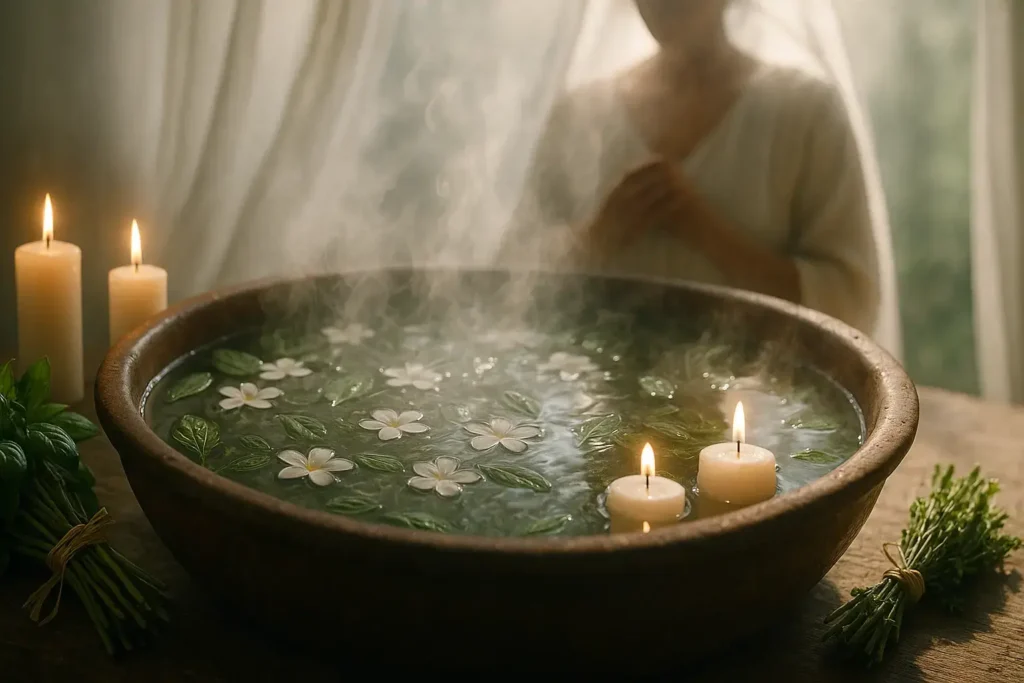
Spiritual cleansing – now that’s something everybody needs but most people don’t even know it. You accumulate spiritual dirt just like physical dirt, except you can’t see it. But oh boy, can you feel it! That heaviness, bad luck following you around, feeling stuck – that’s spiritual grime building up.
The basic cleansing ritual I teach everyone involves white cloth, water, and specific prayers. Sounds simple, right? But the power is in the intention and the connection to the spiritual realm. I start my own day with a quick cleansing – just a few minutes to clear off whatever I picked up the day before. It’s like brushing your teeth but for your spirit.
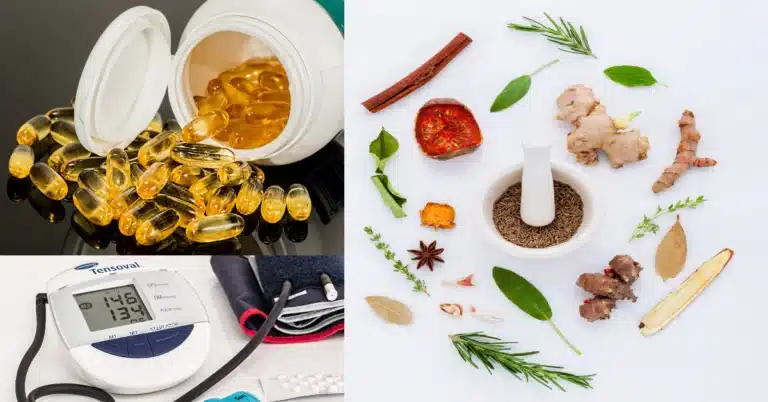
Herbs are the real MVPs in cleansing work. Each plant has its own spiritual signature. Basil clears negative thoughts. Rue breaks hexes. White sage (though not traditional Yoruba, I’ve incorporated it) pushes out stagnant energy. I grow most of my own herbs now – there’s something about tending them yourself that makes them more powerful. Plus, store-bought stuff is sometimes old and weak.
One of my favorite protection rituals uses red palm oil and specific leaves. You prepare the mixture while calling on your ancestors and protective spirits. Then you mark specific points on your body and around your home. I taught this to a family who kept having break-ins. After they did the ritual, the attempts stopped. The thieves would come to the door and just… leave. Like something turned them away.
Protection work is preventive medicine for the spirit. Why wait until you’re under attack to defend yourself? I wear protective items daily – special beads, prepared amulets, blessed oils. Some people think it’s superstition. Those same people come running when things go bad, wishing they’d listened earlier.
The cleansing of spaces is crucial too. Your home absorbs everything – arguments, sickness, worry, fear. If you don’t clean it spiritually, that energy just sits there, affecting everyone who enters. I do a deep spiritual cleaning of my own space every month. Smoke from burning herbs, blessed water sprinkled in corners, prayers at every doorway. My home feels different afterward – lighter, brighter, more peaceful.
For serious cases – when someone’s under real spiritual attack – we pull out the big guns. All-night vigils with continuous prayer and cleansing. Multiple practitioners working together. Sometimes we need to trace the source of the attack and neutralize it. This work can be dangerous. I’ve had things thrown at me by unseen forces, felt crushing pressure trying to stop the work. But with faith and proper preparation, good always wins.
The Influence of Yoruba Healing on Modern Medicine
You know what’s funny? Doctors used to laugh at our practices. Now they’re studying them in universities! I’ve lived long enough to see this complete turnaround, and honestly, it makes me chuckle sometimes.
The integration is happening whether people realize it or not. That willow bark tea your grandmother gave you for headaches? Same compound as aspirin. Those breathing exercises for anxiety? We’ve been doing similar practices in healing rituals for centuries. Modern medicine is finally catching up to what we’ve always known – you can’t separate the body from the spirit.
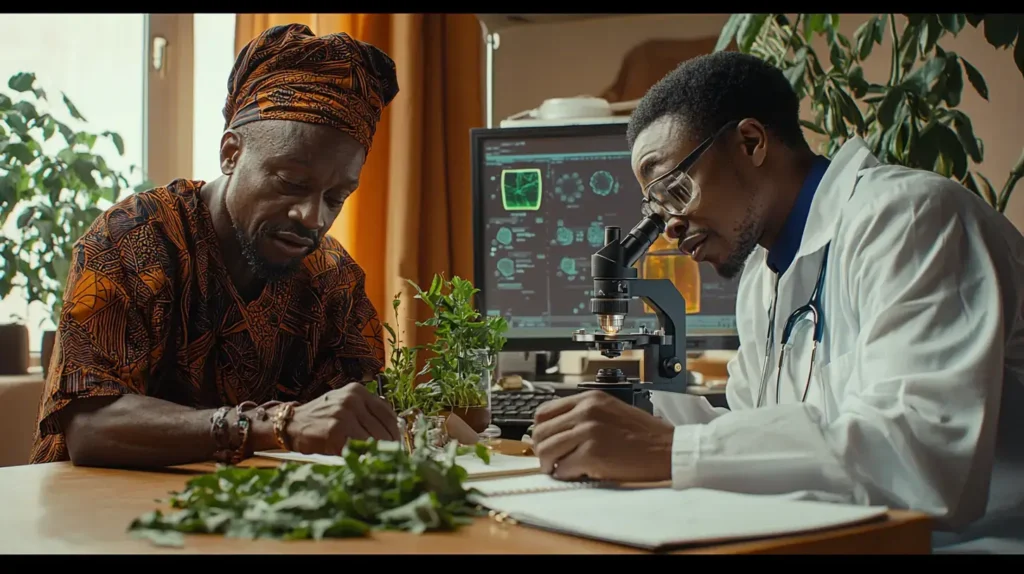
I work with several doctors now who send me patients they can’t help. Usually it’s the “mysterious” cases – chronic pain with no clear cause, recurring illness despite treatment, psychological issues that don’t respond to medication. One cardiologist friend sends me patients with heart problems linked to emotional trauma. We work together – he handles the physical, I handle the spiritual and emotional. The results speak for themselves.
There was this case that really opened some eyes. A young girl with seizures that no medication could control. The neurologist was stumped. The family brought her to me as a last resort. Through divination, we discovered the seizures started after a traumatic family event that was never properly addressed. We did healing rituals to release that trauma, combined with herbs known to calm the nervous system. The seizures reduced dramatically. The doctor was so intrigued, he started researching the herbs we used.
But it ain’t all smooth sailing. Some medical professionals still see us as primitive or dangerous. They don’t understand that we’re not trying to replace modern medicine – we’re trying to complement it. I always tell my clients to keep taking their prescribed medications. We’re adding another layer of healing, not substituting.
The bureaucracy is a real pain too. They want us to prove our methods work using their scientific standards, but how do you measure spiritual healing in a laboratory? How do you do a double-blind study on ancestral intervention? Some things can’t be reduced to numbers and charts.
What gives me hope is the younger generation of healers and doctors who see the value in both approaches. I’m training several people who also have medical degrees. They bring fresh perspectives while respecting the traditional ways. One of my students is researching the antimicrobial properties of herbs we’ve used for generations. Another is documenting how our counseling methods in healing rituals align with modern trauma therapy.
Yoruba Healing Rituals: Stories from Practitioners
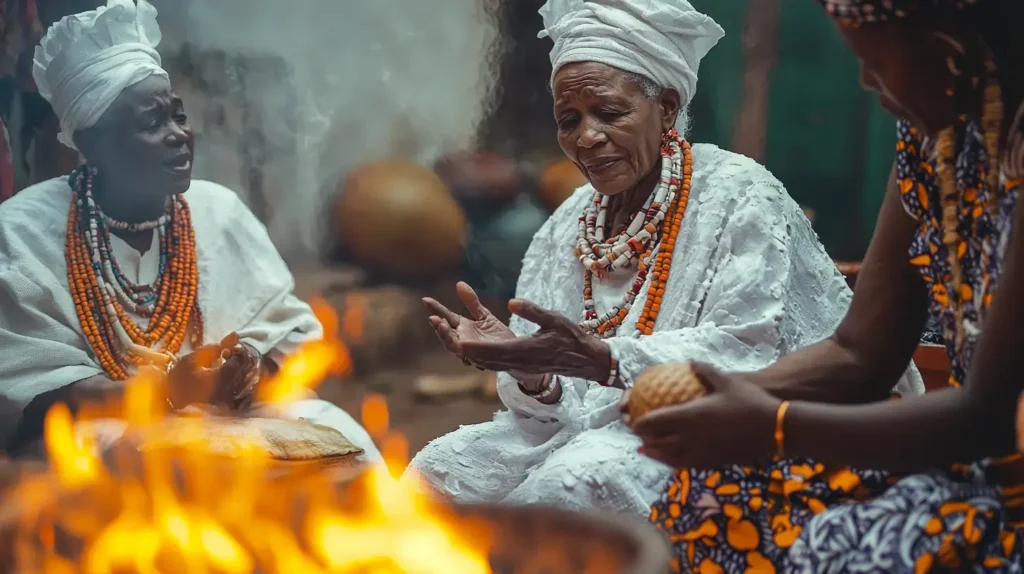
Let me tell you about my colleague Iya Funke – now that woman has some stories! She’s been practicing even longer than me, learned from her great-grandmother who was legendary in Lagos. Iya Funke specializes in women’s health and fertility. The things she’s seen and done would fill books.
She told me about this couple who’d been trying for a baby for fifteen years. Fifteen! They’d spent fortunes on IVF, traveled abroad for treatments, nothing worked. When they came to her, she immediately sensed a spiritual blockage. Turns out, the woman’s grandmother had been a powerful healer who was wrongly accused and humiliated before she died. That pain and injustice was blocking the family line. Iya Funke led them through an elaborate reconciliation ritual. Today, that couple has three children.
Then there’s Baba Biodun, who focuses on mental and emotional healing. This man has a gift for seeing through to people’s core wounds. He helped a CEO who was successful but suicidal. Through divination and healing work, they uncovered childhood trauma the man had completely blocked out. The healing process was intense – months of rituals, counseling, and spiritual work. Now that man runs a foundation helping abuse survivors.
My own practice has given me stories I’ll never forget. Like the time a desperate mother brought her son who hadn’t spoken in two years after witnessing violence. Doctors said it was selective mutism, probably permanent. We did a series of cleansing rituals and soul retrieval work. On the seventh session, he suddenly started singing – a Yoruba children’s song his grandmother used to sing. His first words in two years! The mother just collapsed, crying and praising God.
The impact on patients’ lives goes beyond the healing itself. Many become practitioners themselves, wanting to help others the way they were helped. Others become advocates, working to preserve and promote traditional healing. Some simply live their lives with a deeper connection to their culture and spirituality.
Storytelling itself is medicine in our tradition. When I share these experiences with patients, they see they’re not alone. Their struggles aren’t unique or insurmountable. Others have walked similar paths and found healing. Sometimes just hearing the right story at the right time can shift someone’s entire perspective.
What strikes me most is how each healer develops their own style while honoring the tradition. We all learned the same foundations, but our practices reflect our personalities and experiences. Some work with music and dance. Others focus on plant medicine. Some excel at divination. This diversity makes our tradition rich and adaptable.

Celebrating the Legacy of Yoruba Healing
The responsibility of keeping this knowledge alive keeps me up at night sometimes. So much has already been lost. Elders who died without passing on their secrets. Sacred sites destroyed by development. Young people more interested in TikTok than traditional wisdom. But then I see signs of hope that make my old heart sing.
Music and dance aren’t just entertainment in our healing work – they’re medicine themselves. Each rhythm speaks to different parts of your being. The drums can literally change your brainwaves, open spiritual channels, release trapped emotions. I’ve seen people who couldn’t cry for years finally release their grief during a healing dance. The body remembers how to heal itself when we give it the right rhythm.
My students come from all backgrounds now – doctors, teachers, artists, tech workers. They’re finding ways to adapt our practices for modern life without losing the essence. One created an app that helps people track moon phases for optimal ritual timing. Another makes videos teaching basic protection prayers. It’s not how I learned, but if it keeps the knowledge flowing, I support it.
The art of healing extends beyond rituals. It’s in the way we prepare food with intention. How we arrange our living spaces to promote wellbeing. The colors we wear for different purposes. Even how we greet each other carries spiritual significance. These everyday practices are just as important as the big ceremonies.
Preservation efforts are picking up steam. Universities are finally documenting our practices properly. Museums are collecting ritual objects with proper context. Communities are establishing healing gardens with traditional medicinal plants. But the real preservation happens person to person, heart to heart, when knowledge is passed with love and understanding.
Modern interpretations sometimes make me scratch my head, but adaptation has always been part of our tradition. Our ancestors adapted when they were forcibly brought to the Americas. They adapted when colonization tried to erase our practices. We’ll adapt to the digital age too, without losing our roots.
What matters most is that people are healing. Whether they come through traditional channels or stumble upon our practices while googling their symptoms, they’re finding help. And each person who experiences real healing becomes a living testament to the power of our tradition.

Getting Started with Yoruba Healing: A Beginner’s Guide
So you’re interested in exploring Yoruba healing? Good for you! But let me give you some real talk about how to approach this path respectfully and safely. Too many people jump in without understanding what they’re getting into.
First thing – you can’t learn this from books alone. You need a teacher, a mentor, someone who’s walked the path. Be patient in finding the right one. A real healer won’t promise instant fixes or charge crazy money upfront. They’ll take time to know you, might even turn you away at first to test your commitment. I turned away my best student three times before accepting him!
When looking for a traditional healer, trust your gut. Do you feel safe with them? Do they respect your boundaries? Are they connected to a community, or are they a lone wolf? Real healers are accountable to their community and their ancestors. They should be able to tell you who taught them, where they learned, how long they’ve been practicing.
Start small with your own practice. Morning prayers, simple cleansing baths, learning to recognize medicinal plants in your area. You don’t need fancy tools or expensive items. Some of my most powerful work has been done with plain water, white cloth, and sincere prayer. The power comes from your connection to spirit, not from objects.
Ethics matter big time in this work. You’re dealing with people’s spirits, their deepest wounds, their life force. Never use this knowledge to harm or manipulate. Never break confidentiality. Never practice beyond your level of training. I’ve seen people mess themselves up bad trying to do advanced work without proper preparation.
Be ready for your own healing journey. You can’t pour from an empty cup. Most of my early training was actually healing my own wounds and blockages. How can you guide others through darkness if you haven’t faced your own? This path will challenge everything you think you know about yourself.
Learn the language, at least some basics. Yoruba words carry power – they’re not just labels but spiritual technologies. When you say “ase” (ah-shay), you’re not just saying “amen” – you’re activating spiritual force. The pronunciation matters, the intention matters, the understanding matters.
Respect the culture this comes from. This isn’t something you can cherry-pick from or remix however you want. These practices emerged from specific people, specific land, specific history. Honor that. Support Yoruba communities. Learn about the culture beyond just the healing practices.
Conclusion
After all these years, all these healings, all these stories, what strikes me most is how much we need this wisdom right now. People are hurting in ways that pills and therapy alone can’t touch. They’re disconnected from their roots, from nature, from their own spirits. Yoruba healing offers a path back to wholeness.
These practices work because they address the whole person – not just symptoms but causes, not just individual but community, not just physical but spiritual. They remind us that healing is our birthright, that our ancestors walk with us, that nature provides everything we need if we know how to ask.
If you take anything from my ramblings, let it be this: you have more power to heal yourself and others than you realize. Whether you dive deep into Yoruba traditions or simply start paying attention to your spiritual health, you’re taking steps toward wholeness. Maybe try a simple cleansing bath this week. Say a prayer to your ancestors. Notice which plants grow around your home.
Share your own experiences in the comments below. What traditional healing practices did your grandparents use? What wisdom are you keeping alive? We heal in community, and your story might be exactly what someone else needs to hear. Let’s keep this conversation going and these traditions thriving.
The ancestors are watching, and they’re smiling.





This is a very enlightening article! I really enjoyed reading it.
Thank you for your comment.